




























Views
Plays
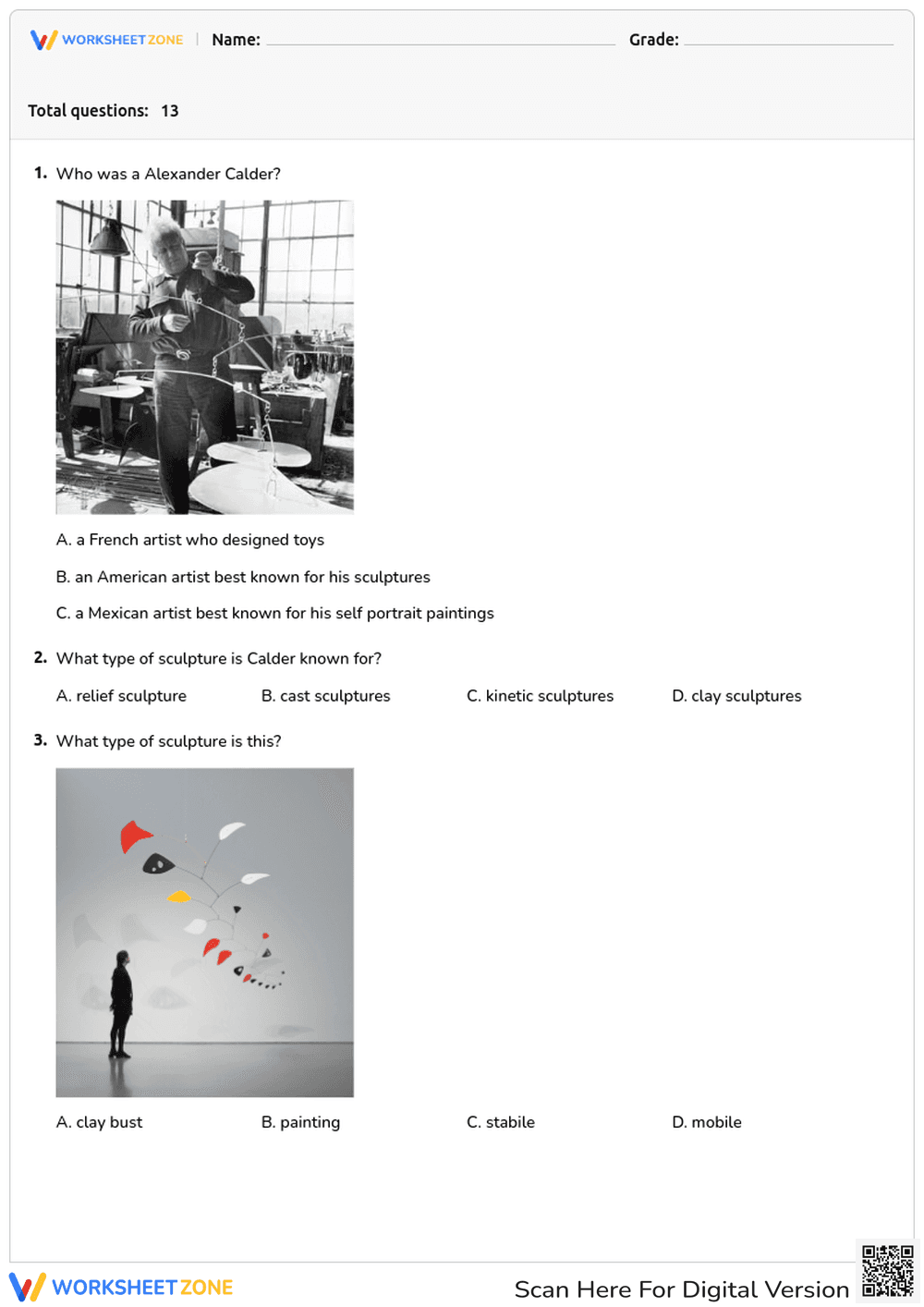
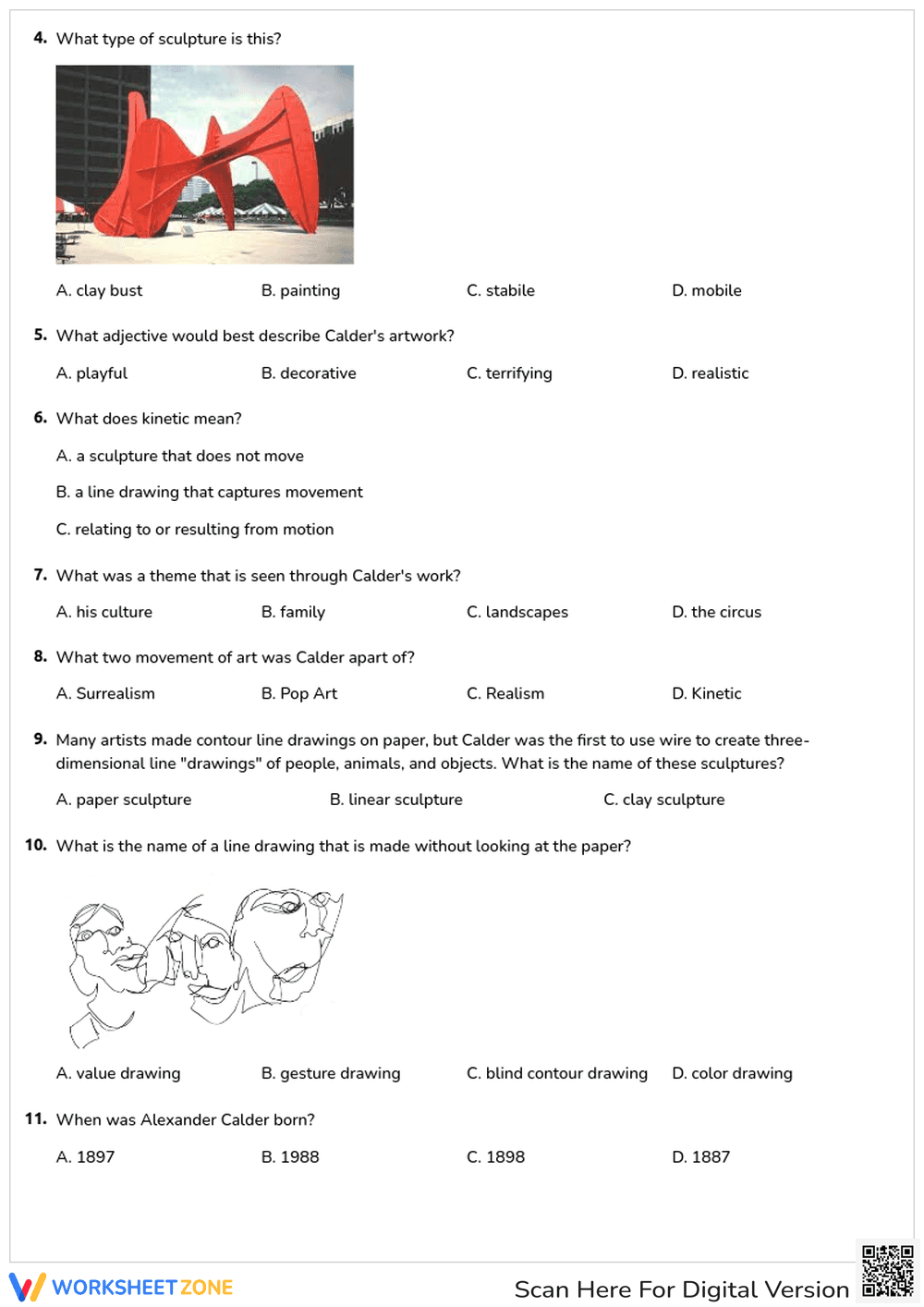
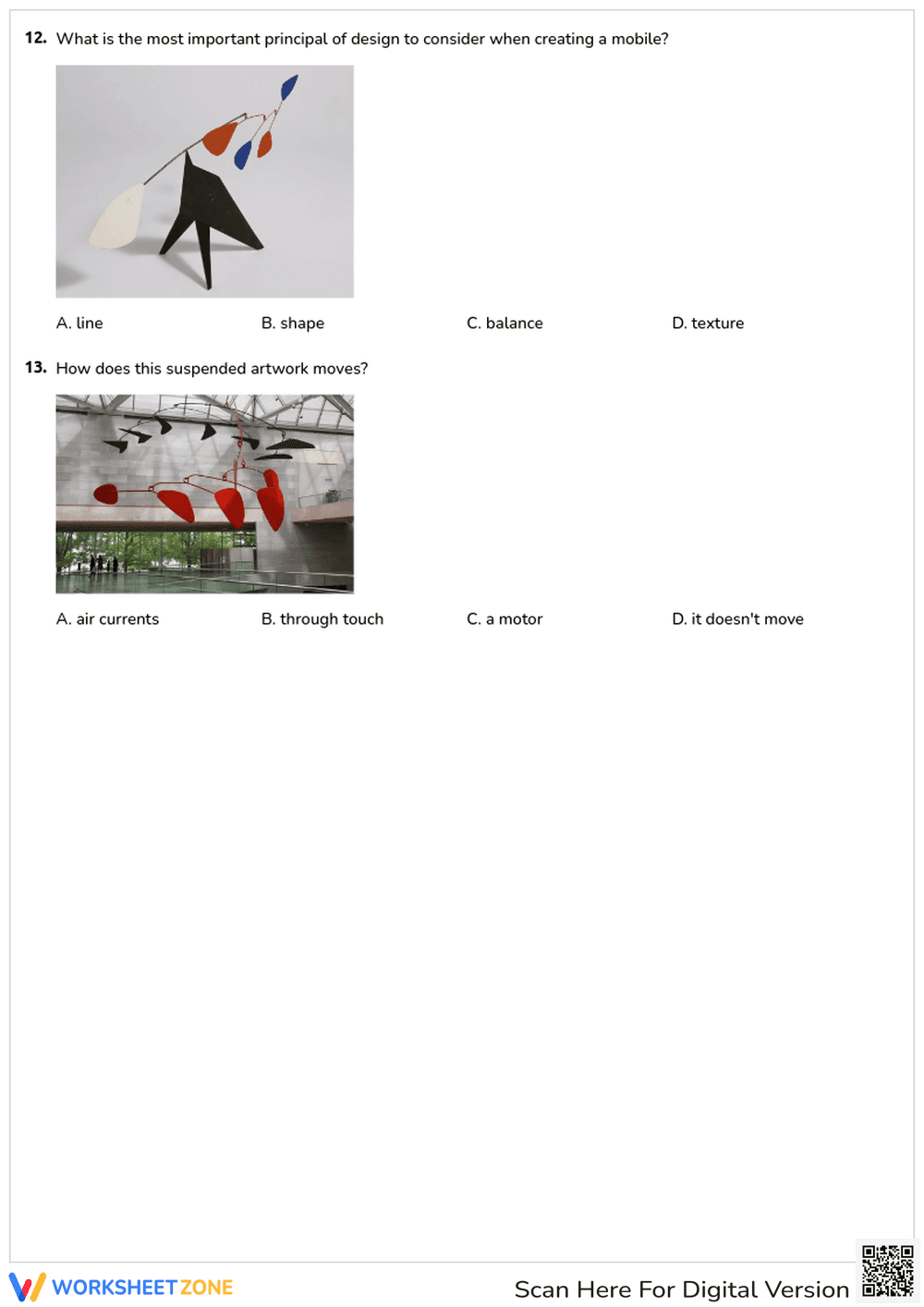

Grade 3 Alexander Calder — Printable No-Prep Worksheet

Paste this activity's link or code into your existing LMS (Google Classroom, Canvas, Teams, Schoology, Moodle, etc.).
Students can open and work on the activity right away, with no student login required.
You'll still be able to track student progress and results from your teacher account.
This Grade 3 Fine Art worksheet gives students a structured opportunity to explore the life and work of Alexander Calder. By completing this multiple-choice quiz, learners will identify key artistic concepts such as kinetic energy, mobiles, and contour line drawings while analyzing famous sculptural techniques.
At a Glance
- Grade: 3 · Subject: Fine Art
- Standard:
VA:Re7.1.3a— Speculate about processes an artist uses to create art- Skill Focus: Art History and Sculpture Analysis
- Format: 3 pages · 13 problems · Answer key included · PDF
- Best For: End-of-unit assessment or sub plan
- Time: 15–20 minutes
This three-page assessment features thirteen multiple-choice questions. Tasks range from identifying Calder sculptures using full-color images to defining vocabulary like "stabile" and "kinetic." The clean, visual layout ensures students can easily observe artwork details. A complete answer key streamlines grading.
This resource is designed for immediate classroom implementation with a highly efficient zero-prep workflow:
- Print (1 minute): Download the PDF and print the three-page student packet.
- Distribute (1 minute): Hand out as an independent activity, requiring no complex setup.
- Review (3 minutes): Use the answer key to quickly grade the thirteen questions.
With a total teacher prep time under two minutes, this is an excellent option for emergency sub plans.
This assessment is directly aligned to VA:Re7.1.3a, requiring students to speculate about processes an artist uses to create a work of art. By analyzing Calder's use of wire, balance, and air currents, students demonstrate a foundational understanding of three-dimensional design. Both standard codes can be copied directly into lesson plans, IEP goals, or district curriculum mapping tools.
Teachers can utilize this quiz as a summative assessment after a direct instruction unit on modern sculpture. Alternatively, use it as an independent activity during an art history station rotation. As a formative assessment observation tip, note whether students struggle more with vocabulary or visual identification to guide future lessons. Expected completion time is 15 to 20 minutes.
Designed for third-grade art students, this worksheet is adaptable for second or fourth grades. The multiple-choice format provides built-in differentiation, making it accessible for students who struggle with open-ended responses. It pairs naturally with a hands-on wire sculpture lesson or a Calder biography.
Integrating structured art history assessments into elementary fine arts curricula significantly enhances students' visual literacy and critical thinking skills. According to a ScienceDirect TpT Analysis, providing students with clear, visually supported multiple-choice formats helps solidify complex vocabulary and historical concepts without overwhelming their cognitive load. This specific resource targets VA:Re7.1.3a, challenging learners to speculate about processes an artist uses to create art. By evaluating Alexander Calder's unique approach to kinetic movement and wire contouring, students move beyond simple observation into active analytical thinking. Regular exposure to these types of targeted, standard-aligned questions ensures that young artists develop a robust vocabulary to describe both their own creative processes and the historical masterpieces they study. This foundational knowledge ultimately supports broader academic success by training students to look closely, analyze visual evidence, and draw informed conclusions.


