


























Views
Downloads
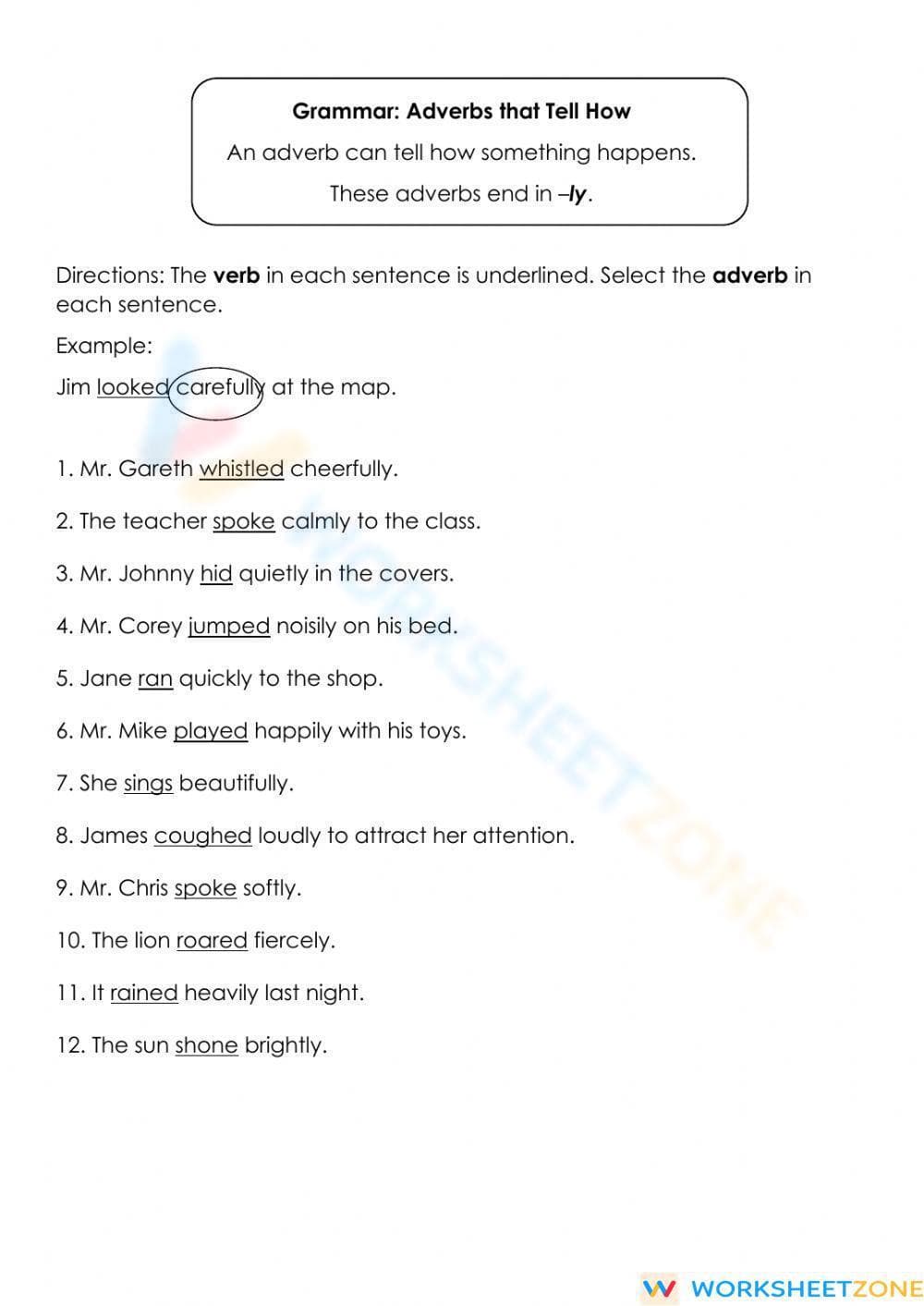

Printable Adverbs with -ly Worksheet | Grade 2 ELA
Paste this activity's link or code into your existing LMS (Google Classroom, Canvas, Teams, Schoology, Moodle, etc.).
Students can open and work on the activity right away, with no student login required.
You'll still be able to track student progress and results from your teacher account.
This worksheet provides focused practice for second-grade students on identifying adverbs that tell how an action happens, specifically those ending in the "-ly" suffix. Through a series of clear, simple sentences, learners will reinforce their understanding of how adverbs modify verbs and build a foundational skill in descriptive writing and grammar.
At a Glance
- Grade: 2 · Subject: ELA / Grammar
- Standard:
CCSS.ELA-LITERACY.L.2.1.E— Use adjectives and adverbs, and choose between them.- Skill Focus: Identifying adverbs ending in -ly
- Format: 1 page · 12 problems · Answer key included · PDF
- Best For: Skill reinforcement, grammar stations, homework
- Time: 10–15 minutes
What's Inside
This single-page PDF download contains one straightforward grammar exercise. The top of the page features a clear definition of "adverbs that tell how" and notes that they often end in "-ly." An example sentence is provided to guide students. The main task consists of 12 sentences where the verb is already underlined, requiring students to simply identify and select the adverb. A complete answer key is included for quick checking.
Skill Progression
The worksheet follows a clear gradual-release model to build student confidence.
- Guided Practice: The exercise begins with a concise explanation and a worked example ("Jim looked carefully..."), ensuring students understand the task. This "I Do" step models the thinking process.
- Supported Practice: In each of the 12 problems, the verb is underlined. This scaffold helps students focus their attention on the relationship between the action word and the modifying adverb, creating a "We Do" feel as they apply the rule.
- Independent Practice: Students work through the 12 sentences, identifying the adverb. This "You Do" phase allows them to demonstrate their understanding and provides a clear measure of their ability to apply the grammar rule.
This structured progression makes the worksheet an effective tool for targeted skill development.
Standards Alignment
This resource directly aligns with Common Core standard CCSS.ELA-LITERACY.L.2.1.E, which requires students to "Use adjectives and adverbs...". This worksheet specifically targets the adverb component, providing essential practice in recognizing this part of speech. The standard code can be copied directly into lesson plans, IEP goals, or district curriculum mapping tools.
How to Use It
Use this worksheet after a mini-lesson on adverbs for independent practice. For a formative check, see if students can complete the first five problems accurately in two minutes. It also works as a quick homework assignment to reinforce the concept, taking about 10-15 minutes to complete.
Who It's For
Designed for first and second-graders learning parts of speech. The simple structure makes it accessible. For struggling readers, consider reading sentences aloud. This worksheet pairs well with a classroom anchor chart that defines adverbs and lists examples.
Providing students with explicit, decontextualized practice on grammatical forms is a foundational step toward more complex application in writing. This worksheet, aligned with CCSS.ELA-LITERACY.L.2.1.E, focuses on the critical skill of identifying adverbs. Research from Fisher & Frey (2014) emphasizes the importance of a gradual release of responsibility, which this worksheet models by providing clear examples and scaffolds before asking for independent application. The 12 targeted problems offer the kind of repetition needed to move a concept from short-term to long-term memory. By mastering the ability to identify adverbs that describe how an action occurs, students gain a tool they can later use to add precision and detail to their own narrative and informational writing, a key predictor of later academic success.


