


























Views
Downloads
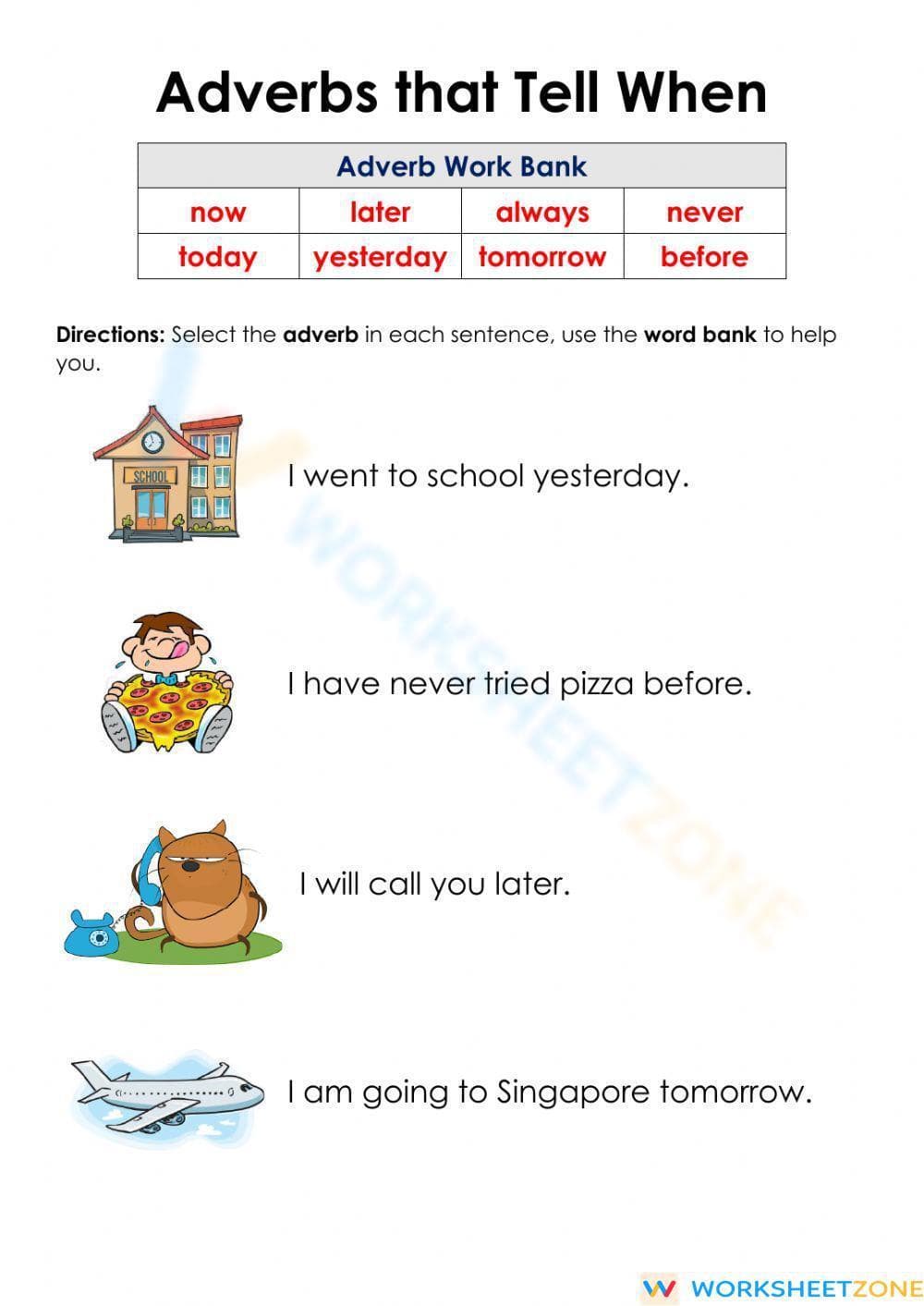
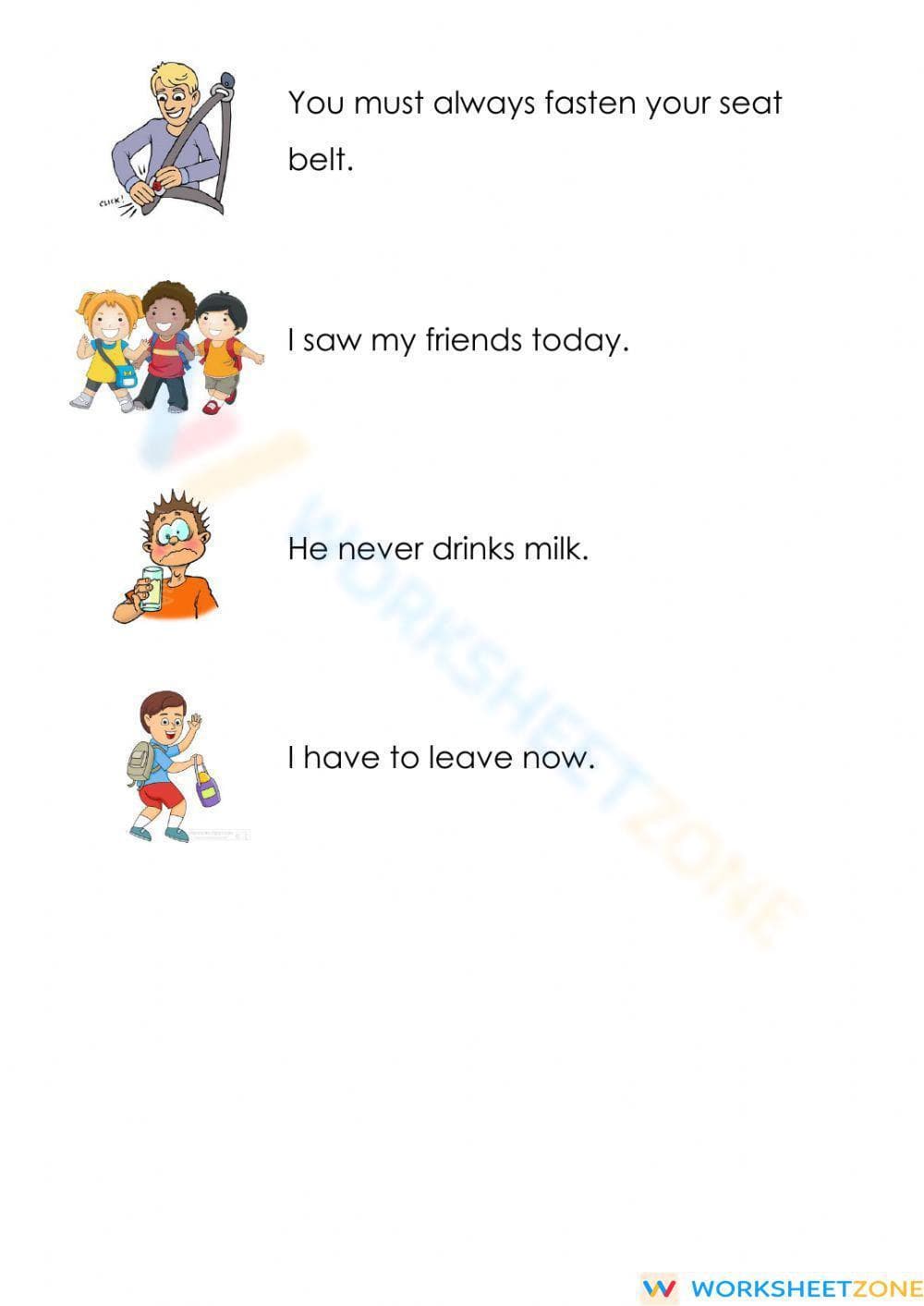

Grade 2 Adverbs of Time — Printable No-Prep Worksheet
Paste this activity's link or code into your existing LMS (Google Classroom, Canvas, Teams, Schoology, Moodle, etc.).
Students can open and work on the activity right away, with no student login required.
You'll still be able to track student progress and results from your teacher account.
This worksheet provides targeted practice for Grade 2 students to identify and use adverbs that tell when. Through a series of clear, illustrated sentences, learners will reinforce their understanding of temporal words, a key component of early grammar and sentence structure, leading to more descriptive and precise writing.
At a Glance
- Grade: 2 · Subject: ELA
- Standard:
CCSS.ELA-LITERACY.L.2.1.E— Use adjectives and adverbs correctly.- Skill Focus: Identifying adverbs of time
- Format: 2 pages · 8 problems · Answer key included · PDF
- Best For: Independent practice, grammar stations, or homework
- Time: 10–15 minutes
What's Inside
This two-page resource contains eight sentences, each paired with a helpful illustration. A word bank at the top of the first page lists eight common adverbs of time (now, later, always, never, today, yesterday, tomorrow, before) to support students as they identify the correct adverb in each sentence. A complete answer key is included for quick checking.
A Zero-Prep Workflow
This activity is designed for maximum efficiency:
- Print (1 min): Simply print the two-page worksheet and the corresponding answer key.
- Distribute (1 min): Hand out the worksheet to students for immediate use. The instructions are self-contained.
- Review (5 mins): Use the answer key to review the 8 problems with students or have them self-correct.
This entire activity requires less than two minutes of teacher preparation, making it an ideal resource for a substitute plan or a simple homework assignment.
Standards Alignment
This worksheet is aligned with CCSS.ELA-LITERACY.L.2.1.E, which requires students to "Use adjectives and adverbs, and choose between them depending on what is to be modified." The tasks target the use and identification of adverbs that clarify when an action occurs, a foundational skill for this Grade 2 standard. Both standard codes can be copied directly into lesson plans, IEP goals, or district curriculum mapping tools.
How to Use It
This resource is effective as independent practice after a direct instruction lesson on adverbs of time. It can also be used as a formative assessment tool; as students work, circulate and observe whether they can correctly pinpoint the temporal adverbs, noting any common errors. The worksheet is designed to be completed in approximately 10-15 minutes.
Who It's For
This worksheet is designed for Grade 2 students who are learning about adverbs. The clear layout, supportive word bank, and pictorial cues make it accessible for most learners. For additional support, pair this activity with a classroom anchor chart displaying adverbs of time and example sentences.
This resource provides focused practice on CCSS.ELA-LITERACY.L.2.1.E, helping students master the use of temporal adverbs. By identifying adverbs like 'yesterday' and 'always' in context, students build a foundational understanding of how adverbs modify verbs to add detail and precision. This aligns with research emphasizing the importance of explicit grammar instruction within authentic reading and writing contexts. As noted by Fisher & Frey (2014), effective instruction involves a gradual release of responsibility, where students move from guided to independent application of new skills. This worksheet serves the independent practice phase, allowing students to apply their knowledge of adverbs after initial teacher modeling. Its clear format provides the repetition needed to solidify this crucial language skill, which is a building block for constructing more complex sentences.


