


























Views
Downloads

Printable Alphabet Handwriting Practice | Grade 2-3
Paste this activity's link or code into your existing LMS (Google Classroom, Canvas, Teams, Schoology, Moodle, etc.).
Students can open and work on the activity right away, with no student login required.
You'll still be able to track student progress and results from your teacher account.
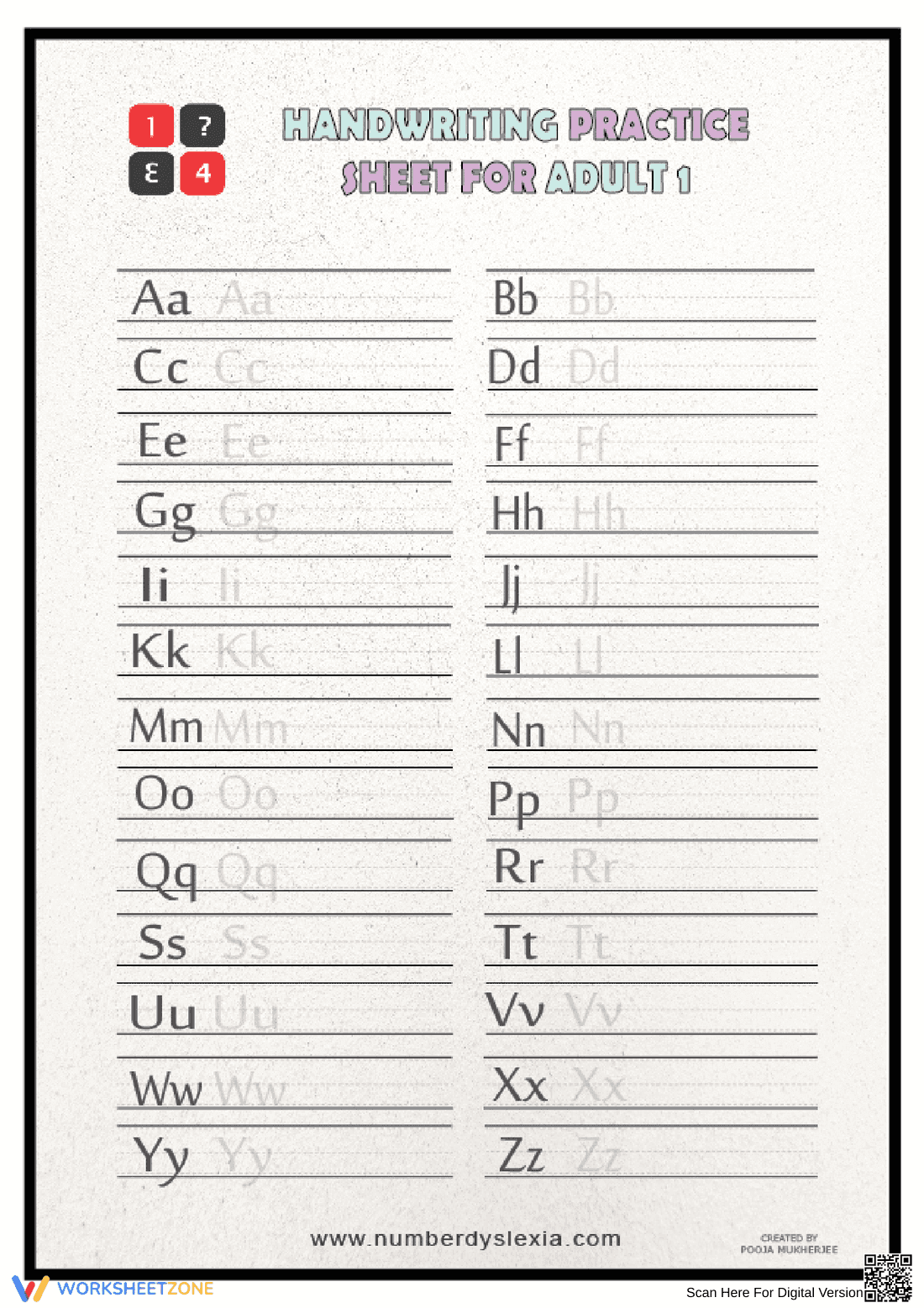
This printable alphabet handwriting worksheet helps students refine letter formation and improve overall penmanship legibility. By tracing and writing uppercase and lowercase letter pairs from A to Z, learners build the fine motor control necessary for fluent writing. This resource provides structured, independent practice to reinforce foundational literacy skills.
At a Glance
- Grade: Grades 2–3 · Subject: Handwriting
- Standard:
CCSS.ELA-LITERACY.L.2.1— Write legibly and demonstrate command of standard English conventions- Skill Focus: Alphabet letter formation and spacing
- Format: 1 page · 26 tasks · No answer key required · PDF
- Best For: Morning work and independent penmanship practice
- Time: 15–20 minutes
This single-page PDF features a clean, dual-column layout containing all 26 letters of the English alphabet. Each entry provides a clear, solid-line model of the uppercase and lowercase letter pair, followed immediately by a faded, dotted tracing guide on standard primary writing lines. The structured lines help students maintain consistent letter height, alignment, and spacing without distracting visual clutter.
Integrating this activity into your daily routine requires less than 2 minutes of preparation. First, print the single-page PDF for your class. Second, distribute the sheets during morning arrival or transition periods, requiring only a pencil from each student. Third, review student letter formation during independent work or collect the sheets for quick visual assessment. This self-explanatory layout makes it an ideal option for emergency sub plans.
Standards Alignment
This worksheet aligns directly with the primary standard CCSS.ELA-LITERACY.L.2.1, which requires students to demonstrate command of the conventions of standard English grammar and usage when writing. Developing legible handwriting is a foundational component of this standard, ensuring that written communication is clear and readable. Both standard codes can be copied directly into lesson plans, IEP goals, or district curriculum mapping tools.
How to Use It
Use this worksheet as a warm-up activity before direct writing instruction to prepare students' fine motor skills. Alternatively, assign it as an independent center activity during ELA rotations to reinforce letter formation. During the 15 to 20 minutes students spend completing the 26 tracing tasks, walk around the room to observe pencil grip and stroke direction, noting students who start letters from the bottom instead of the top for targeted intervention.
Who It's For
This resource is designed for second and third-grade students who need to refine their print handwriting legibility. It is also highly beneficial for older struggling writers or English language learners practicing basic English letter shapes. For students requiring extra support, pair this worksheet with a physical alphabet desk strip or a tactile tracing board to guide their strokes before they write on the paper.
According to the Fisher & Frey (2014) framework for gradual release of responsibility, structured independent practice is essential for motor skill acquisition. This handwriting worksheet supports that progression by targeting standard CCSS.ELA-LITERACY.L.2.1, focusing on the plain-English skill of legible alphabet letter formation. Research indicates that explicit handwriting practice correlates with improved spelling accuracy and writing fluency in early elementary students. By providing a clear visual model alongside tracing guides, this resource helps students transition from guided tracing to independent production. Teachers can integrate this tool into daily routines, knowing that systematic penmanship practice builds the physical stamina required for longer writing tasks. The single-page layout ensures students remain focused on the motor task without cognitive overload, making it an effective supplement for any foundational literacy curriculum.


