


























Views
Downloads

Printable Addition with Tens Sticks Worksheet | Grade 1
Paste this activity's link or code into your existing LMS (Google Classroom, Canvas, Teams, Schoology, Moodle, etc.).
Students can open and work on the activity right away, with no student login required.
You'll still be able to track student progress and results from your teacher account.
This Grade 1 math worksheet helps students master the concept of regrouping and place value through addition with tens sticks. By visualizing numbers as groups of tens and ones, learners build a strong foundation for mental math and multi-digit operations. This resource provides a clear pathway from concrete counting to abstract number sentences.
At a Glance
- Grade: 1 · Subject: Math
- Standard:
1.NBT.B.2— Understand that the two digits of a two-digit number represent amounts of tens and ones- Skill Focus: Addition with Regrouping
- Format: 4 pages · 5 problems · Answer key included · PDF
- Best For: First-grade introduction to place value addition
- Time: 15–20 minutes
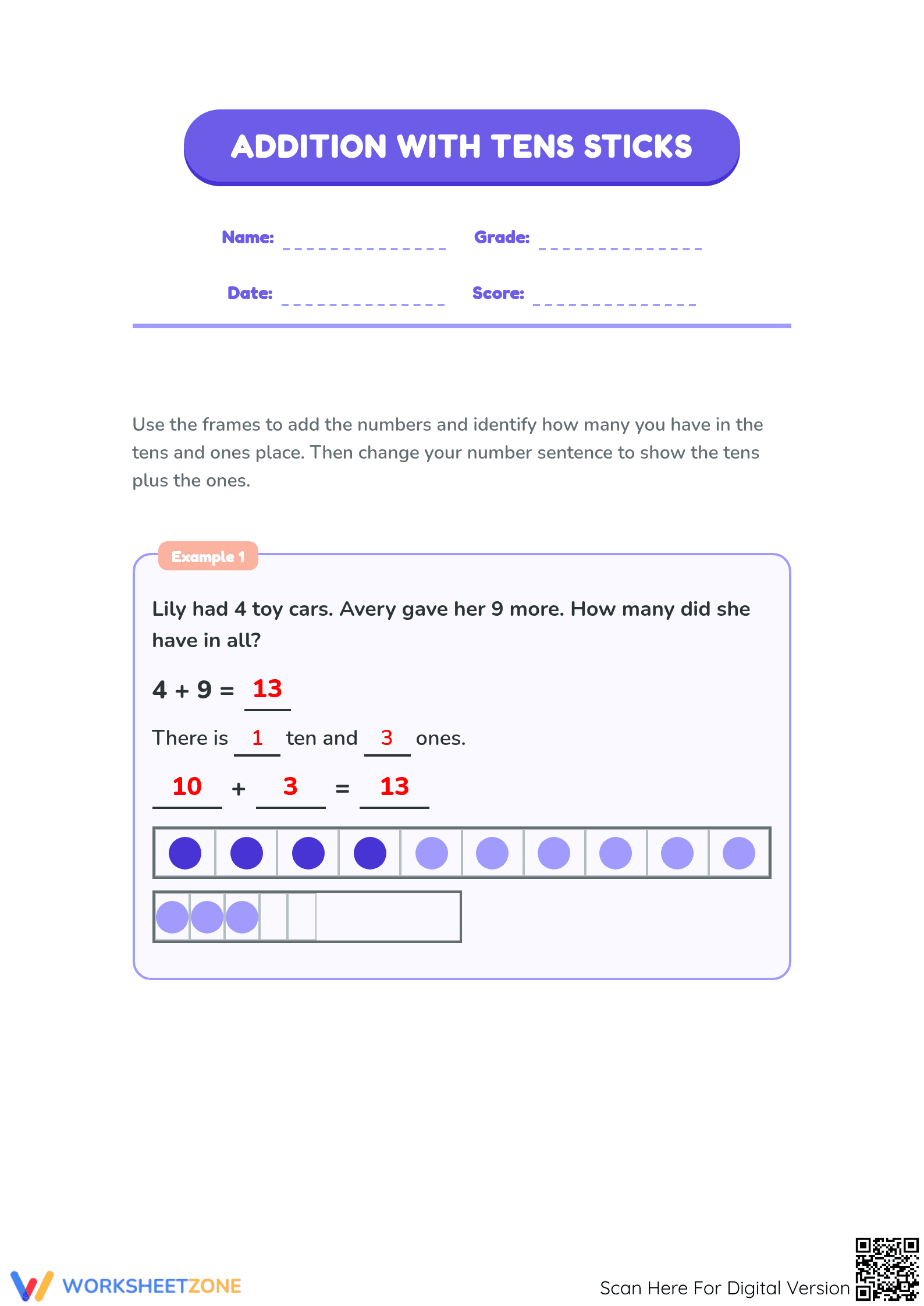
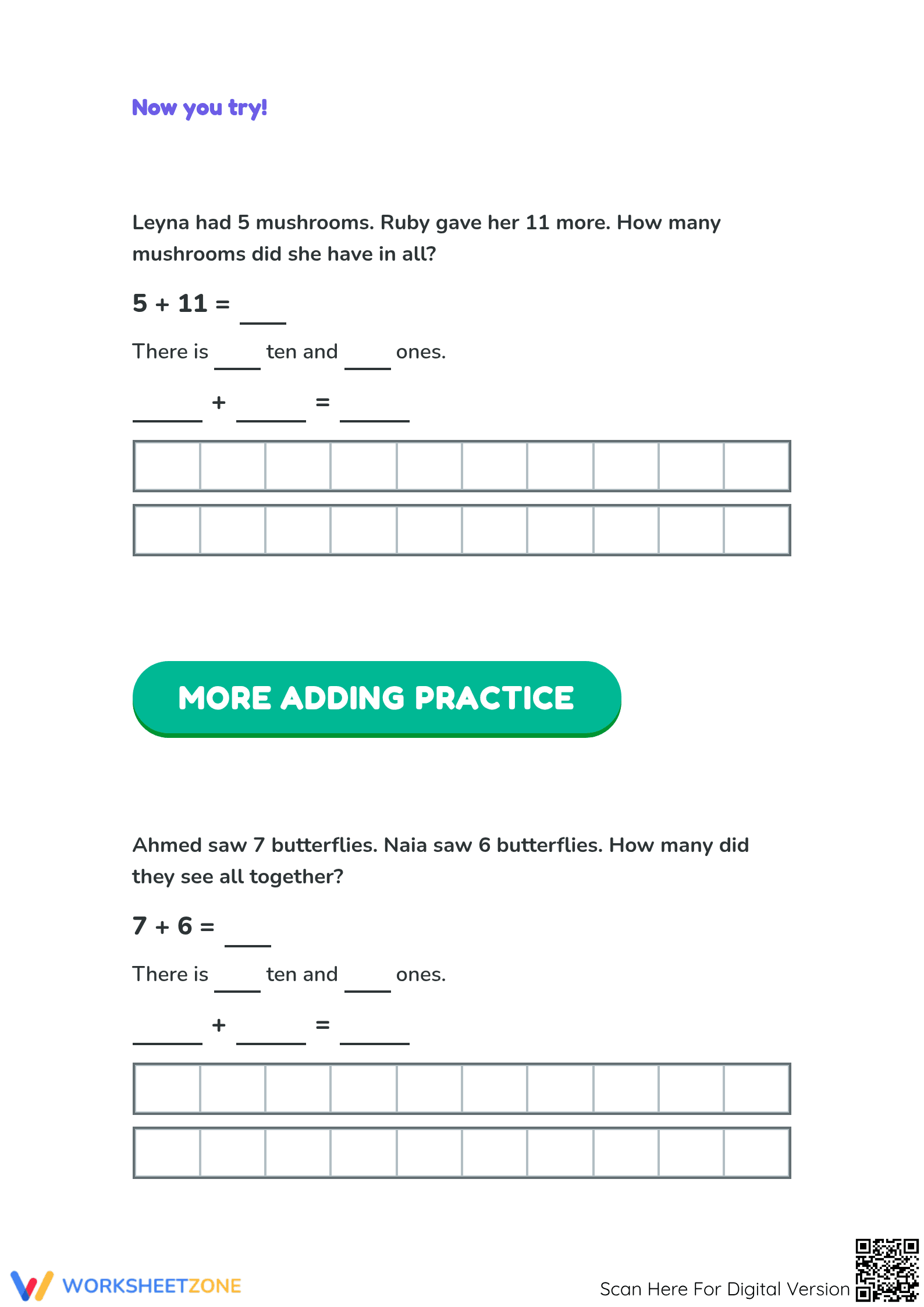
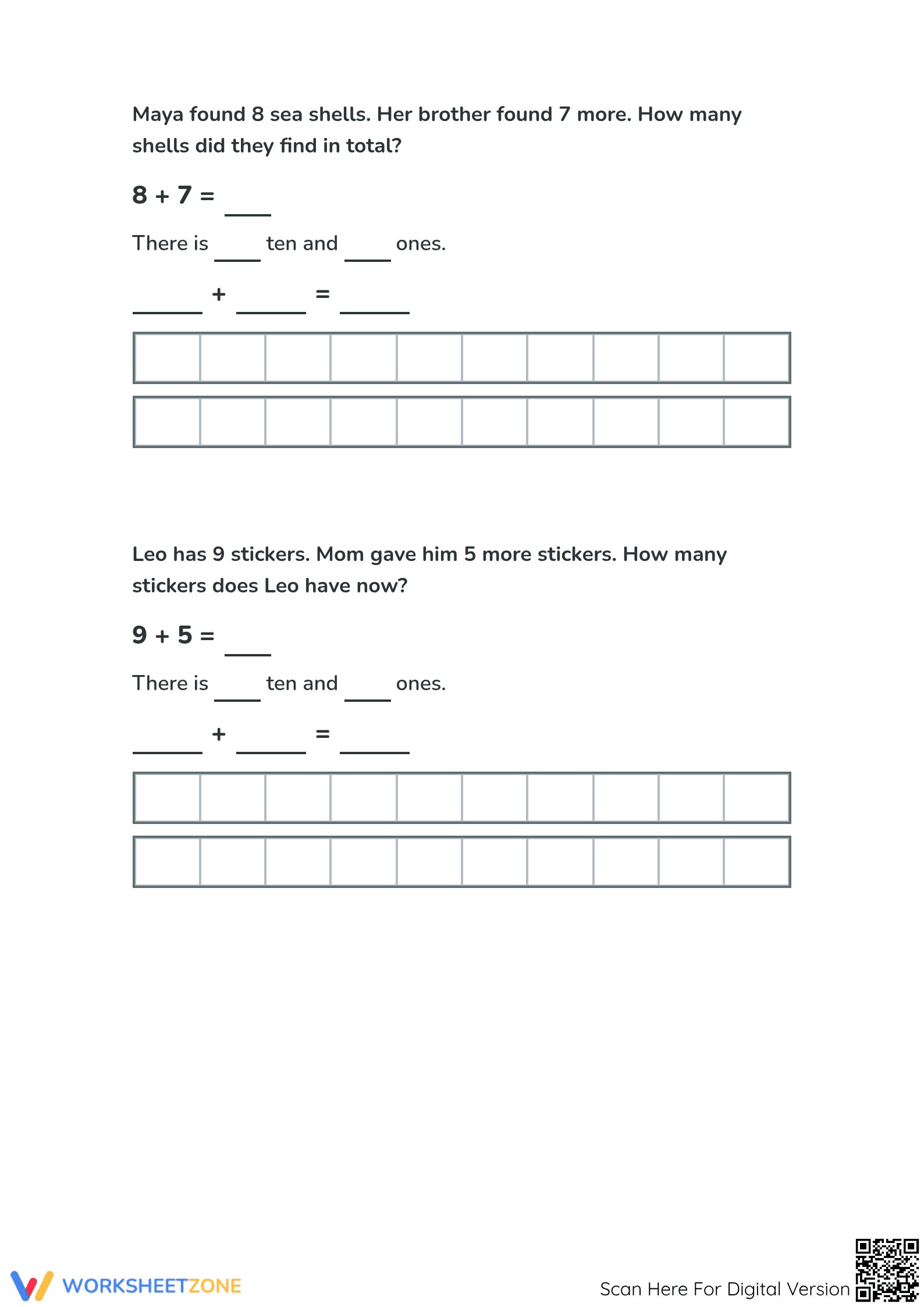
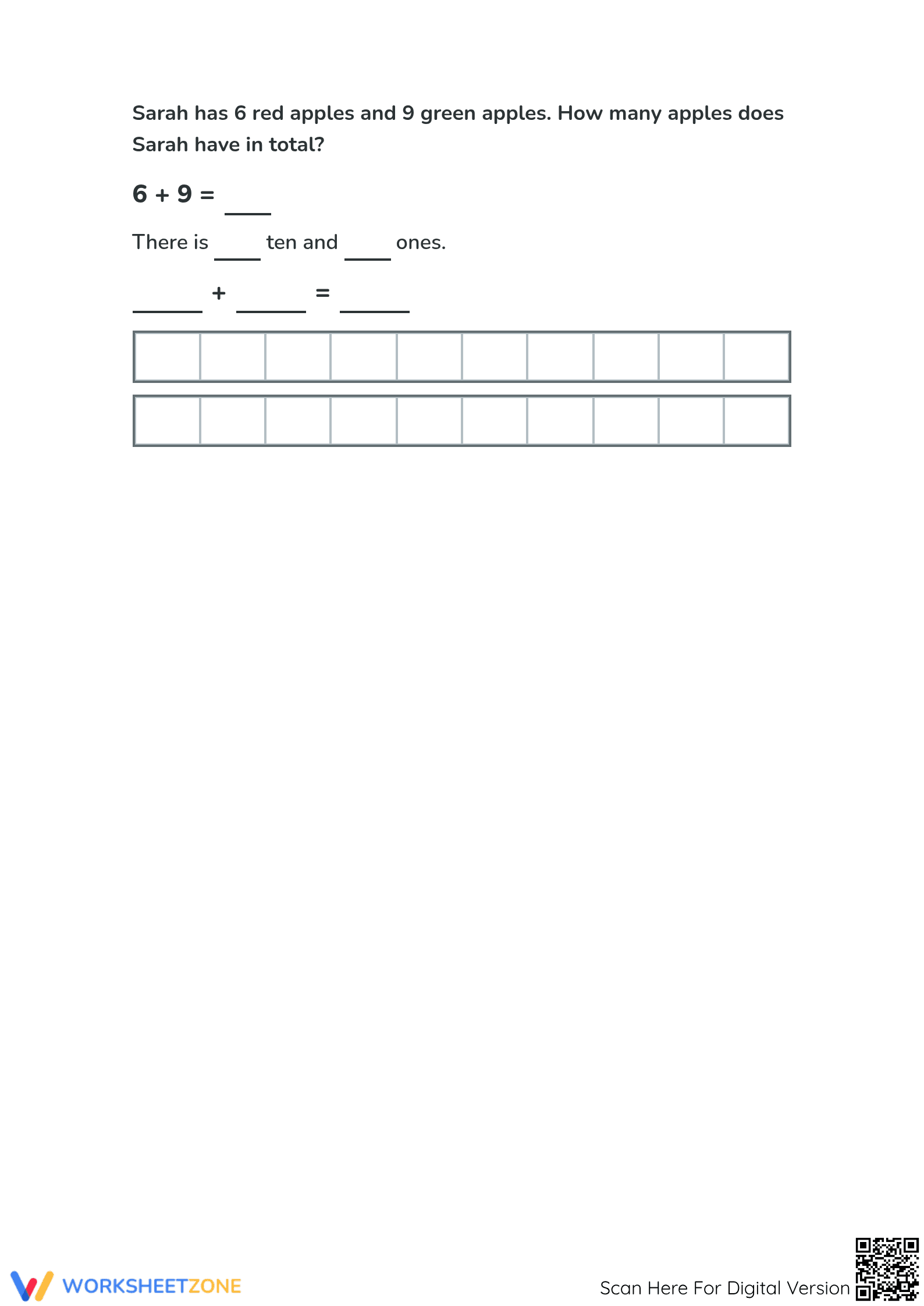
Inside this 4-page PDF, you will find one comprehensive worked example followed by five independent practice problems. Each task features a relatable word problem, space for a traditional addition sentence, a place-value breakdown (tens and ones), and a visual tens-stick frame for student grouping. A complete answer key is provided for rapid grading and immediate student feedback.
The worksheet follows a structured skill progression designed for success. First, students observe a guided example where 4+9 is decomposed into one ten and three ones. Next, they engage in supported practice using the tens-stick frames to visualize the "making a ten" strategy. Finally, they demonstrate independent mastery by completing the number sentences and place-value charts without teacher assistance. This gradual release model ensures student confidence.
This resource aligns perfectly with the primary standard 1.NBT.B.2, which requires students to understand that two-digit numbers represent amounts of tens and ones. By connecting the addition sentence 10 + 3 = 13 to the visual representation, students solidify their base-ten knowledge. This standard code can be copied directly into lesson plans, IEP goals, or district curriculum mapping tools.
Use this worksheet during the "guided practice" portion of your math block. As students work through the problems, observe if they correctly fill the ten-frame before moving to the ones place, as this is a key indicator of place-value readiness. It also serves as an excellent formative assessment at the end of a unit on addition within 20.
This activity is designed for first-grade students but provides valuable remediation for second graders struggling with regrouping concepts. It pairs naturally with physical base-ten blocks or a digital interactive whiteboard demonstration. For students needing more support, provide extra counters or math manipulatives to use alongside the printed frames for a multisensory learning experience.
Research by Fisher & Frey (2014) emphasizes the importance of visual scaffolding when introducing abstract mathematical concepts to young learners. This worksheet utilizes tens sticks as a bridge between simple counting and formal addition, allowing students to see the ten being formed. By requiring students to rewrite equations into their tens and ones components, the resource enforces the 1.NBT.B.2 standard while building the conceptual density necessary for future double-digit addition. The inclusion of word problems further grounds the math in real-world contexts, which improves student engagement and retention of numerical relationships. This approach is highly recommended for curriculum alignment in early elementary mathematics. Educators can rely on this structured format to provide the repetitive practice needed to move basic addition facts into long-term memory while simultaneously developing the structural understanding of the base-ten number system required for all higher-level arithmetic.


