


























Views
Downloads

Action and Linking Verbs Worksheet | Essential Grade 3
Paste this activity's link or code into your existing LMS (Google Classroom, Canvas, Teams, Schoology, Moodle, etc.).
Students can open and work on the activity right away, with no student login required.
You'll still be able to track student progress and results from your teacher account.
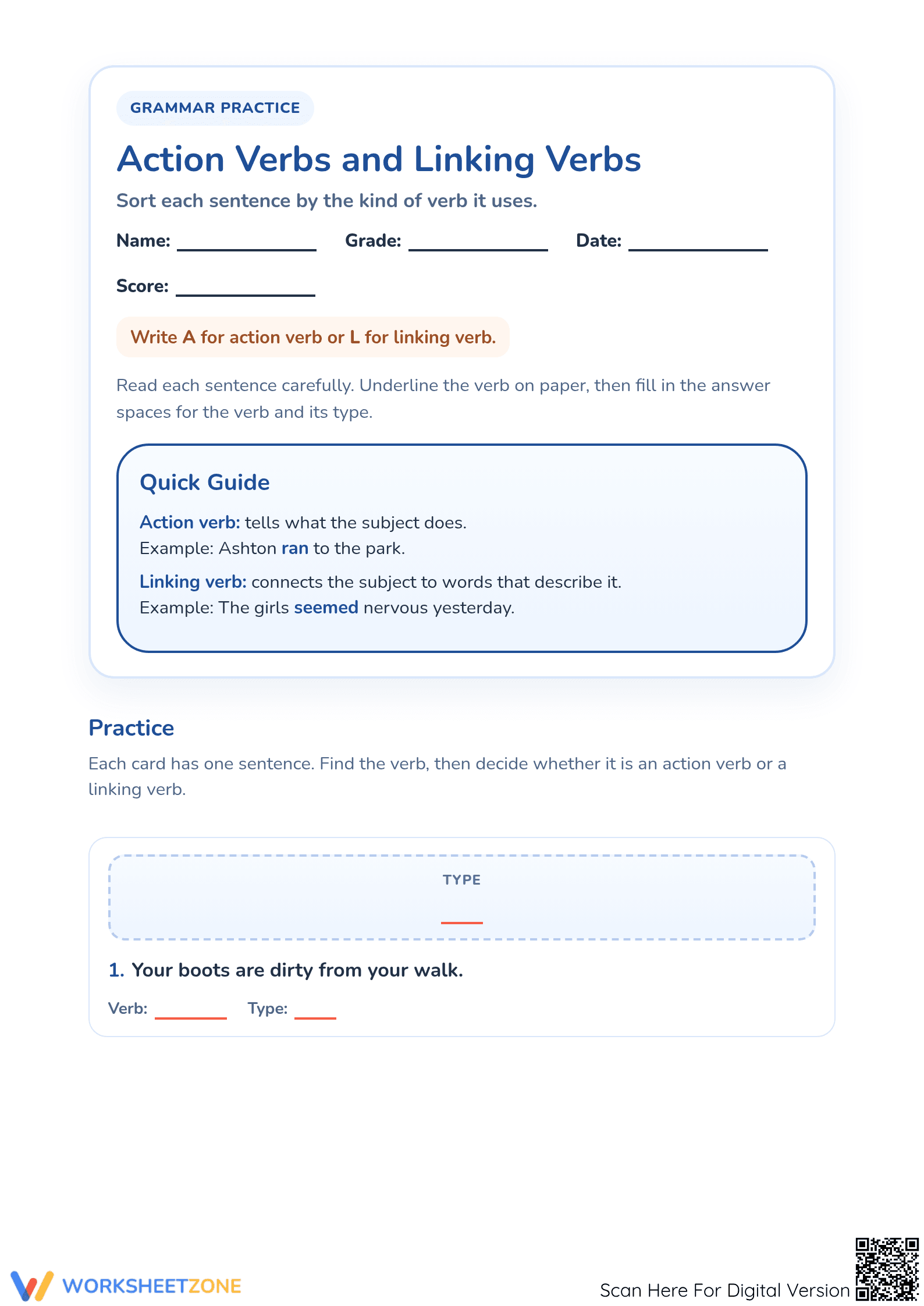
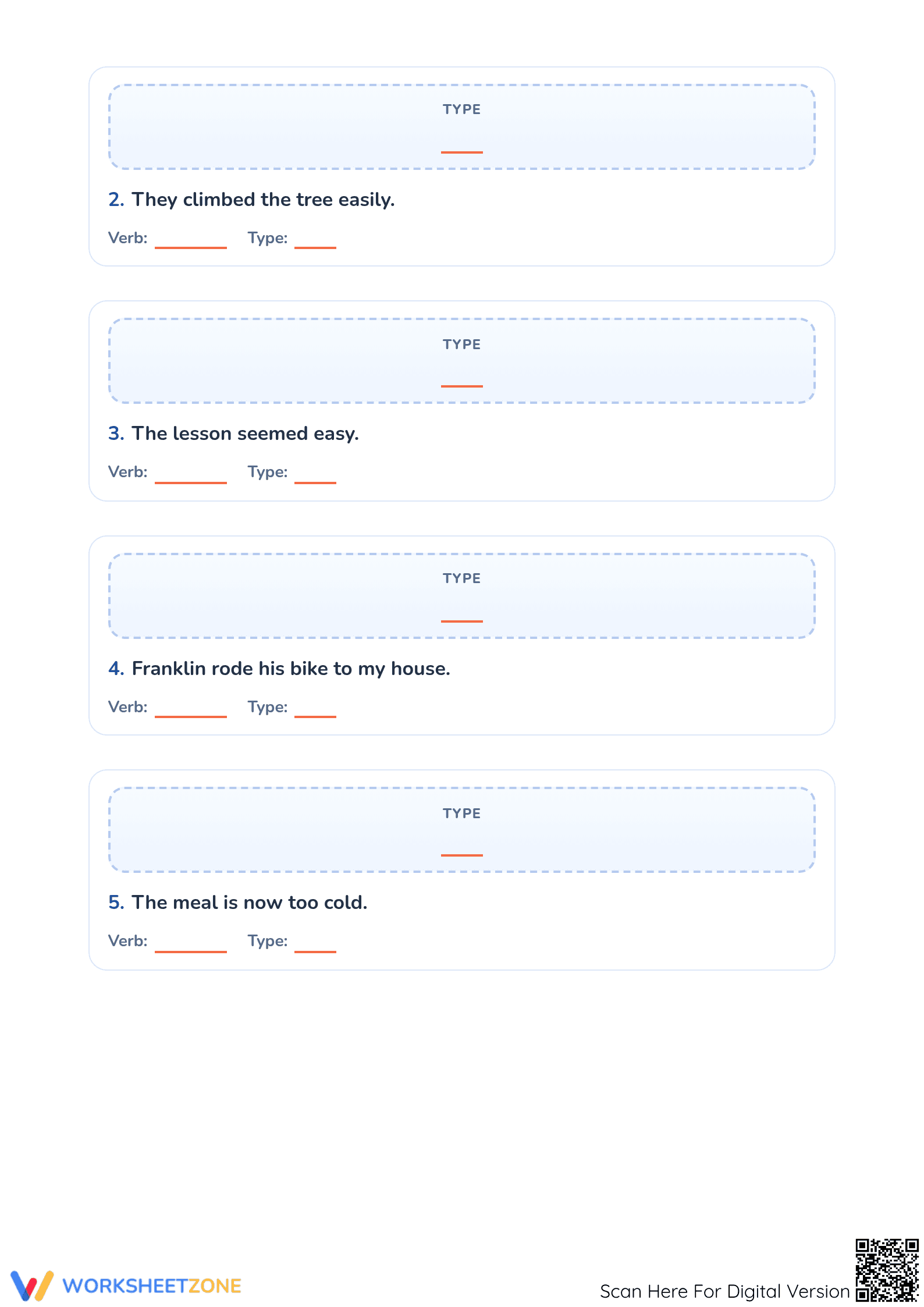
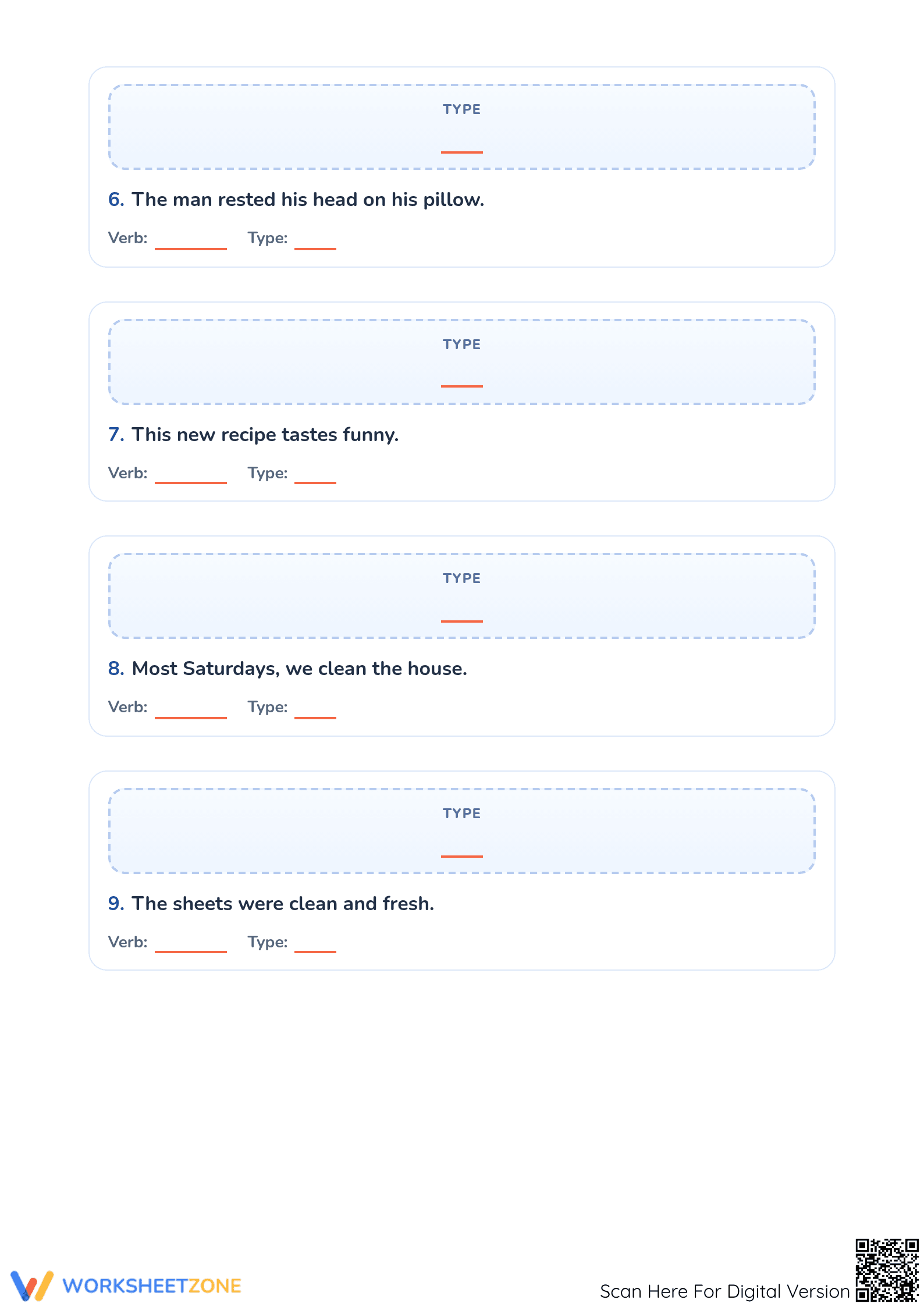
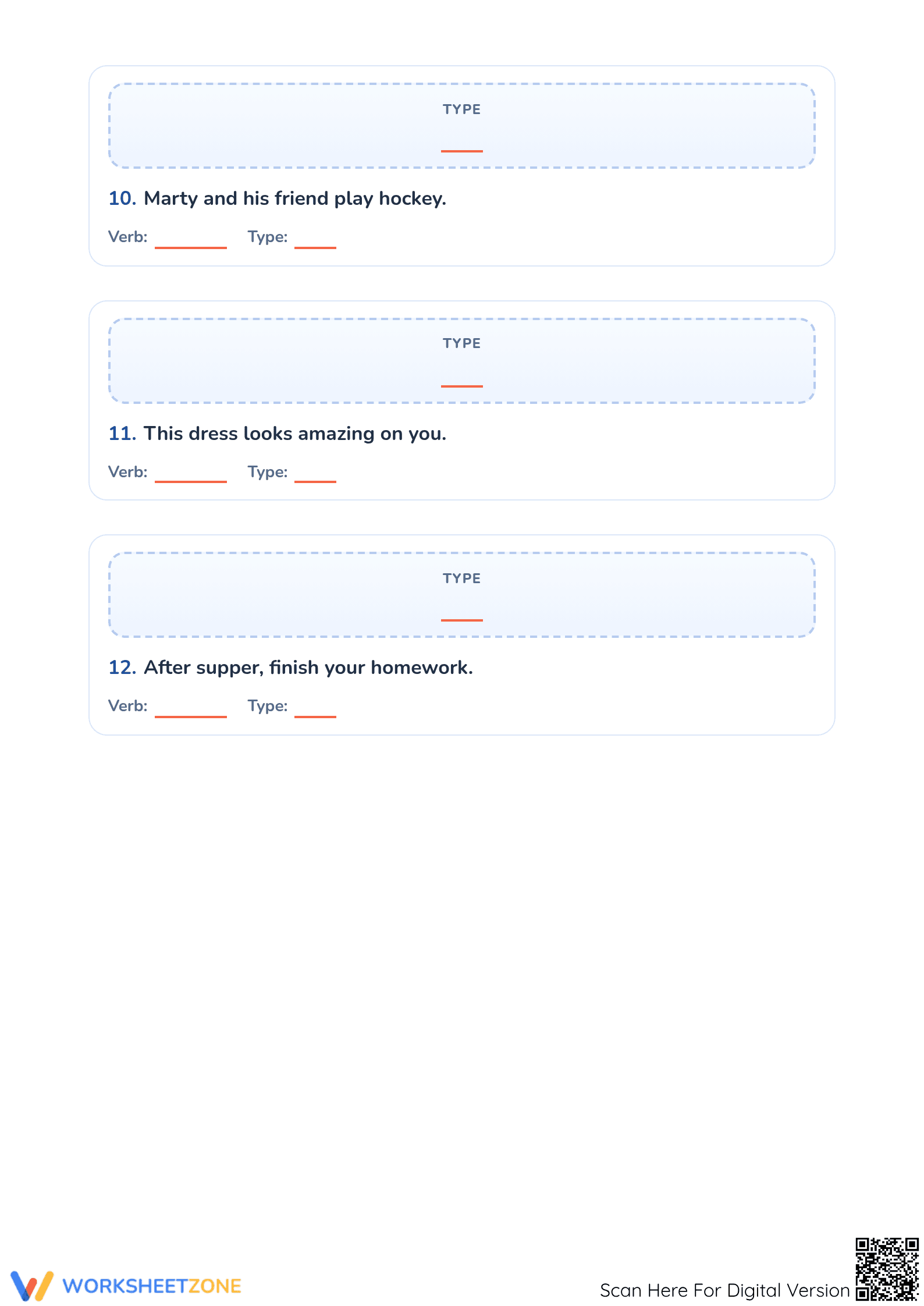
This grammar resource helps students master the distinction between action verbs and linking verbs through 12 targeted practice sentences. By identifying whether a verb expresses a physical or mental action or simply connects the subject to a description, learners improve their overall sentence processing and writing clarity. This worksheet ensures students can confidently categorize lexical word classes.
At a Glance
- Grade: 3 · Subject: ELA
- Standard:
CCSS.ELA-LITERACY.L.3.1.A— Explain the function of verbs in general and in particular sentences- Skill Focus: Action vs. Linking Verbs
- Format: 4 pages · 12 problems · Answer key included · PDF
- Best For: Independent practice and grammar reinforcement
- Time: 20–30 minutes
Inside this 4-page PDF, you will find 12 individual practice cards. Each card features a unique sentence where students must underline the verb and then classify it as an action verb (A) or a linking verb (L). A "Quick Guide" is prominently displayed on the first page, providing clear definitions and examples to support independent work. A comprehensive answer key is included for all 12 tasks.
The zero-prep design allows for immediate classroom implementation. First, print the four-page PDF. Second, distribute the sheets; the built-in "Quick Guide" ensures students can begin immediately without a lengthy teacher introduction. Finally, use the provided answer keys for rapid grading or student self-correction. Total teacher preparation time is under two minutes, making this an ideal solution for unexpected sub plans or morning work.
This resource is aligned with CCSS.ELA-LITERACY.L.3.1.A: "Explain the function of nouns, pronouns, verbs, adjectives, and adverbs in general and their functions in particular sentences." It specifically targets the functional difference between verbs that show action and those that link ideas. Both standard codes can be copied directly into lesson plans, IEP goals, or district curriculum mapping tools.
Use this worksheet as a formative assessment following direct instruction. As students work, circulate and observe if they confuse "state of being" verbs with actions. It also serves as an excellent center activity; the 20–30 minute completion time fits perfectly into a standard ELA rotation block.
This practice set is designed for Grade 3 students but is highly effective for Grade 2 enrichment or Grade 4 review. It is particularly helpful for English Language Learners (ELLs) who need explicit practice with copular verbs. Pair this worksheet with a mentor text where students can hunt for additional examples of linking verbs in professional writing.
According to the RAND AIRS 2024 report, explicit instruction in lexical categories like action and linking verbs is foundational for syntactic complexity in student writing. This worksheet aligns with CCSS.ELA-LITERACY.L.3.1.A by requiring students to not only identify the verb but also categorize its function within a specific sentential context. By distinguishing between transitive actions and copular linking functions, learners build the grammatical awareness necessary for more sophisticated sentence construction. Research from Fisher & Frey (2014) supports this gradual release approach, where the provided "Quick Guide" serves as a scaffold before independent application. Mastery of these verb types is a significant predictor of reading comprehension levels in upper elementary grades, as noted in recent NAEP framework analyses. This resource provides the structured repetition required to move these grammatical concepts from short-term recognition to long-term functional usage.


