


























Views
Downloads

Grade 4 Math Term Review | Essential Printable Guide
Paste this activity's link or code into your existing LMS (Google Classroom, Canvas, Teams, Schoology, Moodle, etc.).
Students can open and work on the activity right away, with no student login required.
You'll still be able to track student progress and results from your teacher account.
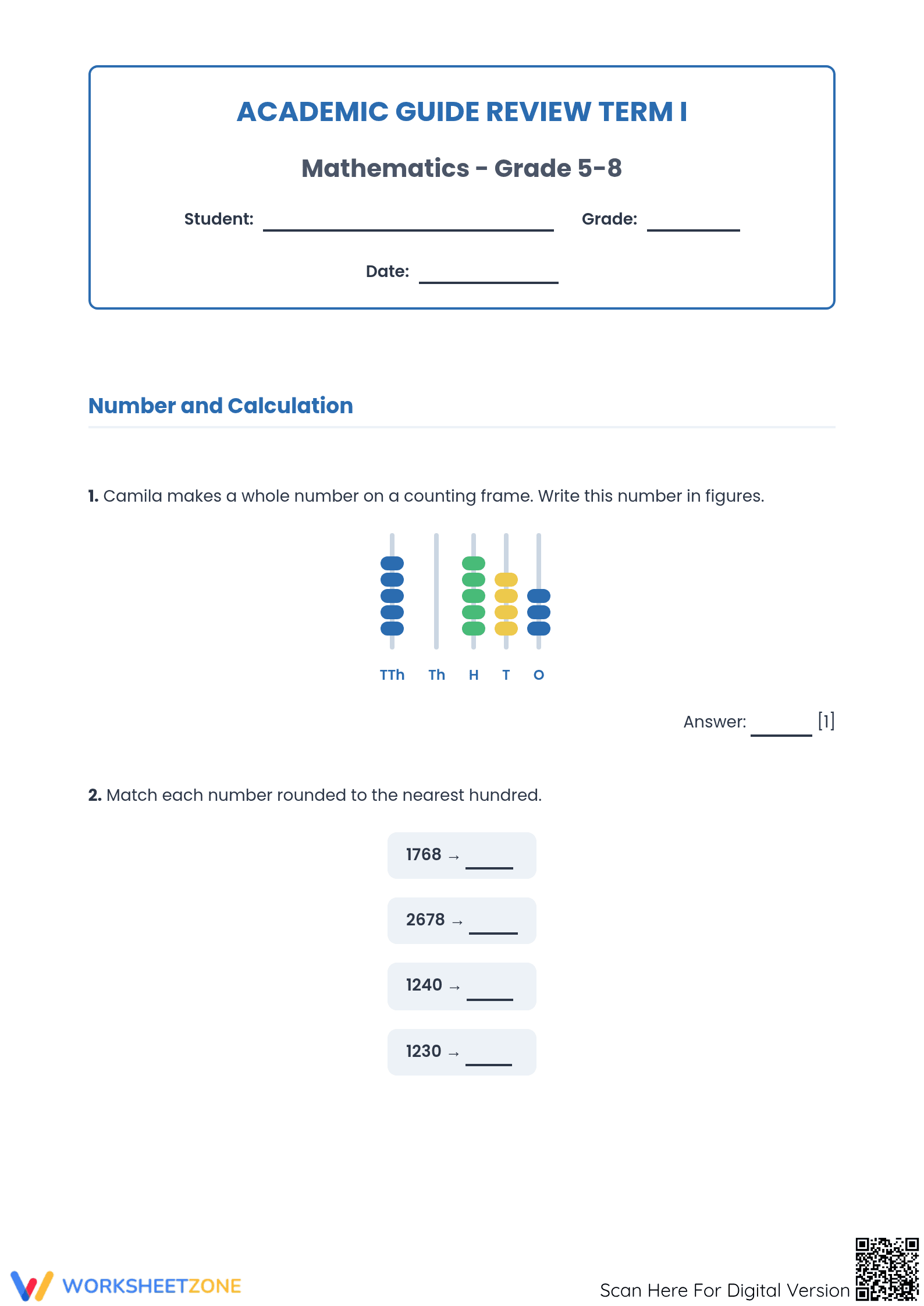
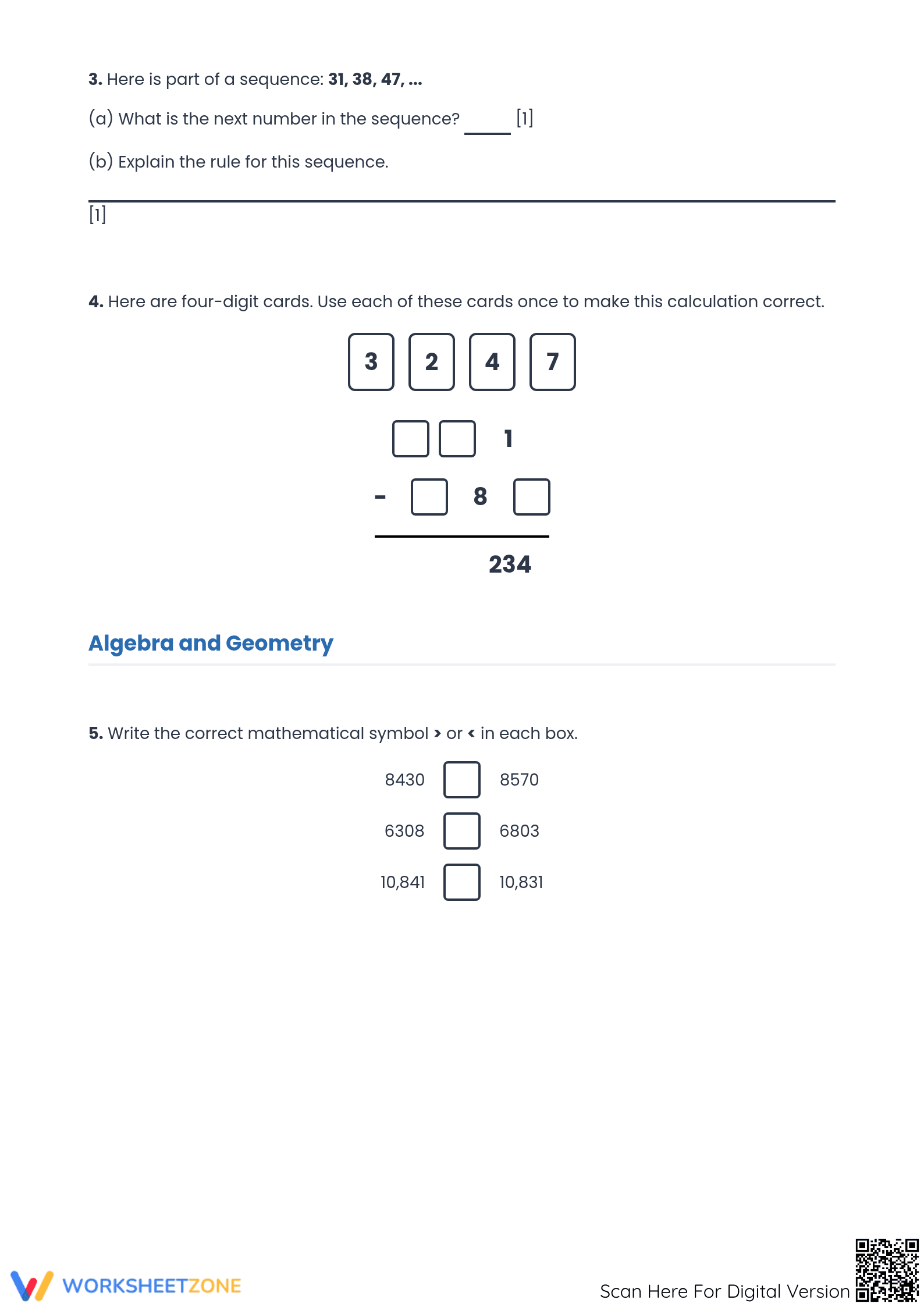
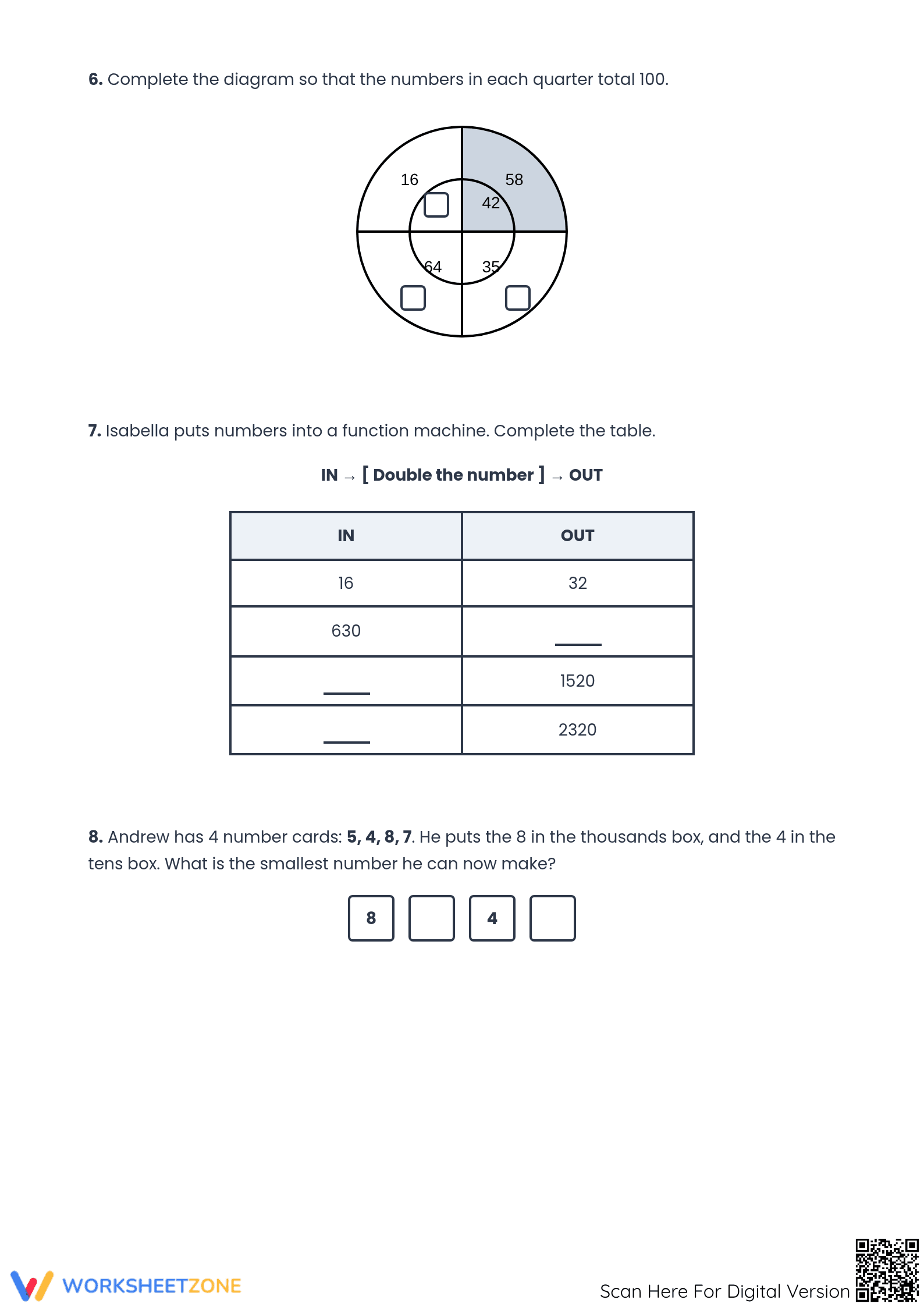
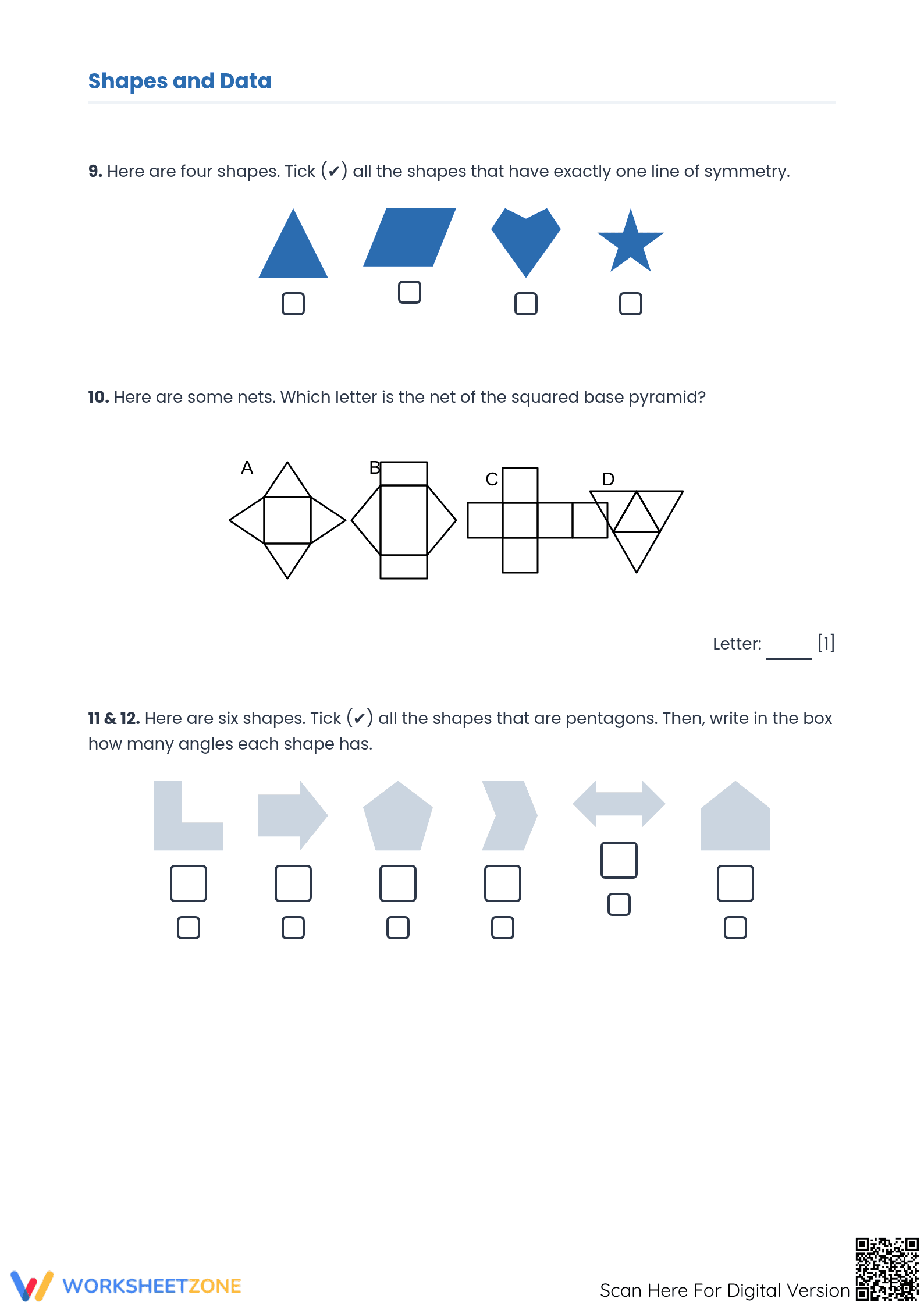
This Grade 4 math review provides a comprehensive assessment of first-term skills, including number operations, algebraic thinking, and geometric properties. Students demonstrate mastery through 14 diverse problems designed to evaluate retention and application across multiple mathematical domains. It serves as a high-quality diagnostic tool for teachers to identify learning gaps before moving into advanced second-term concepts.
At a Glance
- Grade: 4 · Subject: Math
- Standard:
CCSS.MATH.CONTENT.4.NBT.A.3— Use place value understanding to round multi-digit whole numbers to any place- Skill Focus: Multi-domain Math Review
- Format: 5 pages · 14 problems · Answer key included · PDF
- Best For: End-of-term assessment or comprehensive test prep
- Time: 45–60 minutes
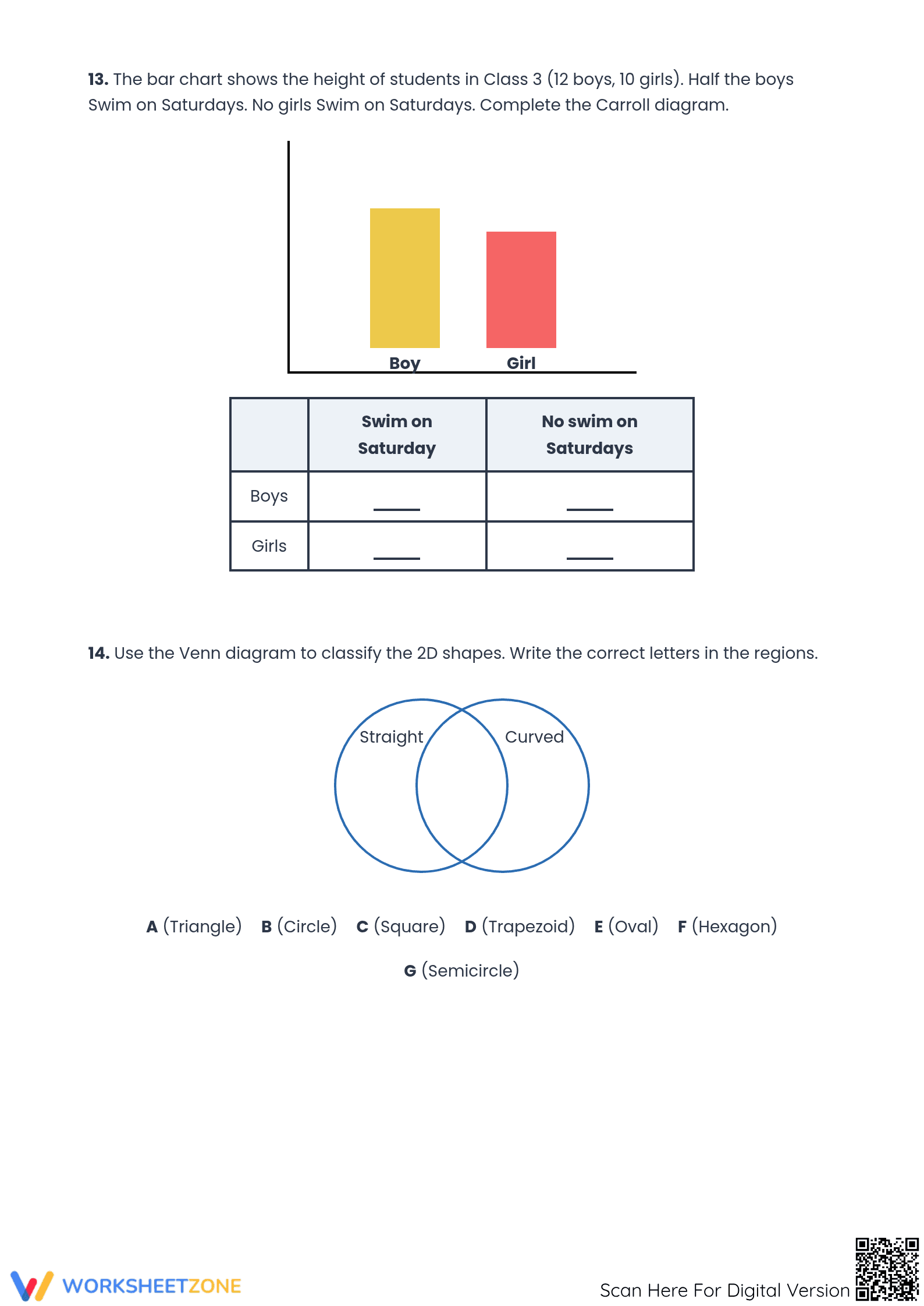
What's Inside: This 5-page packet contains 14 multi-part tasks ranging from visual place value identification using counting frames to complex data classification. The layout includes dedicated sections for Number and Calculation, Algebra and Geometry, and Shapes and Data. A complete answer key is provided, featuring capital-letter response formatting to match the student instructions for easy grading.
Zero-Prep Workflow
- Print (1 Minute): Select the 5-page PDF and print enough copies for your cohort. No additional manipulatives are required as all visual aids, like the counting frame and Venn diagrams, are integrated into the document.
- Distribute (1 Minute): Hand out the packets at the start of a testing block or as a multi-day independent study guide.
- Review (15 Minutes): Use the included answer key to provide immediate feedback or allow students to self-correct during a whole-class review session.
Standards Alignment: This resource is primarily aligned to `CCSS.MATH.CONTENT.4.NBT.A.3`, focusing on rounding and place value. It also supports 4.OA.C.5 through sequence identification and 4.G.A.3 regarding lines of symmetry in 2D shapes. Both standard codes can be copied directly into lesson plans, IEP goals, or district curriculum mapping tools.
How to Use It: Assign this worksheet as a summative assessment at the end of the first term to measure student progress. Alternatively, use it as a robust sub plan, as the clear instructions and varied task types keep students engaged without requiring direct teacher intervention. During the session, observe how students approach the function machine and Carroll diagram to assess their logical reasoning skills. Completion typically takes 45 to 60 minutes.
Who It's For: This packet is designed for Grade 4 students but is highly effective for Grade 5 learners requiring a start-of-year refresher. It pairs naturally with a place value anchor chart or a geometry review lesson. The inclusion of visual scaffolds like nets and bar charts makes it accessible for English Language Learners and students with IEP accommodations.
According to the RAND AIRS 2024 report, comprehensive review cycles that integrate multiple mathematical domains significantly improve long-term retention compared to isolated skill practice. This worksheet facilitates that integration by requiring students to pivot between calculation, algebraic logic, and spatial reasoning within a single session. By utilizing standard CCSS.MATH.CONTENT.4.NBT.A.3 as a foundation, the resource ensures that students have the necessary place value fluency to tackle higher-order operations. Research from Fisher & Frey (2014) suggests that varied task presentation, such as the mix of Venn diagrams and function machines found here, supports cognitive flexibility. This printable guide provides the structured environment needed for students to demonstrate their mathematical proficiency while offering teachers a clear data point for instructional planning.


