


























Views
Downloads
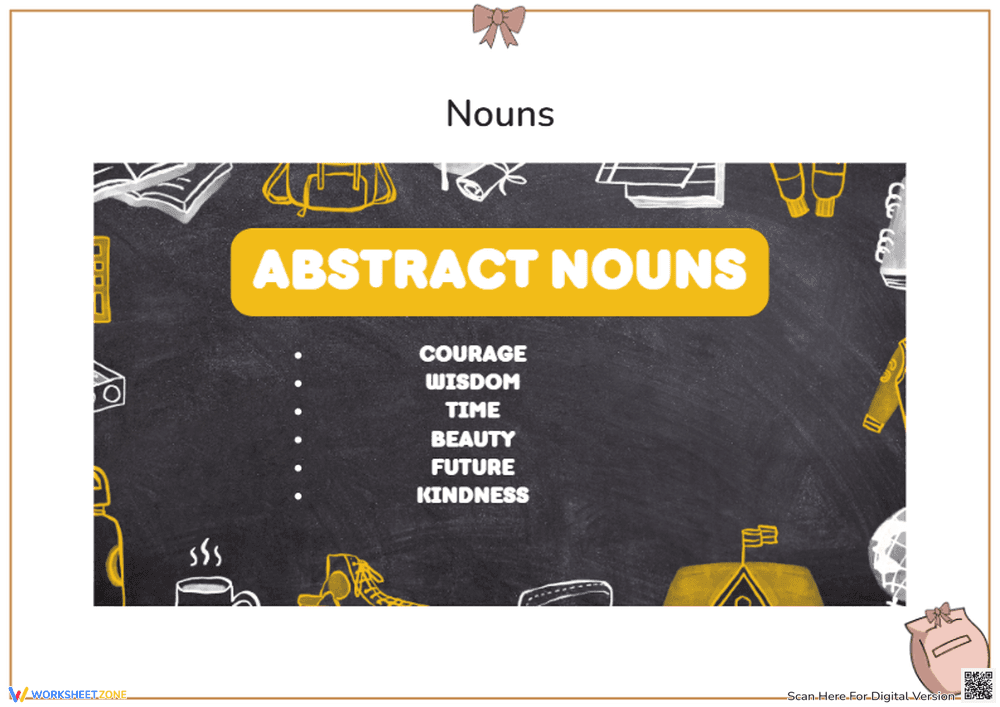

Abstract Nouns Worksheet: Printable Grade 3 Grammar
Paste this activity's link or code into your existing LMS (Google Classroom, Canvas, Teams, Schoology, Moodle, etc.).
Students can open and work on the activity right away, with no student login required.
You'll still be able to track student progress and results from your teacher account.
This printable grammar worksheet helps third-grade students master abstract nouns by identifying non-physical concepts like courage, wisdom, and time. Students practice distinguishing these intangible ideas from concrete nouns, building essential language skills. This resource provides immediate practice to reinforce grammar mechanics and improve sentence writing.
At a Glance
- Grade: Grade 3 · Subject: ELA Grammar
- Standard:
CCSS.ELA-LITERACY.L.3.1.C— Form and use abstract nouns- Skill Focus: Abstract noun identification and usage
- Format: 1 page · 10 problems · Answer key included · PDF
- Best For: Independent practice and quick grammar reviews
- Time: 10–15 minutes
This single-page PDF resource features 10 targeted practice problems designed to reinforce parts of speech. The layout includes a clear definition of abstract nouns alongside examples like beauty and kindness. Students complete fill-in-the-blank sentences and classify words, supported by a clean design that minimizes visual distractions. A complete answer key is provided for rapid grading.
Zero-Prep Workflow
Teachers can integrate this resource into their daily routine with a simple three-step workflow. First, print the single-page PDF, which takes less than 1 minute. Second, distribute the sheets to students for a 10-minute independent activity. Third, review the answers as a class using the included key, requiring only 2 minutes of preparation. This straightforward structure makes the worksheet an ideal option for emergency sub plans or morning work.
Standards Alignment
This activity aligns directly with the Common Core State Standard CCSS.ELA-LITERACY.L.3.1.C, which requires students to form and use abstract nouns. By focusing on words that represent feelings, ideas, and conditions, the worksheet helps students transition from concrete noun usage to more complex sentence structures. Both standard codes can be copied directly into lesson plans, IEP goals, or district curriculum mapping tools.
How to Use It
Use this worksheet as a quick formative assessment immediately following direct instruction on parts of speech. Alternatively, assign it as a quiet morning work activity to review grammar concepts. While students work, walk around and note if they struggle to separate abstract concepts from concrete objects; this observation serves as a quick check for understanding. Most students complete the 10 tasks within 15 minutes.
Who It's For
This resource targets third-grade students learning grammar mechanics, but it also supports second-grade students ready for enrichment. For struggling learners, pair this worksheet with a physical anchor chart listing common abstract nouns for visual reference. It pairs naturally with a reading passage focused on character traits, allowing students to identify abstract nouns like bravery or honesty in context.
Grammar instruction benefits from targeted, isolated practice of specific parts of speech. According to the Fisher & Frey (2014) gradual release of responsibility framework, structured worksheets provide the necessary independent practice phase that solidifies student understanding after direct instruction. This worksheet targets CCSS.ELA-LITERACY.L.3.1.C, focusing on the plain-English skill of identifying and using abstract nouns to describe feelings, ideas, and concepts. By isolating these intangible nouns, students build the linguistic foundation required for advanced reading comprehension and descriptive writing. Research indicates that explicit grammar practice helps young writers transition from simple sentences to complex expressions. This resource serves as a reliable tool for measuring student progress and ensuring mastery of core language standards before moving to advanced syntax.


