


























Views
Downloads
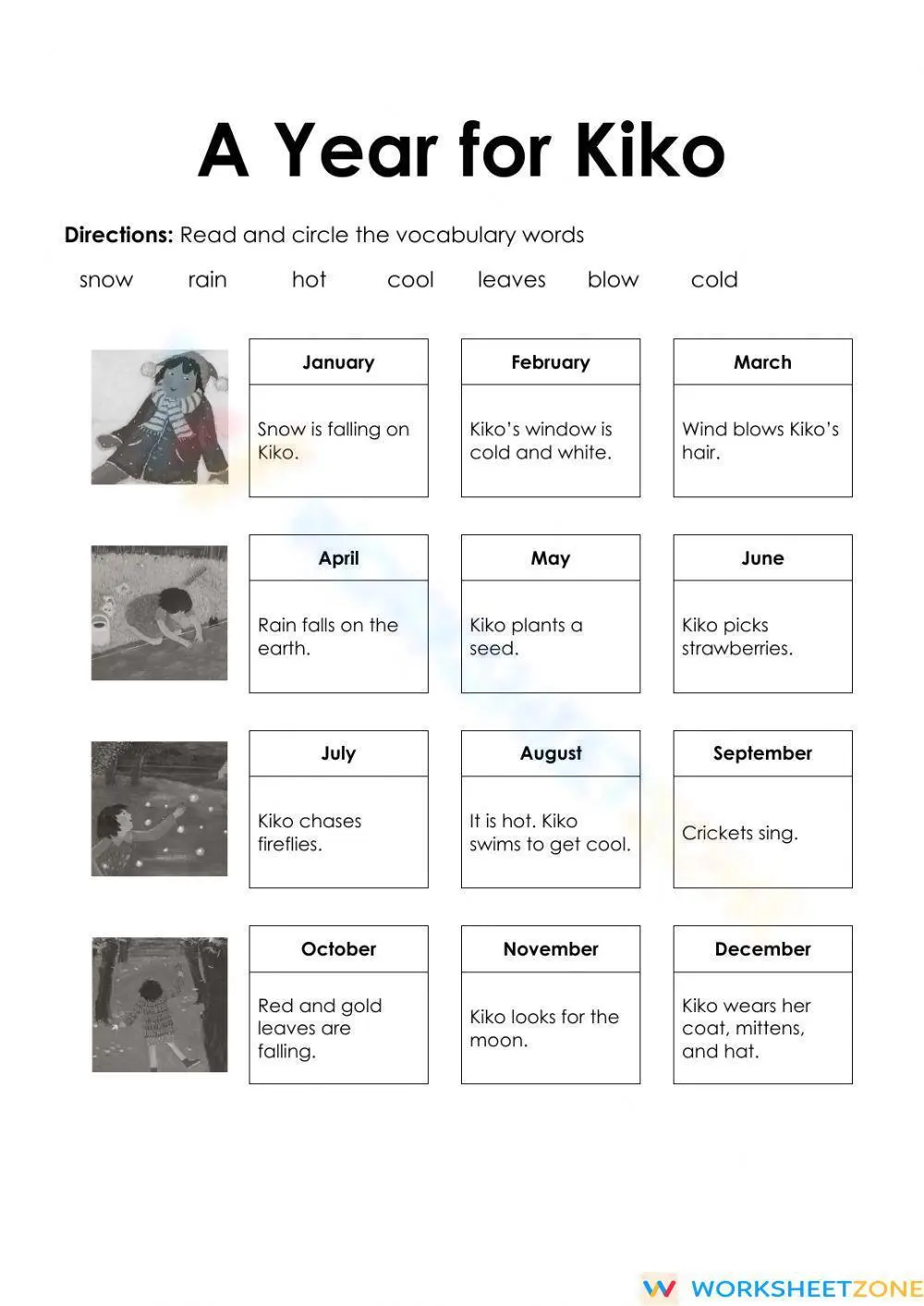

Printable Reading Vocabulary Worksheet | Grade 1-2 ELA
Paste this activity's link or code into your existing LMS (Google Classroom, Canvas, Teams, Schoology, Moodle, etc.).
Students can open and work on the activity right away, with no student login required.
You'll still be able to track student progress and results from your teacher account.
This Grade 1-2 reading comprehension worksheet helps students identify key seasonal vocabulary through a narrative journey across the twelve months of the year. Students engage with sensory language and environmental cues while building essential literacy foundations. By connecting specific words to seasonal changes, learners develop a deeper understanding of descriptive text and temporal relationships.
At a Glance
- Grade: Grade 1 · Subject: ELA
- Standard:
CCSS.ELA-LITERACY.RL.1.4— Identify sensory words and phrases in grade-level stories to determine meaning- Skill Focus: Contextual Vocabulary Identification
- Format: 1 page · 12 sentences · Answer key included · PDF
- Best For: Independent Practice and Seasonal Review
- Time: 15–20 minutes
What's Inside
This single-page PDF features 12 illustrated boxes, each representing a month from January to December. Within each box, Kiko experiences a specific weather event or seasonal activity described in a simple sentence. The worksheet includes a clear word bank of 7 target vocabulary words—including "snow," "leaves," and "cool"—to guide student discovery and circling tasks.
Zero-Prep Workflow
The zero-prep workflow allows for immediate classroom integration. First, print the single-page document in approximately 30 seconds. Second, distribute it to students for a morning warm-up or literacy center activity (1 minute). Finally, use the included answer key for quick individual or whole-group review in under 1 minute. This structure is ideal for emergency sub plans or supplemental literacy blocks.
Standards Alignment
This resource aligns with `CCSS.ELA-LITERACY.RL.1.4`, focusing on identifying words that suggest feelings or appeal to the senses. By isolating seasonal sensory language like "cold," "hot," and "blow," students master the connection between environmental context and vocabulary meaning. Both standard codes can be copied directly into lesson plans, IEP goals, or district curriculum mapping tools.
How to Use It
Use this worksheet as a formative assessment after introducing the concept of seasons or as a quiet independent task during literacy rotations. Teachers can observe if students correctly associate the vocabulary words with the corresponding monthly descriptions. Expect students to complete the circling task in approximately 15 to 20 minutes depending on their reading fluency levels.
Who It's For
This activity is designed for first and second-grade students, particularly those developing early reading comprehension skills. It provides excellent scaffolding for English Language Learners through simple sentence structures and visual month-by-month sequencing. Pair this worksheet with a seasonal picture book or an anchor chart detailing the characteristics of the four seasons.
The "A Year for Kiko" worksheet provides a structured approach to early literacy by embedding vocabulary acquisition within a predictable monthly cycle. Research from RAND AIRS 2024 emphasizes that contextualized word recognition is significantly more effective than isolated rote memorization for primary grade learners. By requiring students to locate specific terms like "snow" and "rain" within the narrative of Kiko’s year, the resource reinforces the semantic links between temporal concepts and sensory descriptions. This pedagogical strategy aligns with findings from Fisher & Frey (2014) regarding the importance of high-frequency word exposure within authentic reading tasks. Educators can utilize the standard CCSS.ELA-LITERACY.RL.1.4 to track student progress in identifying sensory language. This worksheet ensures that students move beyond simple decoding toward meaningful interpretation of descriptive phrases, a critical milestone in reading development. The inclusion of a clear word bank further supports independent mastery for diverse learners.


