


























Views
Downloads

Printable Baseball Coloring Page | Grade K-2 Art
Paste this activity's link or code into your existing LMS (Google Classroom, Canvas, Teams, Schoology, Moodle, etc.).
Students can open and work on the activity right away, with no student login required.
You'll still be able to track student progress and results from your teacher account.
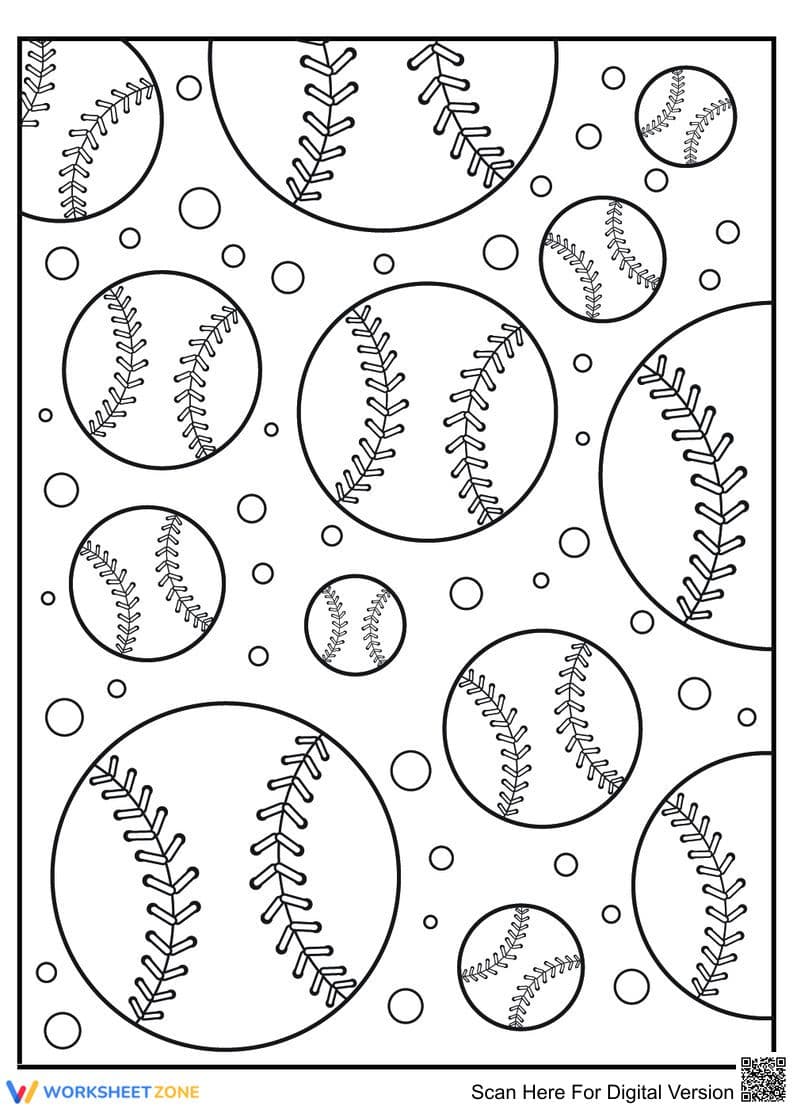
This engaging baseball coloring page provides early learners with a fun, creative outlet while developing essential fine motor control. Students practice grip and hand-eye coordination as they color various sizes of baseballs, building the physical foundation needed for early writing tasks.
At a Glance
- Grade: K · Subject: English
- Standard:
CCSS.ELA-LITERACY.SL.K.5— Add visual displays to descriptions- Skill Focus: Fine motor control
- Format: 1 page · 1 activity · No answer key · PDF
- Best For: Morning work or centers
- Time: 10–15 minutes
This single-page printable features a dynamic pattern of baseballs in multiple sizes, surrounded by smaller bubbles and circles. The bold, clear line art ensures young students can easily identify the boundaries for coloring. With no complex instructions or reading required, this visual activity is entirely self-contained and ready for immediate classroom use.
Zero-Prep Workflow
This resource is designed for maximum efficiency, requiring under two minutes of teacher preparation:
- Print (1 minute): Simply download the PDF and print the required number of copies. The black-and-white design is highly ink-efficient.
- Distribute (1 minute): Hand out the sheets along with crayons, markers, or colored pencils. No additional materials are needed.
- Review (0 minutes): Because this is an open-ended creative task, there is no grading or answer key to manage.
This streamlined process makes it an excellent choice for emergency sub plans or unexpected schedule changes.
Standards Alignment
This activity supports CCSS.ELA-LITERACY.SL.K.5 by encouraging students to add drawings or other visual displays to descriptions as desired to provide additional detail. While primarily a fine motor task, coloring helps students develop the hand strength and precision necessary for formal writing and visual communication. Both standard codes can be copied directly into lesson plans, IEP goals, or district curriculum mapping tools.
How to Use It
This worksheet serves as an excellent morning work activity. As students arrive, they can immediately begin coloring, creating a calm and focused classroom environment before formal instruction begins. Alternatively, use it as a transition activity during literacy centers. Teachers can observe students' pencil grip and coloring pressure, providing a quick formative assessment of their fine motor development. The activity typically takes 10 to 15 minutes to complete.
Who It's For
This resource is primarily designed for Kindergarten and first-grade students who are refining their fine motor skills. It naturally accommodates varying ability levels, as students can choose to color simply or add intricate patterns to the baseballs. Pair this coloring page with a read-aloud book about sports or a direct instruction lesson on the letter "B" to reinforce thematic vocabulary.
Developing fine motor skills through activities like coloring is a critical precursor to early writing success. This resource aligns with CCSS.ELA-LITERACY.SL.K.5, helping students add visual displays to descriptions by building the physical dexterity required for drawing and writing. According to a RAND AIRS 2024 report on early childhood development, structured fine motor tasks significantly improve pencil grip, hand-eye coordination, and sustained attention in young learners. By engaging with this baseball-themed activity, students practice staying within boundaries and controlling their writing instruments, which directly translates to improved letter formation later in the academic year. Teachers can confidently integrate this developmentally appropriate task into their daily routines, knowing it provides foundational support for broader literacy goals while keeping students actively engaged in a low-stress, creative endeavor.


