


























Views
Downloads

Grade 6 Reading Comprehension | Printable ELA Worksheet
Paste this activity's link or code into your existing LMS (Google Classroom, Canvas, Teams, Schoology, Moodle, etc.).
Students can open and work on the activity right away, with no student login required.
You'll still be able to track student progress and results from your teacher account.
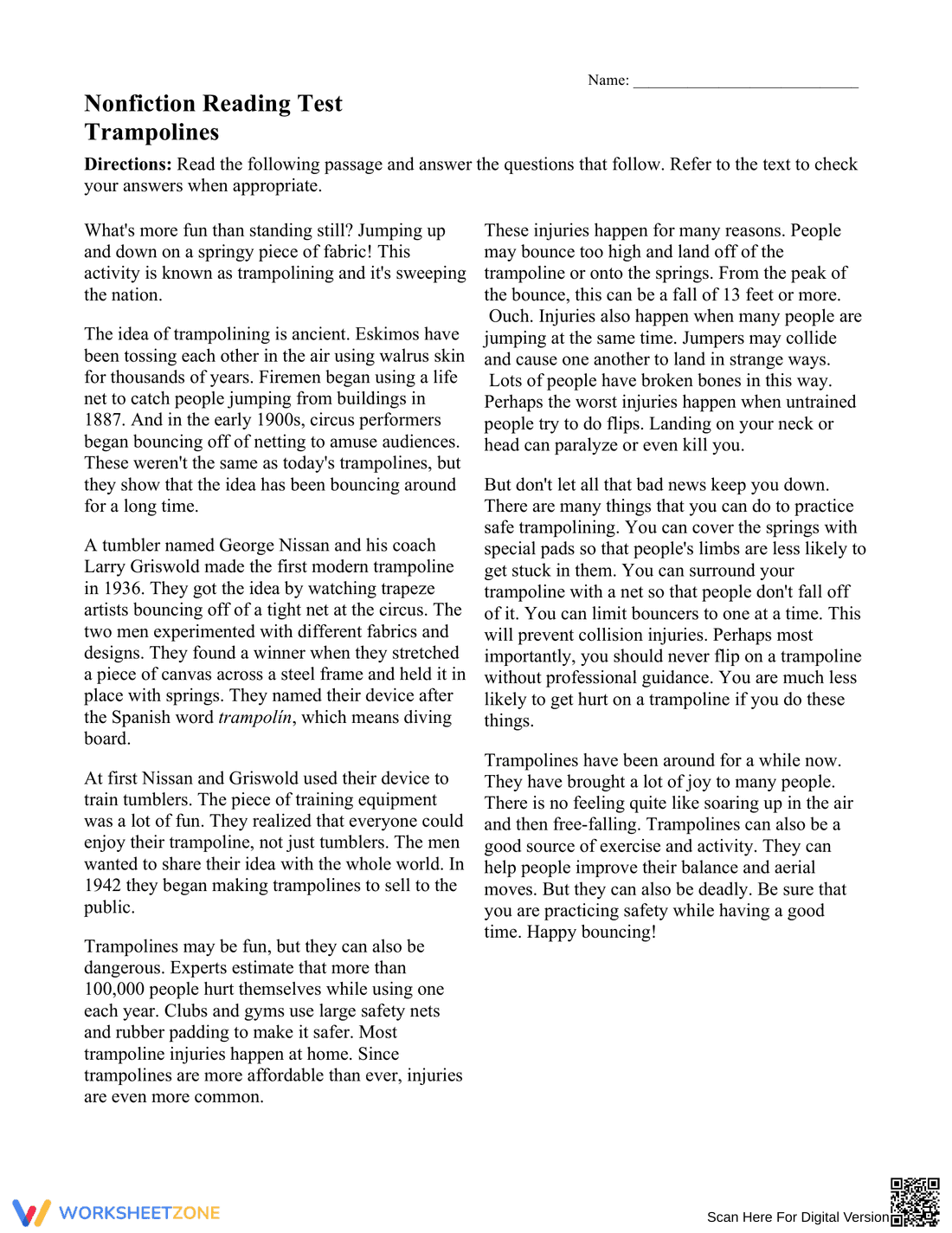
This Grade 6 reading comprehension worksheet builds essential skills in analyzing informational text and citing textual evidence. Students read a high-interest passage about trampolines and complete targeted questions that measure their ability to identify main ideas, determine author's purpose, and construct evidence-based written responses.
At a Glance
- Grade: 6 · Subject: ELA
- Standard:
CCSS.ELA-LITERACY.RI.6.1— Cite textual evidence to support analysis of the text- Skill Focus: Reading Comprehension and Textual Evidence
- Format: 4 pages · 13 problems · Answer key included · PDF
- Best For: Independent practice and assessment
- Time: 30–45 minutes
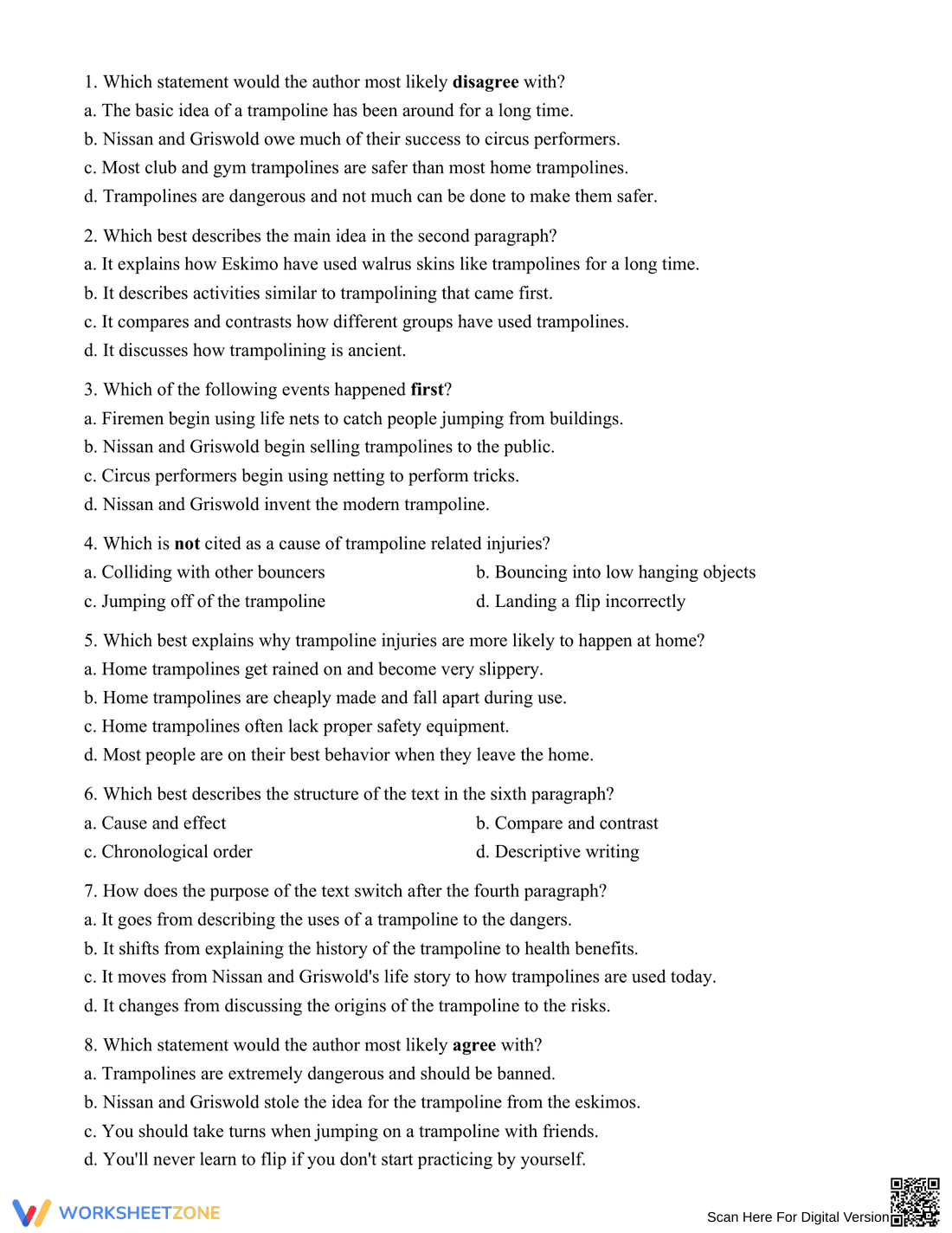
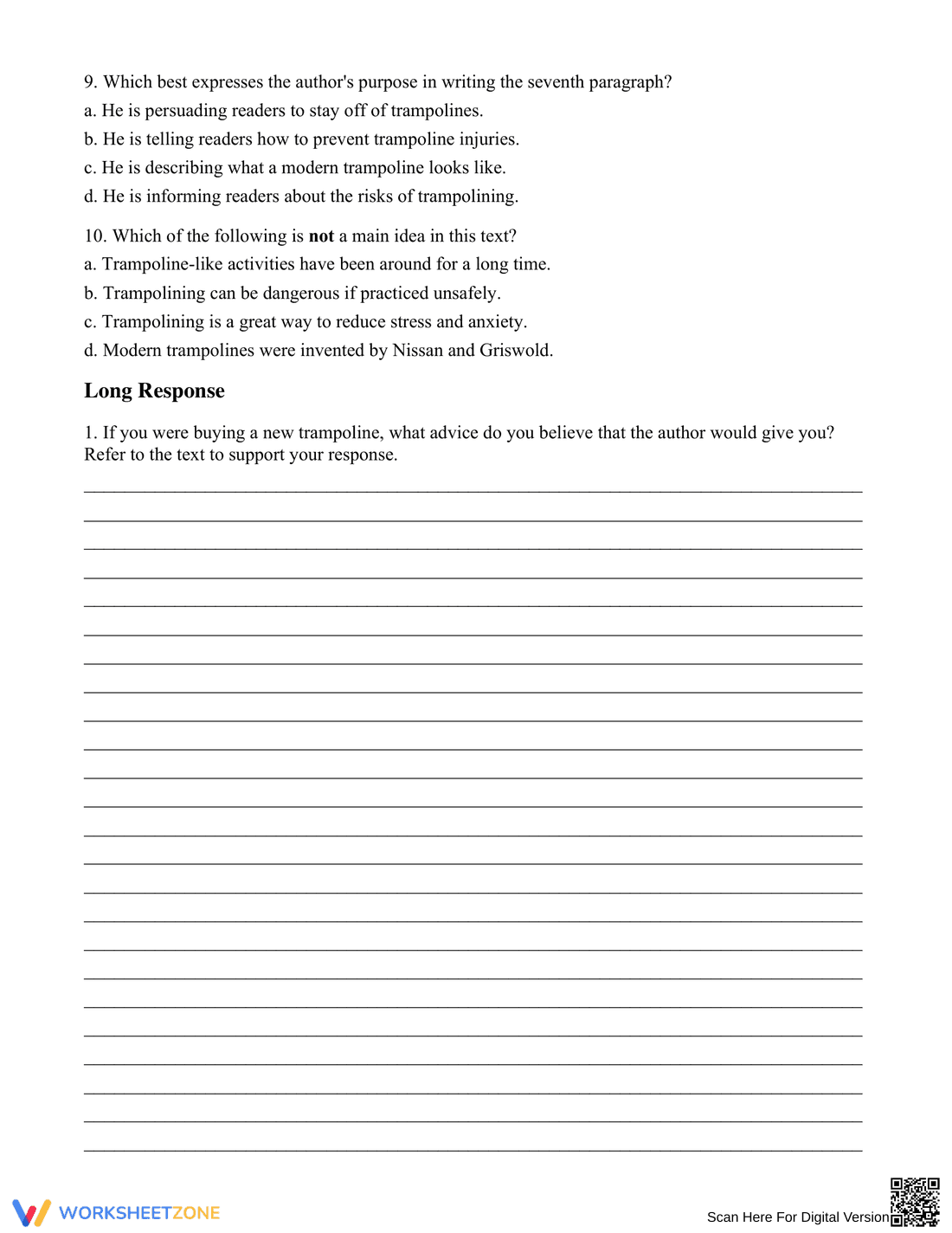
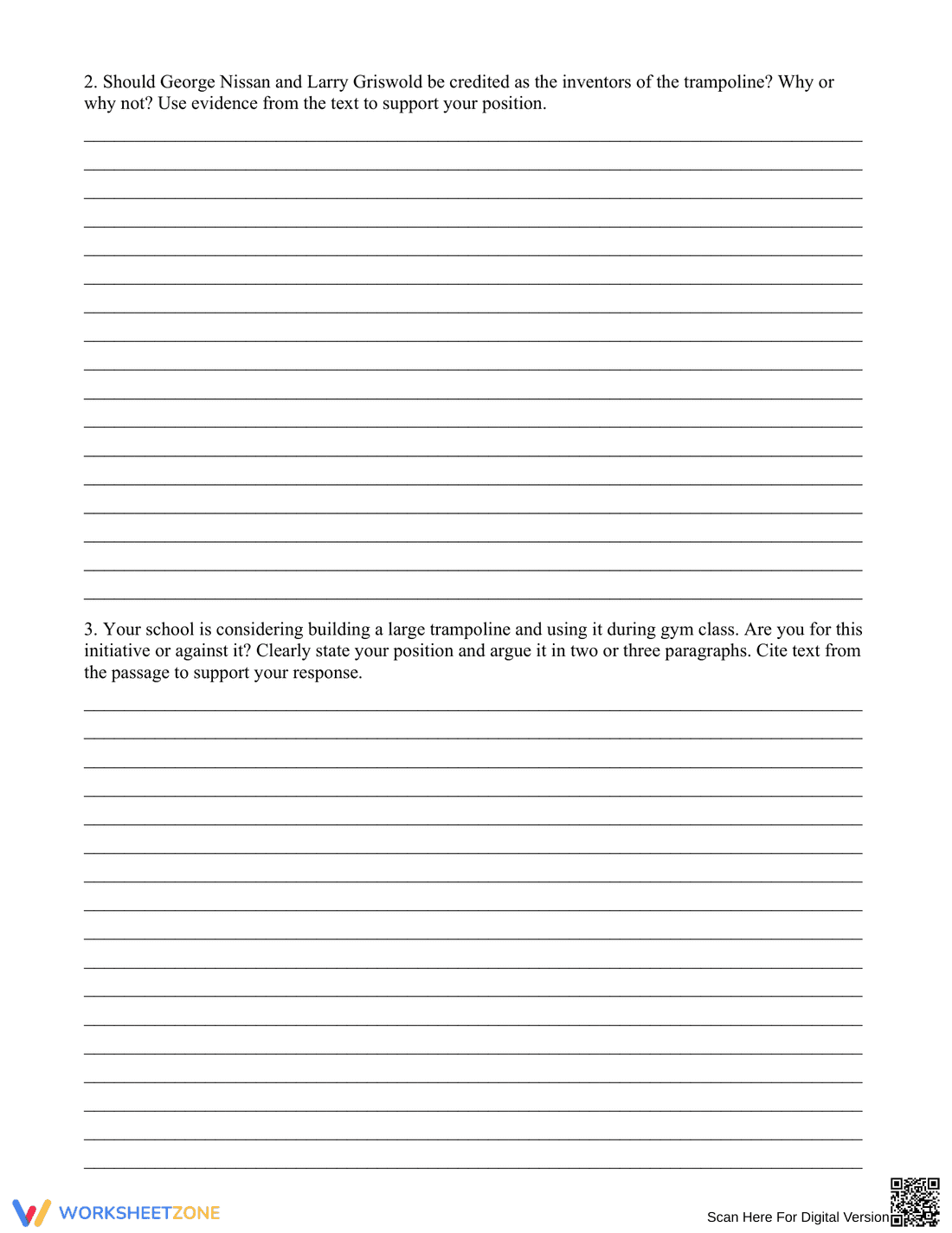
This comprehensive four-page packet features a multi-paragraph nonfiction passage detailing the history and safety of trampolines. Following the text, students tackle ten multiple-choice questions that assess text structure, chronological order, and central ideas. The final two pages provide three extended-response prompts where learners must construct multi-paragraph arguments and cite specific evidence directly from the reading passage.
This resource is designed for immediate classroom implementation with a simple three-step workflow. First, print the four-page packet (under one minute). Next, distribute the passage and question sets to students (one minute). Finally, review the expectations for the long-response questions (two minutes). Total teacher prep time is under five minutes, making this an excellent, self-explanatory option for emergency sub plans or independent reading blocks.
This material is aligned to CCSS.ELA-LITERACY.RI.6.1, requiring students to cite textual evidence to support analysis of what the text says explicitly as well as inferences drawn from the text. It also supports RI.6.2 by asking students to determine central ideas. Both standard codes can be copied directly into lesson plans, IEP goals, or district curriculum mapping tools.
Deploy this worksheet during independent reading stations or as a summative assessment after direct instruction on informational text analysis. As a formative assessment tip, monitor students while they complete the long-response section to ensure they are actively pulling quotes rather than summarizing from memory. Expected completion time ranges from 30 to 45 minutes depending on writing speed.
This resource is optimized for sixth-grade general education students developing their informational reading proficiency. The structured multiple-choice section provides a natural scaffold before students attempt the more rigorous written responses, supporting learners who need gradual progression. Pair this passage with a direct instruction lesson on identifying reliable evidence to maximize student success.
Mastering CCSS.ELA-LITERACY.RI.6.1 requires students to consistently cite textual evidence to support analysis of the text. According to EdReports 2024, middle school students who engage with high-interest nonfiction texts and immediately apply their comprehension through evidence-based writing show significant gains in overall literacy metrics. This specific skill bridges the gap between passive reading and active critical thinking, ensuring learners do not just consume information but can defend their interpretations using concrete facts. By practicing with structured multiple-choice and extended-response formats, students build the stamina required for standardized assessments and advanced academic writing. Regular exposure to these rigorous, text-dependent tasks is a proven method for developing long-term reading proficiency and analytical confidence across all core subjects. When educators prioritize direct text citation, they equip students with the foundational tools necessary for high school readiness and beyond.


