


























Views
Downloads
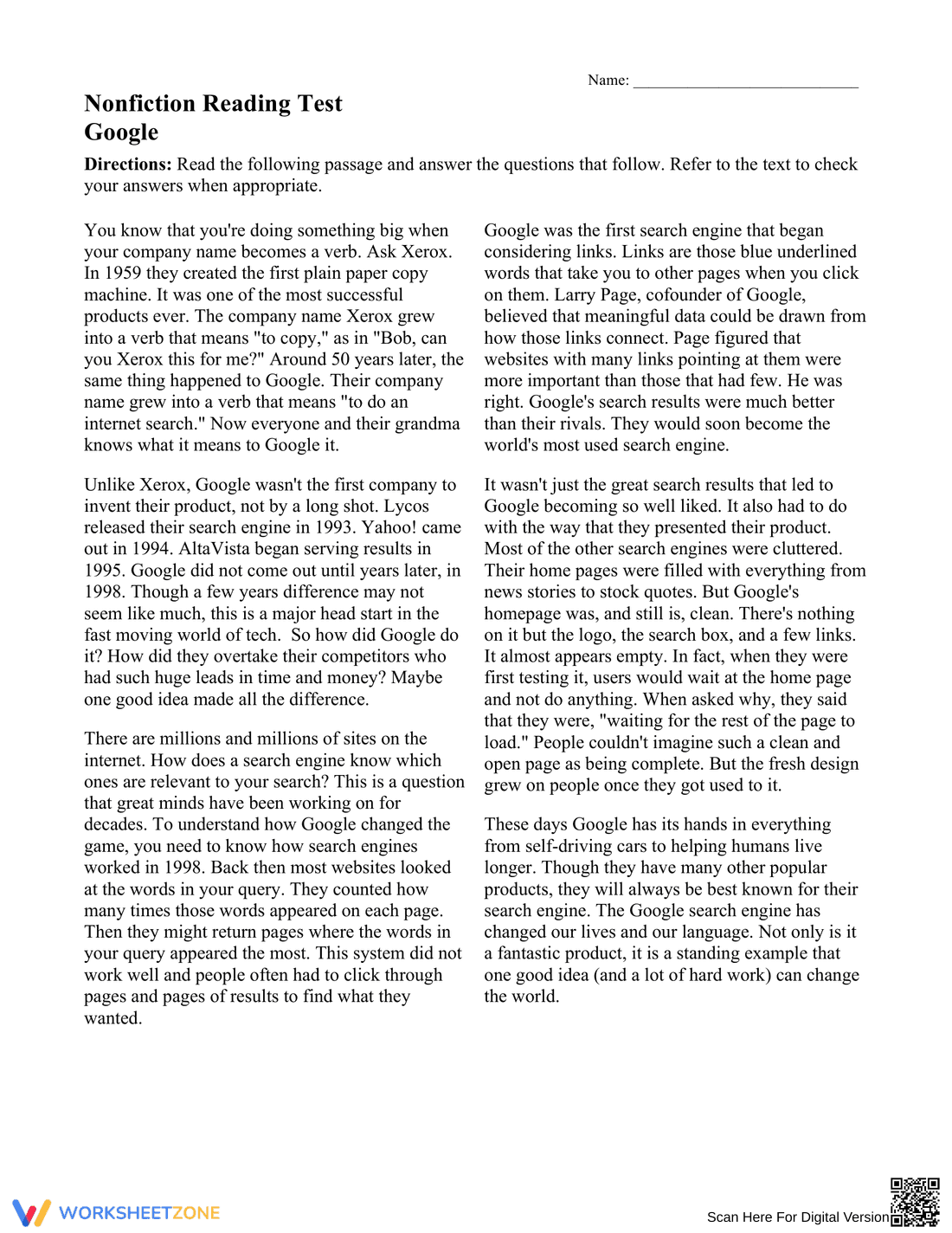
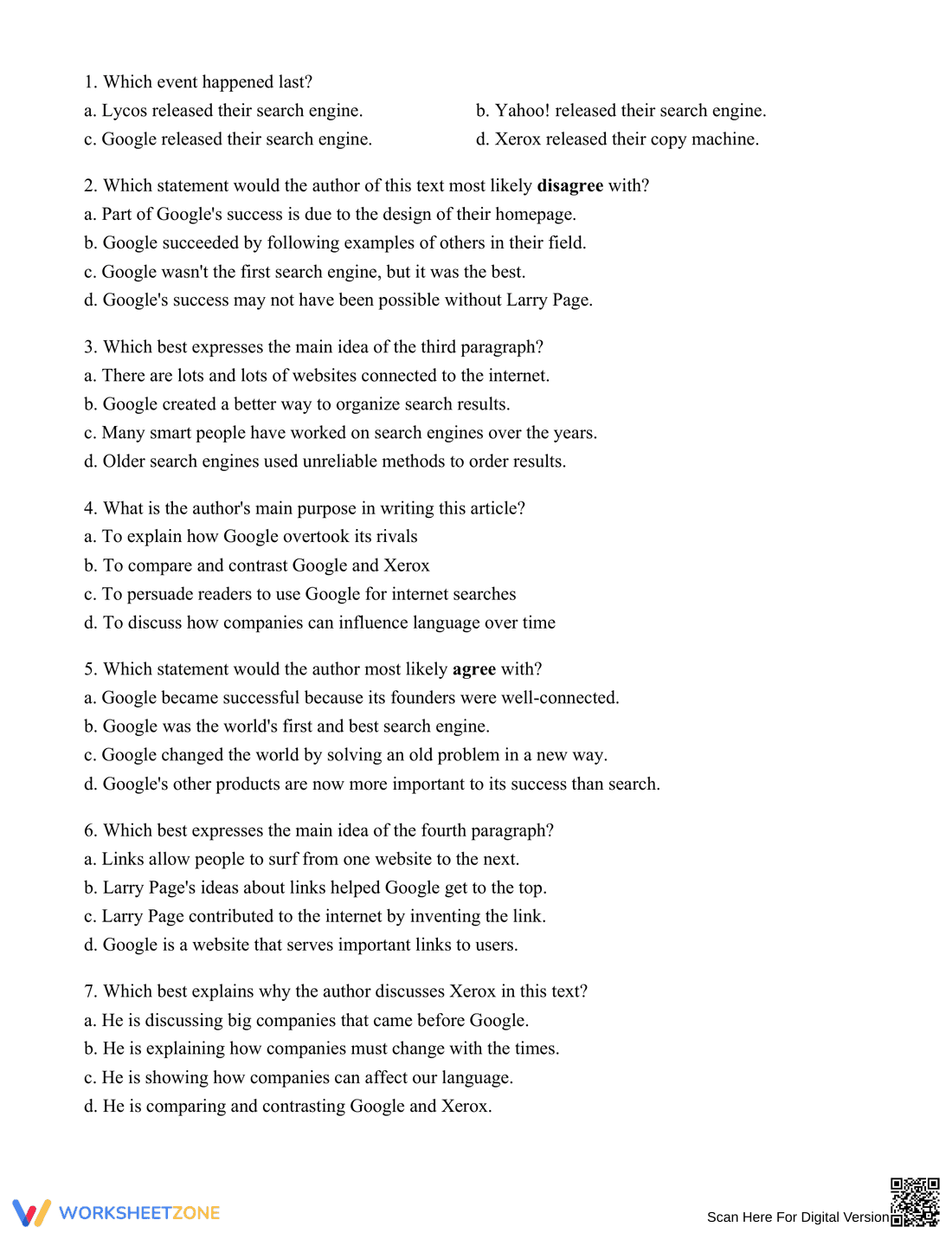
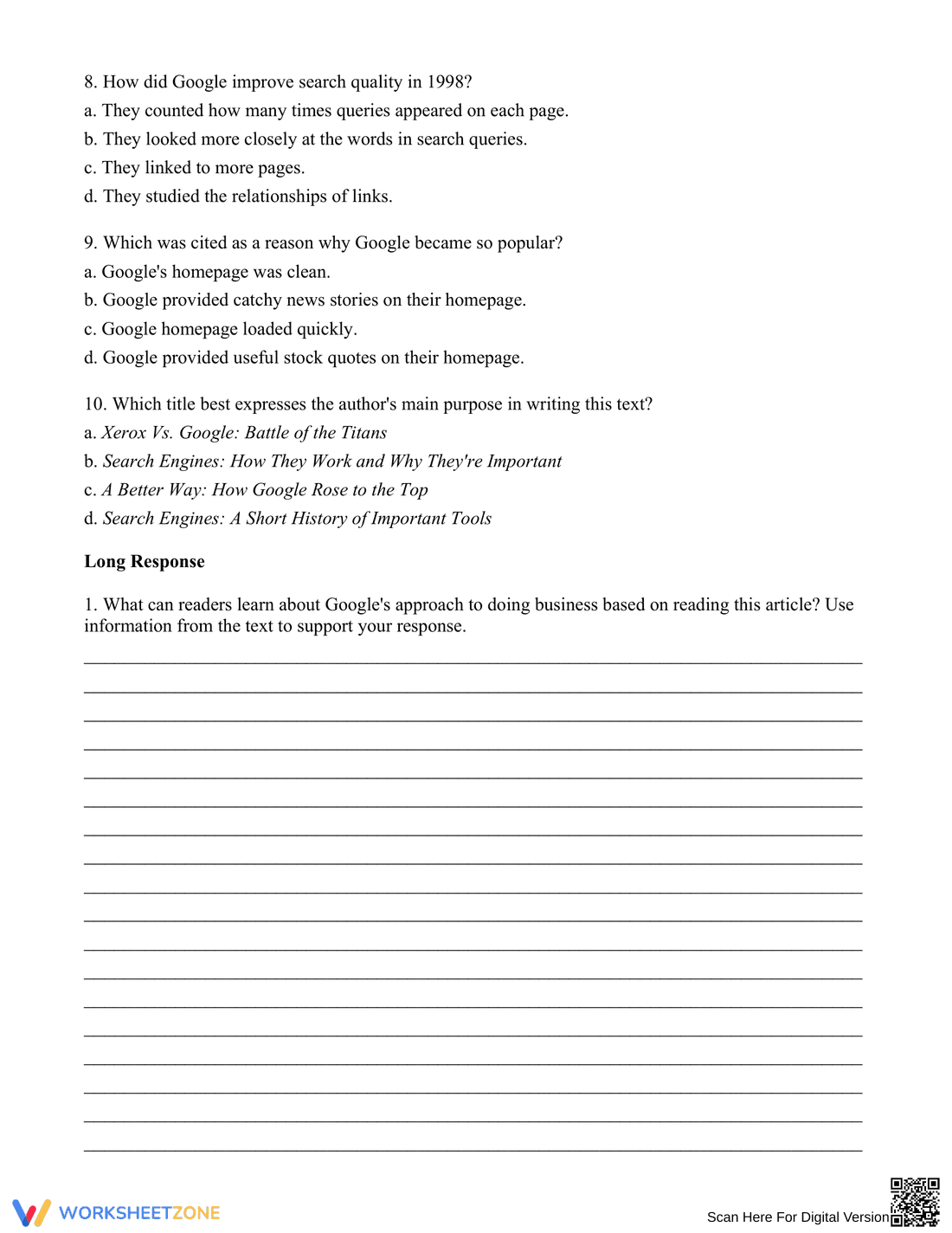
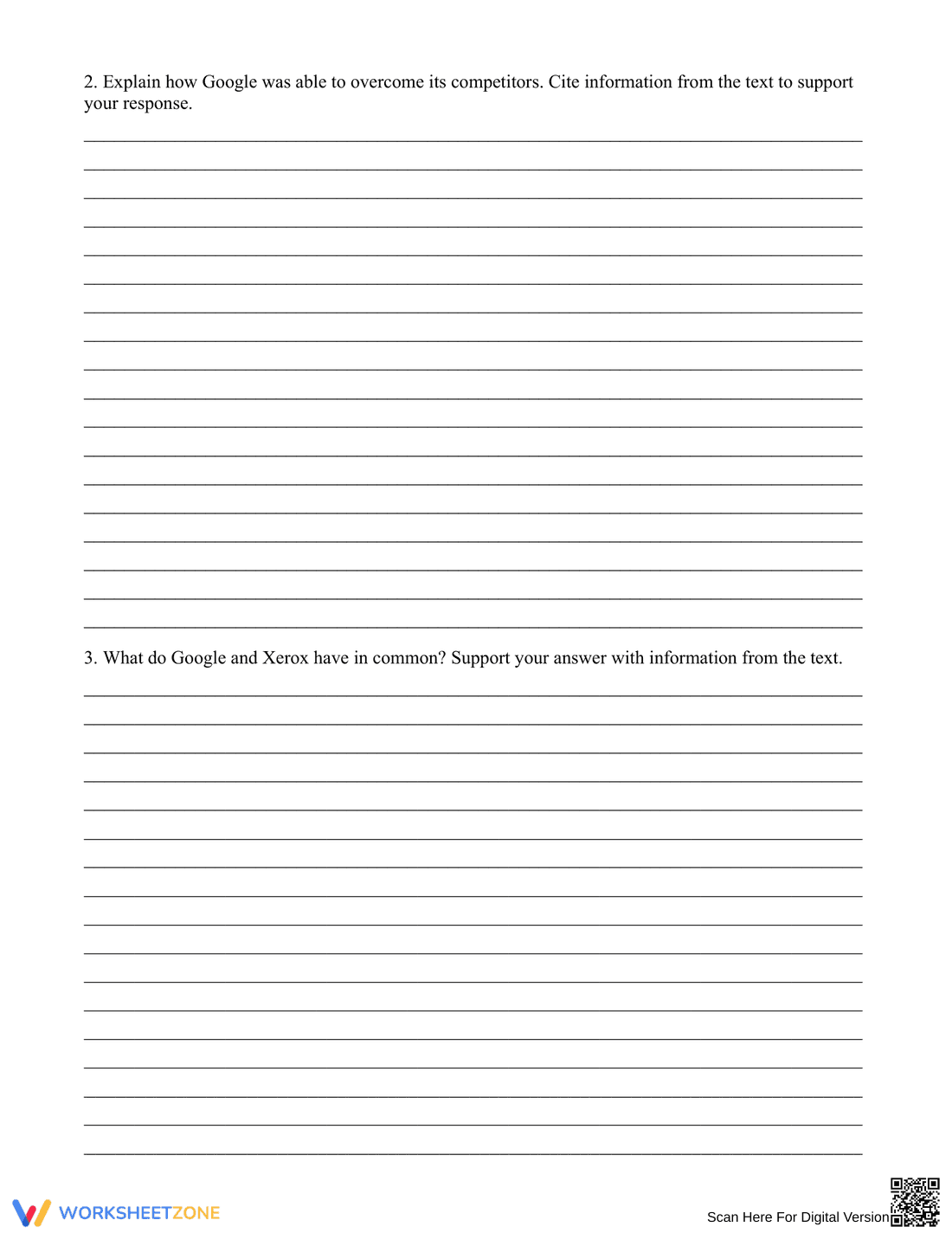

Essential Grade 6 Nonfiction Reading Test: Google
Paste this activity's link or code into your existing LMS (Google Classroom, Canvas, Teams, Schoology, Moodle, etc.).
Students can open and work on the activity right away, with no student login required.
You'll still be able to track student progress and results from your teacher account.
This Grade 6 nonfiction reading comprehension worksheet helps students master informational text analysis through an engaging history of Google. Students practice identifying main ideas, determining author's purpose, and citing textual evidence to support complex claims. It transforms a standard reading exercise into a rigorous assessment of critical literacy skills.
At a Glance
- Grade: 6 · Subject: ELA
- Standard:
CCSS.ELA-LITERACY.RI.6.1— Cite textual evidence to support analysis of what the text says explicitly.- Skill Focus: Nonfiction Comprehension
- Format: 4 pages · 13 problems · Answer key included · PDF
- Best For: Formative assessment and test preparation
- Time: 35–45 minutes
What's Inside
This 4-page resource features a comprehensive nonfiction passage detailing the rise of Google and its impact on technology. The packet includes 10 rigorous multiple-choice questions targeting specific reading skills and 3 long-response prompts that require students to synthesize information and provide written evidence from the text. A clear layout ensures students have ample space for detailed writing.
Skill Progression
- Guided practice: The initial multiple-choice questions focus on literal recall and chronological sequencing of events to build student confidence and establish a factual baseline.
- Supported practice: Middle-tier questions require students to identify the main idea of specific paragraphs and infer the author's perspective using provided context clues.
- Independent practice: The final long-response section challenges students to construct original arguments about business strategy and competition using direct quotes from the passage.
This gradual-release model ensures students move from basic comprehension to high-level analysis within a single session.
Standards Alignment
The primary focus is `CCSS.ELA-LITERACY.RI.6.1`, which requires students to cite textual evidence to support analysis of what the text says explicitly as well as inferences drawn from the text. It also supports RI.6.2 regarding central ideas and RI.6.6 regarding author's purpose. Both standard codes can be copied directly into lesson plans, IEP goals, or district curriculum mapping tools.
How to Use It
Use this worksheet as a mid-unit formative assessment during your informational text module. Assign the reading and multiple-choice sections during class, then use the long-response questions as a collaborative "think-pair-share" activity to observe how students justify their answers. Completion typically takes 40 minutes, making it an ideal fit for a standard class period.
Who It's For
This resource is designed for Grade 6 ELA students, including those needing extra support with evidence-based writing. It pairs naturally with an anchor chart on "Citing Evidence" or a direct instruction lesson on the history of the internet and search engine optimization.
According to the RAND AIRS 2024 report on literacy instruction, the ability to synthesize informational text is a primary predictor of middle school academic success. This worksheet targets CCSS.ELA-LITERACY.RI.6.1 by requiring students to move beyond surface-level reading to deep textual analysis. By engaging with 13 distinct tasks, students practice the specific skill of citing evidence to support claims, a core requirement of the National Assessment of Educational Progress (NAEP) frameworks. Research from Fisher & Frey (2014) emphasizes that complex nonfiction passages, like this history of Google, provide the necessary productive struggle for Grade 6 learners to develop cognitive endurance. This printable resource offers a structured environment for students to demonstrate mastery of informational text structures while providing teachers with clear data points for progress monitoring. It is an essential tool for any classroom focused on rigorous, standards-aligned ELA instruction.


