


























Views
Downloads

Printable Decimal Operations Worksheet | Grade 5 Math
Paste this activity's link or code into your existing LMS (Google Classroom, Canvas, Teams, Schoology, Moodle, etc.).
Students can open and work on the activity right away, with no student login required.
You'll still be able to track student progress and results from your teacher account.
This Grade 5 decimal operations worksheet provides a comprehensive review of essential place value and computational skills. Students master adding, subtracting, multiplying, and dividing decimals through structured practice. By completing these exercises, learners gain the confidence needed for advanced fifth-grade mathematics and middle school readiness.
At a Glance
- Grade: 5 · Subject: Math
- Standard:
CCSS.MATH.CONTENT.5.NBT.B.7— Add, subtract, multiply, and divide decimals to hundredths- Skill Focus: Comprehensive multi-operation decimal computation and place value
- Format: 5 high-quality pages · 60 unique problems · Full answer key included · PDF
- Best For: Homework assignments, structured math centers, or quick formative assessment
- Time: 45–60 minutes of focused classroom work
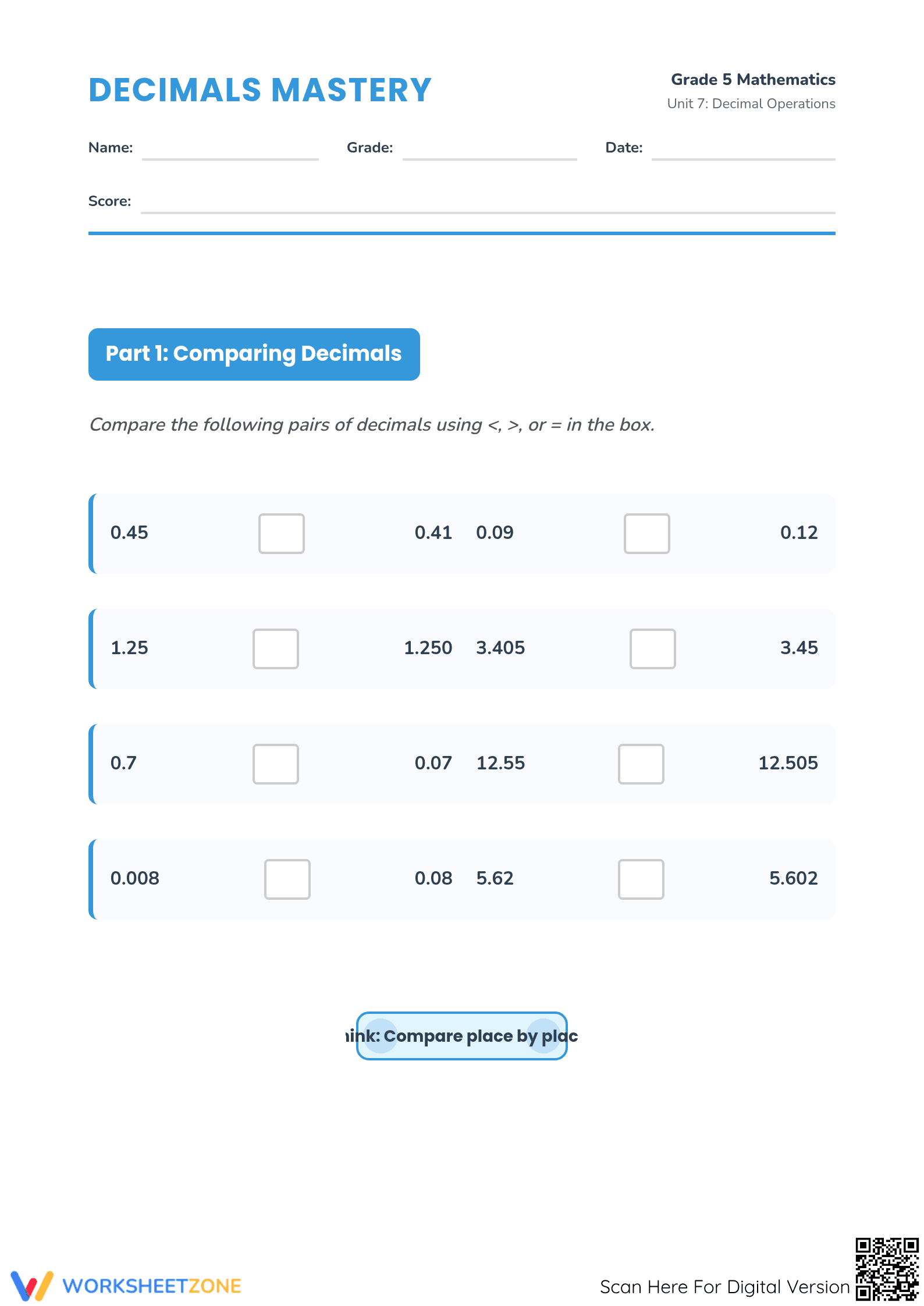
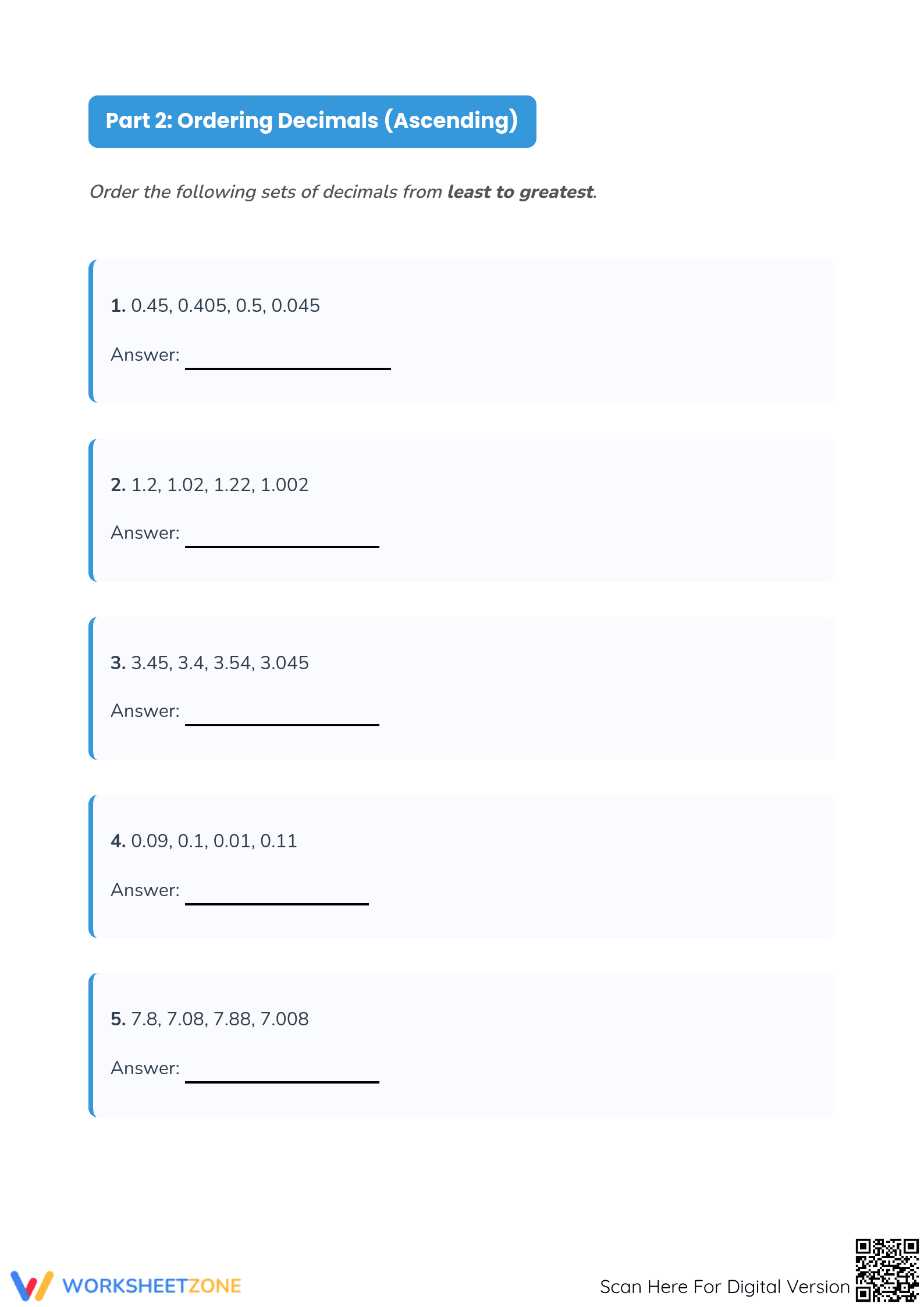
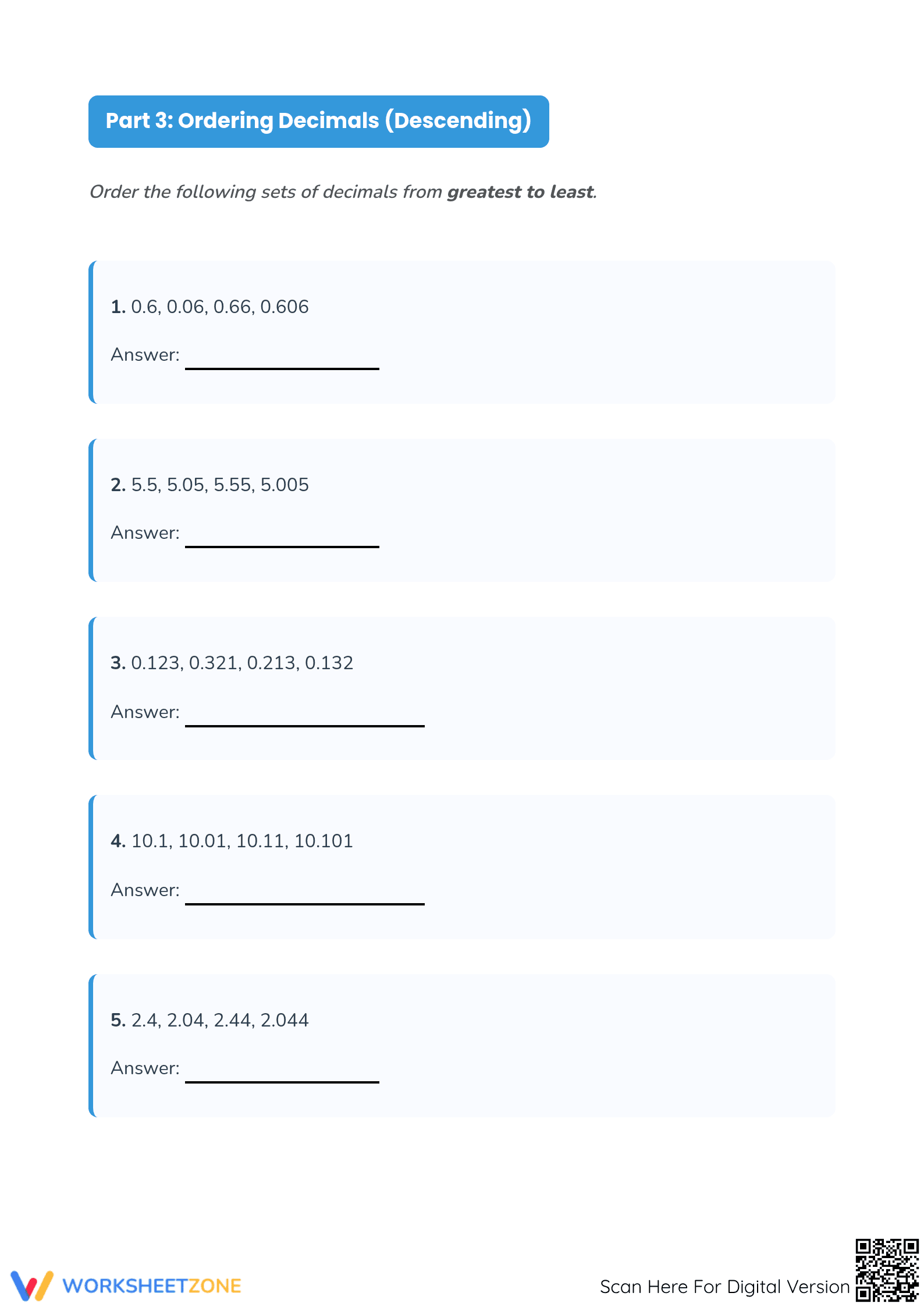
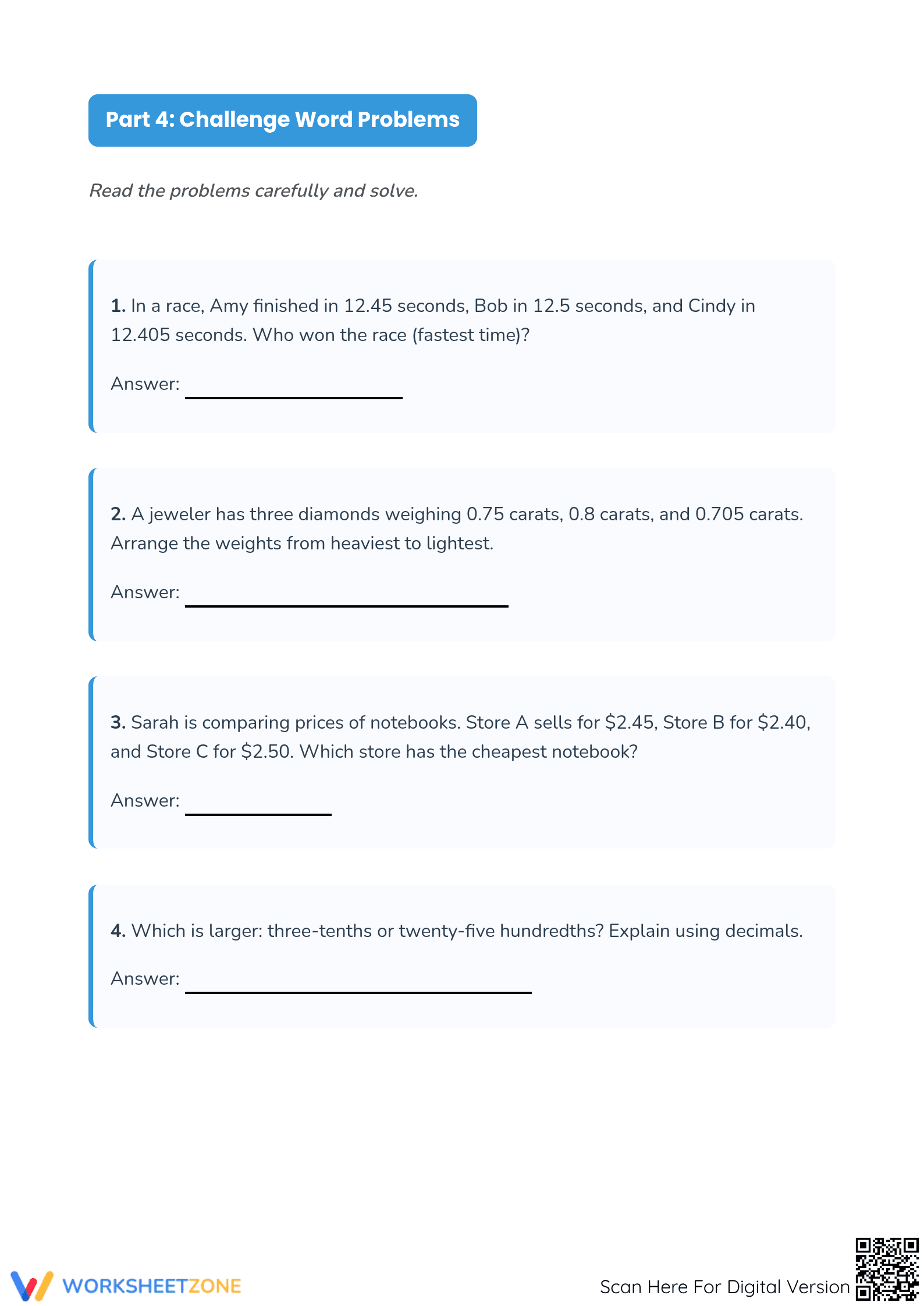
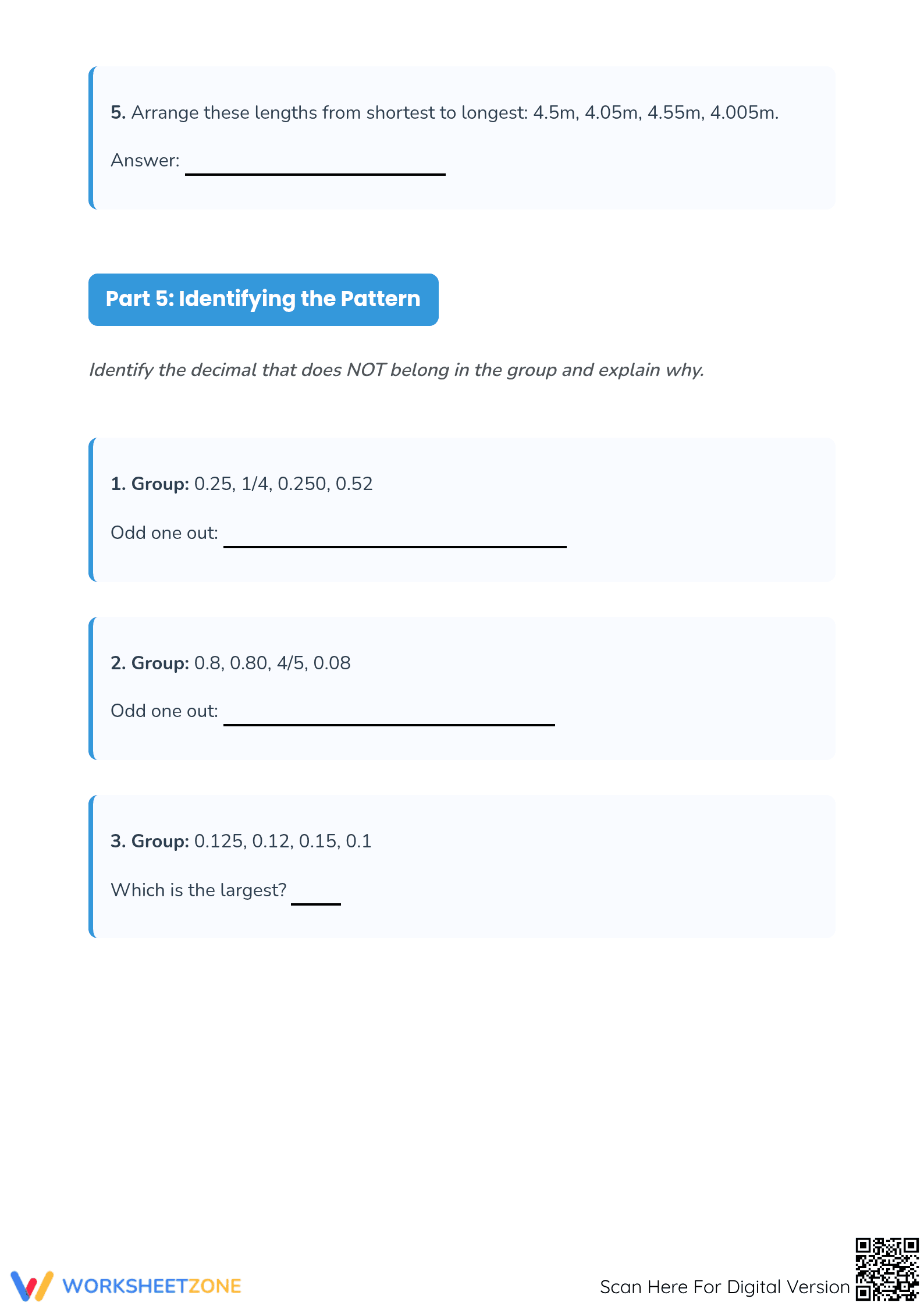
The PDF contains five full pages of decimal practice. Each page focuses on a specific sub-skill, including comparing decimals using inequality symbols, rounding to specific place values, and performing the four basic operations. A complete answer key is provided for quick grading or student self-correction.
- Guided Practice: The initial tasks provide clear place-value alignments to help students set up addition and subtraction problems correctly (15 problems).
- Supported Practice: Mid-level tasks involve rounding and comparing, requiring students to apply conceptual understanding to numerical values (20 problems).
- Independent Practice: The final section challenges students with multiplication and division, moving toward mastery without scaffolding (25 problems).
This gradual release approach ensures that students build computational fluency at their own pace.
Standards Alignment: CCSS.MATH.CONTENT.5.NBT.B.7: Add, subtract, multiply, and divide decimals to hundredths, using concrete models or drawings and strategies based on place value, properties of operations, and/or the relationship between addition and subtraction; relate the strategy to a written method and explain the reasoning used. This resource also supports CCSS.MATH.CONTENT.5.NBT.A.3 and 5.NBT.A.4. Both standard codes can be copied directly into lesson plans, IEP goals, or district curriculum mapping tools.
Assign this worksheet during the independent practice portion of a decimal operations unit. It works exceptionally well as a summative review after direct instruction. Teachers should observe students during the division section to ensure proper decimal placement in the quotient, as this is a common point of struggle for fifth graders. Completion typically takes 50 minutes.
This resource is designed for fifth-grade general education students, but it also serves as an excellent remediation tool for sixth graders. It pairs naturally with place-value anchor charts or interactive math notebooks to support students who need visual cues during computation.
Research indicates that mastery of decimal operations in the fifth grade is a significant predictor of success in algebraic thinking. According to the NAEP framework, computational fluency with rational numbers requires a balance of conceptual understanding and procedural practice. This Grade 5 worksheet aligns with the recommendations of the RAND AIRS 2024 report, which emphasizes the importance of multi-step decimal tasks to build mathematical persistence. By targeting CCSS.MATH.CONTENT.5.NBT.B.7, the activities help students bridge the gap between whole-number operations and complex fractional reasoning. The inclusion of addition, subtraction, multiplication, and division ensures a holistic approach to the decimal system, providing the necessary repetition for long-term retention. Educational studies from ScienceDirect TpT Analysis suggest that five-page focused practice sets like this one optimize student engagement by breaking complex standards into manageable sub-goals, leading to higher rates of task completion and improved assessment scores across diverse learning populations.


