


























Views
Downloads

Essential Multi-Digit Addition and Subtraction — Grade 5
Paste this activity's link or code into your existing LMS (Google Classroom, Canvas, Teams, Schoology, Moodle, etc.).
Students can open and work on the activity right away, with no student login required.
You'll still be able to track student progress and results from your teacher account.
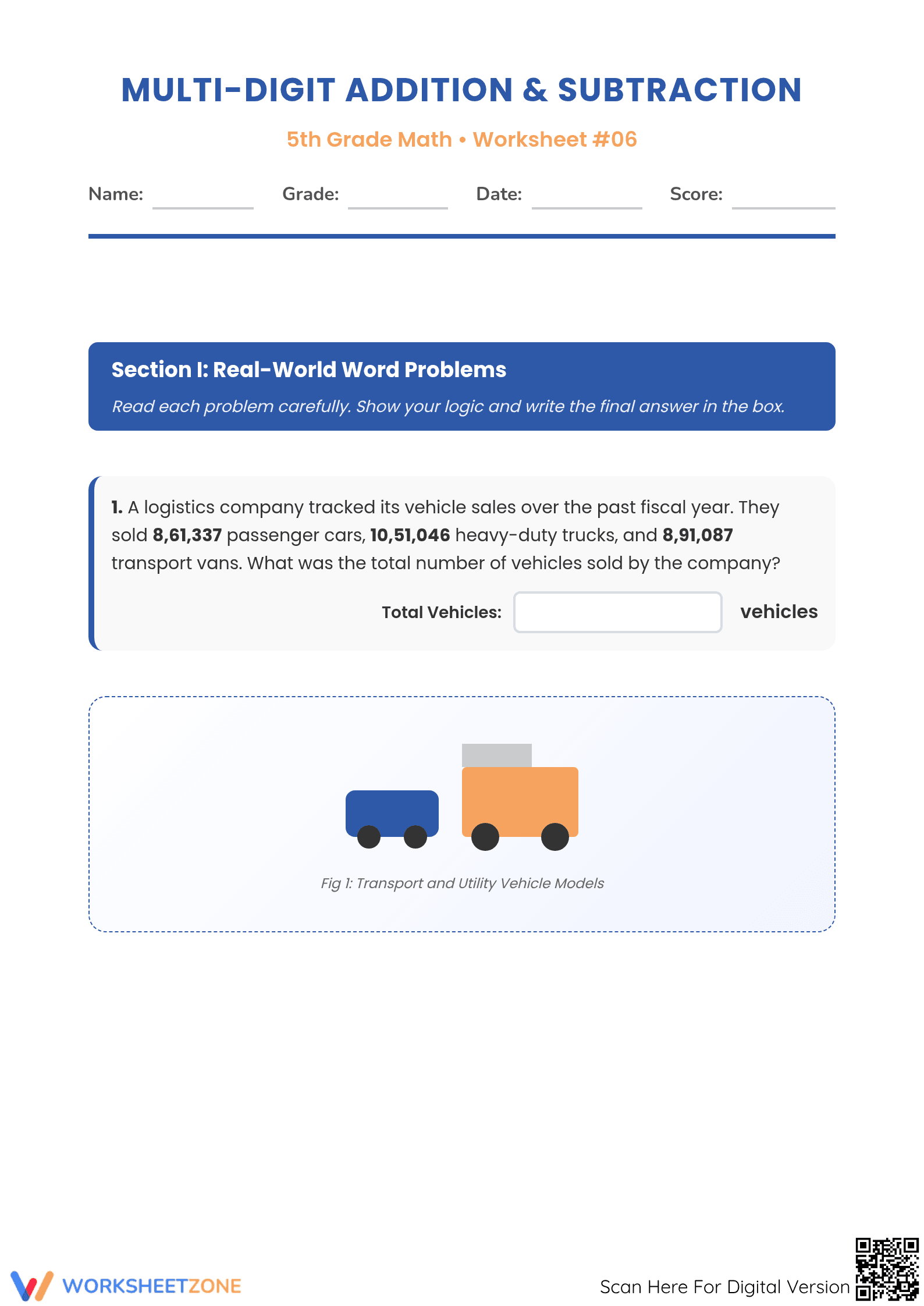
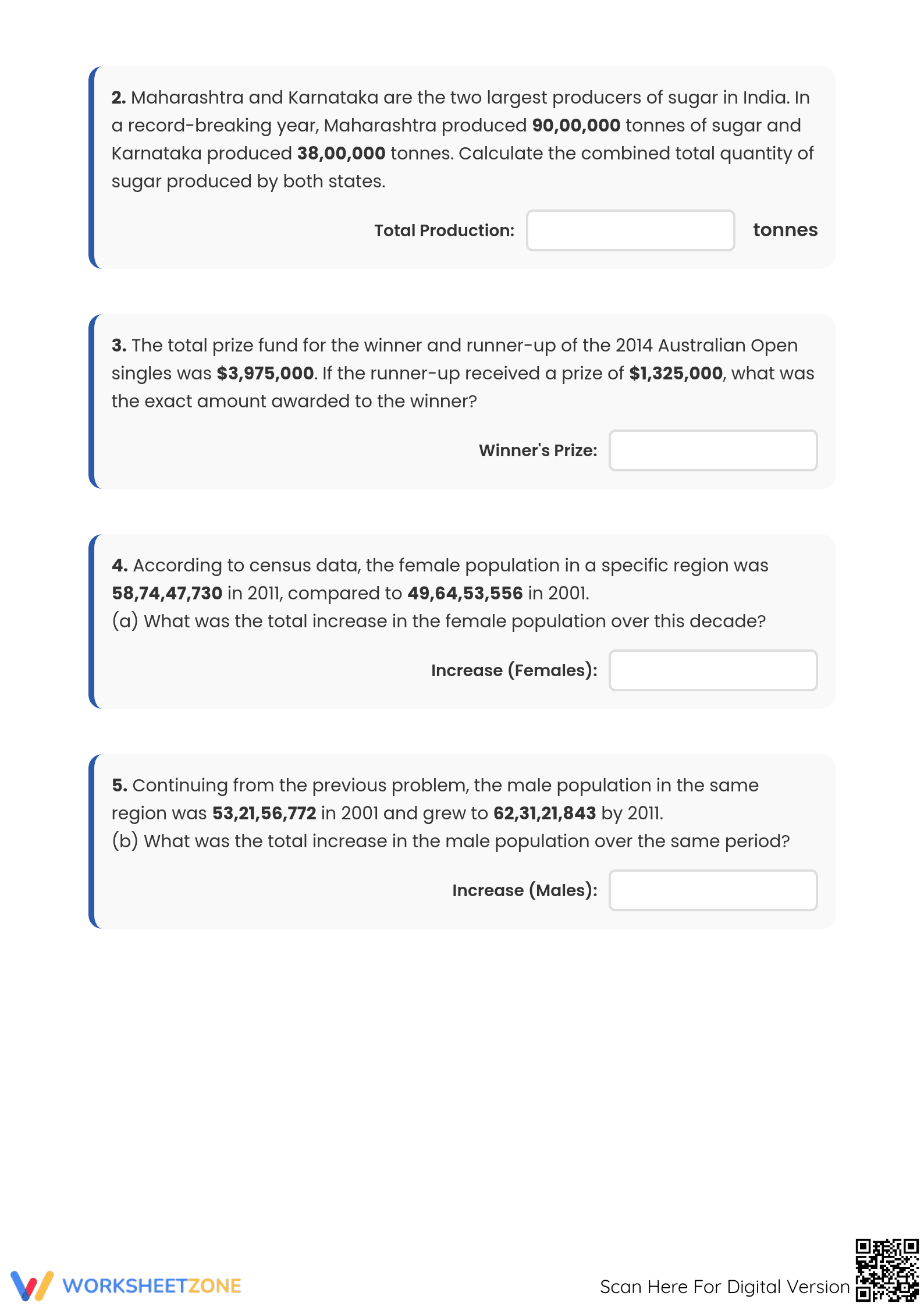
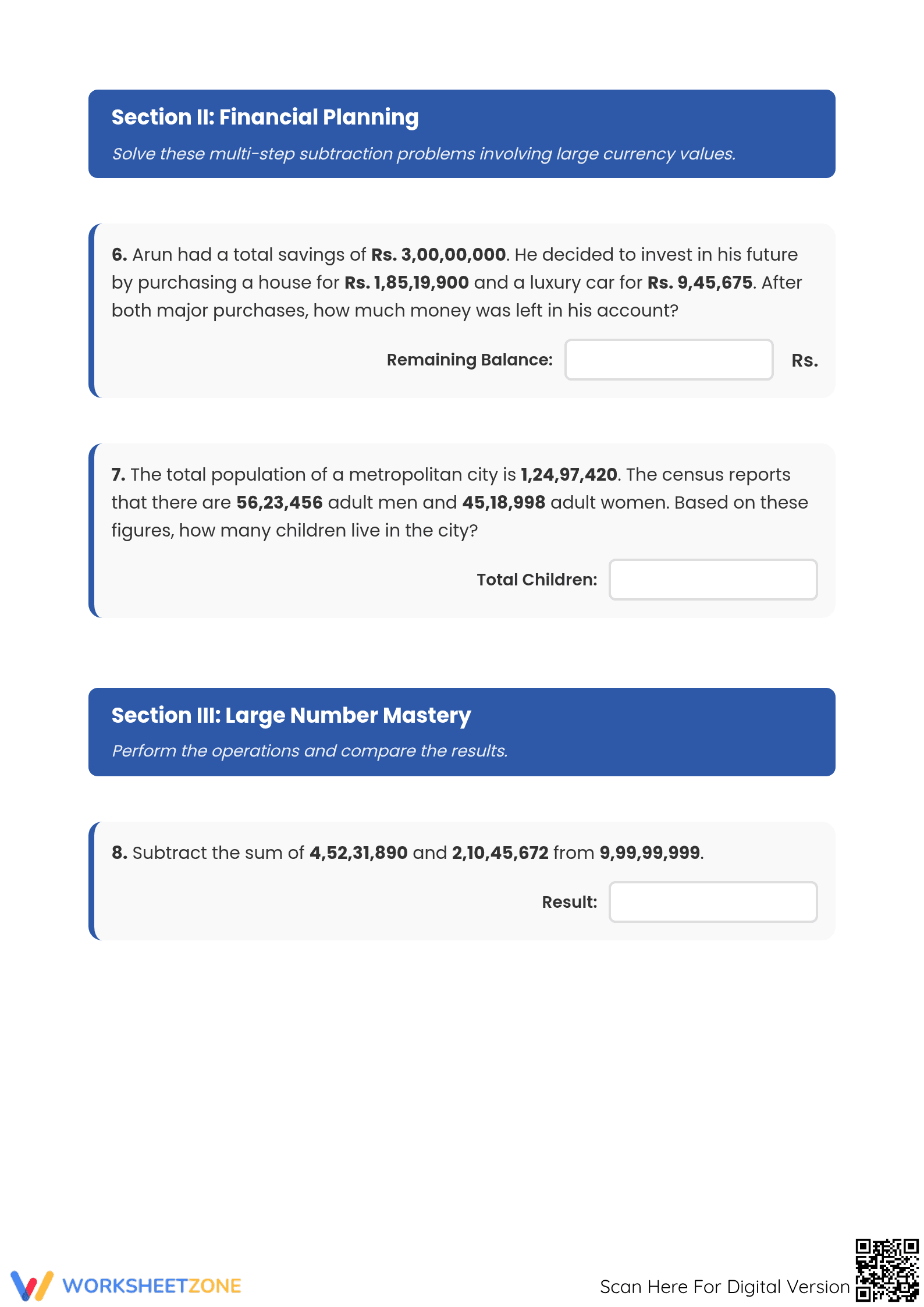
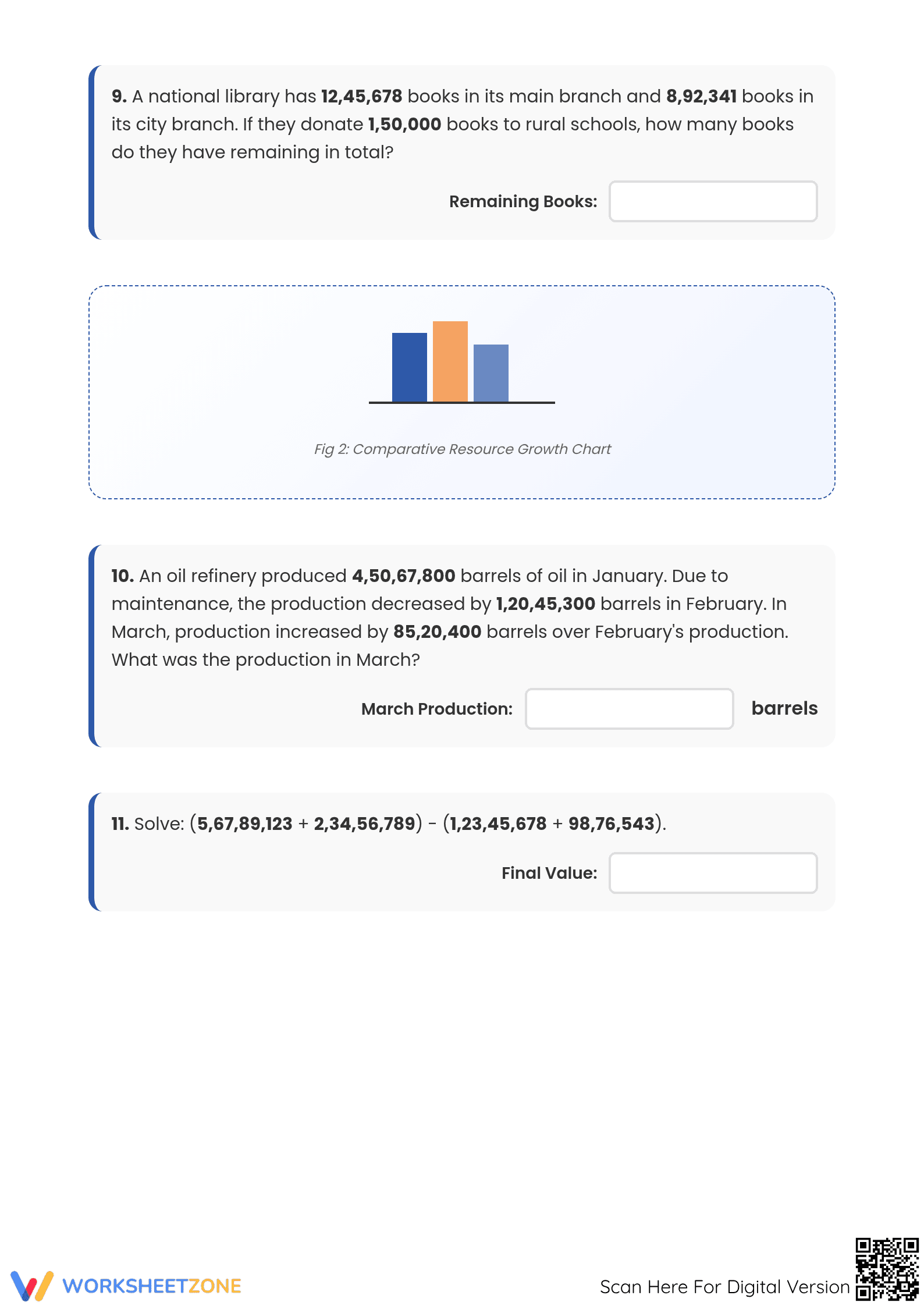
Strengthen your students' proficiency in whole number operations with this comprehensive Grade 5 math worksheet. By tackling multi-step word problems involving numbers in the millions, learners develop the stamina and precision required for upper elementary mathematics. This resource ensures students can accurately apply the standard algorithm to real-world scenarios, improving their mathematical fluency and confidence.
At a Glance
- Grade: 5 · Subject: Math
- Standard:
CCSS.MATH.CONTENT.4.NBT.B.4— Fluently add and subtract multi-digit whole numbers using the standard algorithm- Skill Focus: Multi-step addition and subtraction with large numbers
- Format: 5 pages · 15 problems · Answer key included · PDF
- Best For: Independent practice or formative assessment
- Time: 30–45 minutes
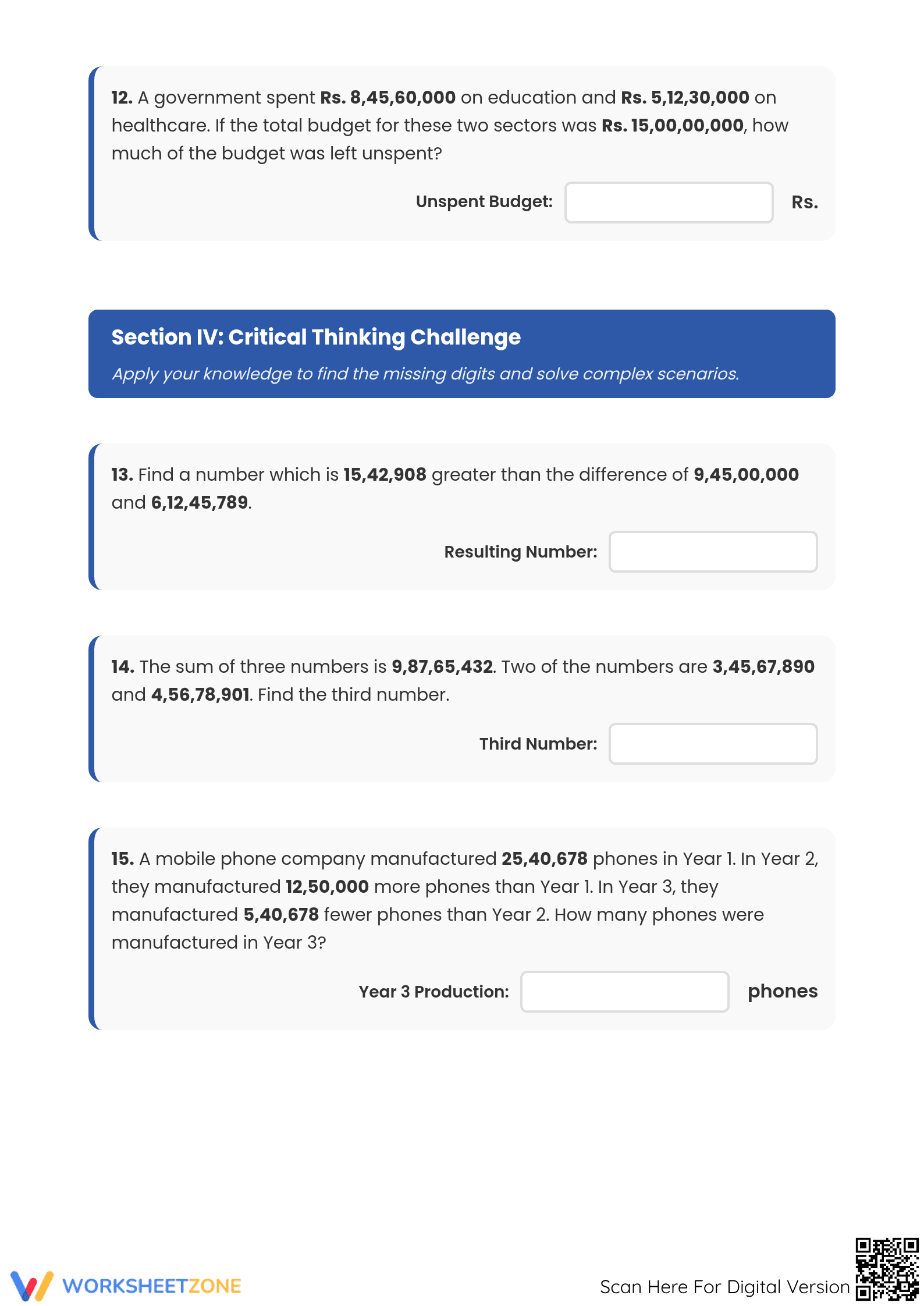
This 5-page PDF contains 15 rigorous word problems divided into four strategic sections: Real-World Word Problems, Financial Planning, Large Number Mastery, and a Critical Thinking Challenge. The layout provides ample workspace for students to show their logic and includes two helpful visual aids—a transport vehicle graphic and a comparative resource growth chart—to anchor the abstract numbers in concrete contexts.
The worksheet follows a structured progression to ensure deep understanding. It begins with 5 guided practice problems where students extract data from narrative scenarios. This is followed by 7 supported practice items that introduce financial contexts and multi-step logic. Finally, 3 independent practice problems in the Critical Thinking Challenge section require students to solve complex scenarios with missing digits and triple-layer operations.
This resource is primarily aligned with CCSS.MATH.CONTENT.4.NBT.B.4, which requires students to fluently add and subtract multi-digit whole numbers. It also supports Grade 5 expectations for solving multi-step word problems using the four operations. Both standard codes can be copied directly into lesson plans, IEP goals, or district curriculum mapping tools to ensure all instructional minutes contribute toward grade-level mastery and state assessment preparation.
Use this worksheet during the "independent practice" phase of a lesson or as a comprehensive review after direct instruction on large number operations. To use it for formative assessment, observe students during Section II (Financial Planning) to see if they can correctly sequence multiple subtractions. Most students will complete the 15-problem set within 35 to 50 minutes.
Designed for 5th-grade students, this worksheet is also suitable for 4th-grade extension or 6th-grade review. The inclusion of Section IV provides natural differentiation for advanced learners, while the clear workspace scaffolds the process for students requiring extra support. It pairs naturally with a direct instruction lesson on multi-step problem-solving strategies involving currency and census data.
According to the RAND AIRS 2024 report, providing students with structured, multi-step word problems is essential for bridging the gap between procedural fluency and conceptual application. This Grade 5 worksheet targets CCSS.MATH.CONTENT.4.NBT.B.4 by requiring students to fluently add and subtract whole numbers within complex narrative contexts like financial planning and population growth analysis. By working through 15 varied tasks, learners reinforce their understanding of the standard algorithm while developing the critical thinking skills necessary for higher-order mathematics. Research from Fisher & Frey (2014) emphasizes that a gradual-release model—moving from guided scenarios to independent challenges—is the most effective way to foster student autonomy in math. This resource provides that exact structure, ensuring students not only compute accurately but also understand the underlying logic of multi-digit operations in real-world environments. It is a proven tool for building the mathematical stamina required for success on standardized assessments.


