


























Views
Downloads

Superhero Writing Prompt (3 Levels) | Grade K Ready
Paste this activity's link or code into your existing LMS (Google Classroom, Canvas, Teams, Schoology, Moodle, etc.).
Students can open and work on the activity right away, with no student login required.
You'll still be able to track student progress and results from your teacher account.
This differentiated superhero writing prompt helps kindergarten students develop early narrative skills through drawing and writing. By responding to an engaging prompt about having superpowers, young learners practice expressing ideas clearly while building fine motor and handwriting proficiency at their specific developmental level.
At a Glance
- Grade: K · Subject: ELA
- Standard:
CCSS.ELA-LITERACY.W.K.3— Use drawing and writing to narrate an event- Skill Focus: Narrative Writing
- Format: 6 pages · 1 problem · No answer key · PDF
- Best For: Independent writing centers
- Time: 15–20 minutes
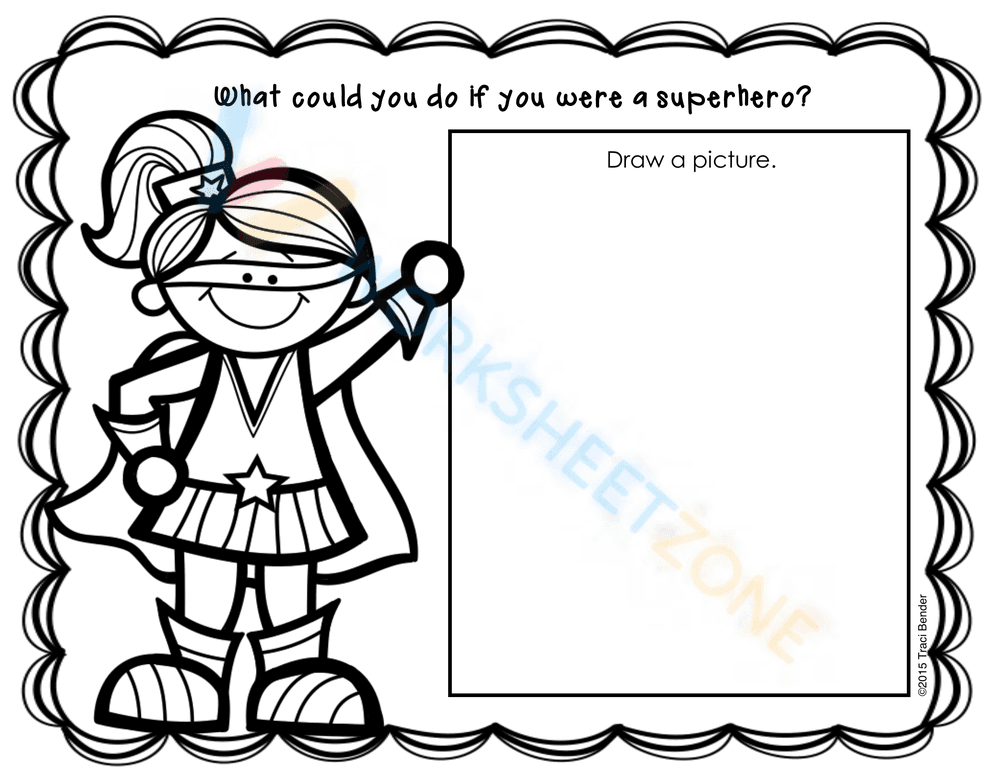
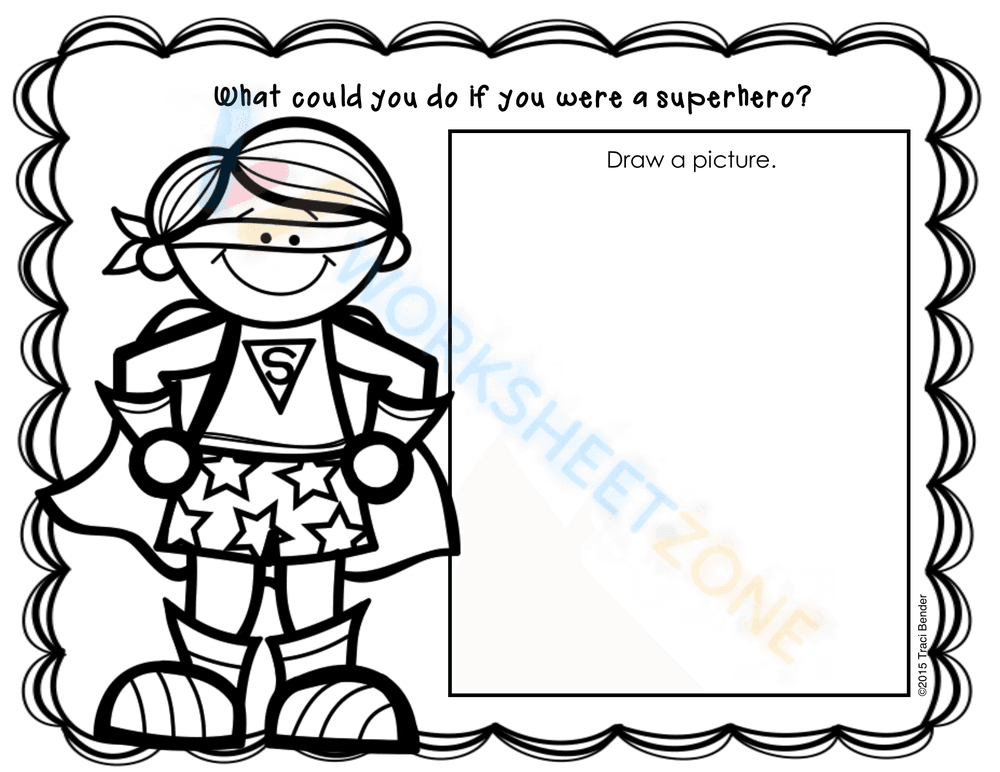
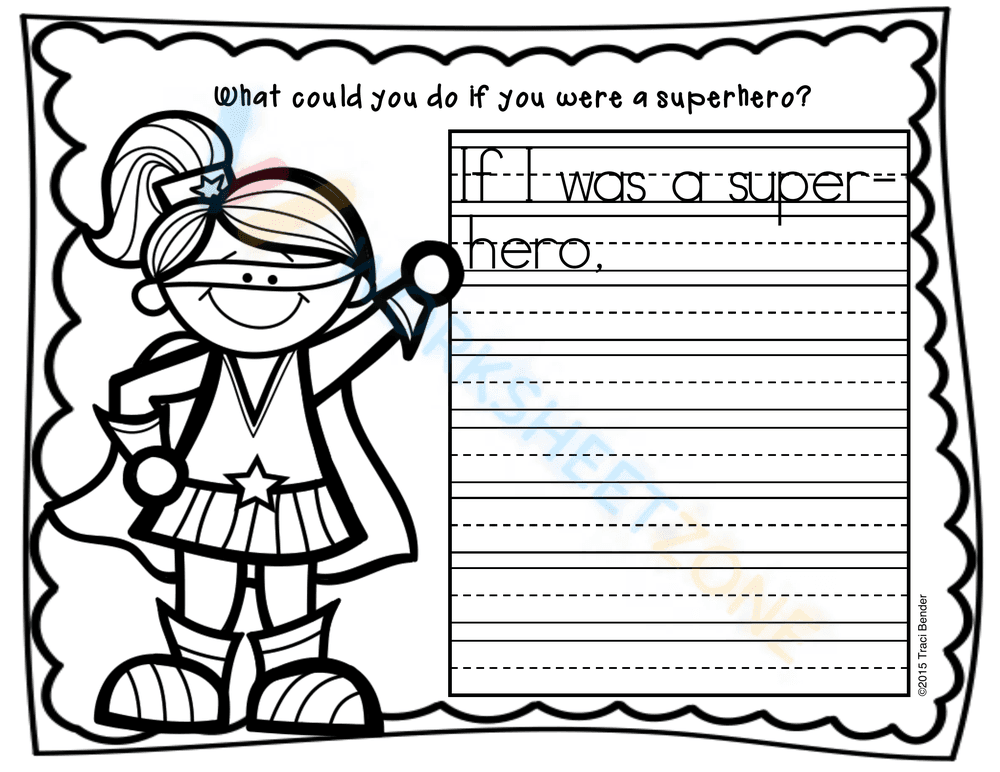
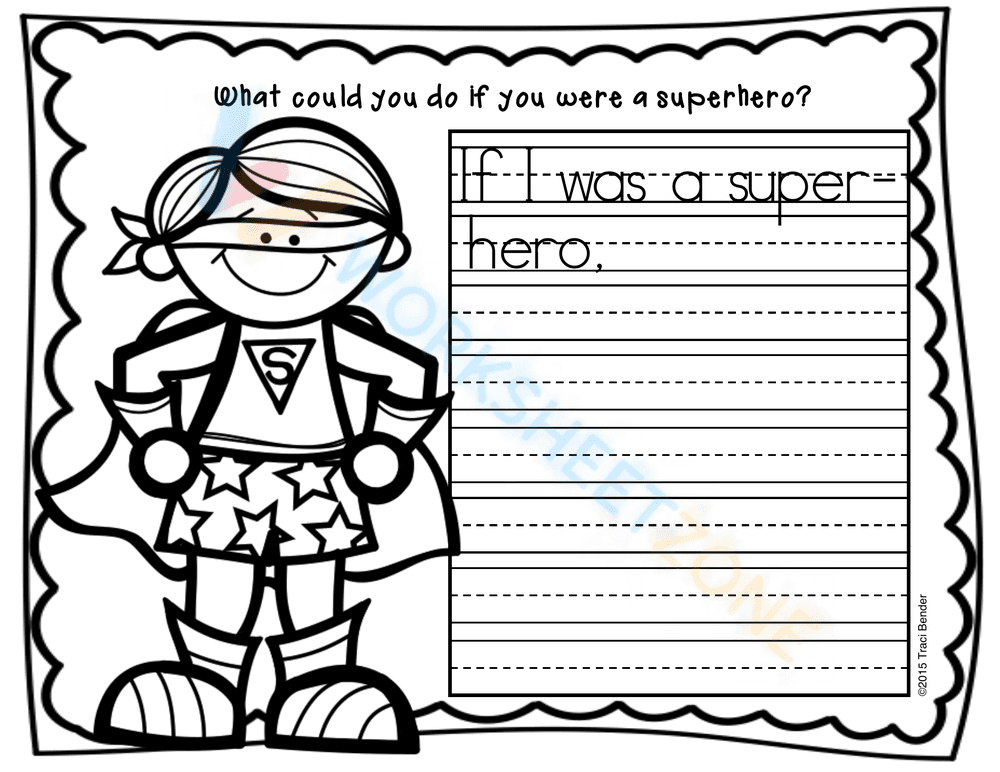
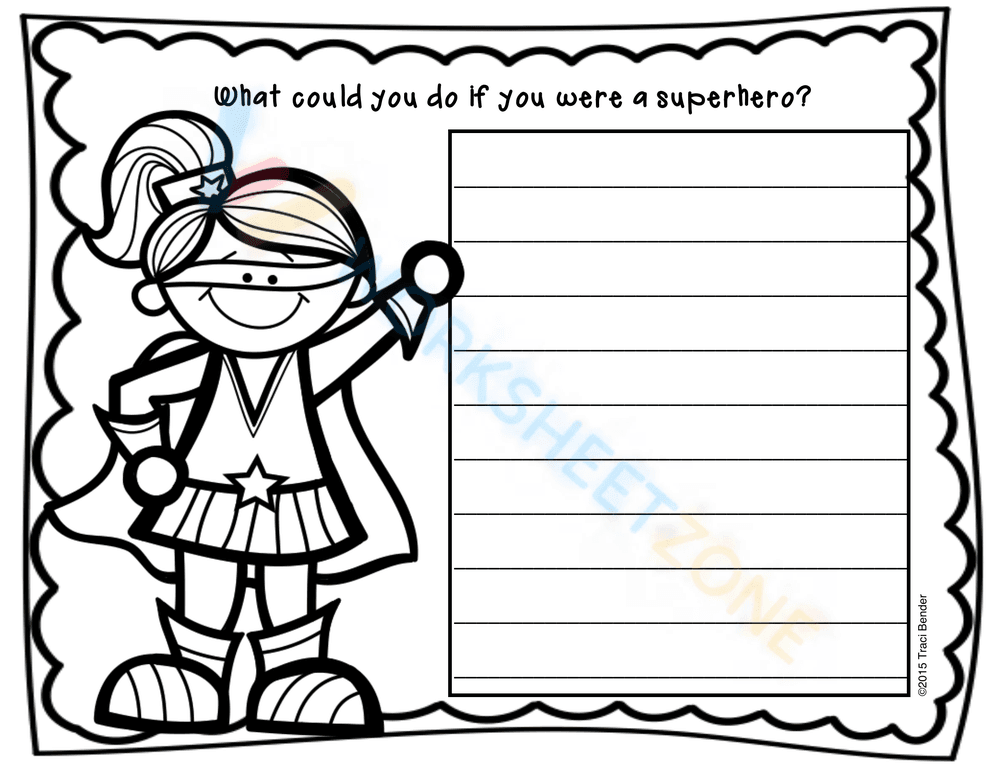
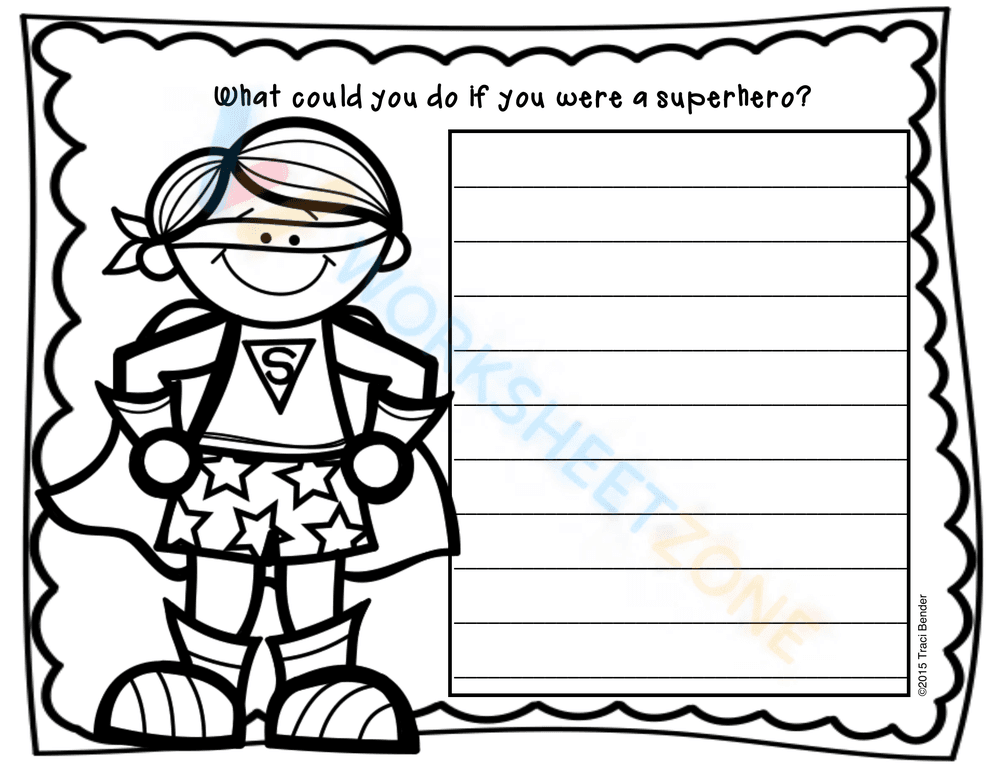
This resource includes six distinct pages featuring both boy and girl superhero characters to maximize student engagement. The packet provides three distinct formatting options for the same creative prompt, allowing educators to easily accommodate diverse fine motor and expressive language abilities within a single classroom. Students will encounter a blank drawing space, primary dashed lines with a traceable sentence starter, or standard writing lines.
- Below grade: Features a large, blank drawing box where pre-writers can illustrate their superhero actions, supporting dictation and visual storytelling without the cognitive load of letter formation.
- On grade: Provides primary dashed writing lines alongside a traceable sentence starter ("If I was a superhero,"), bridging the gap between illustration and independent sentence generation.
- Above grade: Offers standard writing lines without sentence frames, challenging advanced kindergarteners or first graders to independently construct and format their narrative responses.
All three versions are included to ensure every learner can participate meaningfully.
This activity aligns with CCSS.ELA-LITERACY.W.K.3: "Use a combination of drawing, dictating, and writing to narrate a single event or several loosely linked events, tell about the events in the order in which they occurred, and provide a reaction to what happened." It also supports early language development and fine motor control. Both standard codes can be copied directly into lesson plans, IEP goals, or district curriculum mapping tools.
Deploy this resource during independent literacy centers or as a whole-group creative writing block following a superhero-themed read-aloud. Teachers can use the varying levels as a formative assessment tool to observe pencil grip, letter formation, and phonetic spelling strategies in real time. Expected completion time ranges from 15 to 20 minutes depending on the selected scaffolding level.
This worksheet is designed for kindergarten and early first-grade students, particularly those in mixed-ability classrooms requiring immediate differentiation. The visual supports and sentence frames make it highly accessible for English Language Learners and students receiving occupational therapy for handwriting. It pairs perfectly with a superhero picture book or a mini-lesson on using imagination in narrative writing.
Effective early literacy instruction requires providing multiple entry points for expressive language development. Aligning with CCSS.ELA-LITERACY.W.K.3 to use drawing and writing to narrate an event, this resource ensures that cognitive barriers related to handwriting do not impede creative expression. According to Fisher & Frey (2014), implementing tiered scaffolds such as sentence starters and visual representation options significantly increases student engagement and task persistence in foundational writing tasks. By offering three distinct levels of support—from pure illustration to independent line writing—educators can accurately target the zone of proximal development for each student. This structured approach allows young learners to build confidence in their narrative abilities while simultaneously developing the fine motor skills necessary for future academic success. The gradual removal of constraints fosters both creativity and technical writing proficiency.


