




























Views
Downloads

Creative Writing Journal Prompts | Grade 4-5 Essential

Paste this activity's link or code into your existing LMS (Google Classroom, Canvas, Teams, Schoology, Moodle, etc.).
Students can open and work on the activity right away, with no student login required.
You'll still be able to track student progress and results from your teacher account.
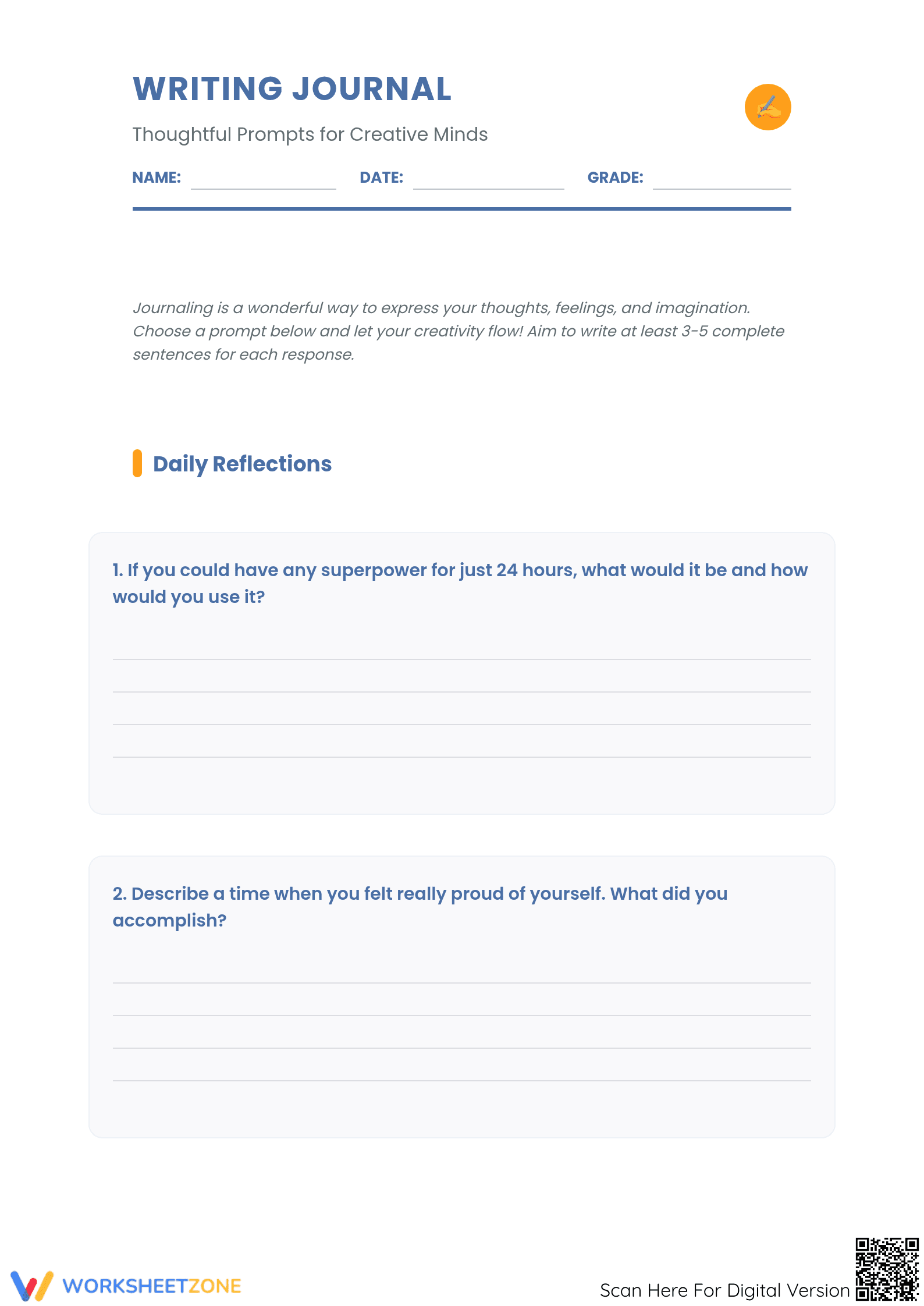
This Grade 4-5 creative writing journal worksheet provides students with seven structured prompts to spark imagination and strengthen narrative voice. By offering a mix of daily reflections and adventurous scenarios, this resource helps learners build the habit of routine writing while expressing their unique perspectives and creative thoughts.
At a Glance
- Grade: 4–5 · Subject: ELA Writing
- Standard:
CCSS.ELA-LITERACY.W.4.10— Write routinely for a range of tasks, purposes, and audiences- Skill Focus: Narrative and Reflective Writing
- Format: 3 pages · 7 problems · Open-ended responses · PDF
- Best For: Morning work or daily writing centers
- Time: 15–20 minutes
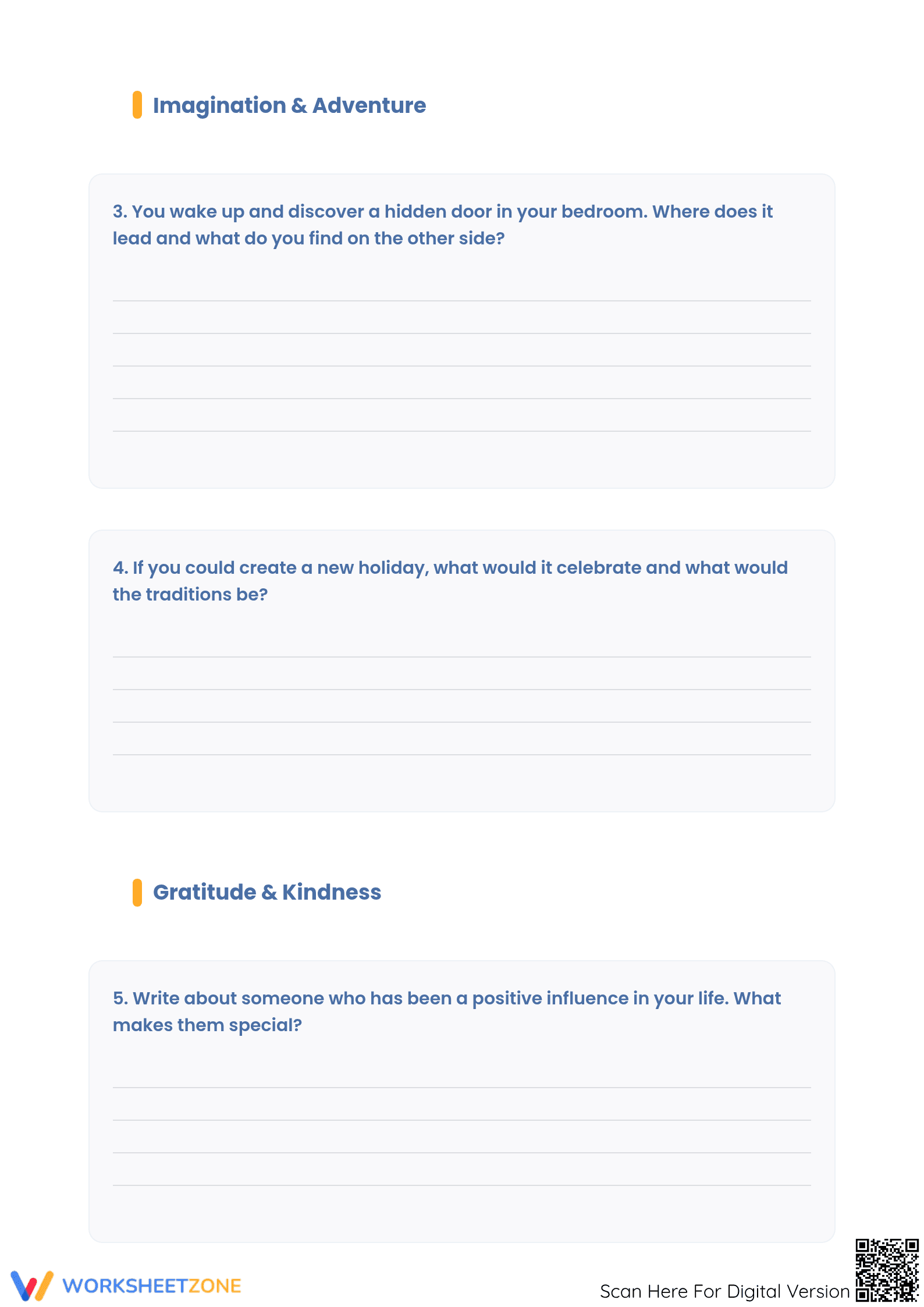
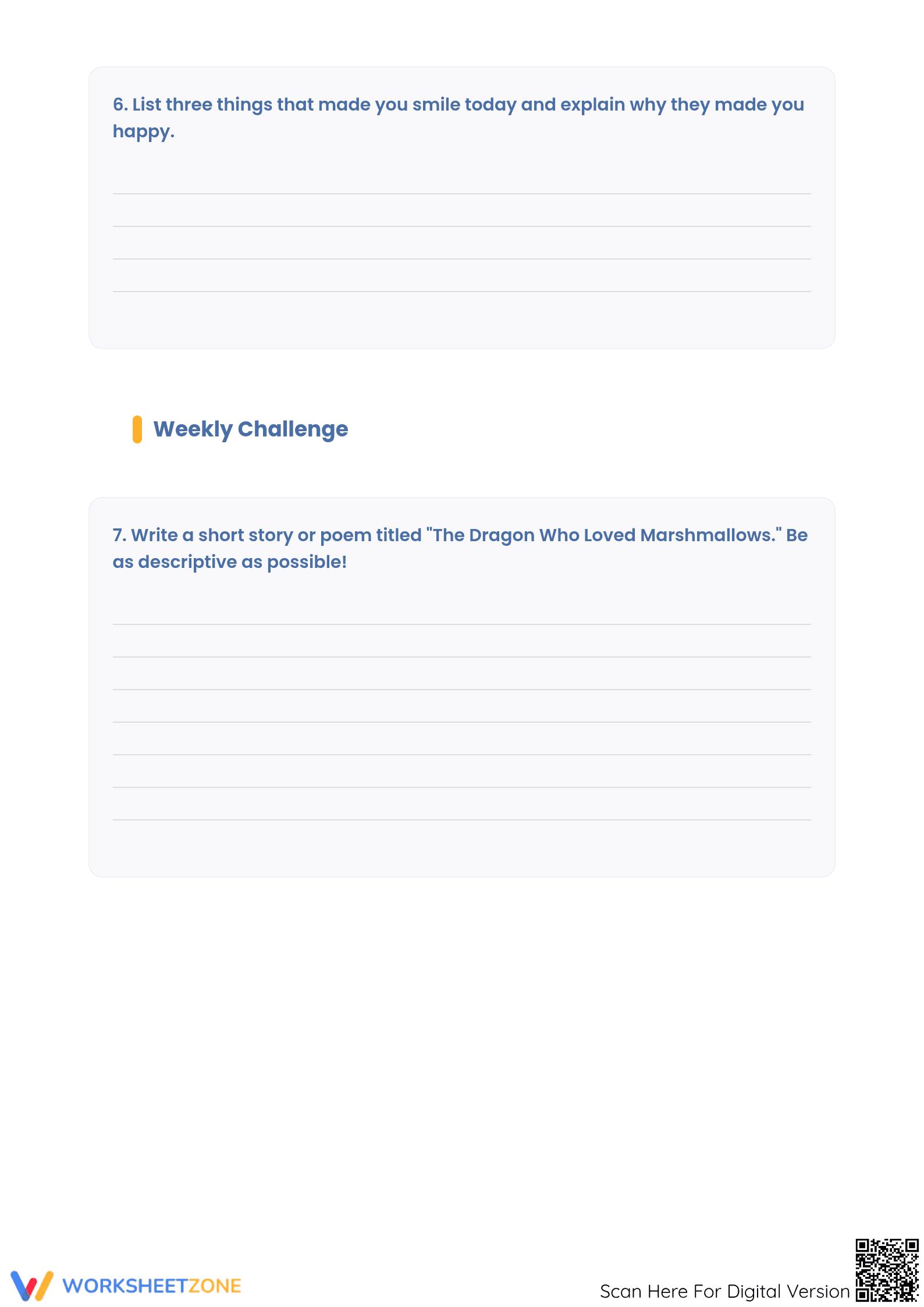
This 3-page printable pack features seven distinct writing prompts organized into four thematic categories: Daily Reflections, Imagination & Adventure, Gratitude & Kindness, and a Weekly Challenge. Each prompt provides ample lined space for a 3-5 sentence response, ensuring students have enough room to develop their ideas without feeling overwhelmed by a blank page. The layout is clean and professional, focusing entirely on the student's output.
Zero-Prep Workflow
- Print: Simply print the three pages in black and white or color; no complex assembly required (1 minute).
- Distribute: Hand out the sheets for a bell-ringer activity or add them to a dedicated student writing folder (1 minute).
- Review: Check for sentence structure, spelling, and creative engagement during a 5-minute wrap-up or peer-share session.
Standards Alignment
The primary standard `CCSS.ELA-LITERACY.W.4.10` requires students to "Write routinely over extended time frames and shorter time frames for a range of discipline-specific tasks, purposes, and audiences." This worksheet facilitates this by providing specific, varied entry points for short-form narrative and informational writing. By engaging with these prompts, students build the stamina needed for longer compositions. Both standard codes can be copied directly into lesson plans, IEP goals, or district curriculum mapping tools.
How to Use It
Use these prompts as a consistent morning "bell-ringer" to settle the class and activate writing muscles immediately upon arrival. Alternatively, use the "Weekly Challenge" short story prompt as a formative assessment to observe how well students apply descriptive language and sensory details. Expected completion time is 15-20 minutes per prompt, making it perfect for supplemental practice or early finisher tasks.
Who It's For
Ideal for general education Grade 4 and 5 students, this resource also supports English Language Learners (ELLs) by providing clear, concrete scenarios to write about. It pairs naturally with a descriptive word bank or a "narrative arc" anchor chart to help students expand their responses into fuller stories. The open-ended nature of the prompts allows for easy teacher differentiation through individualized feedback.
This writing journal is grounded in the standard CCSS.ELA-LITERACY.W.4.10, which emphasizes the importance of routine writing to build fluency and stamina. According to Fisher & Frey (2014), providing students with choice and creative hooks significantly increases engagement in the writing process. By alternating between reflective Daily Reflections and imaginative adventure prompts, the worksheet ensures that students exercise different cognitive pathways, from metacognition to abstract reasoning. The 3-page format with 7 prompts is designed to integrate directly into a weekly instructional cycle, reducing teacher overhead while maintaining high academic expectations for student output. This resource provides a reliable, evidence-based method for tracking student progress in written expression over time, making it a functional tool for any elementary literacy curriculum or writing intervention program.


