


























Views
Downloads
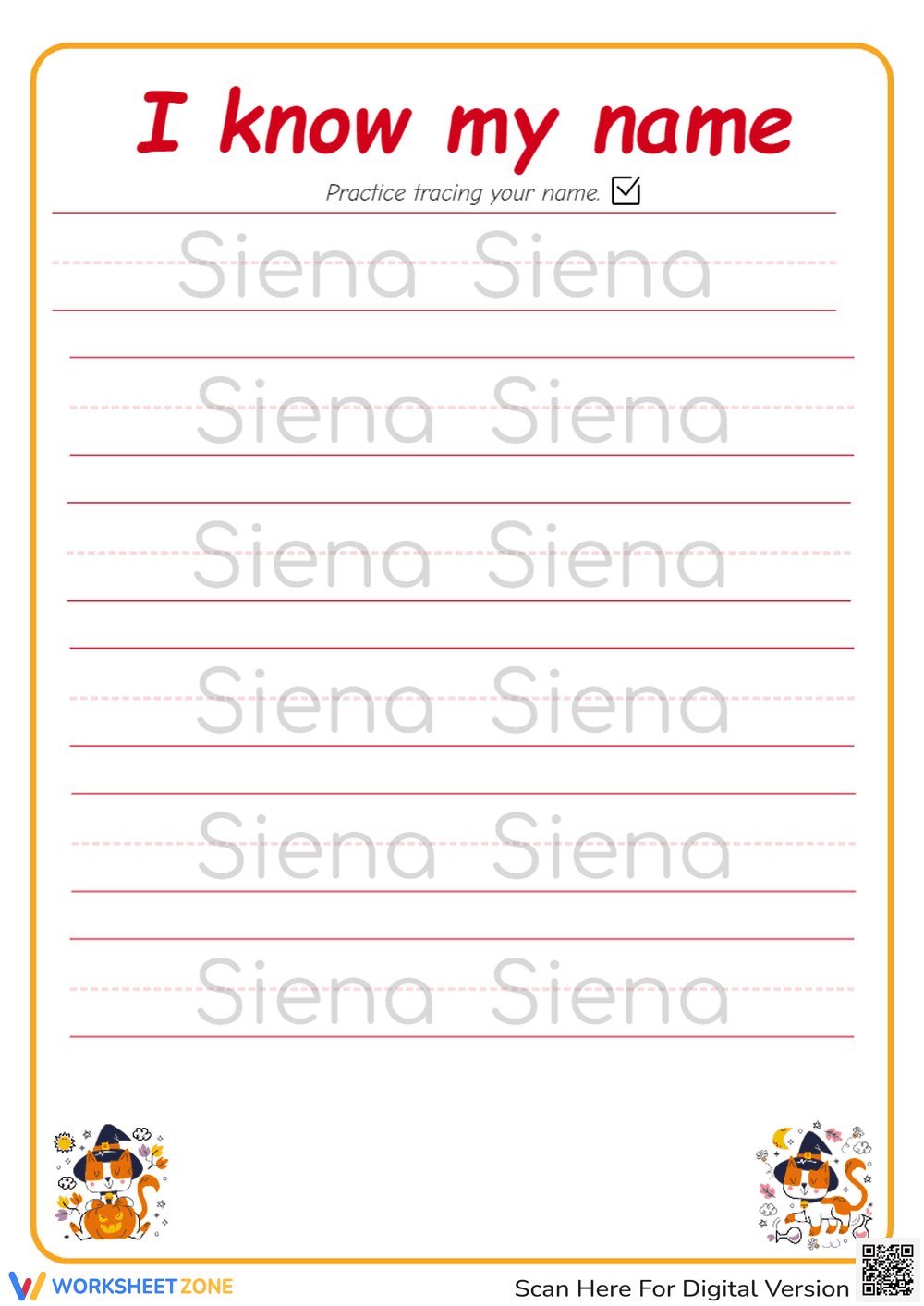

Printable Siena Name Tracing Worksheet for Kindergarten
Paste this activity's link or code into your existing LMS (Google Classroom, Canvas, Teams, Schoology, Moodle, etc.).
Students can open and work on the activity right away, with no student login required.
You'll still be able to track student progress and results from your teacher account.
This printable handwriting worksheet helps early learners master writing the name Siena through structured tracing practice. Students develop muscle memory and pencil control by tracing the name twelve times on primary writing lines. This activity builds confidence and foundational writing skills.
At a Glance
- Grade: Preschool and Kindergarten
- Standard:
CCSS.ELA-LITERACY.L.K.1.A— Print upper- and lowercase letters- Skill Focus: Name tracing, letter formation, and fine motor control
- Format: 1 page · 12 tracing tasks · Answer key not applicable · PDF
- Best For: Early morning work and independent handwriting practice
- Time: 10–15 minutes
What's Inside
The worksheet features a clean, distraction-free layout designed specifically for young learners. It contains one page with six rows, each featuring two light-gray dashed outlines of the name Siena. The primary writing lines include a solid top line, a dashed middle line, and a solid bottom line to guide proper letter height and placement. Cute cat illustrations at the bottom add a friendly touch without distracting from the writing tasks.
Zero-Prep Workflow
This resource requires zero teacher preparation. First, print the single-page PDF (1 minute). Next, distribute the sheet to students with pencils or crayons (1 minute). Finally, review student letter formation during independent work or collect the sheets for quick visual assessment (1 minute). The total teacher setup time is under two minutes, making it an ideal choice for emergency sub plans, morning arrival routines, or quick transition activities.
Standards Alignment
This activity aligns directly with the Common Core State Standard CCSS.ELA-LITERACY.L.K.1.A, which requires students to print many upper- and lowercase letters. By tracing the capital letter S followed by lowercase letters i, e, n, and a, students practice proper letter formation and spacing. This exercise supports early literacy development by connecting letter shapes to a meaningful word. Both standard codes can be copied directly into lesson plans, IEP goals, or district curriculum mapping tools.
How to Use It
Use this worksheet during morning arrival to establish a calm, productive routine. Alternatively, assign it during small-group literacy centers after direct instruction on letter strokes. While students work, observe their pencil grip and stroke direction to identify who needs extra support. The activity takes approximately 10 to 15 minutes to complete.
Who It's For
This worksheet is designed for preschool and kindergarten students learning to write their names. It is ideal for early writers who need structured guidance to control their pencil movements. Pair this activity with a name-recognition anchor chart or a letter-tracing sensory bin to reinforce letter shapes through multiple modalities.
Research from Fisher & Frey (2014) highlights the importance of structured, scaffolded practice in early childhood writing development. Tracing activities provide the necessary motor scaffolding that allows young learners to internalize letter shapes before transitioning to independent writing. By focusing on a highly personal and high-frequency word like their own name, students show increased engagement and ownership over their learning. This worksheet targets the foundational skills outlined in CCSS.ELA-LITERACY.L.K.1.A, helping students master the physical mechanics of printing upper- and lowercase letters. Regular practice with guided lines builds the spatial awareness required for consistent letter sizing and alignment. Implementing this simple, targeted tracing exercise during early literacy blocks supports fine motor control and prepares students for more complex writing tasks. Educators can confidently integrate this resource into daily routines to support early writing milestones.


