


























Views
Downloads

Beginning Sounds Worksheet | Grade K Essential
Paste this activity's link or code into your existing LMS (Google Classroom, Canvas, Teams, Schoology, Moodle, etc.).
Students can open and work on the activity right away, with no student login required.
You'll still be able to track student progress and results from your teacher account.
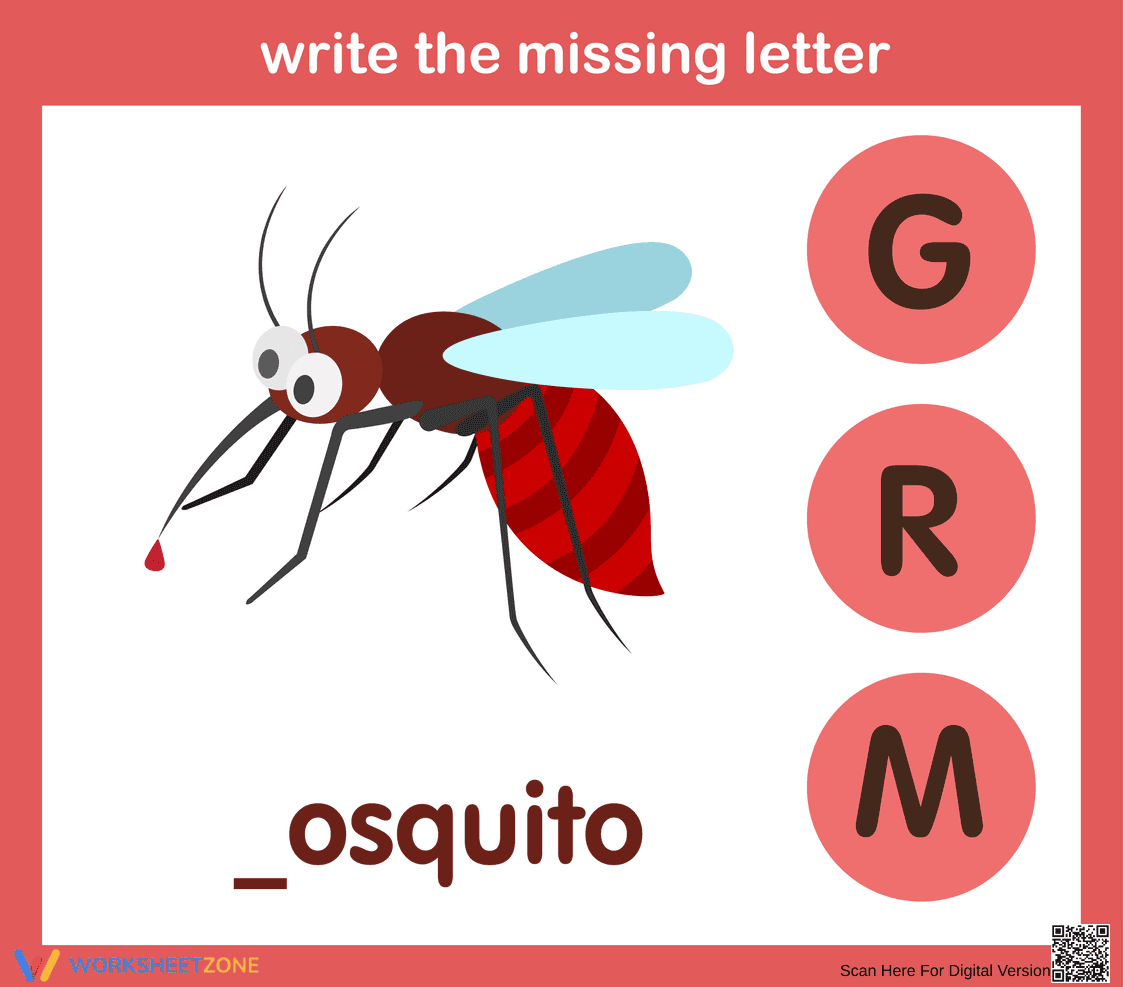
This Kindergarten beginning sounds worksheet helps early learners master initial consonant identification through visual cues. By connecting the image of a mosquito to its starting letter, students strengthen phonemic awareness and letter-sound correspondence. It provides a focused, high-success task for developing readers to practice sound isolation.
At a Glance
- Grade: Kindergarten · Subject: ELA Phonics
- Standard:
CCSS.ELA-LITERACY.RF.K.2.D— Isolate and pronounce the initial sounds in words- Skill Focus: Beginning Consonants
- Format: 1 page · 1 task · Answer key included · PDF
- Best For: Quick morning work or phonics warm-up
- Time: 2–5 minutes
The worksheet features a vibrant, high-quality illustration of a mosquito paired with a partially completed word. Students are presented with three clear letter choices (G, R, M) in a multiple-choice format. This single-page PDF is designed for immediate recognition and minimal distraction, ensuring students focus entirely on the phonemic task without being overwhelmed by complex instructions.
This resource is designed for a zero-prep workflow. First, print the single-page PDF in under 30 seconds. Second, distribute to students as a quick check or bell-ringer activity. Third, review the correct initial sound as a whole group to reinforce the /m/ phoneme. Total teacher preparation time is under 2 minutes, making it an ideal sub-plan addition or transition activity between lessons.
Standards Alignment: This resource is aligned to `CCSS.ELA-LITERACY.RF.K.2.D`, which requires students to isolate and pronounce the initial, medial vowel, and final sounds (phonemes) in three-phoneme words. While the vocabulary word is multi-syllabic, the instructional focus remains strictly on the primary initial consonant sound. Both standard codes can be copied directly into lesson plans, IEP goals, or district curriculum mapping tools.
Use this as a formative assessment during your phonics block. After introducing the letter 'M', assign this worksheet to verify that students can distinguish the /m/ sound from distractors like /g/ or /r/. Alternatively, use it in a literacy center where students can use clothespins to "clip" the correct letter choice, adding a fine-motor component to the phonics practice. It takes approximately 3 minutes for a student to complete.
This worksheet is tailored for Kindergarten students and Grade 1 learners requiring RTI support. It pairs naturally with alphabet anchor charts or beginning sound picture sorts. The visual support makes it accessible for English Language Learners (ELLs) who are building basic vocabulary alongside phonics skills. It serves as a bridge between oral language and written literacy.
Research from Fisher & Frey (2014) emphasizes the importance of gradual release in early literacy, where isolated tasks like beginning sound identification serve as the foundational phase of phonemic awareness. This worksheet targets CCSS.ELA-LITERACY.RF.K.2.D by requiring students to isolate the initial phoneme /m/ from a set of phonetically distinct distractors. By providing a clear visual anchor, the cognitive load is shifted toward sound-symbol mapping rather than word decoding. According to the RAND AIRS 2024 report, high-quality visual scaffolds in early phonics instruction significantly improve retention rates for students in the bottom quartile of reading readiness. This printable resource offers a structured, low-stakes environment for students to demonstrate mastery of initial consonants, ensuring they are prepared for more complex blending and segmenting tasks in later primary grades.


