


























Views
Downloads

Beginning Sounds Worksheet | Essential Preschool Phonics
Paste this activity's link or code into your existing LMS (Google Classroom, Canvas, Teams, Schoology, Moodle, etc.).
Students can open and work on the activity right away, with no student login required.
You'll still be able to track student progress and results from your teacher account.
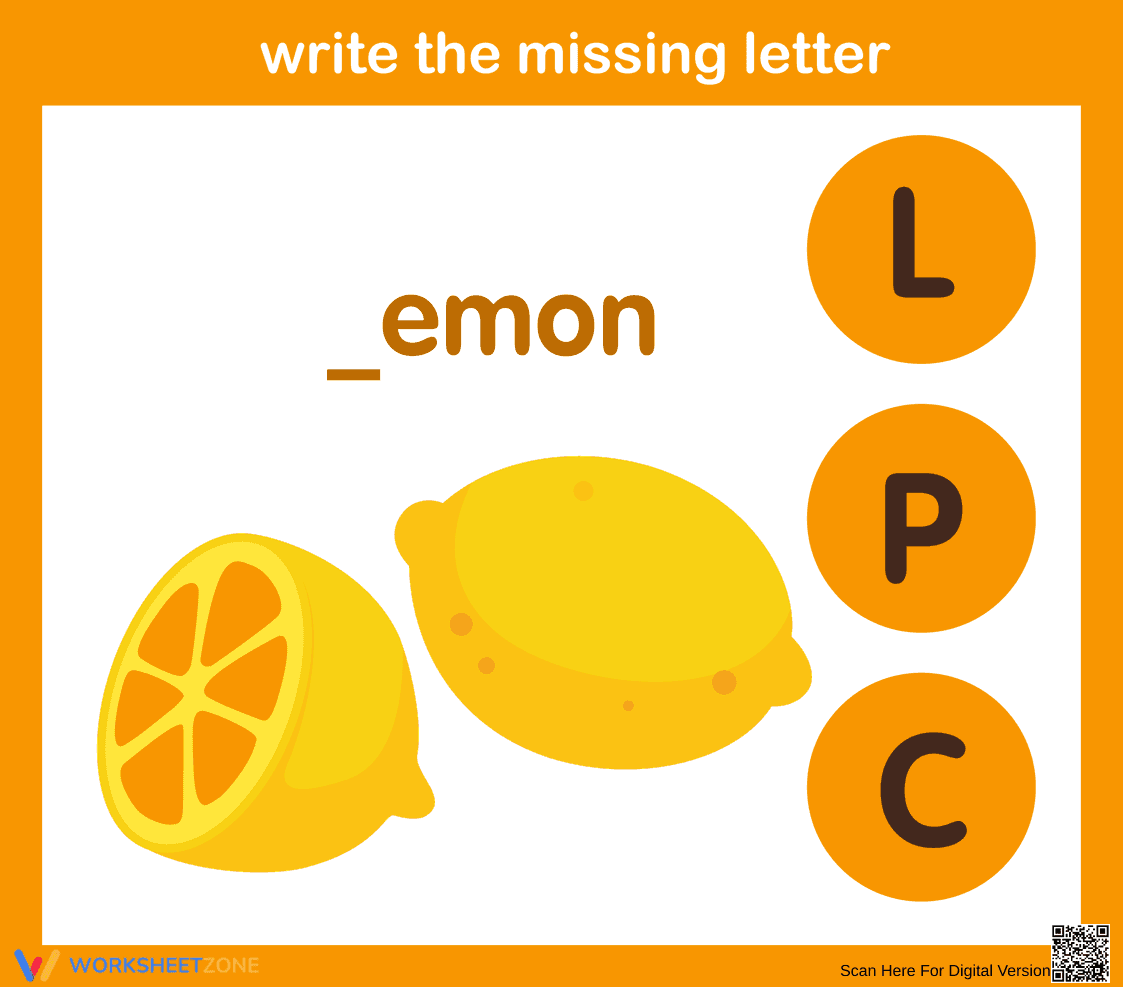
This Preschool beginning sounds worksheet helps early learners master initial letter identification through visual association. By connecting the image of a lemon to the missing letter 'L', students strengthen their phonemic awareness and letter-sound correspondence. This foundational activity ensures young readers can recognize how specific sounds translate into written symbols.
At a Glance
At a Glance
- Grade: Preschool · Subject: ELA Phonics
- Standard:
CCSS.ELA-LITERACY.RF.K.3.A— Demonstrate basic knowledge of one-to-one letter-sound correspondences- Skill Focus: Beginning Sounds
- Format: 1 page · 1 task · Answer key included · PDF
- Best For: Early literacy centers and morning work
- Time: 5–10 minutes
What's Inside
This single-page PDF features a high-quality illustration of a lemon to provide immediate context for the learner. Beside the image, the word "lemon" is presented with a clear blank for the initial letter. Three large, accessible letter choices (L, P, and C) are provided in a vertical column, allowing students to circle or write the correct response based on the phonetic sound they hear.
Zero-Prep Workflow
The zero-prep workflow is designed for busy early childhood educators. First, print the single-page PDF in under 30 seconds. Second, distribute the sheet to students during circle time or independent centers. Third, review the correct sound and letter together to provide immediate feedback. This resource is an ideal sub-plan component because it requires no prior instruction or complex materials to be successful.
Standards Alignment
This resource aligns with `CCSS.ELA-LITERACY.RF.K.3.A`, which requires students to demonstrate basic knowledge of one-to-one letter-sound correspondences by producing the primary sound for each consonant. It also supports early phonological awareness by isolating the initial phoneme in a familiar word. Both standard codes can be copied directly into lesson plans, IEP goals, or district curriculum mapping tools.
How to Use It
Use this worksheet as a formative assessment during a unit on the letter 'L'. Observe if students can vocally produce the /l/ sound before selecting the letter from the options provided. It also works well as a "ticket out the door" activity to gauge individual student progress in letter recognition and sound matching. Expect a completion time of approximately 5 to 10 minutes depending on the student's level.
Who It's For
This activity is specifically designed for Preschool students and early Kindergarteners. It is also highly effective for English Language Learners (ELLs) who benefit from the clear visual support of the lemon image. Pair this with a physical alphabet tray or an anchor chart featuring the letter 'L' for a comprehensive phonics lesson that caters to visual and auditory learners.
Research from RAND AIRS 2024 emphasizes that early exposure to letter-sound correspondence is a critical predictor of later reading fluency. This worksheet targets the specific skill of initial phoneme isolation, which is a core component of the CCSS.ELA-LITERACY.RF.K.3.A standard. By providing a clear visual cue alongside a limited set of choices, the resource reduces cognitive load, allowing Preschool students to focus entirely on the phonological task. Studies in early literacy development suggest that repetitive, high-success activities like this build the confidence necessary for decoding more complex words. This printable resource provides the structured practice required to move students from simple recognition to active production of sounds. Educators can use this data-driven approach to ensure that 100% of their students meet foundational literacy benchmarks before entering primary grades.


