Worksheets
Lesson Plans
Coloring Pages
Home
Activity:
Topic:
CCSS:
Who interprets laws? Judicial. Who enforces laws? Executive. Who makes laws? Legislative. Which branch is the Cabinet in? Executive. Which branch is Congress in? Legislative. Which branch are Legislators in? Legislative. Who vetoes laws? Executive. Which branch is the Senate in? Legislative. Which branch has the Vice President? Executive. Which branch is the Supreme Court in? Judicial. Judicial. Which branch is the House of Representatives in? Legislative
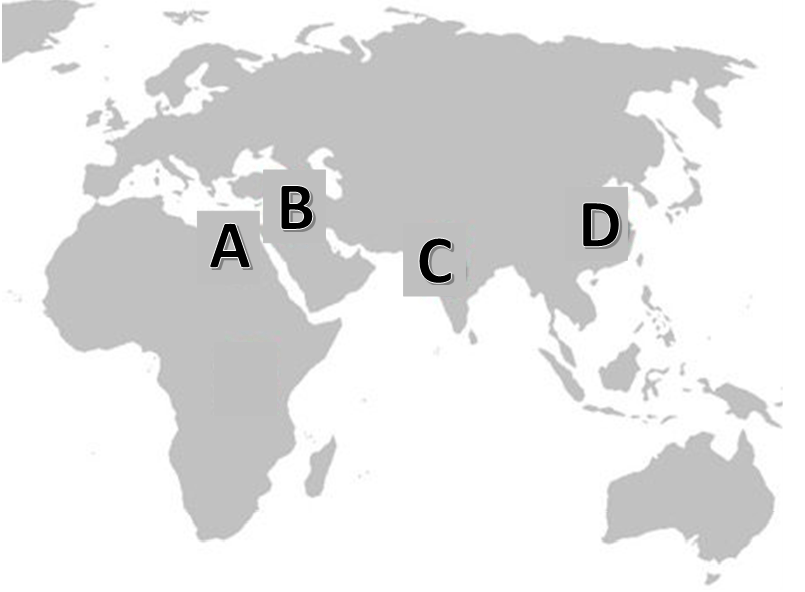
One of the reasons for the success of early civilizations such as those in Egypt and Mesopotamia was because _____: they used rivers and bodies of water for food. Which explanation of the Mandate of Heaven is most correct: The emperor ruled with the blessing of god. One of the great achievements of the Indus Valley civilization was _____: sophisticated plumbing and sewage systems. In China, Confucianism emphasized the idea that _____: harmony is achieved by proper behavior of each member of a family or society. Ziggurats in Mesopotamia best exemplifies which of the following processes: Use of monumental architecture to unify civilizations. The best single explanation for why so little is known about the Indus River Valley is that _____: their writing has never been deciphered and understood. Which of these played the largest role in Buddhism's spread throughout Asia from the 100s to the 700s CE? : The Silk Road. How did the Mandate of Heaven affect the government in China? : It allowed new rulers to justify overthrowing a declining dynasty. Confucianism differed from Hinduism in that _____: Confucianism emphasized earthly obligations without concerns relating to afterlife and rebirth. Why was the development of writing in the ancient world of the Sumerians and Egyptians so important? : . Using this excerpt from The Code of Hammurabi, what would be the punishment for a slave who slapped his master? : The slave's ear would be cut off. The __________ were the foundation for civic and religious laws for the Hebrew people: Ten Commandments. What set the Hebrews apart from the other groups and civilizations of their time and region: They practiced monotheism while others practiced polytheism.. The caste system, illustrated in the diagram, was used to _____: provide social control according to a person's birth in a class. Why were Egyptian farmers more fortunate than the farmers of Mesopotamia? : The Nile flooded at regular times; the Tigris and Euphrates flooded irregularly.. The beliefs expressed in this excerpt would agree with the Asian concept of _____: filial piety. The geographic factors presented here led to the development of which highly complex and distinctive civilization by the year 600 CE? : India. Which is the location of Mesopotamia, the Greek word for "between the rivers"? : B. Which location is Ancient China, where loess deposits would turn the river yellow and mountains and deserts helped this civilization from being invaded: D
The power of a court to review a law or an official act for constitutionality is known as ________. Judicial Review. The Court Case that established the principal of Judicial Review was: Marbury vs. Madison. The judicial philosophy of upholding all previously established laws unless there is a clear violation of the U.S. constitution is known as ___________. Judicial Restraint. The judicial philosophy of using the interpretive power of the courts to correct legal injustices is known as ___________. Judicial Activism. A formal request to have a case heard or reviewed by an appellate court is known as _________. This is the way most cases get to the Supreme Court. A Writ of Certiorari. The authority of a court to hear a case for the first time is known as __________. Original Jurisdiction. The authority of a court to review or hear a case after it has been decided at a lower court level is known as __________. Appellate Jurisdiction. An opinion by justices that disagree with the outcome of the case is known as a _______. Dissenting Opinion. An opinion written by justices that while they agree with the outcome of the case, they do not agree with the reasoning behind the final outcome is known as a _______. Concurring Opinion
The highest leader of a city Mayor. The leader of a state governor. The leader of the USA president. Responsible for making decisions that affect our country Federal Government. Uses tax dollars to take care of state parks State Government. The legislative branch of local government; Has many members who make laws city council. Takes care of the city by collecting trash, taking care of roads and sewers public works. Help keep us safe in fires, crimes and emergencies . Takes care of parks by keeping the space clean and safe. parks and recreation. Plans new schools, houses, buildings, and more in the community planning department
Test your world history knowledge with this quiz! Learn about the Byzantine Empire, and ancient civilizations. Perfect for history buffs. Try it now!
Explore key events in world history with this engaging worksheet. Perfect for students to learn and understand significant historical moments!
What was the main goal of the United States during the Cold War? To contain communism and promote democracy. What was the main goal of the Soviet Union during the Cold War? To spread communism to other countries. Which statement describes the Marshall Plan? An economic plan to spend 12.5 billion dollars on reconstructing Western Europe. Which of the following best describes the Truman Doctrine? Over 400 million dollars were given to various countries to fight off communism in their lands. During the Cold War Era, which best explains why the United States and the Soviet Union avoided real military conflict with each other? They were concerned about the possibility of global nuclear war.. The countries to the east of the bold black line were all members of what group? the Warsaw Pact. What is shown in the two marked areas on this map? the North Atlantic Treaty Organization and the Warsaw Pact. An "arms race" can be described as ... a race between nations to acquire the most powerful weapons. What event prompted the Soviet Union to form the Warsaw Pact? the formation of NATO. An economic and political system in which a country's trade and industry are controlled by private owners for profit, rather than by the state. Capitalism. A political theory derived from Karl Marx, advocating class war and leading to a society in which the government controls the economy, all property is publicly owned and each person works and is paid according to their abilities and needs. Communism. The policy of building a weapons arsenal so deadly that no other nation will dare attack Deterrence. A theory that if one nation comes under Communist control, then neighboring nations will also come under Communist control. Domino Theory . A nation that is dominated politically and economically by a more powerful nation, and thus depends on them is... Satellite. The policy of containment meant that The U.S. would not let Communism spread.. This was a military alliance between the United States, Canada, and Western European nations dedicated to mutual defence. NATO. Proxy War a war in which the powers in conflict use third parties as substitutes instead of fighting each other directly . What is the term used to describe the invisible line that separated communist Eastern Europe from democratic Western Europe? Iron Curtain
Warm up your world history knowledge with this quiz! Test your understanding of key concepts and civilizations. Perfect for students and enthusiasts!
Test your knowledge of world history timelines with this quiz! From ancient times to the present day. Perfect for history buffs. Take the quiz now!
Challenge yourself with this World history trivia quiz—fun, educational questions for students, teachers, and curious minds of all ages!
A concise 10-question multiple-choice quiz testing knowledge of essential historical terms and definitions. Explore key concepts that shape our understanding of past events and historical analysis.
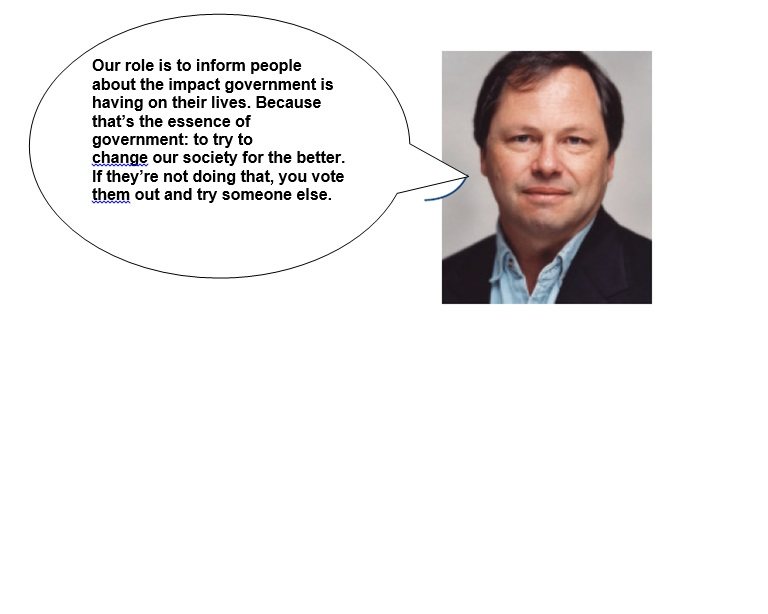
The document which outlines the way a country will be governed is called the:: Constitution.. Canada is a _____________ country: Democratic. Federal Government represents: All of Canada. Who is the symbolic head of government for Canada: The King. What are the three levels of government called in Canada: Municipal, Provincial, Federal. The Prime Minister is part of of this level: Federal government. In Canada, the Prime Minister is elected by: Being the leader of the party with the most votes. What does the executive branch do: enforces the laws. The head of Alberta's government is the ____________________: Premier. This level of government oversees the military: Federal. Trade is a responsibility of the..: Federal government. In most democratic countries, the government is divided in three branches: executive, legislative, and judicial. In Canada, the legislative branch is the ______: Parliament. Canada's parliament is made up of three houses: False. The people who lead the government agencies and advise the prime minister are called the Prime Minister's cabinet: True. To be Prime Minister in Canada you must be: All least 18 years, hold a seat in the House of Commons, and be the selected leader of your party.. The Cabinet is part of the executive branch of the federal government: True. The prime minister and the cabinet ministers make up the judicial branch: False. Where do the majority of Canadians live: In eastern Canada, near the southern border with the U.S.. One of the main jobs of the members of Parliament is to pass laws: True. True or False: The number of senators is the same for all Provinces: False. The main goal of the system of checks and balances is to make sure that no person or group has all the power in the government: True. How many Supreme Court Justices sit on the Supreme Court of Canada: 9. The ______________________ study laws to see if they are correct according to the Constitution: . The __________________________ Branch of our government makes the laws: Legislative. The Supreme Court is part of the legislative branch of the federal government: False. The _________________________ Branch of our government enforces our laws: Executive. A Member of Parliament or MP is:: An elected individual that represents the constituents of a defined riding in The House of Commons.. An electoral district represented by a MP is called a:: constituency . Currently there are how many seats in the House of Commons: 338. When the party in power has fewer than 50% of the seats, but more than other parties they are a: : Minority Government. The leader of a political party is normally chosen by: members of their party . The "chamber of sober second thought” of parliament is a term used to describe the responsibilities of the:: Senate. In the Canadian parliamentary system the Official opposition is:: the political party with the second largest number of elected members.. Which of the following is does not describe the functions of the cabinet: interpret the laws created in the legislative branch. The legislative branch of government:: makes new laws. . The executive branch of government:: puts laws Into effect.. After looking at the image which of the following statements is inaccurate: Approximately 16% of the Members of Parliament in Alberta are Liberal. The man speaking above is talking about the role of the: : Media. Which official is the last to sign a bill before it actually becomes law? : . Proposed legislation under consideration by the legislature is a: Bill. Tax bills must be raised in which House of Congress: House of Representatives . How old must you be to be in the House of Commons as an MP and the Senate as a senator: . What comes first in the lawmaking process: introducing a bill in either house
Hinduism is what type of religion? Monotheistic . Who is the founder of Hinduism? no specific founder. Hinduism developed in what country? India. What are good or bad deeds? karma. What is the belief that the soul is reborn? reincarnation. What are a set of physical and mental exercises as one way to achieve religious understanding? yoga. Who founded Jainism? Mahavira . According to Jainism, every creature in the world has a soul. True. Jains try to convert people to their religion. False. What country do almost five million Jains live in today? India
The Vedic religion is named for the Vedas, which are: a collection of sacred texts.. Which of these is the best reason for someone in India to study Sanskrit: To read the ancient texts.. What is the major difference between the old Vedic religion and Brahmanism: All of them.. To Hindus, the soul, or Atman is a part of: Brahman. How was the Hindu belief about karma related to the caste system: People are in a caste because of how they lived in past lives.. In the caste system, how were people in India placed into a certain social class: By birth.. The festival of Diwali, which begins the Hindu New Year, celbrates: the victory of good over evil.. Which job was a Shudra most likely to do: plow a field. A person who spoke these words most likely belonged to which cast? "I have been learning about battle. My father is showing me how to use different kind of weapons so I will be a good warrior.": Kshatriyas. Why did untouchables live in separate communities: They were considered unclean.. Which of these is true of most Hindu temples: They contain elaborate sculptures.. In some Hindu traditions, Brahma is the creator and Vishnu is the preserver. What does Shiva do: Destroy. The ancient social class system was called varna. What did early Hindus mean by varna dharma: Each caste had its own duties.. Which symbol best represents samsara, the Hindu view of birth, life, ans death: Circle. Hindus from all over the world travel to the Ganges River to bathe in its cleansing waters. This journey to a holy site is called: a pilgrimage.. How do people escape the cycle of reincarnation: All of the above.. The story of the Ramayana is often told to Hindu children to teach them all of the following EXCEPT: money can buy happiness.. The Hindu belief that the Ramayana best illustrates is: the belief in dharma.. How might Hindus expect karma to affect Sita in the story the Ramayana: Sita will be rewarded for following her dharma.
A comprehensive quiz with 25 multiple-choice questions covering key historical events, figures, and concepts from ancient to modern times.
What date was the Declaration of Independence signed? July 4, 1776. Who did the Declaration of Independence declare our independence from? England. How many colonies were converted into free states? 13. The Articles of Confederation were considered what? Weak and Ineffective. There were 55 delegates that came together in September of 1786 to make the US Constitution. This group was led by James Madison and Alexander Hamilton. What state did not send a delegate? Rhode Island. Who was elected to be president of the convention forming the US Constitution? George Washington. What plan was written by Edmund Randolf and contained the following:2 chamber legislatureexecutive elected by legislatureseparate judiciaryrepresentatives based on states population Virginia Plan. Smaller States. A compromise was presented by Roger Sherman from Connecticut. This proposal included a 2 Chamber Congress. One was the House of Representatives, what was the other? Senate. Who heads the Executive branch of our government? President. How are the members of the house of representatives chosen? Elected by the people of the states. How is the President elected? Electoral college composed of men chosen by voters of each state. The Bill of Rights. What is the purpose of the Bill of Rights? Protect the civil rights of the people. 10. Who was elected the first president by a unanimous vote? George Washington. Who was our first Vice President? John Adams. How many times has the constitution been amended in the last 200 years? 27. According to the Bill of Rights any powers not given to the government in the constitution are given to whom? The states or the people who reside in them. According to the constitution, just because some rights are not mentioned means what? just because they are not mentioned does not mean you do not have those rights
Delve into the history of the American Empire with this worksheet. Perfect to use for history class and research today. Download now!
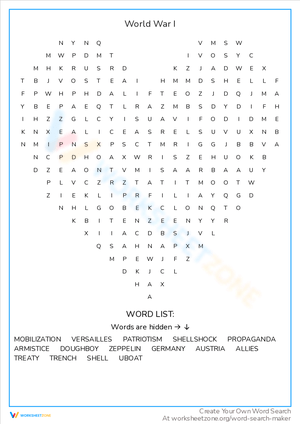
Learn about World War I with this comprehensive worksheet. Cover the causes and major events. Enhance your understanding of this significant historical period!
a meeting between the leaders of the Allied powers that resulted in a plan for peace after World War II Yalta Conference. the war crimes trials of Nazi leaders Nuremburg Trials. an alliance of nations that attempts to end disputes between countries peacefully United Nations. a period of hostility between Western powers and Communist powers Cold War. a foreign policy that attempts to stop the spread of communism without ending it in the countries in which it already exists Containment. a policy attempting to contain the spread of communism, beginning with military aid to the monarchies of Turkey and Greece Truman Doctrine. the idea that the U.S. could help rebuild wartorn Europe with loans and other economic aid Marshall Plan. an alliance of Western powers . a law that offered veterans money for school, houses, farms, and businesses GI Bill of Rights. President Truman’s legislative plan for the nation that included antilynching laws Fair Deal. also known as Chairman Mao, was a Chinese communist revolutionary who was the founder of the People's Republic of China Mao Zedong. the boundary between North and South Korea before the Korean War 38th Parallel. Senator who lent his name to the term McCarthyism. He dominated the U.S. political climate in the early 1950s through his sensational but unproven charges of communist subversion in high government circles. Joseph McCarthy. a thermonuclear weapon that gets its power from splitting a hydrogen atom Hydrogen Bomb. a growth in weapons based on the number of weapons an enemy country has Arms Race. the first artificial satellite, launched by the Soviet Union in 1957 Sputnik. the Cold War foreign policy designed to “get to the verge without getting into the war” Brinkmanship. a sharp increase in the number of American births during the 1950s and 1960s Baby Boom. Urban Renewal
The main job of the executive branch is to : enforce laws. The 15 department heads make up the President's __________________. : cabinet. Why did the founding fathers create the Electoral College to select the nation's president: They were not sure the people had the knowledge to make the best choice.. The branches of the federal are:: legislative, executive, and judicial.. Who is in line next if the President becomes incapacitated, resigns, dies or is removed from office: Vice President. How often to we vote for a President: every 4 years. Who leads the Executive Branch of the government: President. The Department of Energy would be involved if.... : the country decided to install new solar panels on all government buildings. The purpose of the President's cabinet is to : advise and help the President. Who makes up the Executive Branch: All of the above. Which of the following are constitutional requirements for being president: . What power does the President exercise when ordering soldiers into battle: . What is the President's yearly speech to Congress where he can propose laws to Congress: State of the Union Address. If the U.S. president and vice president are unable to serve, who becomes the chief executive officer of the country: The Speaker of the House of Representatives.. How long is a single term for President of the United States: 4 years. The person in this cabinet position is in charge of the U.S. Justice Department. : Attorney General. Negotiates, interprets, or terminates treaties and agreements and conducts negotiations relating to U.S. foreign affairs: Secretary of State
Test your world history knowledge with this quiz! From the Renaissance to the French Revolution. Perfect for history buffs. Start learning now!
Learn about primary sources, history, and community with this fun worksheet. A great way to practice critical thinking in social studies!
Who made the statement "An Iron Curtain has descended across the continent"? Winston Churchill. What major country was behind the "Iron Curtain"? Soviet Union. Who was the leader of Russia when the phrase "Iron Curtain" was phrased? Joseph Stalin. What is the purpose of N.A.T.O? Countries joining together to fend off attacks by other communist countries. In what country is the city of Berlin located? Germany. Why did Joseph Stalin block the city of Berlin from getting supplies after WWII? He wanted to make the people dependent on communist Germany for their needs. Which country was the aggressor that started the Korean War? North Korea. Which country did the U.S. send military aid to during the Korean War? South Korea. Who was the Senator who started rumors of the Red Scare? Joseph McCarthy. Which country was Nikita Khrushchev the leader of in the 1950's? Soviet Union. Khrushchev said, "We will bury you." To what coutnries was he directing this statement? S. and Great Britain. What type of race was the U.S. involved in with Russia in the 1950's? Arms. Which 2 superpowers were involved in the Cold War? The U.S. and the Soviet Union. Why did the U.S. enter the Korean War? It did not want another country to fall to communists. Why did the U.S. want the Soviet Union to remove its nuclear weapons from Cuba? Cuba is close to the U.S. border. What best describes the Soviet satellite Sputnik? The first satellite launched into space. Which of the following caused the Vietnam War? North Vietnam wanted all of Vietnam to be communist. What symbolizes the end of the Cold War? The Soviet Union broke up into 15 independent republics. Who was the leader of the communist government in North Vietnam? Ho Chi Minh. Which side ended up winning the Vietnam war and taking control of the entire country? North Vietnam. Who was the first man to set foot on the moon? Neil Armstrong. Which U.S. President challenged America to be the first to put a man on the moon? John F. Kennedy. What action caused the Cuban Missile Crisis? The Soviet Union placed missiles in Cuba that could be used against the U.S.. What important entertainment industry influenced Americans the most in the 1950's and 1960's? Television
Who has the power to declare war: Congress. Who has the power to print and coin money: Congress. Who is the Commander in Chief of the U.S. military forces: President. What is the length of term of office for members of the United States Senate: six years. What is the length of term for members of the U.S. House of Representatives: two years. What is the length of term of office for President of the United States: four years. How old must one be to hold the office of president of the United States: 35 years old. How many members of the Supreme Court are there: nine. What is the length of the term of office for justices of the U.S. Supreme Court: lifetime. Who has the power to settle disputes between different states: Federal Courts. Who must approve judges, cabinet members, and ambassadors that the president appoints to government positions: Senate. Who has the power to veto laws: President. How many amendments have been made to the Constitution: 27 amendments. How many branches does the American government have: Three. How old must a person be to be elected to the U.S. House of Representatives: 25 years old. What fraction of states must approve an amendment to the Constitution: Three fourths. Who has the power to nominate ambassadors and members of the cabinet: President. How old must one be to be elected to the United States Senate: 30. Which amendment gave women the right to vote: 19th Amendment
This quiz explores key milestones in the history of the FFA, including important dates, organizational changes, and notable events from 1928 to 2000.
This quiz covers geological processes such as weathering, erosion, fossil formation, volcanic eruptions, earthquakes, and the Earth's surface layers, testing knowledge of natural forces that shape landscapes and geological events.
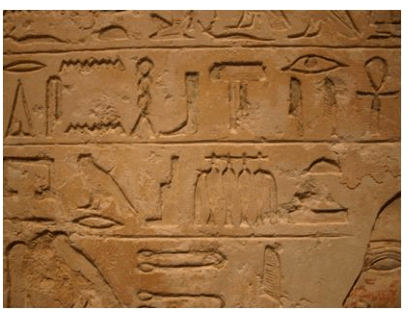
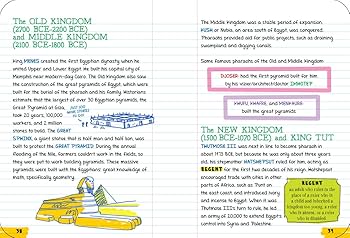
What were the names of rulers of Ancient Egypt Pharaoh. Who was responsible for deciphering the hieroglyphics Jean Francois Champollion. who unified Egypt into one kingdom? Menes. What does the word hieroglyphics mean? Sacred Writing. The way people manage money & resources for the production of goods and services. Economy. A professional writer of hieroglyphics who kept records & documents. Scribes. A reed plant that grows along the Nile, used for making paper scrolls. papyrus . A stone discovered in 1799 that helped to decipher hieroglyphics. Rosetta Stone. The joining of two separate parts into one. Unification. The architect who built the first “step pyramid” IMHOTEP
True. The President of the United States cannot be removed from office? False. The President is elected to a 6 year term of office? False. The President is elected when he receives a majority of the popular vote? False. The President has the power to nominate Supreme Court Justices? True. According to the current law which of the officers follows the President in the line of presidential succession? Vice President. The number of electoral votes each state receives is determined by the number of seats each state has in Congress.. Which of the following positions are appointed by the President? Cabinet. Who is the current President of the United States? Joe Biden. Who is the current Vice President of the United States? Kamala Harris
Find perfect worksheets
Grade + Topic search
Select your Grade level, Topic and Subject to find worksheets instantly or you can use keyword below to search what you need.
Make your own worksheets