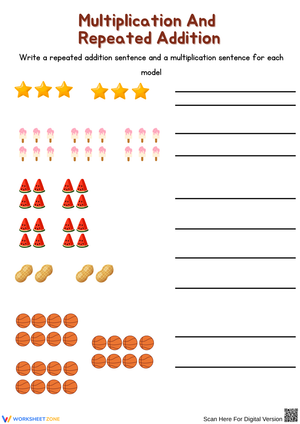
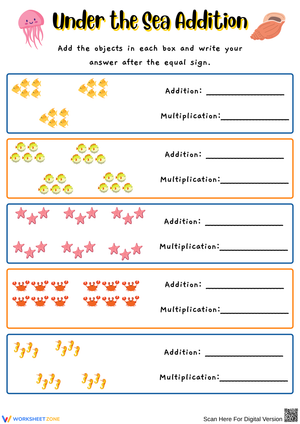
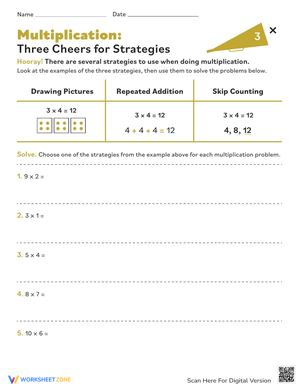
These multiplication repeated addition worksheets give 2nd and 3rd grade students a structured way to see the relationship between equal groups and multiplication notation before they're expected to recall facts automatically. Each worksheet asks students to represent the same quantity two ways — as a repeated addition sentence and as a multiplication equation — so the connection between operations becomes visible rather than assumed.
The Specific Skills Targeted
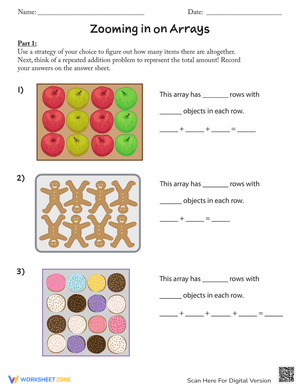
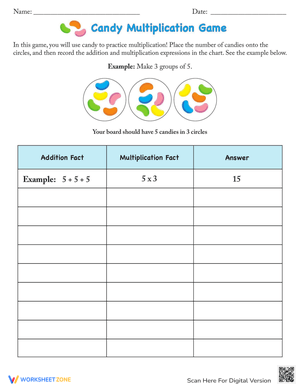
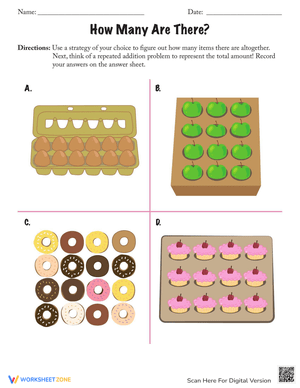
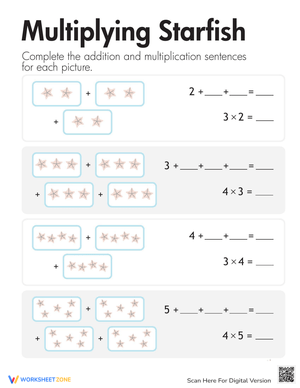
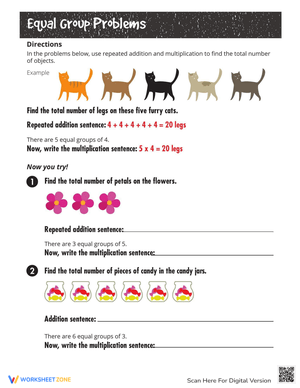
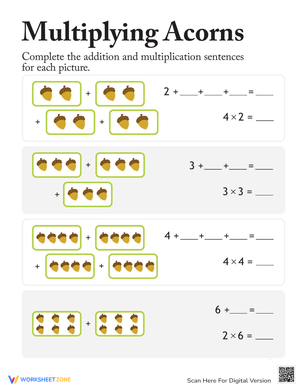
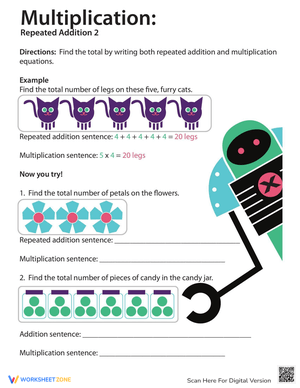
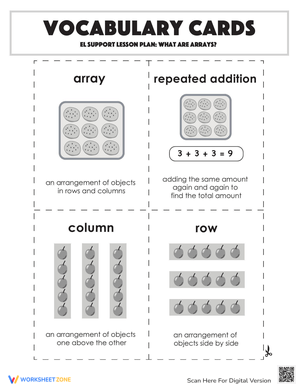
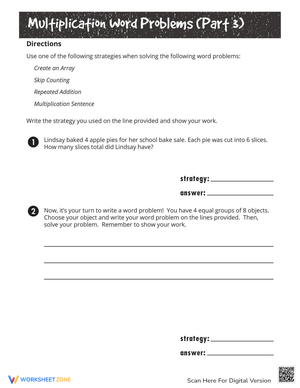
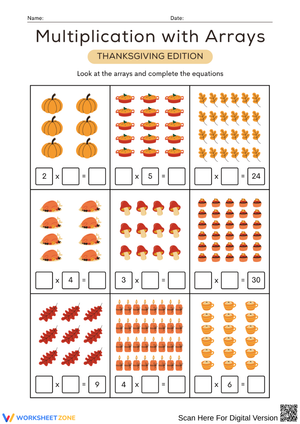
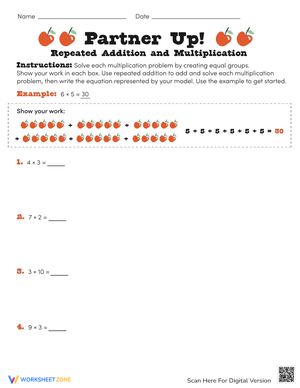
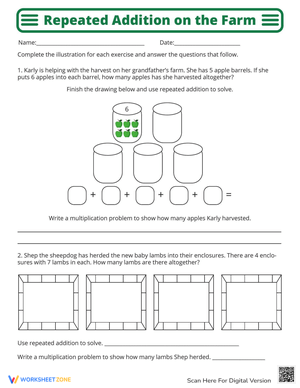
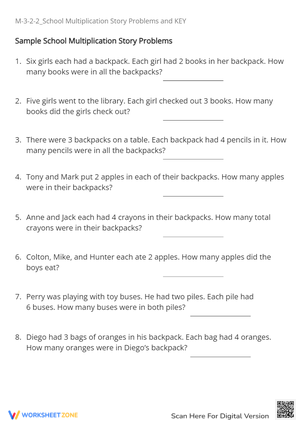
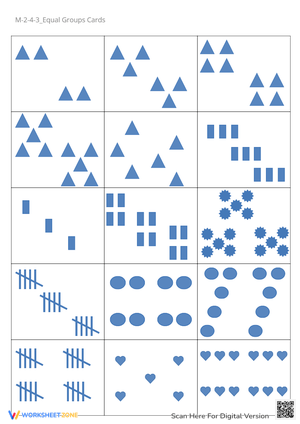
The worksheets cover six distinct formats, each designed to isolate a different aspect of the relationship between repeated addition and multiplication. Fill-in-the-blank equations give students a partial expression and ask them to complete both the addition and multiplication sentences. Equal groups drawings ask students to sketch circles and dots representing groups, then write both number sentences beneath the drawing. Number line worksheets have students mark equal hops and record what each jump represents as addition and as multiplication. Array-based problems ask students to identify rows and columns, then connect each row to one addend in the repeated addition sentence. Word problems require students to write the addition sentence first before translating it into multiplication notation, which forces the conceptual step rather than skipping straight to the equation. Cut-and-sort matching activities pair repeated addition expression cards with their multiplication equivalents, and work well at a center table.
The set is scaffolded to open with 2s and 5s — groups students can count quickly — before introducing 3s, 4s, and beyond. That sequencing matters because students who can already skip count by 5s find it natural to write 5 + 5 + 5 = 15 and then recognize that as 3 × 5 = 15. Starting with friendlier factors reduces cognitive load at exactly the moment students are learning a new notation system.
Standard Alignment
These worksheets address CCSS 2.OA.C.4, which asks 2nd graders to use addition to find the total number of objects arranged in rectangular arrays, and CCSS 3.OA.A.1, which defines multiplication in terms of equal groups and asks 3rd graders to interpret products as the total number of objects in a given number of groups. The repeated addition format is the instructional bridge between those two standards — it begins in the language of 2nd grade (addition) and ends in the language of 3rd grade (multiplication equations). Teachers working on a multiplication unit can use the earlier worksheets in the set for review of the 2.OA.C.4 standard and the later, notation-focused worksheets for direct instruction on 3.OA.A.1.
Why This Format Works at This Grade Level
Third grade is when multiplication shifts from informal exploration to a formalized operation with its own notation. That's a larger conceptual leap than it looks from the outside — students who've been adding for two years are now asked to interpret a symbol (×) that means something qualitatively different from what they've done before. Worksheets that place repeated addition and multiplication notation side by side on the same line make that leap smaller by showing both representations of the same fact in the same visual space. The student's eye moves from left to right across a single problem and lands on the multiplication equation having already built it from pieces they understand.
The three visual models used across the set — equal groups, arrays, and number lines — each illuminate a different aspect of multiplication. Arrays make the commutative property intuitive in a way that equal groups drawings do not; a 4-by-3 array rotated 90 degrees is a 3-by-4 array, and students can see that without being told. Number lines surface the connection to skip counting, which most 2nd and 3rd graders already have. Exposure to all three models gives students the flexibility to approach an unfamiliar fact from multiple angles, which matters when they hit a number like 7 × 8 that doesn't sit as cleanly in memory as 2 × 5.
Frequent Student Errors Worth Watching For
The most common error appears on equal groups problems: students write an addition sentence that mixes the number of groups with the group size. Faced with four groups of three, they write 4 + 3 = 7 instead of 3 + 3 + 3 + 3 = 12. This tells you the student is reading the two numbers in the problem as addends rather than understanding what each number represents. The worksheet makes that error visible on paper before the student moves to abstract fact practice, which is where it would go undetected for weeks.
A subtler error shows up when students write the multiplication equation with the factors reversed — 3 × 4 when the problem shows four groups of three. Whether this is a problem depends on what the teacher is trying to assess. If the goal is conceptual understanding of equal groups (four groups of three), then 3 × 4 is technically wrong even though the product is correct. Pointing this out explicitly during guided practice prevents confusion later when students encounter division and need to keep track of which number is the number of groups.
On number line worksheets, students sometimes draw unequal hops because they're placing marks by estimate rather than counting carefully. A quick classroom fix: have students say each hop aloud as they draw it ("three, six, nine, twelve") before writing the addition sentence. The vocalization slows them down enough to catch unequal jumps before they commit them to paper.
Building These Worksheets Into Your Lesson Plans
The most effective placement for this set is immediately after skip counting instruction and before any formal fact memorization work. That window — usually several weeks into a 3rd grade unit — is when students have the counting tools but haven't yet been asked to recall facts from memory. Introducing repeated addition worksheets here gives them a conceptual scaffold to carry forward.
For whole-group introduction, project the equal groups drawing worksheet on a document camera and complete the first problem together. Ask students to count the objects in one group aloud, then count how many groups there are, then build the addition sentence before you write the multiplication equation. That sequence — count the group, count the groups, add, then compress into multiplication — mirrors the reasoning students should internalize.
During guided practice, pairs work better than individual work because students verbalize their reasoning. A student who says "there are five groups of two, so five plus two…" will be corrected by a partner before the error reaches the paper. That peer correction moment is faster and often sticks better than teacher correction after the fact.
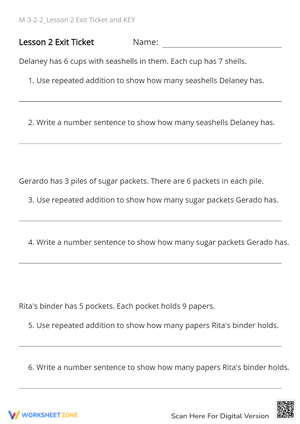
The word problem worksheets make a useful exit ticket at the end of any multiplication lesson. One problem, five minutes, handed in on the way out — and you have an immediate read on which students are still conflating the number of groups with group size and who's ready to move forward.
Adjusting the Worksheets for a Range of Learners
Students who are still building basic addition fluency benefit from the number line format first, since it offloads the arithmetic to a visual tool and lets them focus on the structural relationship between repeated addition and multiplication. Equal groups drawings and arrays can come after, once addition is more automatic.
For students who have already made the conceptual connection and are moving toward fact fluency, the cut-and-sort matching activity works as a timed challenge: how quickly can they sort a set of cards correctly? That adds a fluency dimension without abandoning the conceptual format that makes the set useful as a teaching tool rather than a drill.
Students who need re-teaching after initial multiplication instruction — the ones who can write 3 × 6 = 18 during a drill but can't explain what the 3 or the 6 means — return to the equal groups drawing worksheet and annotate directly on it: label each circle as "one group," label the dots inside as "how many in each group," write the addition sentence in pencil before the multiplication equation in pen. That physical distinction between the two representations slows students down in a useful way and rebuilds the meaning behind the notation they've been writing without understanding.
Frequently Asked Questions
What grade levels are these worksheets designed for?
The set is built for 2nd and 3rd grade. Second graders use the equal groups and array worksheets to develop early multiplicative thinking through addition. Third graders use the full set — including notation-focused and word problem worksheets — as they formalize the multiplication equation and connect it to the equal groups concept they began building in 2nd grade.
How do these worksheets fit alongside fact memorization practice?
These multiplication repeated addition worksheets are a conceptual foundation tool, not a fluency drill. The right sequence is to use them before students are expected to recall facts automatically. Once students can write both representations fluently and explain what each number in a multiplication equation means, they're ready to move to fact practice. For students who are already in fact practice but struggling, these worksheets serve as a re-teaching anchor.
Can the word problem worksheets be used as assessments?
Yes. A word problem that asks students to write the repeated addition sentence before the multiplication equation gives you two separate data points: whether the student can identify equal groups from context, and whether the student can translate that addition sentence into correct multiplication notation. Grading both steps separately gives a clearer picture of where a student is in the conceptual progression than a right/wrong score on the final answer alone.
Do arrays on these worksheets address the commutative property?
Array-based worksheets naturally set up a discussion of commutativity because a 3-by-4 array can be read as three groups of four or four groups of three depending on orientation. The worksheets present both interpretations for certain problems, asking students to write two different repeated addition sentences for the same array. That side-by-side comparison is often the moment students first grasp that 3 × 4 and 4 × 3 produce the same product for a structural reason, not by coincidence.













 Interactive Worksheet Maker
 Quiz Maker
 Word Search Maker
 Crossword Puzzle Maker
 Word Scramble Generator
 Sentence Scramble Generator
 Handwriting Worksheet Generator
 Name Tracing Generator
 Fill In The Blank Generator