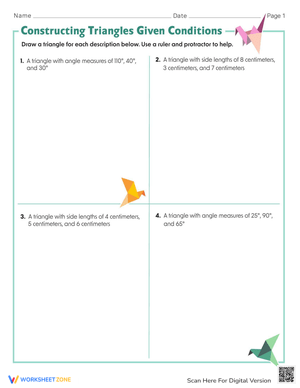
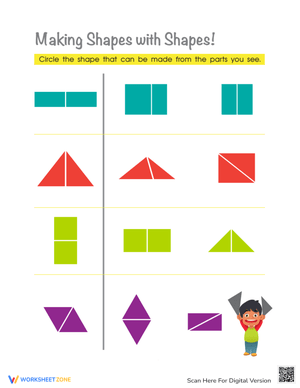
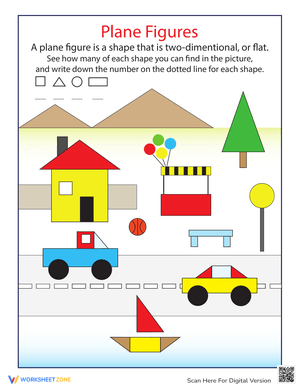
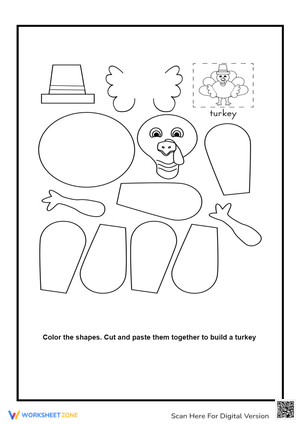
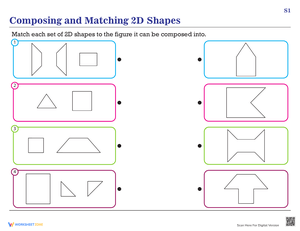
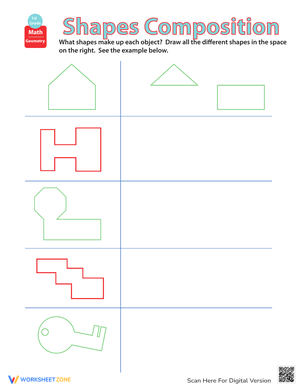
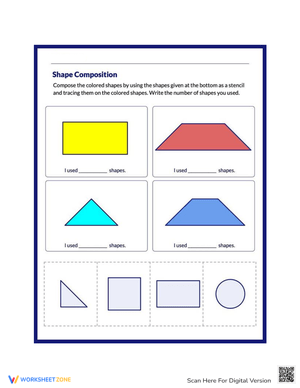
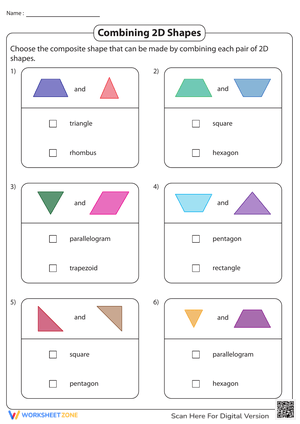
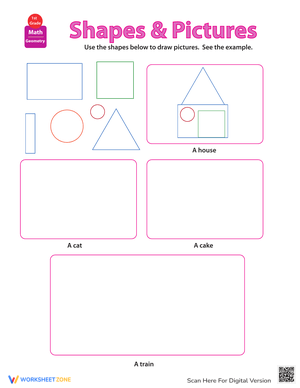
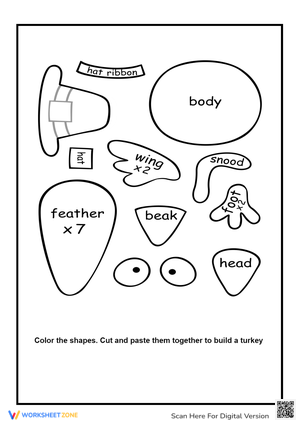
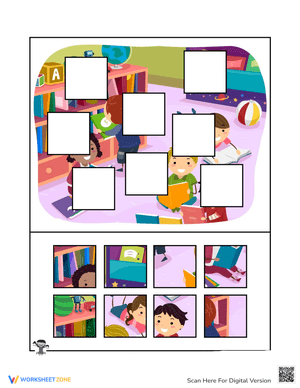
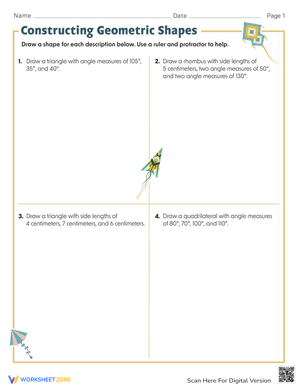
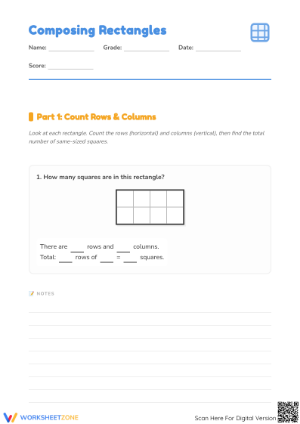
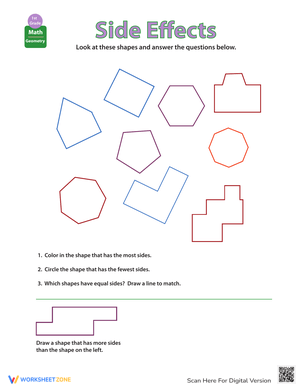
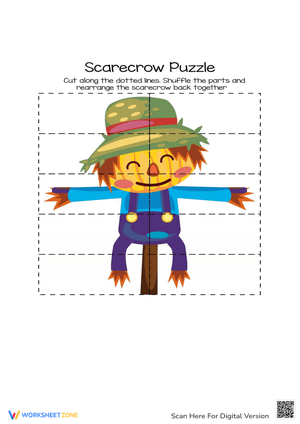
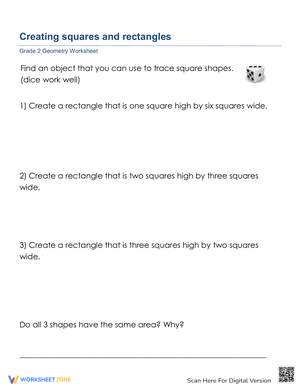
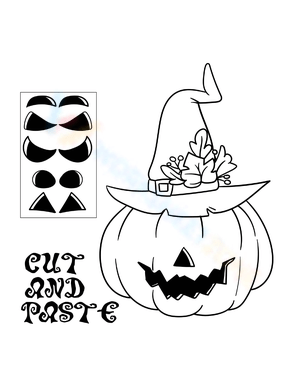
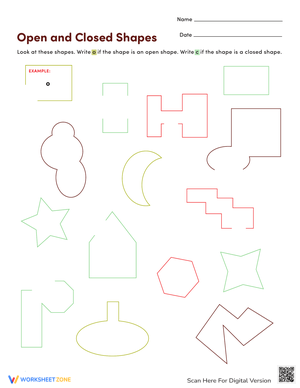
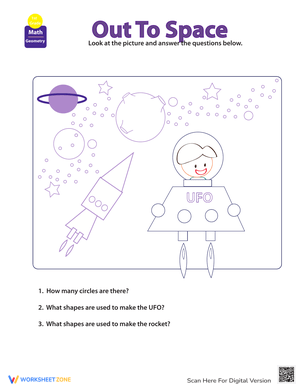
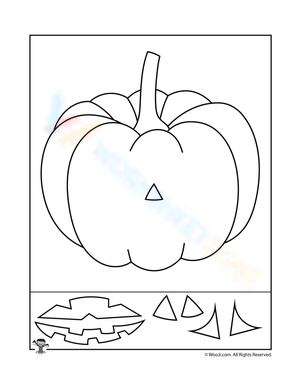
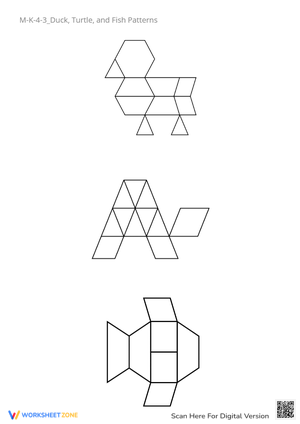
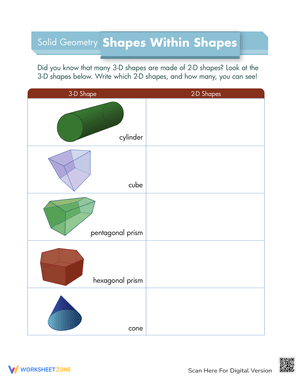
These composing shapes worksheets give kindergarten and first-grade teachers structured practice pages for one of the most cognitively demanding tasks in early geometry: not identifying a shape, but building one from smaller parts. Each page asks students to do something specific — place two triangles to form a square, fill a hexagon outline with trapezoids and rhombuses, or cut and paste a target composite figure from a bank of loose shapes. The mental work required is genuine, and the pages reflect that.
What Students Do on These Pages
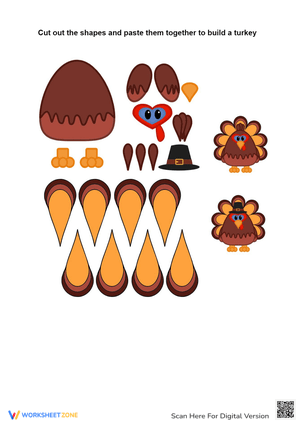
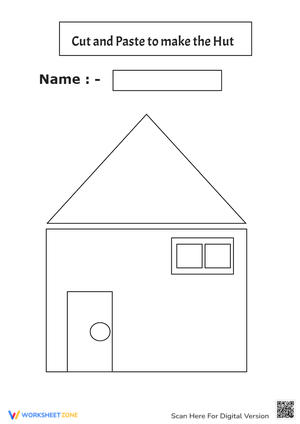
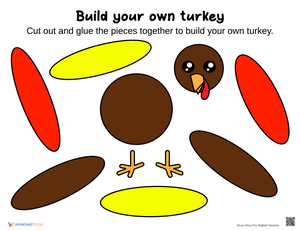
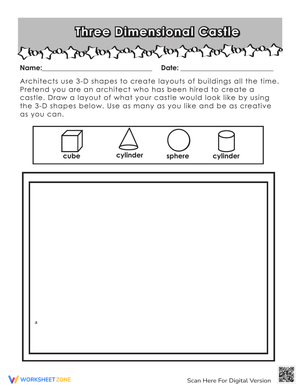
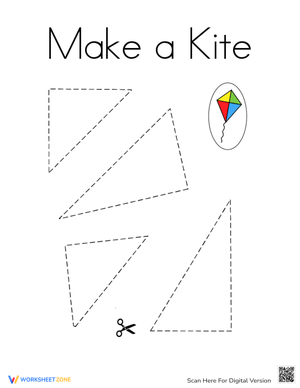
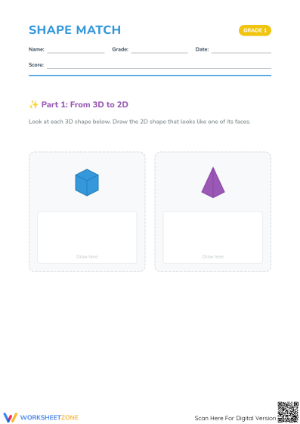
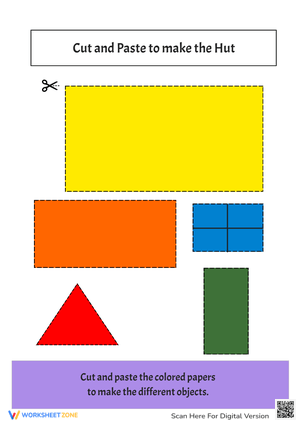
The activities fall into a few distinct formats, each targeting a different aspect of spatial reasoning. Pattern block mats show a complex outline — a boat, a star, an abstract design — and students fill it using standard classroom blocks, then record their work. Tangram puzzles ask students to recreate a silhouette using all seven pieces, which means they have to mentally rotate and flip shapes before committing to a placement. Cut-and-paste builders are the most concrete format: students cut individual shapes from a strip at the bottom of the page and assemble them into the composite figure shown above. A fourth format introduces simple three-dimensional composition — how a cylinder and a cone stack into a rocket, or how two rectangular prisms combine into an L-shaped block structure.
The range of formats matters because each one isolates a different spatial skill. Tangrams build mental rotation. Pattern block mats build part-whole visualization. Cut-and-paste tasks make the composition physical and reversible before it becomes permanent — students can try an arrangement, decide it's wrong, and reorganize without erasing.
Standards Alignment
Two CCSS geometry standards anchor this work directly.
- K.G.B.6 specifies that kindergartners compose simple shapes to form larger shapes — a rectangle from two squares, a triangle from two smaller triangles. The language is intentionally simple because the cognitive task is not.
- First grade extends this through 1.G.A.2, which requires students to compose two-dimensional and three-dimensional shapes to create composite shapes and understand the parts. The shift in language from "simple shapes" to named composite figures signals the increased expectation: students should not just produce the shape but recognize and name what they've built.
Composing shapes worksheets that address both standards give teachers a way to use the same format across the K-1 span while differentiating by what the page asks students to do after they fill the outline. That cross-grade continuity is useful in combination classrooms and helpful for first-grade teachers with students still working toward K-level targets.
Where These Fit in the Classroom Day
Cut-and-paste pages work well during the independent portion of a math workshop block, after a brief whole-group launch with magnetic shapes on the board. A reliable opening move: show students two triangles on the board and ask what they notice when you rotate one and slide it against the other. Give them thirty seconds to turn and talk before they touch their worksheets. That brief activation keeps them from immediately guessing rather than reasoning.
Pattern block mats run naturally as a math center. Laminate a set, add a basket of blocks, and students can reuse the same mat across multiple rotations without consuming paper. For accountability, pair the mat with a small recording sheet where students draw and color the blocks they used — this turns an informal center activity into something you can actually look at later.
Tangram puzzle pages are better suited for small-group instruction than independent work, at least initially. Watching a student work a tangram in real time tells you things a completed page cannot: whether they rotate randomly or with intention, whether they get stuck on the same piece repeatedly, whether they mentally anchor one shape and build around it. That process observation is harder to capture during a center.
Patterns You'll Recognize in Student Work
The most persistent error in shape composition tasks is orientation fixation — a student who knows that two right triangles form a square when arranged correctly but cannot make it work because they keep placing the hypotenuses on the outside instead of together. They'll try the same wrong placement three times before rotating. Worksheets that include a small worked example in the corner (showing one valid starting arrangement) reduce this looping without eliminating the productive struggle.
A second common pattern: students fill an outline correctly but cannot describe what they built. Ask a first grader which shapes they used and they'll point rather than name, or they'll say "two of those big triangles" without recognizing the pieces as trapezoids. The worksheets address this by including a labeling step — after filling the outline, students write or stamp the name of each component shape inside its region. That step transforms a spatial task into a vocabulary task, and both matter.
Students who have worked extensively with tangrams sometimes develop a different problem: they get very fast and start treating the pages as a race rather than a reasoning task. If you see a student finishing pattern block mats in ninety seconds flat, the next move is to hand them a blank hexagon outline and ask them to find three different ways to fill it — no blocks, just drawing. That constraint slows them down in a productive direction.
Frequently Asked Questions
Do students need physical blocks to use these, or can they work directly on the page?
Either approach works, but the strongest practice pairs both. Have students build the composition physically — blocks placed directly on top of the printed outline — before they draw or paste their final answer. That sequence lets them experiment without committing, then record when they're confident. Students who skip the physical step often paste shapes down before they've checked the fit, which produces a lot of crossed-out work and frustration.
How do these pages work for students who struggle with fine motor skills?
Cut-and-paste formats are the hardest physically, and some students lose significant time to cutting and gluing rather than geometry. For those students, switch to a drawing-only version of the same task — they draw each component shape inside the outline and label it — or use pre-cut foam shapes that skip the scissors entirely. The spatial reasoning goal is unchanged; the motor demand drops substantially.
At what point should a student be able to work on these independently?
Pattern block mats with clear target images and a basket of blocks nearby can run independently after one teacher-led demonstration. Tangram puzzles almost always need small-group support before students can work alone, because the frustration ceiling on tangrams is low and students who get stuck without support often give up rather than persist. Cut-and-paste builders fall in between — students can usually manage independently once they understand the format, but the first session benefits from a teacher present to clarify the task.













 Interactive Worksheet Maker
 Quiz Maker
 Word Search Maker
 Crossword Puzzle Maker
 Word Scramble Generator
 Sentence Scramble Generator
 Handwriting Worksheet Generator
 Name Tracing Generator
 Fill In The Blank Generator