Why This Worksheet Format Works in Kindergarten
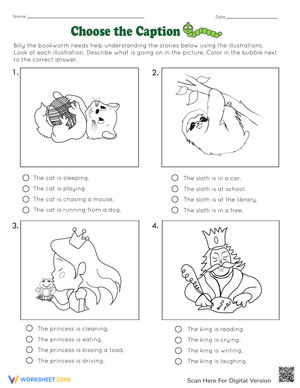
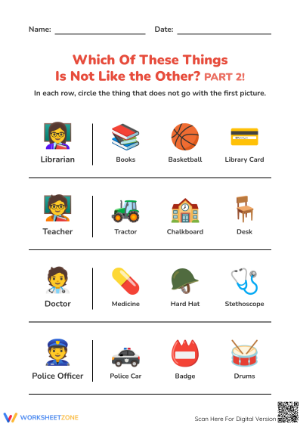
Kindergarten early literacy multiple choice worksheets printable sets work best when teachers need quick, structured practice that doesn't overwhelm new readers. In this grade band, students are still learning how print works, how spoken sounds connect to letters, and how to hold attention through short reading tasks. A well-designed multiple choice page keeps the thinking narrow: look at the picture, hear the word, notice the letter, and choose from a small set of options. That format is practical for morning work, literacy tubs, intervention folders, substitute plans, and same-day review after a mini-lesson.
For classroom use, the strongest pages stay tightly focused on one skill at a time. Instead of mixing rhyme, sight words, and letter names on the same sheet, teachers get cleaner evidence when each printable targets a single foundational reading move. That matters in kindergarten because students may know the concept orally but still struggle with page navigation, pencil control, or scanning too many choices. Multiple choice reduces those extra demands and makes the worksheet easier to use as an independent task.
Which Early Literacy Skills Fit Multiple Choice Best
Not every reading task belongs in a multiple choice format, but several kindergarten skills do. Recognition-based goals are the clearest match because students can show what they know without having to generate full written responses. That makes this format especially useful early in the year and during small-group reteaching.
- Letter recognition: Students identify a named letter, match uppercase to lowercase, or choose the correct letter from picture-supported options.
- Beginning sounds: Students look at an image and pick the letter that matches the first sound they hear.
- Rhyming: Students choose the word or picture that rhymes with a target word.
- Sight words: Students recognize a taught high-frequency word among simple distractors.
- Print awareness: Students identify where to start reading, point to a word, or choose a letter versus a picture when the task is presented visually.
This is where printable kindergarten early literacy multiple choice worksheets can save planning time. Teachers can match the page to a single objective, print it quickly, and use the results the same day. When answer choices are clear and supported by visuals, students can complete the work with less adult prompting and more valid evidence of the target skill.
What Developmentally Appropriate Printables Should Include
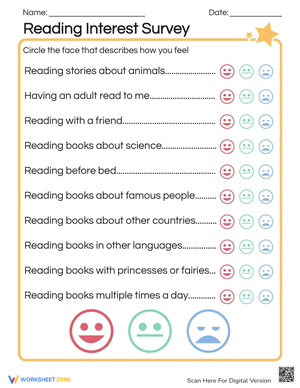
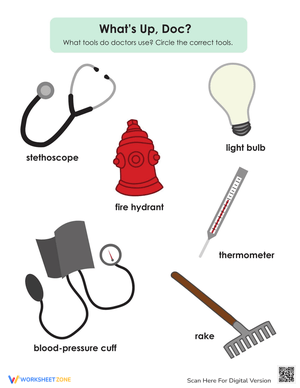
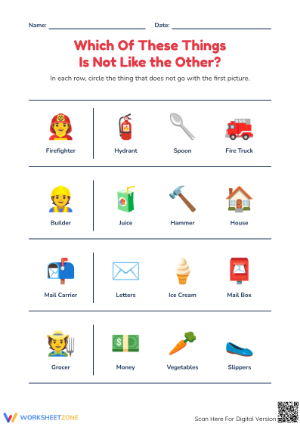
Teachers usually know within seconds whether a worksheet is usable for kindergarten. The page either looks clean and teachable, or it asks children to do too much at once. Developmentally appropriate early literacy printables keep the cognitive load low and the visual support high. Directions should be short enough to read aloud once and then restate with a gesture or model. Pictures should be large enough to anchor meaning. Answer choices should be limited, typically three or four, so students can scan successfully without losing focus.
Good multiple choice pages also use strong distractors. If the correct answer is obvious because the other options are unrelated, the sheet measures guessing more than literacy. For example, a beginning sound task is stronger when the distractors are plausible letter choices, not random symbols. A rhyme page is stronger when two options sound similar enough that students have to listen carefully. That balance helps teachers see whether a student is using the intended skill rather than relying on visual elimination.
Classroom Implementation
These worksheets are flexible because the task structure is simple, but implementation still matters. Teachers get better results when the worksheet is tied to a lesson sequence instead of dropped in as isolated busy work. A beginning sounds page, for example, works well after oral warm-up, sound boxes, or picture sorts. Students then approach the printable already primed for the sound discrimination the page requires.
- Morning work: Use one focused page to review a skill taught the day before and establish a calm start to the literacy block.
- Centers: Place a printable in an independent station with crayons, a model example, and directions students already know.
- Small groups: Give the same page to a targeted group and watch how students justify each choice aloud before marking answers.
- Fast finishers: Offer a short review sheet that extends current phonics or word work without introducing new directions.
- Homework: Send home pages with familiar formats so families can support practice without reteaching the lesson.
For intervention, teachers can reuse the same structure across several weeks while changing only the content focus. That consistency reduces transition time. Students don't have to relearn the routine, so the teacher can pay attention to the reading behavior itself. In busy kindergarten classrooms, that kind of efficient routine is often what makes printable practice worth using.
How Multiple Choice Data Can Improve Instruction
When a kindergarten student misses two of four beginning-sound items, the error pattern matters more than the raw score. If both mistakes involve letters with similar sounds or visually similar forms, the teacher may be seeing a discrimination issue rather than a total lack of understanding. That is why short multiple choice pages are useful as fast diagnostic snapshots: they isolate one reading behavior in a controlled format and let teachers sort students into the next right reteach group without waiting for a larger benchmark window.
Teachers can also compare independence with accuracy. A student who answers correctly only after repeated adult prompting may need more oral rehearsal before independent paper tasks. Another student may complete the sheet quickly but reveal weak stamina when the page includes too many items. Those observations help teachers adjust not only the target skill, but the task length, amount of visual support, and level of adult scaffolding. In practice, a strong printable does double duty: it provides rehearsal and yields usable planning information.
Source-Based Alignment for Foundational Reading Practice
Reading instruction at this level should stay grounded in foundational skills. Reading Rockets points educators toward print awareness, phonological and phonemic awareness, and alphabet knowledge as central parts of early literacy development, which matches the most effective use of kindergarten multiple choice practice. These pages are strongest when they ask students to recognize letters, connect sounds to symbols, and notice language patterns rather than complete broad comprehension tasks before they're ready.
Reading Rockets' 'Basics - Alphabet Knowledge' supports concise recognition work because students are distinguishing 26 uppercase and 26 lowercase letter forms across early reading tasks. That concrete number matters for worksheet design: with only 3 or 4 answer choices, teachers can measure identification more cleanly instead of overloading visual scanning.
Teachers working within the Common Core State Standards Initiative: English Language Arts Standards can also use these printables as one small source of evidence during foundational skills instruction. The sheets will not replace observation, read-aloud discussion, or oral language work, but they fit well as a quick checkpoint when the goal is to see whether students can identify a taught concept independently on paper.
How to Choose the Right Printable Set
The best set depends on where students are in the sequence of instruction. Early in the year, teachers may need pages focused on book handling, letter names, and initial sound awareness. As the year moves forward, sight word recognition and more precise phonological tasks become more useful. The key is to choose pages that match what students have already practiced aloud and with manipulatives.
Look for printable sets that make it easy to sort by objective. If one group needs rhyming review and another needs alphabet recognition, the materials should let the teacher assign distinct practice without rewriting directions from scratch. That is especially helpful in classrooms running small groups, intervention rotations, or mixed-readiness centers. Kindergarten early literacy multiple choice worksheets printable resources become much more valuable when they can support differentiated review without adding prep time.
Teachers should also consider whether the page can stand on its own. If a student can understand the task after a brief model and then complete it independently, the printable is doing its job. If the worksheet requires constant explanation, the format is too dense for the intended use.
Frequently Asked Questions
1. What skills should kindergarten early literacy worksheets cover?
They should focus on foundational reading skills such as print awareness, phonological awareness, phonemic awareness, and alphabet knowledge. In worksheet form, the clearest tasks are letter recognition, beginning sounds, rhyming, and simple sight word identification.
2. Are multiple choice worksheets appropriate for kindergarten readers?
Yes, when the task is recognition-based and the page is designed for young learners. Kindergarten students do well with short directions, large visuals, limited answer choices, and one skill per page. That structure supports independence without expecting too much reading stamina.
3. How can teachers use printable literacy worksheets in centers or homework?
In centers, use them after students already know the routine and the target skill. For homework, send familiar formats that review taught content rather than introduce something new. In both settings, the worksheet works best as reinforcement or a quick check, not as the full lesson.
4. What makes an early literacy worksheet developmentally appropriate for kindergarten?
A developmentally appropriate page keeps the layout uncluttered, uses clear picture cues, limits the number of choices, and measures one skill at a time. It should help teachers see what students know while keeping the reading and attention demands realistic for kindergarten learners.












 Interactive Worksheet Maker
 Quiz Maker
 Word Search Maker
 Crossword Puzzle Maker
 Word Scramble Generator
 Sentence Scramble Generator
 Handwriting Worksheet Generator
 Name Tracing Generator
 Fill In The Blank Generator