Easter Addition Worksheets Fit In Spring Math Instruction
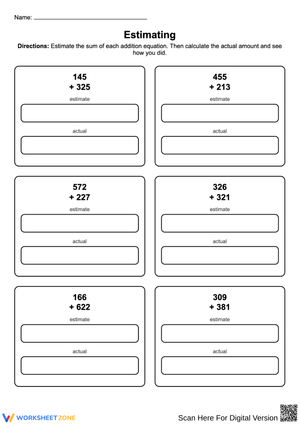
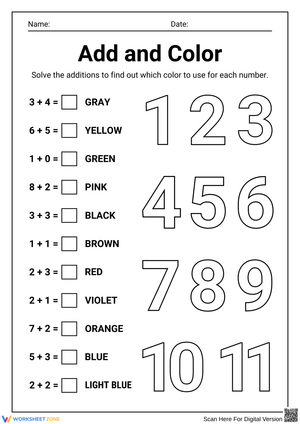
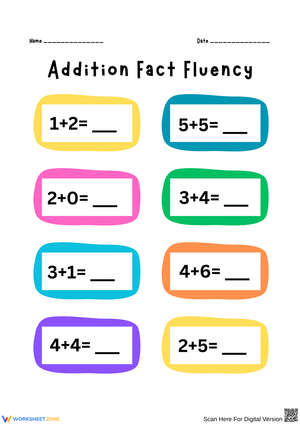
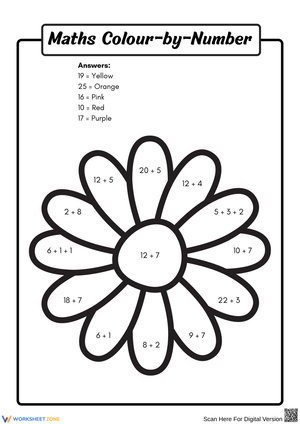
Late March and April bring a natural lull in K-2 pacing guides, right as spring break approaches and teachers look for engaging ways to keep addition skills sharp. Easter addition worksheets give kindergarten and first grade teachers a themed, low-prep option for morning work, math centers, or take-home practice during this window. Because the imagery, eggs, bunnies, and baskets, is already part of students' seasonal environment, the worksheets connect skill practice to something students are already talking about at home and in class. Instead of introducing a brand-new format two weeks before break, teachers can keep the same addition routines students already know and simply refresh the visuals, which cuts down on re-teaching classroom expectations.
Because Easter falls in late March or April depending on the year, most classrooms have a two-to-three week runway where these worksheets fit naturally into existing math blocks, rather than displacing core instruction. That timing also lines up with the point in the year when many first grade classrooms are consolidating sums within 20, making seasonal review a good match for where students already are.
Aligning Easter Addition Practice to CCSS.1.OA.C.6
For first grade classrooms, seasonal addition practice should map directly onto CCSS.MATH.CONTENT.1.OA.C.6, which expects students to add and subtract within 20, with fluency for sums within 10, using strategies such as counting on and making ten.
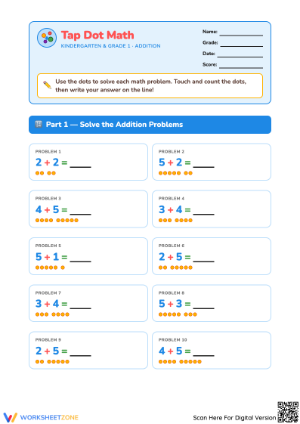
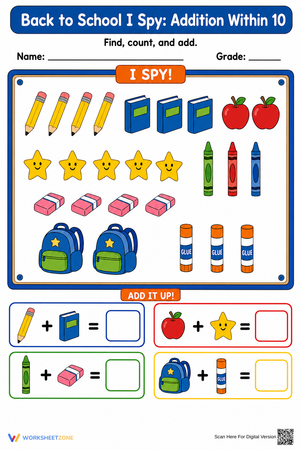
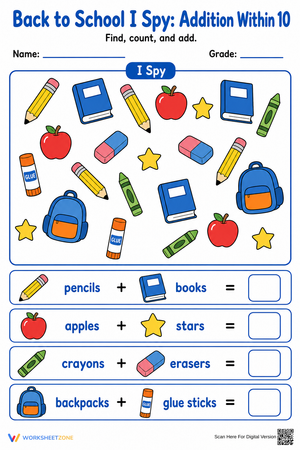
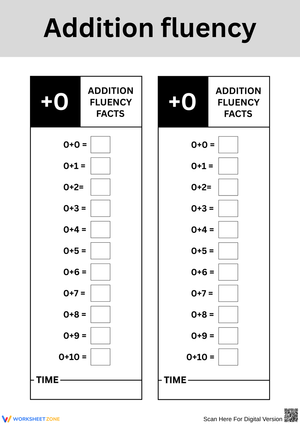
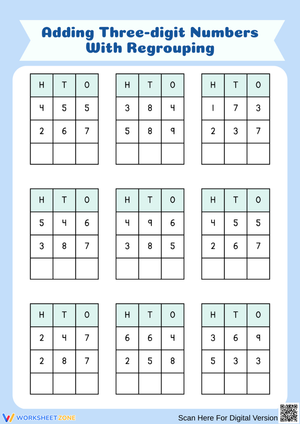
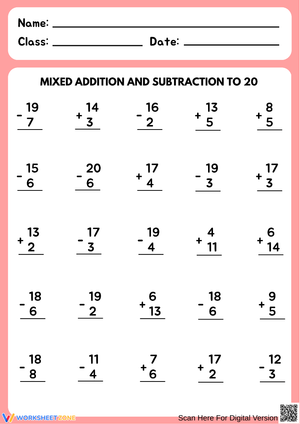
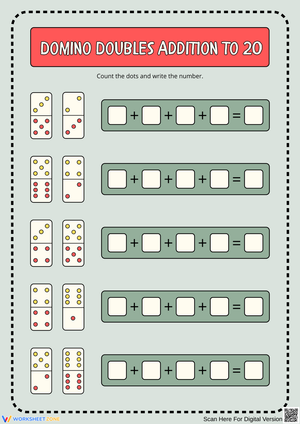
Teachers can use Easter addition worksheets as a quick strategy check: problems built around sums within 10, like 4+5 or 7+1, should be solved by automatic recall by the end of first grade, while problems that stretch to sums within 20, like 6+7 or 8+6, are the moments to watch for strategy use, such as counting on from the larger number or bridging through ten, rather than a guess or a restart from one.
Sorting a worksheet's problem set into these two bands before printing lets a teacher decide, in advance, whether the page is meant to measure recall speed or strategy use, which changes how the page should be scored and discussed afterward.
Using Egg, Bunny, and Basket Visuals to Support Strategy Use
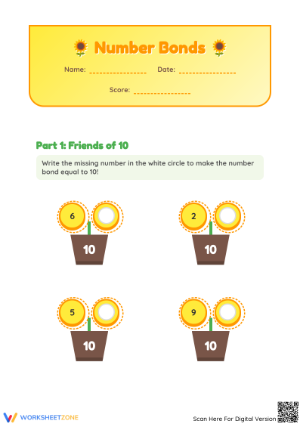
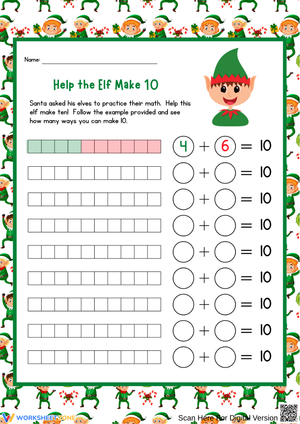
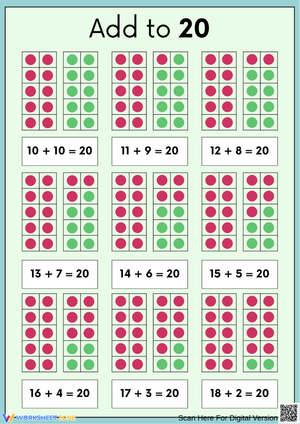
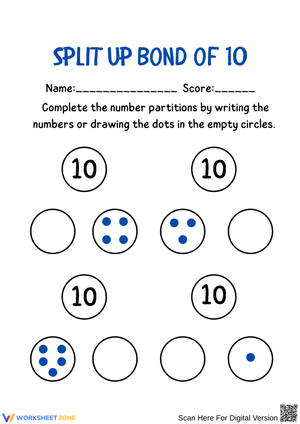
Seasonal visuals are not just decoration. When a worksheet shows ten eggs in a basket with some shaded and some blank, it gives students a built-in ten-frame model for making ten, one of the core strategies named in the first grade standard. Bunny and basket groupings can also support counting-on: a picture with 6 eggs already in a basket and 3 more being added invites a student to start at 6 and count on, instead of starting over at 1 every time.
Framing the same strategy work through spring imagery can make the practice feel like a fresh activity rather than a repeat of a worksheet students have already seen in a different color earlier in the year. For students who are still counting all from one, a basket drawn with a visible five-group or ten-group structure gives them a scaffold toward counting on without requiring a separate mini-lesson.
Classroom Implementation
Easter addition worksheets work well in short, repeatable classroom routines rather than as a one-time event. Consider these placement options across a spring week:
- Morning work: one worksheet as students arrive, reviewed together during morning meeting.
- Math center rotation: a themed addition station alongside a manipulatives station and a fact-fluency game.
- Homework or take-home folder: a single page sent home the week before Easter break, paired with a note asking families to use household items like buttons or coins if a student needs support.
- Early finisher task: extra worksheets available for students who complete core math work early, keeping fact practice going without new instruction.
Keep an eye on which students still need to count on their fingers for sums within 10. That is useful, real-time information for planning small-group intervention before end-of-unit assessments, and it costs nothing extra beyond a quick scan of completed pages.
Frequently Asked Questions
1. What grade level are Easter addition worksheets best suited for?
They work best for kindergarten and first grade classrooms. Kindergarten versions should stay within sums to 5, while first grade versions can range from sums within 10 up to sums within 20, matching the progression in CCSS.MATH.CONTENT.1.OA.C.6.
2. How can teachers use Easter addition worksheets to support CCSS addition fluency goals?
Use worksheets with sums within 10 to check automatic recall, and worksheets with sums within 20 to observe whether students apply a strategy such as counting on or making ten, which is exactly what the standard asks first graders to demonstrate.
3. Can Easter addition worksheets be used for both in-class practice and homework?
Yes. The same worksheet can serve as a math center task, a morning work page, or a take-home practice sheet in the two to three weeks before Easter break, since the skill target stays consistent across settings.
4. How do seasonal themes like Easter help with student engagement during math practice?
Seasonal imagery connects familiar, real-world content to a repetitive academic task, which can make fact practice feel fresh even when the underlying addition skill has not changed.














 Interactive Worksheet Maker
 Quiz Maker
 Word Search Maker
 Crossword Puzzle Maker
 Word Scramble Generator
 Sentence Scramble Generator
 Handwriting Worksheet Generator
 Name Tracing Generator
 Fill In The Blank Generator




 BACK TOSCHOOL