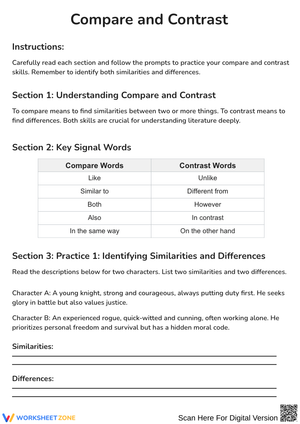
By 8th grade, students are expected to do more than simply list how two topics are alike and different. They need to explain meaningful connections, organize ideas clearly, and support their thinking with evidence. 8th grade compare and contrast worksheets help students build these skills step by step. Through graphic organizers, paired passages, writing prompts, and sentence frames, learners can practice comparing characters, themes, historical events, arguments, texts, and real-world topics with greater depth.
A strong compare and contrast activity should push students beyond surface-level answers. Instead of writing that two characters are “both brave” or “different because they live in different places,” students should learn to ask why those similarities and differences matter. Worksheets can guide them to identify categories for comparison, such as motivation, conflict, point of view, setting, theme, evidence, or outcome. This helps students build stronger analytical thinking before they begin writing full paragraphs or essays.
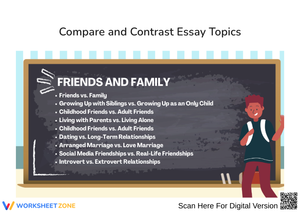
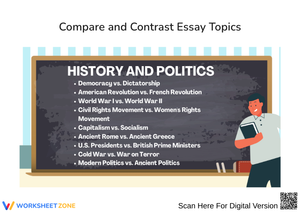
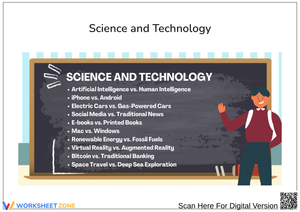
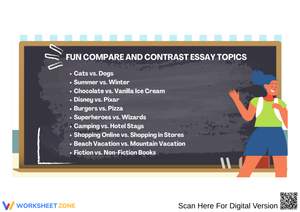
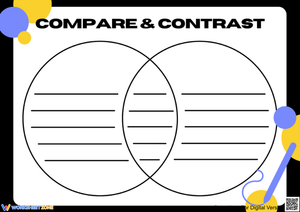
For many 8th graders, the challenge is not understanding the two topics but organizing their ideas. Some students may benefit from a Venn diagram, while others may need a T-chart, comparison matrix, or paragraph planning outline. Once students can organize their thoughts visually, they are better prepared to write clear topic sentences, use transition words, and explain evidence. Teachers looking for writing inspiration can use compare and contrast essay topics to give students age-appropriate prompts that encourage deeper discussion.
Compare and contrast practice also supports reading comprehension. When students compare two passages, they must read carefully, notice details, and think about how authors develop ideas differently. They may compare fiction and nonfiction texts, two poems, opposing arguments, or different accounts of the same event. These activities prepare students for more advanced writing tasks because they must evaluate information, make connections, and explain their reasoning clearly. For focused practice, compare and contrast worksheets can help students strengthen both planning and writing skills.
Whether used in classrooms, homeschool lessons, tutoring sessions, or writing review blocks, 8th grade compare and contrast worksheets give students a practical framework for analytical writing. They support organization, evidence use, transition words, paragraph development, and critical thinking. With consistent practice, students can move from simple comparisons to thoughtful explanations that show how two subjects connect, differ, and reveal larger ideas.
Frequently Asked Questions
Question 1: What skills do 8th grade compare and contrast worksheets help students practice?
These worksheets help students practice identifying similarities and differences, organizing ideas, using evidence, writing topic sentences, and developing clear comparisons. Students also learn how to use transition words such as similarly, however, in contrast, both, unlike, and on the other hand. These skills are important for literary analysis, argumentative writing, informational writing, and essay preparation in middle school and high school.
Question 2: What topics work well for 8th grade compare and contrast writing?
Good topics for 8th graders should encourage thoughtful analysis rather than simple listing. Students might compare two characters, two themes, two historical events, two authors’ viewpoints, two poems, two inventions, or two sides of an argument. Strong topics give students enough detail to discuss similarities and differences while also allowing them to explain why those comparisons matter.
Question 3: How can teachers use compare and contrast worksheets in class?
Teachers can use these worksheets during reading lessons, writing workshops, essay planning, small-group instruction, or test preparation. A teacher might begin with a graphic organizer, guide students through a paired-text comparison, and then ask them to turn their notes into a paragraph or essay. The worksheets can also be used for partner discussions, exit tickets, or revision practice when students need help strengthening organization and evidence.
Question 4: How can students write stronger compare and contrast paragraphs?
Students can write stronger paragraphs by choosing clear points of comparison before they begin. Instead of writing random similarities and differences, they should focus on categories such as character motivation, theme, problem, solution, tone, or evidence. A strong paragraph should include a topic sentence, specific examples, transition words, and an explanation of why the comparison is important. Planning with a worksheet first can make the final writing clearer and more organized.












 Interactive Worksheet Maker
 Quiz Maker
 Word Search Maker
 Crossword Puzzle Maker
 Word Scramble Generator
 Sentence Scramble Generator
 Handwriting Worksheet Generator
 Name Tracing Generator
 Fill In The Blank Generator