Literary elements pdf worksheets for 8th grade give teachers ready-to-use practice that moves students past surface-level recall and into the kind of evidence-based analysis that 8th grade ELA demands. Each worksheet pairs a short reading passage with text-dependent questions — not definition-matching, but the thinking where students point to a specific line, explain what a detail reveals, and connect it to how the author built meaning. That's the work.
The Specific Skills Targeted
These worksheets cover the literary elements students return to all year, building both identification and analysis across the set:
- Plot structure — tracking how rising action and turning points build narrative tension
- Theme — moving from topic labels to full thematic statements supported with evidence
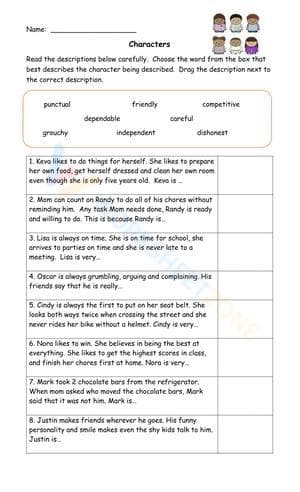
- Characterization — reading actions, dialogue, and internal thought to draw conclusions about motivation
- Conflict — distinguishing internal from external conflict and explaining how each drives the narrative
- Setting — analyzing how time and place shape mood or intensify conflict
- Point of view — examining how the narrator's position shapes what readers know and don't know
- Tone and mood — using word choice and sensory detail as evidence for emotional effect
- Figurative language — explaining what a metaphor or image does in context, not just naming the device
Literary elements pdf worksheets for 8th grade ask students to back every claim with a quoted phrase or sentence and then explain the connection — the same analytical move they'll need on class assessments and state reading tests. Identification without explanation is the habit these worksheets work against.
Mistakes Students Make That These Worksheets Help You Catch
Two errors appear in nearly every 8th grade classroom. The first is the theme-versus-topic collapse. Students write "the theme is loyalty" when the question asks for a thematic statement — a sentence expressing what the text says about loyalty. That gap is not a vocabulary problem; it's a conceptual one, and it won't resolve without repeated practice with questions that force the distinction. The second is the tone-versus-mood swap. Students understand both words emotionally but mix them in writing: they'll describe the "mood" as "sarcastic" (which names the author's attitude, i.e., tone) and the "tone" as "creepy" (which names the reader's emotional response, i.e., mood). These are not careless errors. They come from underexposure to questions that hold the two concepts apart.
Point of view creates a different problem. First-person narration is usually identifiable without difficulty. Third-person limited is where the reading breaks down — students assume all third-person narrators know everything, so they can't distinguish which details are filtered through a character's perception versus which ones the author presents as fact. Worksheets that use third-person limited passages and ask "what does the narrator not tell us here?" make that distinction click faster than any definition chart does.
Fitting These Worksheets Into Your Weekly Lesson Plans
The most efficient structure is one element per day Monday through Thursday, then a mixed-element worksheet on Friday. Monday targets plot and conflict — both connect to narrative tension, so the thinking transfers cleanly. Tuesday shifts to characterization. Wednesday focuses on theme, the skill that needs the most deliberate repetition. Thursday covers point of view and tone. The Friday worksheet uses a short passage and asks students to address three or four elements at once, because it teaches students that literary elements are not isolated categories. They interact, and reading carefully means noticing how.
Ten to twelve minutes before the bell is the right window for daily practice. Students can read a paragraph-length passage and answer two or three evidence-based questions in that time without the routine swallowing a lesson. For sub plans, a worksheet with a clearly worded passage and an answer key holds independent work together without requiring a long written explanation of procedures.
One high-return teaching move: keep the same passage across two or three sessions and change only the question set. Students who reread a short text through different analytical lenses start to see that literary analysis is not a hunt for isolated terms — it's a process of building meaning from evidence. When that shift happens, writing improves fast. Students stop summarizing plot and start explaining authorial choices.
Standard Alignment
These worksheets align most directly to CCSS.ELA-LITERACY.RL.8.1 (citing textual evidence to support analysis), RL.8.2 (determining theme and analyzing its development), RL.8.3 (analyzing how plot, setting, and characterization interact), RL.8.4 (word choice and figurative language), and RL.8.6 (point of view and purpose). In classroom terms, RL.8.2 and RL.8.3 carry the most instructional weight across a typical novel or short story unit — they're the standards most commonly assessed on 8th grade unit tests. RL.8.1 is technically active in every question that asks students to cite a line of evidence, which means it underlies every worksheet in the set regardless of which element is in focus. State reading tests regularly include items that mirror RL.8.2 and RL.8.6, so teachers who run consistent short practice throughout a unit are building direct test-readiness — not just reviewing during the week before.
Adjusting the Worksheets for a Range of Learners
The same worksheet serves different students when teachers adjust how students access the text and what they're expected to produce. For students who struggle with reading fluency, select shorter passages with clear story structure — two or three characters, a single visible conflict — and add annotation cues printed at the top: Underline the sentence where the conflict begins or Circle one word that signals the mood. Those cues give students an entry point without telegraphing the answer. On the response side, sentence starters move students from blank page to written claim: "The author reveals the character's motivation when she writes '____,' which suggests..." That structure reduces the cognitive burden of producing academic language while keeping the analytical thinking intact.
For students reading at or above grade level, the question itself is the lever. Keep the passage the same, remove the guided cues, and add a challenge prompt: "Identify the point of view and explain one piece of information the narrator withholds — and what effect that withholding has on the reader." That question asks students to hold point of view, narrative choice, and reader effect in mind at the same time. Students who are ready for it produce the kind of analysis that directly prepares them for high school English.
Frequently Asked Questions
Which literary elements appear most often on 8th grade assessments?
Theme and characterization carry the most weight on unit tests and state reading exams. Students are regularly asked to state a theme and support it with textual evidence, or to explain how a character changes and what drives the change. Point of view questions appear frequently as well, especially those involving third-person limited narrators. Literary elements pdf worksheets for 8th grade that tie every question to a specific line of evidence build exactly the habits those assessments require.
Do these work for small-group reteaching or intervention?
Yes. Because each worksheet concentrates on one skill, reteaching stays focused. If a quiz reveals that a group of students can't form a thematic statement, pulling a theme-focused worksheet and working through it together — asking students to explain their thinking aloud before writing — surfaces the specific conceptual gap faster than re-teaching to the whole class. The print format makes it easy to annotate in real time, circle evidence together, and talk through why a particular line supports or doesn't support a given thematic claim.
Can these substitute for a full novel unit?
No. Literary elements pdf worksheets for 8th grade work best as consistent practice running alongside a novel or short story unit — they reinforce the analytical moves students need when working with longer texts. The passage-plus-questions format is a practice vehicle, not a curriculum replacement. Passage length is intentionally short so the routine is sustainable across a full unit without crowding out extended reading.
What passage types hold 8th graders' attention?
Realistic fiction and suspense passages work well — students read more carefully when they're genuinely curious about what happens. Historical fiction excerpts and adapted classic-style passages add variety and push students to consider how time period and setting shape meaning. A text that runs between 150 and 300 words is usually long enough to contain two or three pieces of evidence worth analyzing, and short enough that the worksheet fits into a warm-up block rather than consuming a full period.















 Interactive Worksheet Maker
 Quiz Maker
 Word Search Maker
 Crossword Puzzle Maker
 Word Scramble Generator
 Sentence Scramble Generator
 Handwriting Worksheet Generator
 Name Tracing Generator
 Fill In The Blank Generator