


























Views
Plays

Printable Civics & Government Quiz | Grades 5-8
Paste this activity's link or code into your existing LMS (Google Classroom, Canvas, Teams, Schoology, Moodle, etc.).
Students can open and work on the activity right away, with no student login required.
You'll still be able to track student progress and results from your teacher account.
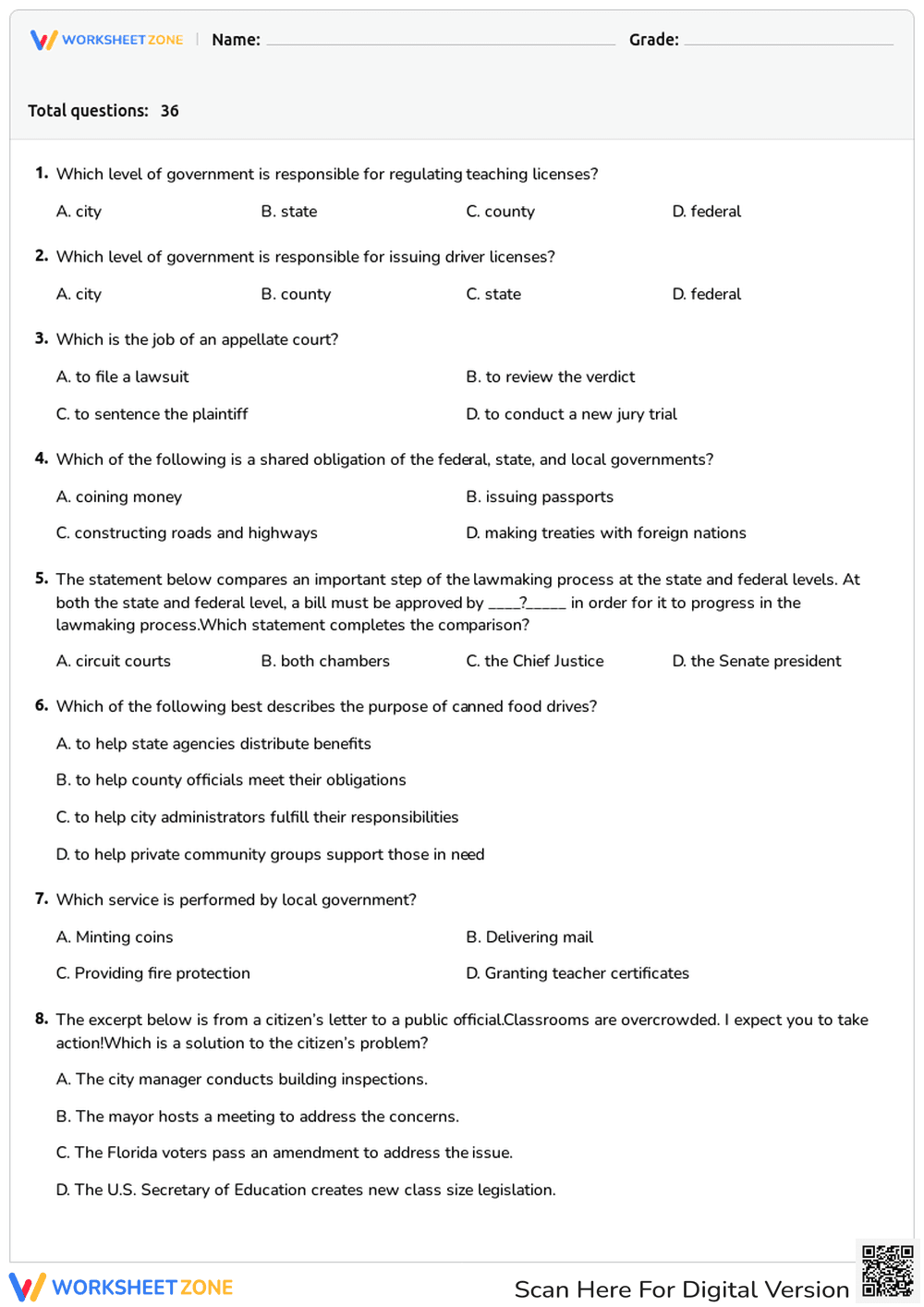
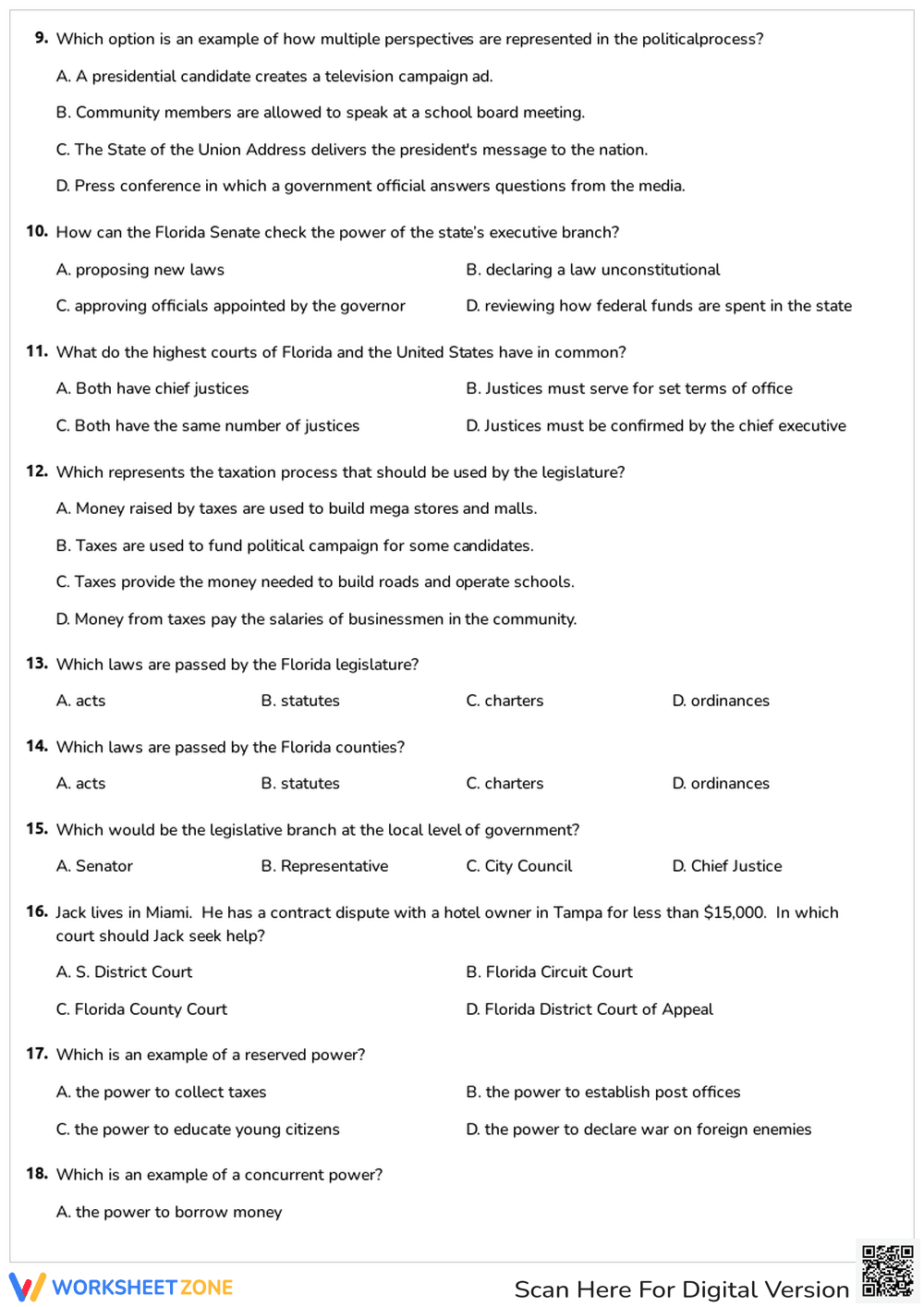
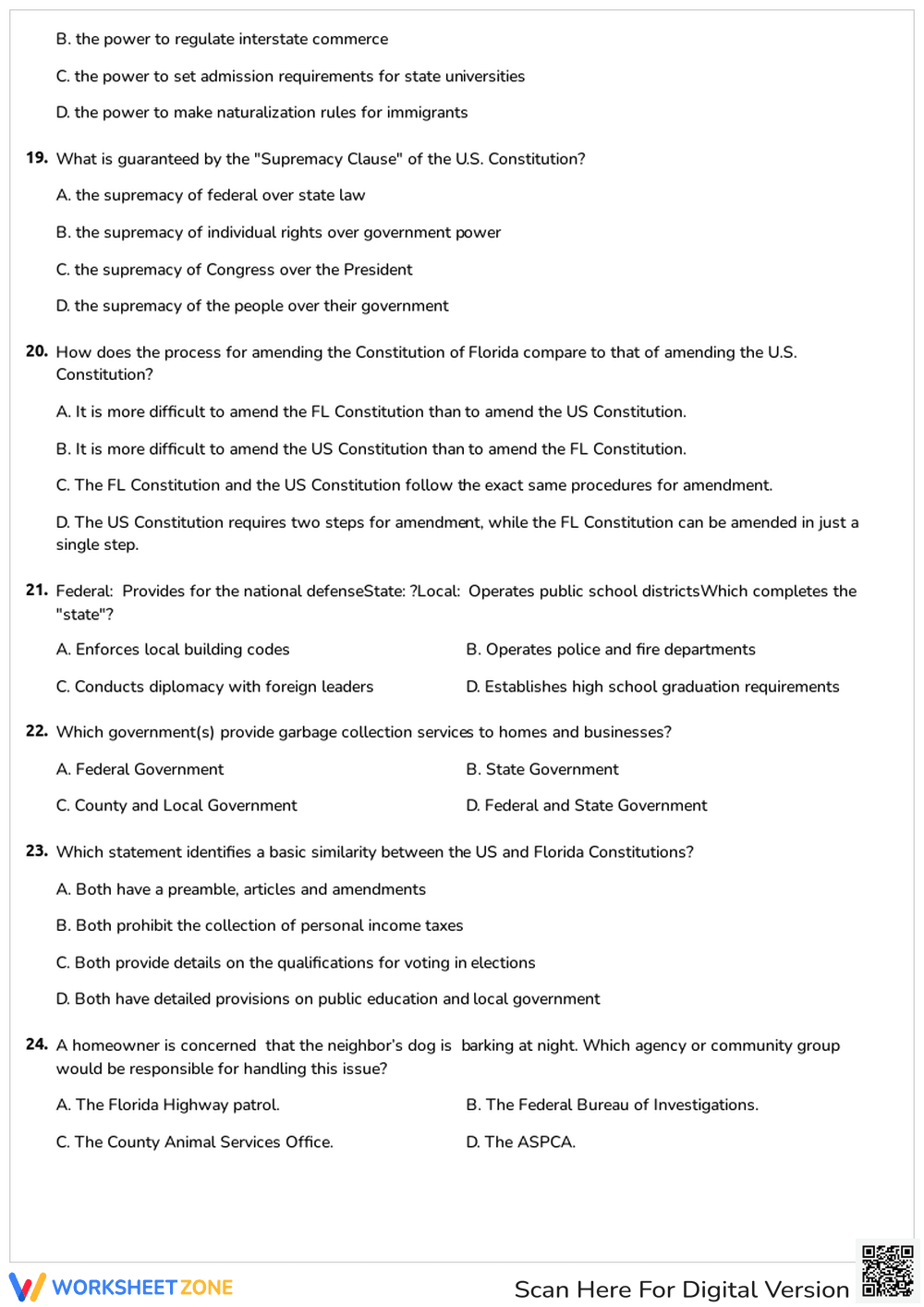
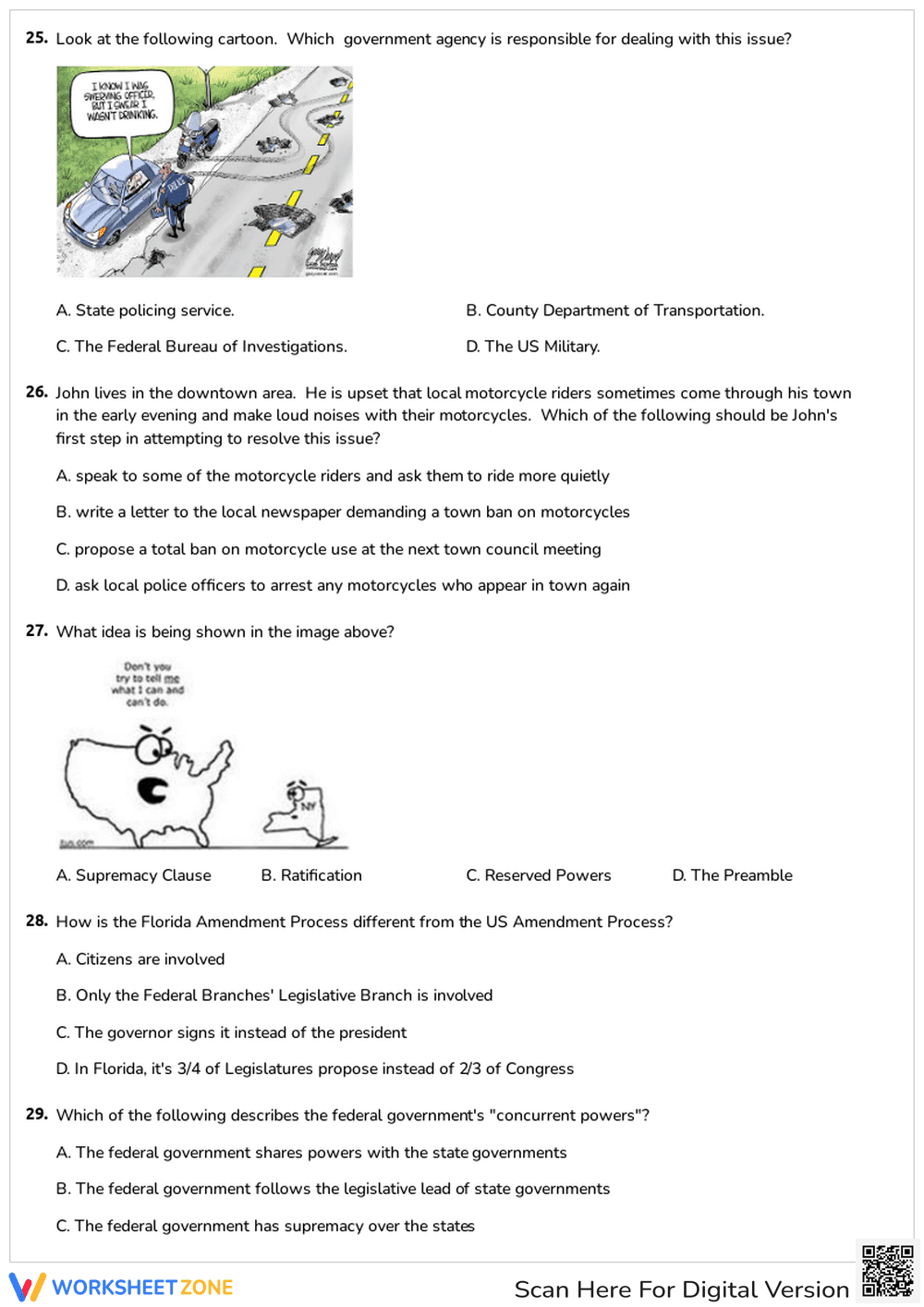
This comprehensive civics and government quiz provides middle school students with targeted practice on federalism, the court system, and state versus national powers. By evaluating real-world scenarios and constitutional principles, students strengthen their understanding of civic duties and governmental structures to become informed citizens.
At a Glance
- Grade: 7 · Subject: Civics
- Standard:
SS.7.CG.3.4— Explain the relationship between state and national governments- Skill Focus: Federalism and Government Structures
- Format: 6 pages · 36 problems · PDF
- Best For: End-of-unit assessment
- Time: 30–45 minutes
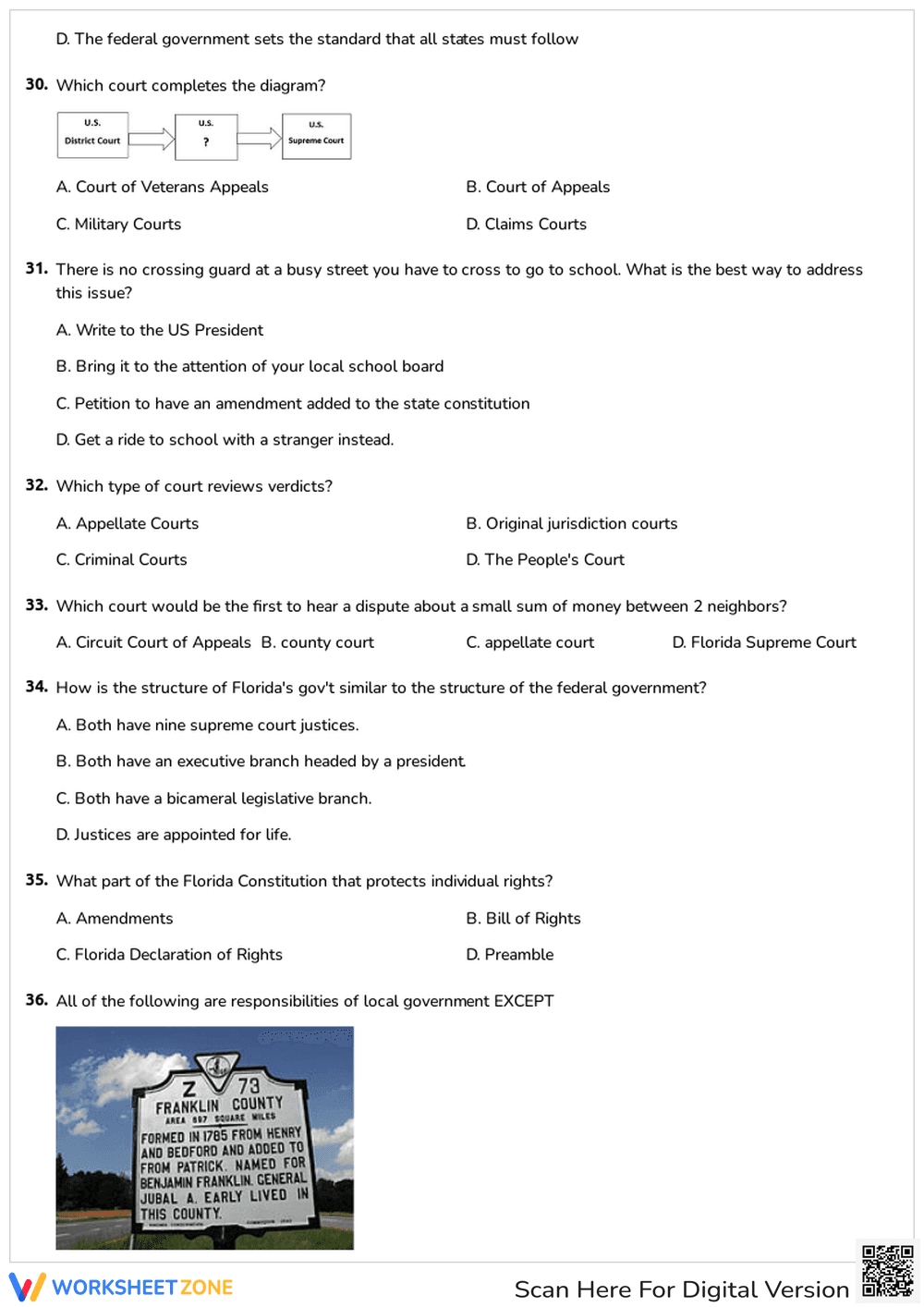
This resource features a robust 36-question multiple-choice assessment spanning six pages. The task types require students to analyze brief excerpts, interpret political cartoons, and identify the correct level or branch of government responsible for specific civic duties. Questions cover a wide range of topics, including the supremacy clause, concurrent powers, the appellate court system, and direct comparisons between state and federal constitutions.
- Print (1 minute): Simply print the six-page PDF document for each student. The clean, multiple-choice format requires no special formatting or cutting.
- Distribute (1 minute): Hand out the assessment at the beginning of the class period or leave it in a highly visible spot for a substitute teacher.
- Review (10 minutes): Use the straightforward multiple-choice structure to quickly grade the assessments or conduct a whole-class review session to address common misconceptions.
With under two minutes of total teacher prep time, this worksheet is an ideal, self-explanatory resource for emergency sub plans or busy testing weeks.
This material is aligned to primary standard SS.7.CG.3.4, requiring students to explain the relationship between state and national governments in the U.S. federal system. It also supports secondary objectives related to comparing state and national constitutions and understanding the judicial review process. Both standard codes can be copied directly into lesson plans, IEP goals, or district curriculum mapping tools.
Deploy this worksheet as a summative assessment after completing a unit on federalism and the branches of government. It serves perfectly as a formal test to measure student retention of complex civic concepts. Alternatively, use it during direct instruction as a collaborative review activity where small groups debate the correct answers to the scenario-based questions. As a formative assessment tip, monitor which specific questions students struggle with to guide your reteaching efforts. Expected completion time ranges from 30 to 45 minutes.
This resource is designed for middle school civics and social studies students in grades 5 through 8. The clear, multiple-choice format provides built-in scaffolding for students who benefit from structured options rather than open-ended writing tasks. It pairs naturally with a direct instruction lesson on the U.S. Constitution or an anchor chart detailing the differences between local, state, and federal responsibilities.
Developing a strong foundational knowledge of civic structures is essential for middle school learners. Aligned with SS.7.CG.3.4, this resource helps students explain the relationship between state and national governments through targeted, scenario-based questioning. According to a 2024 report by EdReports, high-quality instructional materials in social studies that require students to analyze primary sources, interpret political cartoons, and apply constitutional principles to real-world situations significantly improve long-term civic engagement and content retention. By systematically evaluating the distinct roles of local, state, and federal entities, students move beyond rote memorization to achieve a deeper, more practical understanding of federalism. This structured practice ensures that learners are adequately prepared for standardized assessments while simultaneously building the critical thinking skills necessary for active, informed participation in their communities and local government processes.


