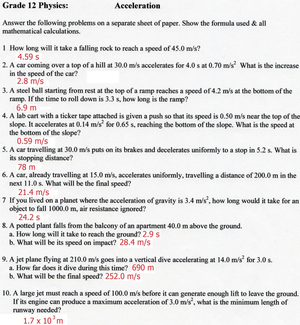
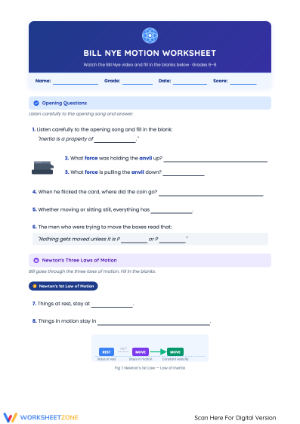
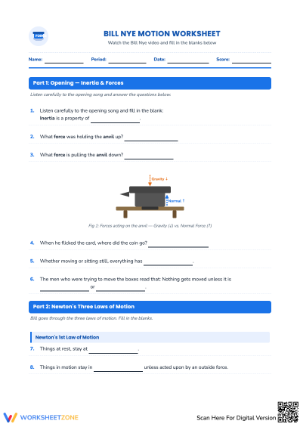
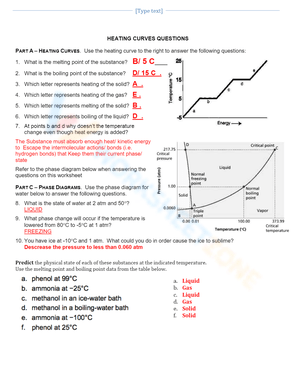
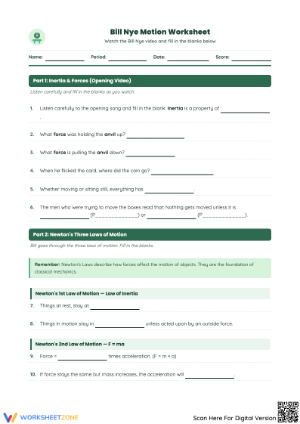
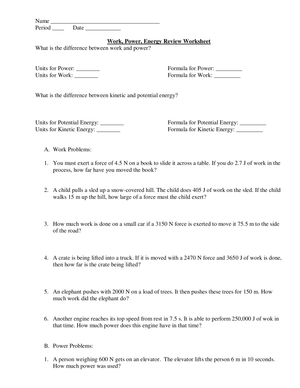
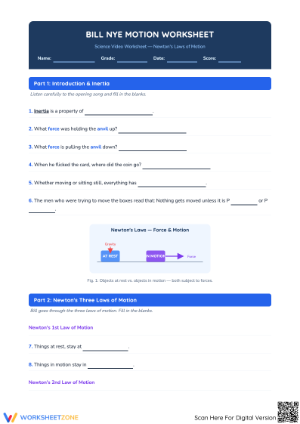
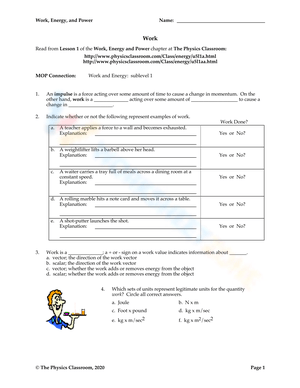
These forces motion and machines pdf worksheets for 7th grade address a specific instructional challenge: students at this level can often repeat definitions from notes but lose their footing the moment a question asks them to apply an idea in an unfamiliar context. Each worksheet in the set covers a focused skill area — balanced and unbalanced forces, speed and velocity, Newton's three laws, or one of the six classic simple machines — and keeps tasks concrete enough for independent work while requiring more than rote recall.
The Specific Skills These Worksheets Build
Seventh grade is where students move from naming and describing to predicting and explaining. That shift matters for this content area because a student can correctly write "unbalanced forces cause acceleration" and still miss a question showing two arrows of different lengths pushing on a box. The practice tasks in this set are built around that gap — the space between knowing the vocabulary and using it to reason through a situation.
- Balanced and unbalanced forces: Students examine force diagrams and predict whether an object moves, stays still, or changes speed — not just define the terms.
- Net force: Short numeric problems where students find the net force and determine direction of movement, kept to manageable numbers so the arithmetic doesn't bury the physics concept.
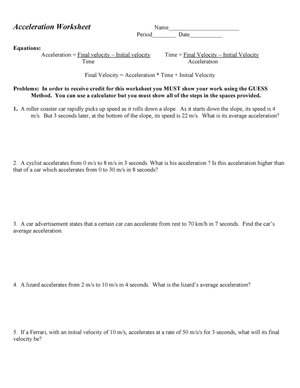
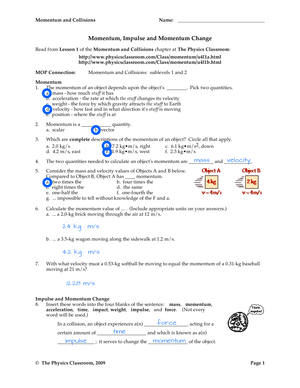
- Speed, velocity, and acceleration: Items that distinguish between the three — including cases where speed stays constant but velocity changes, which is a consistent stumbling point at this level.
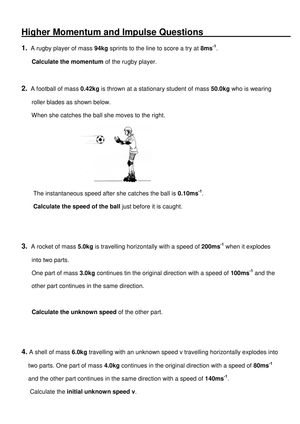
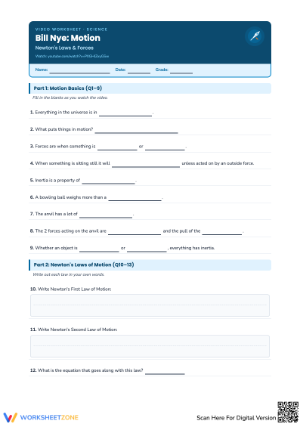
- Newton's three laws: Scenario-based questions where students identify which law is at work and explain why, rather than match a law to a definition copied from the board.
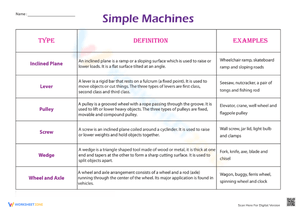
- Simple machine identification: All six types — lever, pulley, wheel and axle, inclined plane, wedge, and screw — with diagram labeling and real-world connections.
- Mechanical advantage: An introductory treatment focused on trade-offs: less force applied over a greater distance, or more force over a shorter one.
Each worksheet targets a slice of this content rather than mixing everything at once, which makes it straightforward to pull one resource for a specific lesson without wading through unrelated items.
Frequent Student Errors Worth Watching For
The most persistent error in this unit is conflating Newton's third law with balanced forces. Students read that every action has an equal and opposite reaction and conclude the forces must cancel out — which is only true when both forces act on the same object. A student who draws a skateboard rider pushing off a wall and marks both forces as "balanced" has made exactly this mistake. The scenario-based Newton's law tasks are built to surface that misconception before a summative assessment does.
With simple machines, trouble typically shows up around mechanical advantage. Students grasp that a longer lever makes lifting easier but ignore the fact that the load travels a shorter distance. Ask a class how a first-class lever changes the total work done, and several students will say it "reduces the work" entirely — skipping the distance component. A diagram task that has students trace both the effort arm and the load arm does more to address this than re-reading the textbook explanation would.
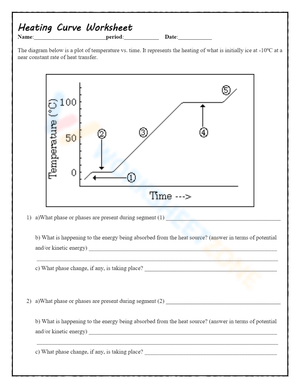
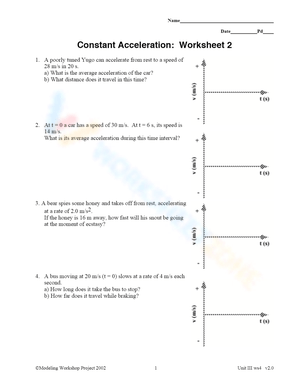
Velocity vs. time graphs produce a reliable third error: when students see a horizontal line, many read it as "the object isn't moving" because they're responding to the flatness of the line rather than its position on the y-axis. Graph-reading items in the set ask students to state both the velocity value and the direction of motion, forcing engagement with both axes instead of one.
Building These Worksheets Into Your Lesson Sequence
Using forces motion and machines pdf worksheets for 7th grade most effectively means matching each worksheet to the cognitive load of the class period rather than the chronological order of the unit. On the day after a Newton's laws demonstration — a cart collision, a textbook sliding across an icy surface — students are ready to explain what they observed. That's the right moment for a scenario-analysis worksheet. Save vocabulary matching for the day before a quiz when students need to consolidate terms, not deepen reasoning.
Some placements that work well across different classroom structures:
- Bell ringer: Three to five force diagram questions students complete in the first eight minutes while the class settles — no setup required and they give a quick read on retention from the previous lesson.
- Post-lab consolidation: One worksheet immediately after a ramp or pulley experiment asking students to connect their data to net force or mechanical advantage.
- Station rotation: Diagram labeling at one station, graph reading at a second, short written explanation at a third — pulling individual worksheets from the set rather than distributing everything at once.
- Sub plans: The identification and labeling worksheets need no additional facilitation; directions are self-contained and the visual format works without a teacher walking students through it.
- Pre-assessment review: Pull mixed-skill worksheets the week before a unit test to identify which subtopics need one more instructional pass.
Sorting the set by task type before printing — vocabulary, diagram work, written application — makes it faster to grab the right worksheet on short notice. That kind of upfront organization pays off when you're sharing the set with a co-teacher or running the same unit across multiple sections.
Differentiating the Set Across Readiness Levels
The task types in these worksheets allow for meaningful adjustment without building parallel versions from scratch. Students who need more support work well with labeling and identification tasks — they're engaging with the same concepts as their peers but with visual anchors that reduce the open-ended writing load. Students ready for more depth move from identification into analysis: after labeling a pulley system, they explain how that configuration changes the effort force and in what direction.
A tiered approach that works particularly well for Newton's laws: give every student the same scenario — a hockey puck sliding across ice with no friction — but vary the question depth. One group circles which law applies. A second group explains the law using that specific example in their own words. A third group predicts what happens when friction is introduced and identifies which law governs that new situation. Same worksheet content, three different response expectations, and students see different question prompts rather than different materials — which keeps the classroom dynamic cleaner.
One limitation worth naming honestly: the diagram-based worksheets can frustrate students who process scientific ideas well verbally but have difficulty orienting to a spatial layout. A two-sentence spoken preview of what the diagram shows — before anyone picks up a pencil — removes that barrier without altering the task for the rest of the class.
Standard Alignment
These worksheets align to NGSS MS-PS2-1, which asks students to apply Newton's third law to predict motion when two objects interact, and MS-PS2-2, which requires analyzing data to determine how forces affect the motion of objects. The simple machines content maps to MS-PS3-5, addressing how machines change the amount or direction of an applied force. In most middle school sequences, PS2-1 and PS2-2 arrive mid-unit as students shift from describing motion to explaining its causes — making the scenario-based worksheets a natural fit for that instructional window. The simple machines worksheets typically belong at the unit's close, when students are connecting physical principles to real engineering contexts.
Frequently Asked Questions
Do these worksheets include answer keys?
Yes. Each worksheet comes with a corresponding answer key formatted for quick grading or student self-correction. For short-response items, the key provides sample language rather than a single locked answer, which is more useful when student wording varies but the underlying reasoning is sound.
Can I use these for homework, or are they better suited for class time?
Both, depending on the task. Identification and labeling worksheets travel well as homework — the task is self-contained and students can check their understanding against the diagram. Graph reading and scenario analysis are better kept in class, where you can catch the interpretation errors that completed written responses don't always reveal. When selecting forces motion and machines pdf worksheets for 7th grade for homework use, look for the ones with visual anchors and clear item formatting rather than open-ended explanation tasks, which tend to produce vague answers without in-class support.
What if my district's unit sequence doesn't match the order of the set?
Each worksheet stands alone. None of the resources in the set assumes students have completed earlier worksheets first, so teachers can pull by subtopic in any order. If your course covers simple machines before Newton's laws, the relevant worksheets work just as well in that sequence.
Are these appropriate for students still working on foundational science vocabulary?
The labeling and matching tasks are the right starting point for those students. They engage with forces motion and machines pdf worksheets for 7th grade content without demanding the extended written explanation that can block students who are still internalizing the terminology. Once the core vocabulary is solid, the scenario and graph tasks become accessible next steps.












 Interactive Worksheet Maker
 Quiz Maker
 Word Search Maker
 Crossword Puzzle Maker
 Word Scramble Generator
 Sentence Scramble Generator
 Handwriting Worksheet Generator
 Name Tracing Generator
 Fill In The Blank Generator