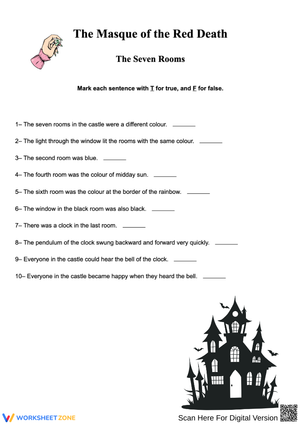
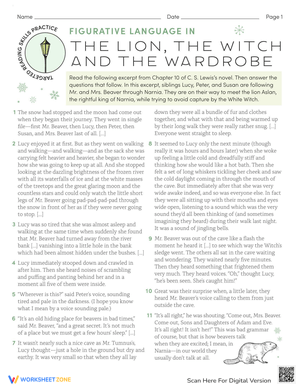
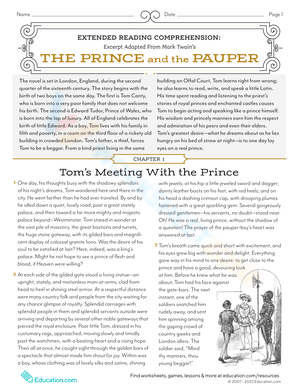
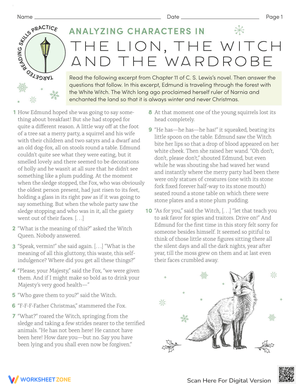
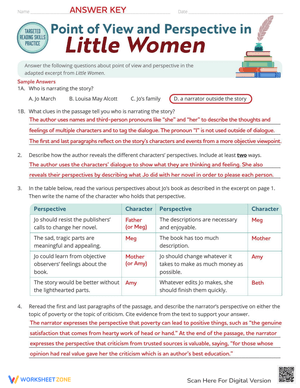
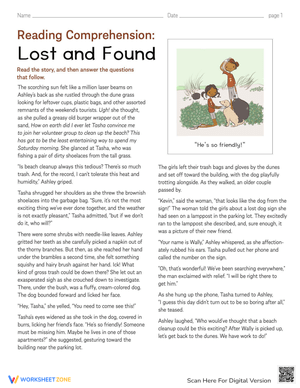
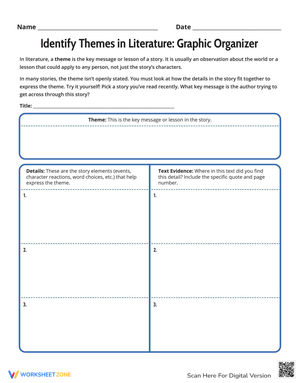
These 7th grade fiction pdf worksheets cover the literary skills that grade 7 ELA specifically demands — theme development, point-of-view analysis, character motivation, inference, and evidence-based response. Each worksheet pairs a short fiction passage with targeted analysis questions, making it possible to run a complete reading cycle in a single class period. The format slots naturally into places a full novel can't fill: a skill check after a chapter discussion, a focused task for an intervention group, or a warm-up before writing workshop.
What Each Worksheet Asks Students to Do
Grade 7 is the year the literary analysis demand shifts noticeably. At grade 5, students retell and identify story elements; by grade 7, the standards expect students to trace how those elements interact — how a character's choice drives conflict forward, how specific dialogue reveals theme, how a first-person narrator's limited view shapes what the reader knows. The questions in these 7th grade fiction pdf worksheets target that shift directly, moving from accessible entry points to genuine analytical thinking.
- Theme development: Students identify a central message and explain how specific events or character decisions build it — not just name it in one word.
- Plot and conflict: Students track how conflict evolves across the passage and analyze how the resolution connects to character change.
- Characterization: Students examine indirect characterization — what characters say, do, think, and how others respond — rather than relying on narrator labels.
- Point of view: Students analyze how the narrator's perspective affects what information reaches the reader and how sympathy gets shaped.
- Inference: Students draw conclusions the text implies but never states, then support those conclusions with specific evidence.
- Figurative language and tone: Students interpret similes, metaphors, and imagery in context — connecting them to mood and theme, not just identifying the device.
- Text evidence: Students quote or paraphrase specific details and explain how those details support their reading.
That progression from comprehension to interpretation matters because it keeps the whole class inside one task while naturally revealing who is working at the surface and who is pushing into deeper analysis.
Student Errors Worth Knowing Before You Assign These
The most persistent error at grade 7 is conflating topic with theme. A student asked to identify the theme of a story about two brothers who stop speaking will write the theme is family and consider the job complete. The real work starts when a follow-up question asks what the story actually argues about family — and the student has to return to the text to build that claim. These worksheets push directly into that territory rather than accepting a one-word response as sufficient.
A second pattern worth watching: students select evidence that sits near the answer in the passage rather than evidence that genuinely proves the claim. A student arguing that a character is selfish will cite the sentence right before or after the clearest example, not the example itself. Paying attention to which detail students choose — and whether it actually supports what they wrote — tells teachers more about reading comprehension than the written response alone.
Point-of-view questions bring a third trap. First-person narrators lead students to accept everything stated as fact. When a narrator calls another character cruel, students treat that as the author's settled judgment. Questions that ask whether the narrator might be unreliable, or what another character's account would include, expose that misreading quickly and generate some of the richest whole-class discussion these worksheets produce.
Where These Worksheets Fit in the Weekly Lesson Plan
One practical approach is to sort the set by thinking demand rather than topic alone. Keep a group of worksheets oriented toward literal comprehension and inference, a separate group aimed at theme analysis and point of view, and a third group focused on character development and figurative language. When a class is returning from testing week, picking up after an interruption, or just short on energy, you can still assign a worksheet that fits what the group can actually do — while keeping the skill focus of the lesson intact.
During a novel unit, a standalone fiction worksheet gives students a chance to apply a skill with fresh text. If the class just finished a chapter discussion about how Chains develops the theme of freedom through Isabel's choices, assigning a short passage on a parallel theme with new characters checks whether students can transfer that thinking independently — or whether class discussion carried them farther than their independent reading actually would.
The 10 to 12 minutes before the end of class is a reliable fit for a focused fiction task. Students read a short passage, answer two or three analytical questions, and have something concrete to turn in. That closing window often leaks time in an ELA period; a well-chosen worksheet stops that.
For sub plans, the case is simple: a self-contained fiction worksheet with an answer key runs itself. Students read, annotate, answer, and the substitute collects the work. That reliability is part of why 7th grade fiction pdf worksheets show up in middle school sub folders year after year — they require no explanation to deploy and no extra preparation to score.
Adjusting Each Worksheet Across Reading Levels
Grade 7 classrooms rarely run at a single reading level, and these worksheets hold up under adjustment without losing their instructional purpose. The goal when differentiating is to support access to the text while keeping the analytical thinking intact.
For students who struggle with longer passages, chunking works reliably: direct them to read the first half of the passage, answer one question, then read the second half before continuing. That approach reduces the cognitive load of holding the entire text in memory while constructing a written response. Preteaching two or three vocabulary words before the reading removes word-level barriers that would otherwise derail comprehension. Sentence starters such as The author shows this when... or One detail that reveals the character's feeling is... give students a structural entry point without doing the interpretive thinking for them.
On-level students move through the standard question set without additional support. The question sequence already builds from literal to analytical, so most students encounter genuine challenge before they reach the end.
Advanced readers benefit from extension prompts attached to the same worksheet: ask them to compare how this passage handles theme with how the class novel develops a similar idea, or to rewrite a key paragraph from a different narrator's perspective and explain what changes. One honest limitation: students who process ideas well orally but struggle to commit thinking to paper will sometimes produce thin written responses even when their understanding is strong. Pairing the worksheet with a brief partner conversation before writing closes that gap for most of them.
Standard Alignment
These worksheets align to the grade 7 literature strand of the Common Core State Standards.
- RL.7.1 — Cite several pieces of textual evidence to support analysis of both explicit statements and inferences drawn from the text. The inference and text-evidence questions in each worksheet address this standard on every passage.
- RL.7.2 — Determine a theme or central idea and analyze its development over the course of the text. Theme questions push students past naming a concept to explaining how specific events or character choices build it.
- RL.7.3 — Analyze how particular elements of a story or drama interact. Characterization and plot questions ask students to trace how character motivation shapes conflict and drives resolution.
- RL.7.6 — Analyze how an author develops and contrasts the points of view of different characters or narrators in a text. Point-of-view questions address narrator reliability, perspective limits, and how narrative distance shapes what the reader understands.
In classroom terms, RL.7.1 through RL.7.3 appear consistently on state reading assessments as the foundation of literary analysis tasks. Working through short passages — where students complete one full reading-analysis cycle per session — builds the fluency they need when those same skills appear in longer or more complex texts later in the year.
Frequently Asked Questions
How long are the reading passages in these worksheets?
Passage length varies across the set, but most run between 300 and 600 words — enough text to support meaningful analysis without overwhelming students who read slowly. That range fits comfortably inside a standard ELA period when reading, annotating, and responding are all part of the same session.
Do the worksheets include answer keys?
Yes. An answer key accompanies every worksheet in the set. Keys save prep time during busy weeks, make it straightforward to leave materials for a substitute, and support consistency when multiple teachers share resources across a grade level.
Can students reading below grade level access these passages?
With targeted adjustments — vocabulary previewing, passage chunking, and sentence starters — most students reading one to two years below grade level can work through the passages and respond to the questions. The analytical thinking expectation stays constant; the support changes the entry point, not the standard.
How do these worksheets fit alongside a class novel?
Best used as skill transfer checks. With 7th grade fiction pdf worksheets, you assign one after a unit lesson on theme or point of view, and the responses show quickly which students can apply the skill independently versus which relied on class discussion to carry their understanding further than their independent reading actually would.












 Interactive Worksheet Maker
 Quiz Maker
 Word Search Maker
 Crossword Puzzle Maker
 Word Scramble Generator
 Sentence Scramble Generator
 Handwriting Worksheet Generator
 Name Tracing Generator
 Fill In The Blank Generator