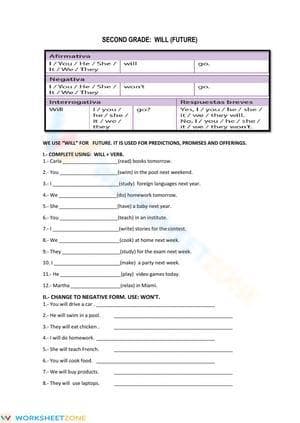
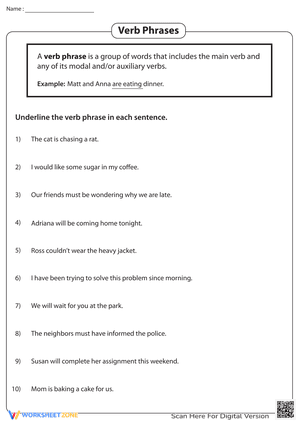
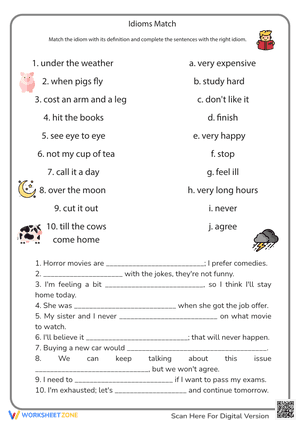
These verbs worksheets for 7th grade give middle school ELA teachers print-ready practice across the skills 7th graders need most — identifying action, linking, and helping verbs, correcting tense shifts, and revising sentences where subject-verb agreement breaks down. Each worksheet stays focused on one skill so teachers can drop it into a lesson cleanly rather than guess which concept is being tested.
The Specific Skills Targeted
Verb instruction in 7th grade has to move past "find the action word." Students at this level are producing literary analysis, explanatory essays, and longer argumentative responses — and those are exactly the contexts where verb problems surface. Teachers looking for verbs worksheets for 7th grade need materials that match what 7th graders are actually writing, not worksheets built around second-grade sentences with obvious action verbs in obvious places.
The skills covered across the set include:
- Action verbs: identifying physical and mental actions in sentences of increasing complexity
- Linking verbs: recognizing verbs that connect subjects to descriptors, including forms of be, seem, appear, and become
- Helping verbs: spotting multi-word verb phrases and understanding how the helping verb shapes meaning and tense
- Verb tense consistency: finding and correcting shifts within sentences and across short paragraphs
- Subject-verb agreement: matching verb forms to subjects, including collective nouns and inverted sentence structures
- Sentence revision: rewriting incorrect sentences so verb usage is accurate and natural
These skills connect directly. A student who cannot identify the helping verb in "had been running" will also struggle to correct a tense shift when that same verb phrase appears inside a paragraph. Working through identification first — then correction, then original writing — builds the kind of verb fluency that carries over into actual composition.
Error Patterns That Surface in 7th Grade Verb Work
The most consistent error at this level is the linking-versus-helping confusion. Students learn early that is, was, and were are linking verbs — and that knowledge backfires when those same words appear as helpers in a verb phrase. A 7th grader who correctly flags "was" as the verb in "She was tired" will often mark only "running" in "She was running," dropping the helping verb entirely. This appears constantly in identification tasks and rarely corrects itself without targeted instruction.
Tense consistency is the other major trouble zone, particularly in literary analysis. Students are taught to write about literature in the present tense — "Atticus argues," not "Atticus argued" — but in longer responses, that discipline breaks down. A student will open a body paragraph in present tense and drift into past tense by sentence three without noticing, because the meaning still feels clear to them. Worksheets that ask students to mark every shift in a paragraph and rewrite the offending sentences make this visible in a way that no multiple-choice question does.
Subject-verb agreement errors cluster around a handful of predictable structures: a prepositional phrase inserted between subject and verb ("The stack of papers are on the desk"), collective nouns treated as plural ("The team were winning"), and inverted constructions ("There is three valid reasons"). Each of these patterns appears in actual 7th grade writing regularly enough to justify its own dedicated worksheet.
Where These Worksheets Fit Into the Week
The most effective use is not assigning a worksheet, grading it, and moving on. A double-pass approach works especially well for tense consistency and subject-verb agreement: students complete the worksheet cold — no notes, no model sentences in front of them — then after a brief class discussion, return to the same worksheet with a second-color pen and revise every incorrect answer. That sequence creates a built-in formative window. You can see what students controlled before instruction and what shifted immediately after, without running a separate quiz.
Bell ringers are the most common placement. Three to five items from an identification worksheet take about five minutes and give students something concrete to do during the transition into class. The structured nature of the task helps — students who sit down and immediately mark verb phrases in two sentences are less likely to spend the first eight minutes of class in off-task conversation.
For sub plans, worksheets with answer keys are the most reliable option. A substitute does not need to understand subject-verb agreement to run the class — the directions are on the worksheet, the answer key handles the review, and the completed work is ready when you return. Skill-specific worksheets that students can complete independently make this practical without requiring any verbal setup from the sub.
Standard Alignment
The worksheets align most directly to CCSS Language Standards L.7.1 and L.7.3. L.7.1 addresses conventions of standard English grammar and usage at the 7th grade level, including verb forms, tense consistency, and agreement. L.7.3 covers deliberate language choices for clarity and effect — which connects to revision tasks where students evaluate and improve verb usage in context rather than simply flagging errors. In practical classroom terms, identification and agreement worksheets fit into a L.7.1 unit, while paragraph-editing and revision worksheets map onto L.7.3 work, typically used in the days before students draft or revise a formal writing piece. State ELA assessments that include grammar editing sections test these skills directly, so consistent practice also supports test preparation without requiring a separate unit.
Adapting the Set for a Mixed-Ability Classroom
Verb knowledge varies widely in a typical 7th grade class. Some students arrive still misidentifying action verbs, while others handle identification without difficulty but shift tenses unpredictably across longer writing. Using verbs worksheets for 7th grade organized by skill allows teachers to assign each group work that challenges them without requiring separate materials built from scratch.
Students who need foundational review start with straightforward identification — marking verb types in clear sentences without distracting complexity. That builds the conceptual vocabulary before asking them to apply it under pressure. Students who are ready for more move to paragraph-editing worksheets that require identifying multiple error types, explaining why each is incorrect, and rewriting the passage. Adding two original sentences using the target pattern correctly keeps stronger students engaged without requiring a separate worksheet entirely.
Item-count adjustment is often enough for students who need a reduced load. Completing six of ten items on a subject-verb agreement worksheet still gives the teacher useful information and does not require printing a modified version. For small-group intervention, skill-specific worksheets on helping verbs or tense shifts work well in pull-out settings where errors can be addressed in real time as students work through them.
Frequently Asked Questions
What verb skills do these worksheets cover?
The set includes identification practice for action, linking, and helping verbs, along with worksheets targeting tense consistency, subject-verb agreement, and sentence revision. Most worksheets concentrate on a single skill, but the set also includes mixed-review options for applying several concepts at once.
Do the worksheets include answer keys?
Yes. Answer keys support fast teacher grading, peer review during class, or self-correction during the double-pass technique. For sub plans, answer-key support means the class can complete and review practice without the teacher present.
Can these be used for reteaching or intervention rather than initial instruction?
The skill-specific organization makes these well-suited to targeted reteaching. When a student struggles specifically with helping verbs or tense shifts, the teacher can pull just the relevant worksheet rather than running that student through material they have already mastered.
How do these worksheets connect grammar practice to actual student writing?
Several worksheets include sentence revision tasks and brief original-writing prompts alongside identification and correction items — students correct an error, then write their own sentence using the same structure correctly. Assigning verbs worksheets for 7th grade in the days before a writing assignment gives students targeted practice with tense control, verb agreement, and clear verb choice at exactly the moment those skills are about to matter in their drafts.















 Interactive Worksheet Maker
 Quiz Maker
 Word Search Maker
 Crossword Puzzle Maker
 Word Scramble Generator
 Sentence Scramble Generator
 Handwriting Worksheet Generator
 Name Tracing Generator
 Fill In The Blank Generator