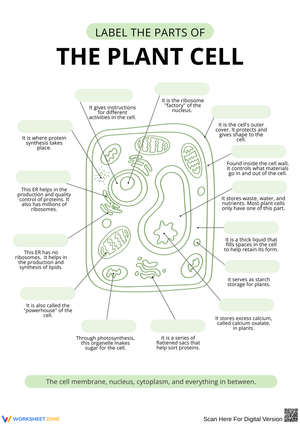
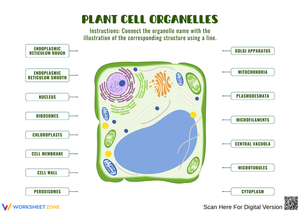
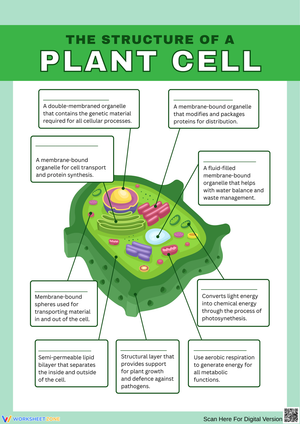
6th grade plant cell labeling worksheets resources give science teachers a simple way to teach structure and function without adding complicated prep. In many classrooms, students first need to recognize the main parts of a plant cell before they can explain how those parts support life processes. A clear printable worksheet helps students connect vocabulary to a visual model, which makes review more efficient during whole-group instruction, partner work, homework, or quick checks.
What to Look for in These 6th Grade Cell Labeling Worksheets
The best plant cell labeling pages for Grade 6 are easy to read, scientifically accurate, and designed for fast classroom use. Resources like Education.com - Plant and Animal Cell Worksheets and Super Teacher Worksheets - Animal and Plant Cells show the value of diagrams that are uncluttered and built for direct student practice.
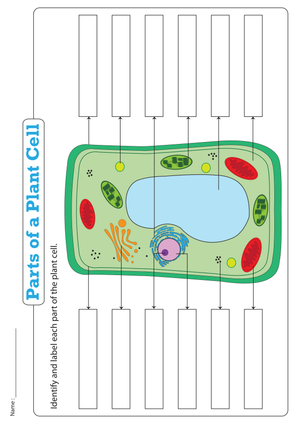
- Clear diagram layout: Labels should point to distinct structures without crossing all over the page.
- Age-appropriate vocabulary: Focus on core plant cell parts before adding less familiar organelles.
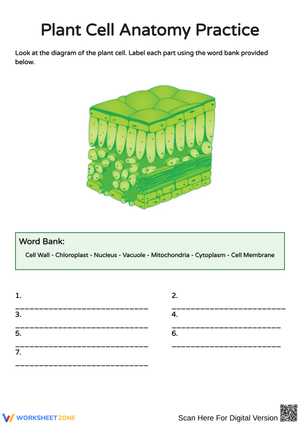
- Word bank options: A word bank reduces frustration and helps students match visual clues to terms.
- Answer key availability: Quick checking matters when teachers are using the worksheet for stations, bell ringers, or exit review.
- Printable formatting: The PDF should print cleanly in black and white if color copies are limited.
- Space for comparison: An extra prompt about plant and animal cells can extend the worksheet without making it too long.
When teachers choose a worksheet with these features, the activity moves from simple naming practice to a stronger science learning tool. Students can see the structure, use academic vocabulary, and begin to explain why plant cells look different from animal cells.
Classroom Implementation
One reason teachers search for printable plant cell PDFs is flexibility. The same worksheet can serve several parts of a Grade 6 science lesson with only small changes in delivery. A practical sequence begins with direct instruction, moves to guided labeling, and ends with independent application.
- Warm-up: Project a blank plant cell diagram and ask students to name any parts they already know.
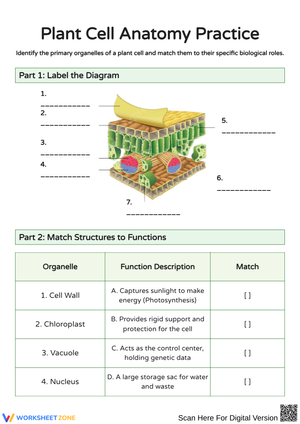
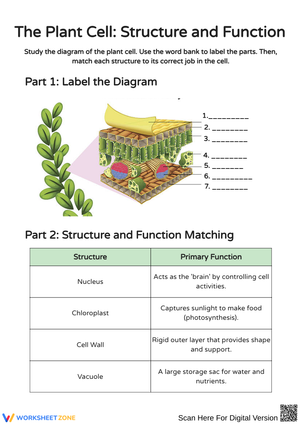
- Mini-lesson: Review the six main structures and give one short function for each.
- Guided practice: Complete the first two or three labels together so students understand how to read arrows and diagrams.
- Independent work: Students finish the worksheet using a word bank or notes.
- Check for understanding: Use an answer key for peer check, teacher review, or a fast self-correction routine.
- Extension: Add one prompt asking how a plant cell differs from an animal cell.
This format works well in whole-class settings, small groups, science stations, or sub plans. Teachers can also print a labeled version for students who need extra support and an unlabeled version for on-level practice or quiz use.
A smart classroom move is to print the same plant cell diagram in two versions: one with arrows and a word bank, and one without supports. Start all students with the supported page for accuracy, then use the second page as a short mastery check 10 minutes later. This keeps the visual consistent while letting teachers see whether students learned the organelles or only matched words from the bank.
Ways to Differentiate the Activity
Plant cell labeling can be adjusted easily without changing the science target. For students who need more support, provide a reduced word bank, color cues, or a diagram with only a few labels missing. For students ready for more challenge, ask them to write one function next to each labeled part or explain why chloroplasts and the cell wall matter in plant cells.
Teachers may also vary the format of the worksheet itself:
- Word bank version: Best for first exposure or intervention groups.
- Cut-and-paste version: Helpful for hands-on practice and vocabulary review.
- Quiz version: Remove the word bank and use the page as a quick assessment.
- Labeled reference page: Useful for notebooks, review folders, or absences.
- Compare-and-contrast add-on: Add two or three questions about plant and animal cells.
These small adjustments help teachers keep expectations aligned while making the task accessible. Because the diagram stays familiar, students can focus on the science instead of learning a new activity structure each time.
Frequently Asked Questions
1. What organelles should students label on a plant cell worksheet?
For Grade 6, teachers usually focus on the main visible parts: cell wall, cell membrane, nucleus, cytoplasm, chloroplasts, and large central vacuole. These give students a solid starting point for plant cell structure.
2. How is a plant cell labeling worksheet different from an animal cell worksheet?
A plant cell worksheet highlights features that make plant cells stand out, especially the cell wall, chloroplasts, and large central vacuole. Teachers often use both worksheet types together so students can compare the two cells clearly.
3. How can teachers support learners who struggle with labeling?
Start with a word bank, model several labels together, and use the same diagram for guided and independent practice. A partially completed page or labeled reference copy can also help students build confidence before they try an unlabeled version.
When teachers choose 6th grade plant cell labeling worksheets resources with clear diagrams, core vocabulary, and answer-key support, they get more than a printable page. They get a flexible science tool that fits direct teaching, review, and assessment while helping students recognize the structures that define a plant cell.












 Interactive Worksheet Maker
 Quiz Maker
 Word Search Maker
 Crossword Puzzle Maker
 Word Scramble Generator
 Sentence Scramble Generator
 Handwriting Worksheet Generator
 Name Tracing Generator
 Fill In The Blank Generator