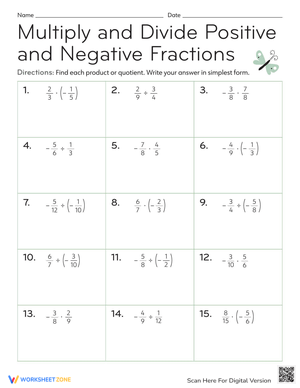
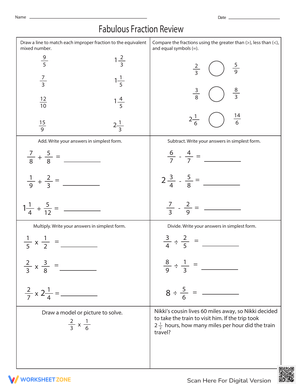
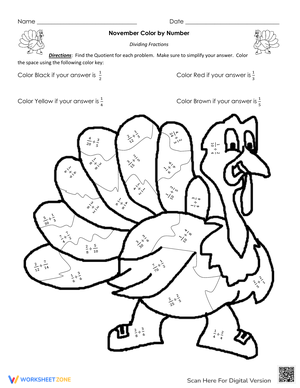
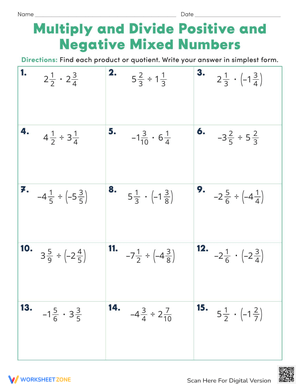
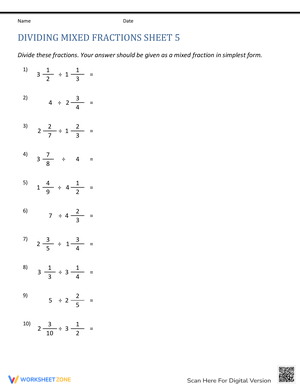
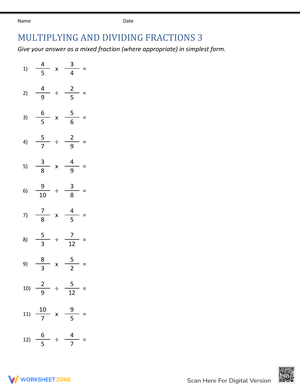
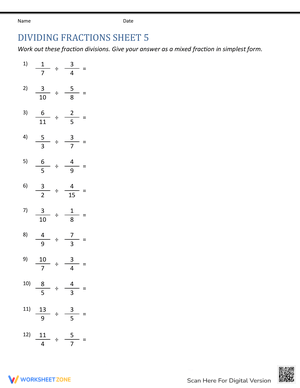
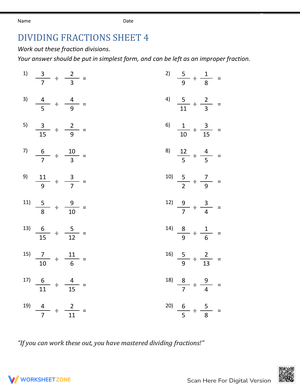
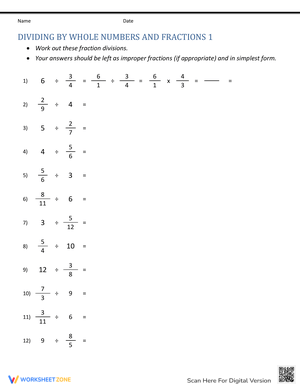
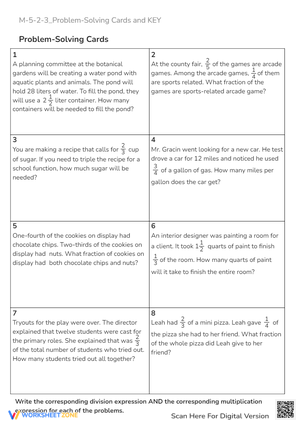
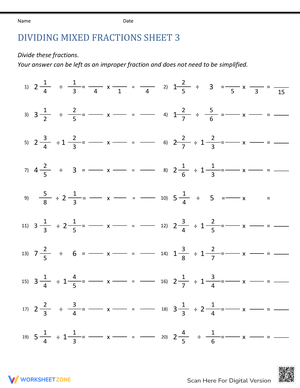
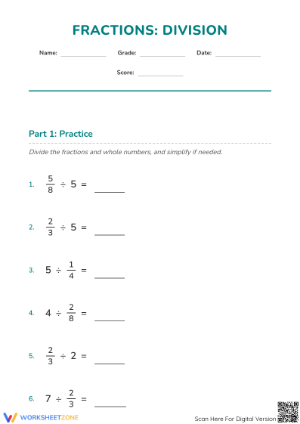
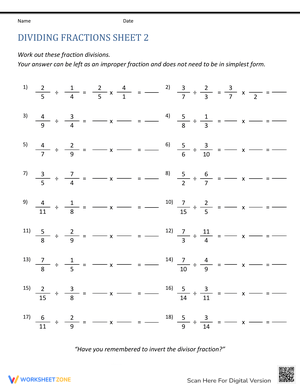
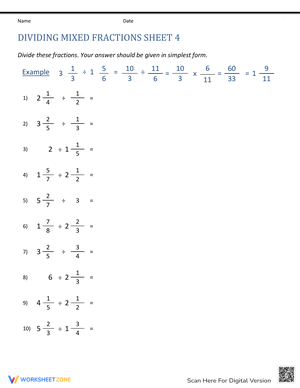
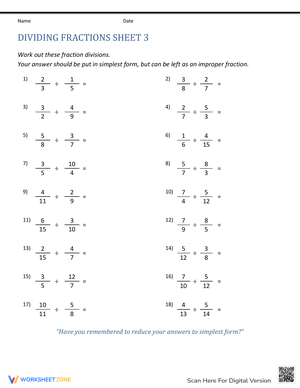
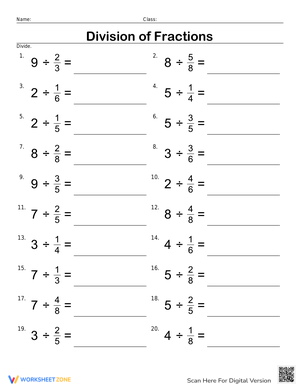
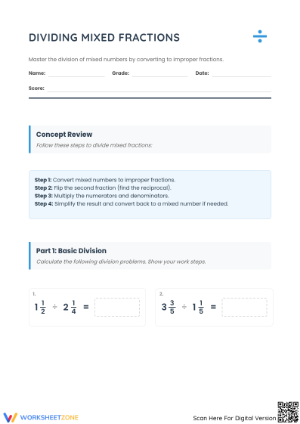
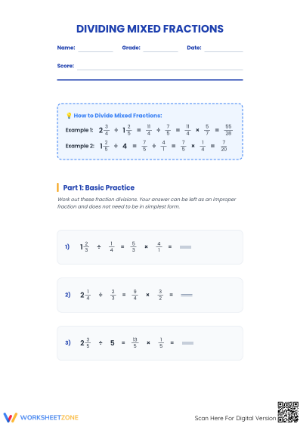
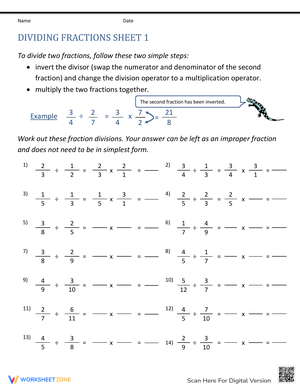
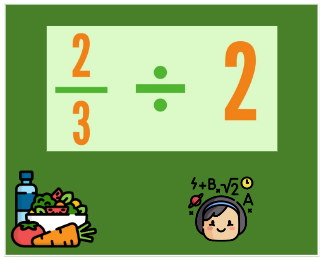
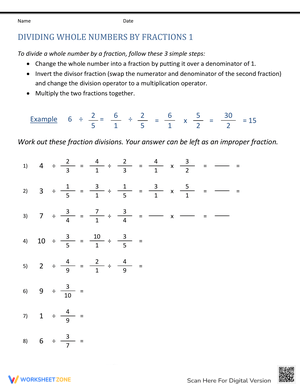
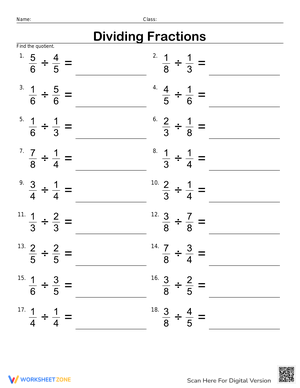
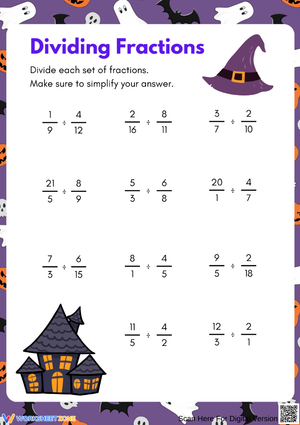
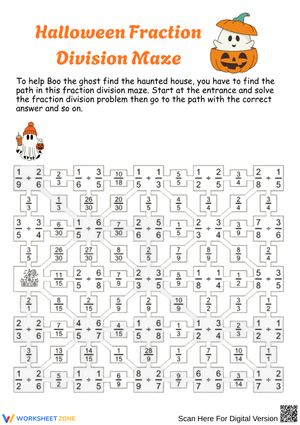
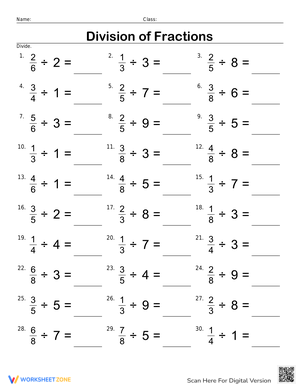
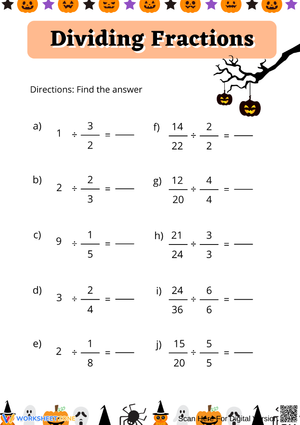
These 6th grade dividing fractions printable worksheets move students through three distinct phases — visual modeling, procedural computation, and applied problem solving — giving teachers a ready-built sequence rather than a collection of disconnected drill exercises. Each worksheet targets a specific skill within that arc, and every resource in the set includes an answer key so grading doesn't eat into planning time.
Mistakes Students Make That These Worksheets Help You Catch
Fraction division produces a predictable cluster of errors, and knowing them before the unit begins changes how you teach. The most common is what teachers sometimes call the "wrong flip": students apply the reciprocal to the dividend rather than the divisor, writing 3/4 ÷ 2/5 as 4/3 × 2/5 instead of 3/4 × 5/2. This happens because students memorize "flip the fraction" without anchoring that step to a specific fraction in the expression. The cue they actually need is procedural — "flip the second fraction" — not just "flip it."
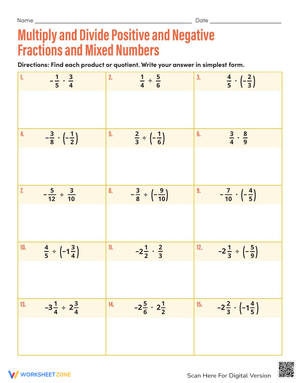
A second error appears with mixed numbers. A student who solves 3/4 ÷ 1/2 without difficulty will often stall or produce nonsense on 2 1/3 ÷ 3/4, skipping the conversion to an improper fraction and treating the whole and fractional parts separately. The result looks like confident work on paper, but the quotient is unreasonable. If a student's answer to 2 1/3 ÷ 3/4 comes out less than 2, something went wrong in the setup — and it almost always traces back to the conversion step.
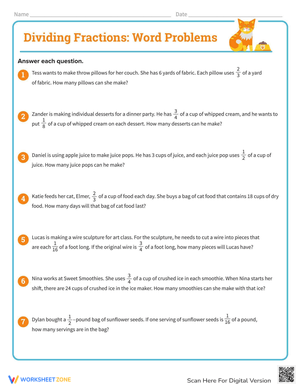
Word problems surface a third gap: students who compute accurately often don't recognize when to divide. A task like "A ribbon measures 3/4 of a yard. How many 1/8-yard pieces can be cut from it?" calls for measurement division, and many students multiply instead. That error isn't procedural — it's a comprehension problem. These worksheets format word problems specifically to expose that reasoning gap, asking students to identify what each quantity represents before they calculate anything.
What's Inside the Set
When teachers evaluate 6th grade dividing fractions printable worksheets, the range of problem types matters as much as the difficulty level. This set spans the full arc from conceptual entry to procedural fluency, with word problems requiring students to apply and extend what they've practiced computationally.
- Visual model tasks: number lines and area models where students shade, partition, and count groups, then write a matching division equation — completed before any algorithm is introduced
- Unit fraction problems: dividing whole numbers by unit fractions and unit fractions by whole numbers, with small numbers so attention stays on reasoning rather than arithmetic
- Mixed operation combinations: fractions divided by whole numbers and whole numbers divided by fractions, both directions, because students often develop fluency in only one order
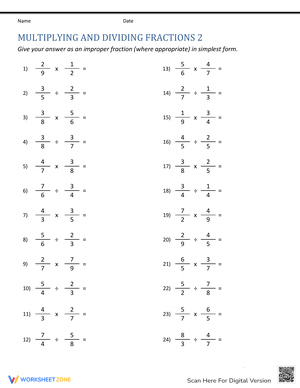
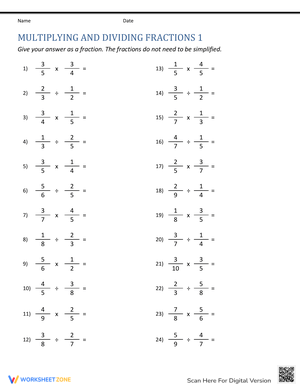
- Fraction by fraction computation: proper fractions first, then improper fractions, then mixed numbers requiring conversion before applying the algorithm
- Simplification and conversion: answers that must be reduced or rewritten as mixed numbers, reinforcing the complete solution process
- Single-step and two-step word problems: situations that require identifying the operation before computing, directly targeting the comprehension gap described above
Several worksheets include worked solutions alongside final answers, showing the reciprocal step explicitly. That level of detail matters when students are checking their own work mid-unit and need to see exactly where their process diverged from the correct one.
How to Work These Worksheets Into Your Week
The most effective placement is not always independent practice at the end of a lesson. A visual-model worksheet used as a lesson opener — 8 minutes before direct instruction begins — surfaces what students already understand about what division means. Their responses to a number-line task reveal the conceptual gaps that need addressing before students encounter a procedure that might paper over those gaps entirely.
In small-group intervention, pull one worksheet that isolates a single operation type, such as whole numbers divided by fractions, and require students to draw every problem before they compute. Students who have memorized "flip and multiply" without understanding it almost always stall when asked to produce a matching model. That constraint is the point. It slows the procedure down and forces students to reconnect with what the quotient actually represents.
These 6th grade dividing fractions printable worksheets also hold up as sub-day materials. The task directions are explicit enough that a substitute can manage the session without a background in fraction division. Pairing a procedural worksheet with a model-based one gives students 30 to 40 minutes of structured work that requires no instructional facilitation beyond reading the directions aloud.
Standard Alignment
These worksheets address CCSS 6.NS.A.1, which requires students to interpret and compute quotients of fractions and solve word problems involving division of fractions by fractions. That standard is demanding because it holds students accountable for both conceptual understanding and procedural accuracy — they must explain what a quotient means in context, not only calculate it correctly.
In most 6th grade classrooms, 6.NS.A.1 arrives in the first major unit of the year, often within the first six to eight weeks. It builds on 5th grade multiplication of fractions (5.NF.B.4) and the interpretation of multiplication as scaling. Students who arrive without that multiplication foundation need to rebuild the reciprocal relationship before computation makes sense, and the model-based worksheets in this set provide the most direct entry point for that backfill work.
Adjusting the Worksheets Across Ability Levels
Differentiation in fraction division works best when it targets the specific gap rather than simply reducing the numbers. A student who understands the concept but makes procedural errors needs more computation practice with fast answer-checking, not easier fractions. A student who computes correctly but fails word problems needs structured reading support — identifying the given quantities, labeling the dividend and divisor, deciding the operation — not a different algorithm. Matching the adjustment to the actual error is more efficient than a blanket difficulty reduction.
- Students needing additional support: begin with visual-model worksheets using unit fractions; require drawing before writing an equation; limit each session to 6 to 8 problems with full room for work shown
- Students working at grade level: assign mixed computation worksheets that include simplifying and a few word problems; watch specifically for whether conversion of mixed numbers happens before the algorithm
- Students ready for extension: use two-step word problem worksheets and error-analysis tasks where students identify and correct a fictional student's mistake
One adjustment worth making regardless of level: vary how much written explanation students produce alongside computation. Having a student solve 8 problems and explain two of them in writing often reveals more about understanding than completing 20 computation items. Verbal explanation exposes whether a student grasps the reciprocal relationship or has only internalized the mechanical steps.
Frequently Asked Questions
What do students need to know before fraction division makes sense?
Students need a solid grounding in equivalent fractions, fraction multiplication, and what division means as an operation — specifically, the idea that division asks how many groups of a given size fit into a quantity. Visual literacy with number lines and area models also matters. Without those foundations, even well-designed 6th grade dividing fractions printable worksheets produce more confusion than progress, and backfill work becomes the first instructional priority.
Are these worksheets better for homework or in-class use?
The procedural computation worksheets translate well to homework once the algorithm has been taught and practiced in class. The model-based worksheets are better kept for in-class use, where a teacher can support a student who stalls on drawing a representation. Sending a visual-model worksheet home before the concept is secure tends to produce blank pages or answers lifted from a sibling — neither is useful data.
How do answer keys factor into student use versus teacher grading?
Answer keys speed up grading, but they also change how students interact with their errors. When students access the key after completing a worksheet, they review their own work, locate where their process diverged, and flag questions to bring to the next class. Worked solutions — which show the reciprocal step explicitly — are more useful than final answers alone during the middle of a unit, when students still need to see the procedure modeled, not just verified.
How does this set fit a standards-based grading structure?
Because each worksheet targets a specific type of thinking within 6.NS.A.1, the set maps cleanly to multiple proficiency indicators. A model-based worksheet corresponds to the "understands what division of fractions means" indicator. A computation worksheet maps to "applies the algorithm accurately." A word-problem worksheet addresses "solves applied problems in context." Assigning worksheets by type lets each piece of student work serve as evidence for exactly one indicator — which is more useful than a mixed worksheet that produces a blurry overall picture.













 Interactive Worksheet Maker
 Quiz Maker
 Word Search Maker
 Crossword Puzzle Maker
 Word Scramble Generator
 Sentence Scramble Generator
 Handwriting Worksheet Generator
 Name Tracing Generator
 Fill In The Blank Generator