Why Grade 6 Readers Benefit From CER Practice
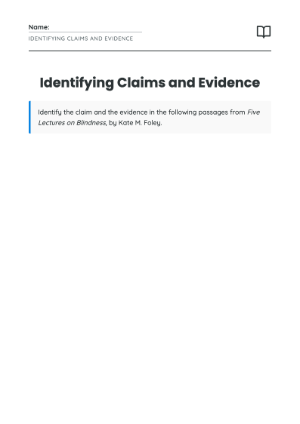
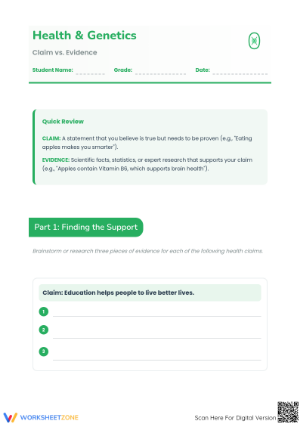
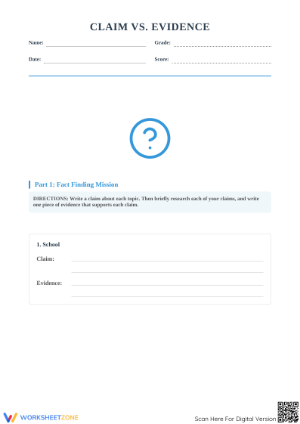
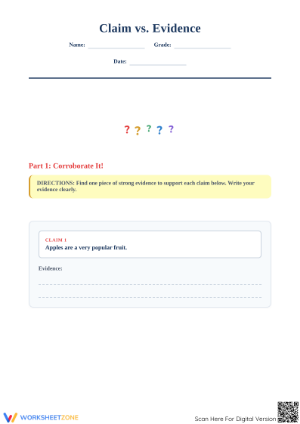
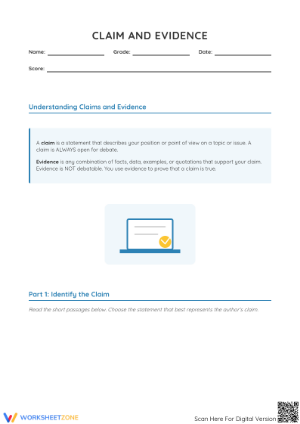
Teachers looking for claim evidence reasoning fill in the blank worksheets for 6th grade usually need a practical way to strengthen reading responses without turning every lesson into a full essay block. In Grade 6 English language arts, students are expected to answer questions about a text, point to details that support the answer, and explain how those details connect to the idea they are defending. That is the everyday work of claim, evidence, and reasoning, even when a lesson is centered on reading rather than formal writing.
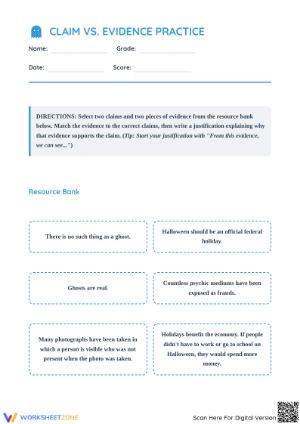
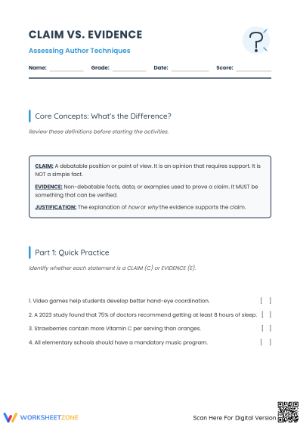
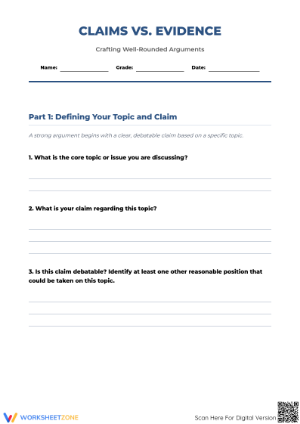
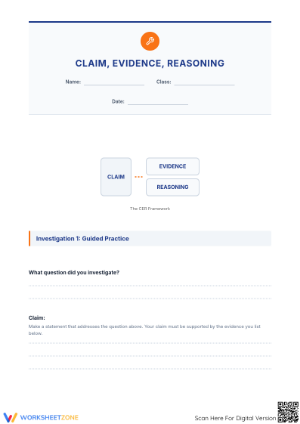
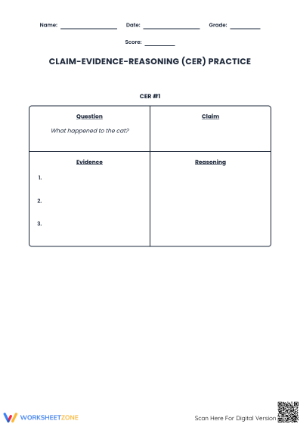
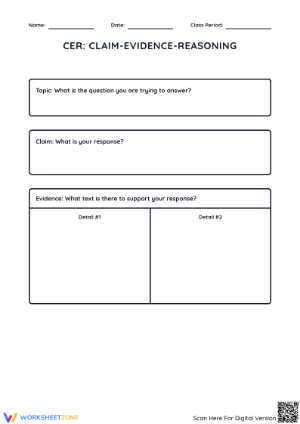
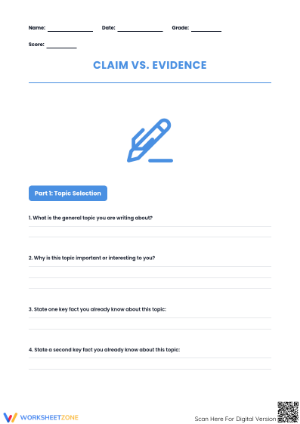
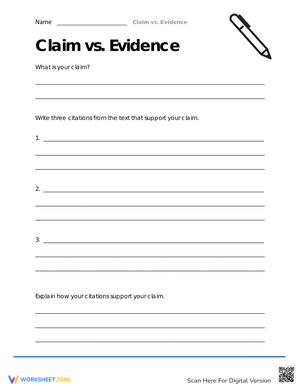
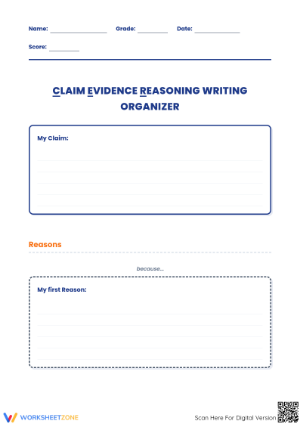
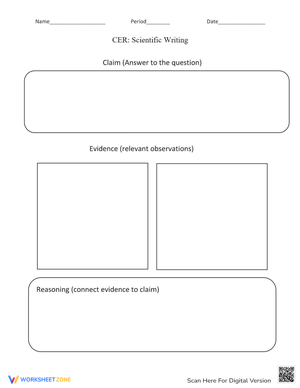
The structure is useful because it gives students a repeatable way to think. A claim states the answer or interpretation. Evidence identifies relevant details from the text. Reasoning explains why those details actually prove the point. When one part is missing, teachers can see the gap quickly. A student may have an acceptable idea but no proof, or accurate evidence with no explanation of why it matters.
That is why fill-in-the-blank formats remain such a strong scaffold in middle school classrooms. They reduce the writing load enough for students to focus on the thinking sequence. Instead of generating every sentence from scratch, students practice completing the logic of an evidence-based response. For many Grade 6 readers, that is the difference between guessing and supporting an answer with purpose.
What Fill-in-the-Blank CER Worksheets Actually Teach
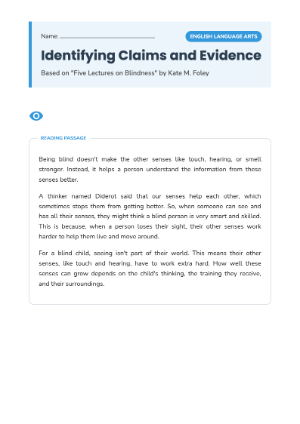
A good fill-in-the-blank page does more than provide sentence stems. It teaches students to notice the separate jobs inside a reading response. One blank may ask for the claim, another for a detail from the passage, and another for the reasoning phrase that links the two. That layout helps teachers slow down a skill that often collapses when students try to do everything at once.
In practice, these worksheets can support several high-value moves:
- Choosing a clear answer to a text-dependent question.
- Returning to the passage for a relevant detail instead of relying on memory.
- Distinguishing between any detail and the strongest supporting detail.
- Explaining how the evidence proves the claim.
- Building confidence before moving into open-ended written responses.
This matters in mixed-ability classes. Students who struggle with written output can still show whether they understand the reading move. Students who are ready for more can complete the scaffold quickly and then expand the response orally or in writing. The worksheet becomes a support for thinking, not a ceiling on rigor.
How These Worksheets Connect to Grade 6 Standards
Grade 6 reading expectations commonly ask students to cite textual evidence and support analysis with relevant details. The Common Core State Standards for English Language Arts make that expectation clear in Grade 6 reading work, where students are asked to cite textual evidence to support analysis of what the text says explicitly as well as inferences drawn from the text. That is exactly why CER routines belong in reading instruction, not only in science or cross-curricular writing.
When teachers use a CER fill-in-the-blank format, they are not lowering the bar. They are separating the parts of the task so students can practice them with more precision. A sixth grader who can identify a claim, pull a matching piece of evidence, and explain the connection is building the same evidence habit needed for short constructed responses, discussion prep, and reading assessments.
Citation capsule: The Common Core State Standards for English Language Arts identify Grade 6 as a point where students must cite textual evidence for explicit analysis and inference. That Grade 6 benchmark supports using CER reading routines and scaffolded fill-in-the-blank practice before students write longer independent responses.
Why Worksheetzone Fits Low-Prep Reading Instruction
Worksheetzone already organizes Grade 6 claim-evidence-reasoning and related text-evidence reading resources on dedicated category pages, which is useful for teachers planning a fast lesson sequence. Instead of building a new prompt set from scratch, teachers can pull printable practice that stays close to the skill they are targeting that day.
The main advantage is instructional efficiency. A teacher may need one page for a bell ringer, one for homework, and one for intervention folders. When those materials stay anchored to Grade 6 reading and evidence routines, the practice feels coherent across the week. Teachers are not re-teaching a new format every time they assign a page.
Related worksheet collections also make it easier to adjust support. A class might begin with a claim-evidence-reasoning page, then move to a citing textual evidence page once students can fill the blanks with more independence. That progression keeps the core reading demand stable while gradually removing scaffolds.
Classroom Implementation
These worksheets work best when they are used as short, repeatable reading reps. A five-minute warm-up can ask students to finish one CER response from a passage read the day before. A small-group lesson can focus on one weak link, such as choosing evidence that is too broad or explaining reasoning that simply repeats the claim.
Teachers can also use the format across several common routines:
- Bell ringers that review a recent story or article.
- Guided practice after whole-class close reading.
- Homework that reinforces evidence-based answers in a manageable format.
- Intervention folders for students who need more structure before independent writing.
A useful instructional insight is that many sixth graders do not fail CER at the claim step. They often fail at the transition between evidence and reasoning. They can copy a relevant line, but they have not yet learned to explain why that line is persuasive. Fill-in-the-blank prompts that isolate the reasoning sentence let teachers diagnose that exact breakdown much faster than a general comprehension worksheet.
That makes the pages especially valuable before longer paragraph writing. If students first complete a scaffolded CER response, they enter the paragraph task with their answer, proof, and explanation already organized. The worksheet is doing real reading instruction, not just occupying practice time.
What Teachers Should Look For Before Printing
Not every CER worksheet is equally useful. Before assigning a page, teachers should check whether the task actually requires students to connect the text to the answer. If students can complete the blanks with vague opinions or copied phrases that are never explained, the page will not build the habit teachers want.
Stronger Grade 6 worksheets usually include:
- A text-dependent question that asks for an answer grounded in the passage.
- Space for at least one relevant detail from the text.
- A prompt that requires reasoning, not just a repeated sentence frame.
- Language that is readable for middle school students without oversimplifying the skill.
- Flexibility for whole group, partner work, homework, or reteach use.
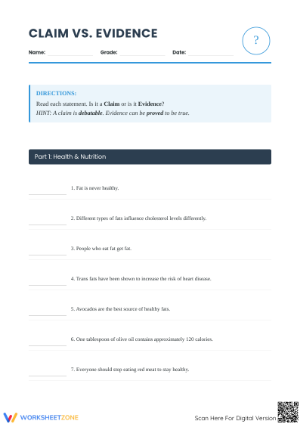
It also helps when the worksheet set aligns naturally with nearby reading skills. Teachers who are already working on citing evidence from the text can pair CER practice with related pages from Worksheetzone so students see that these tasks are connected. The claim is the answer, the evidence is the proof, and the reasoning is the explanation that keeps the response from sounding incomplete.
How to Use CER Pages Across a Week of Reading
One reason teachers keep printable CER materials on hand is that they can stretch across a full week without becoming repetitive. On Monday, students might complete a heavily scaffolded fill-in-the-blank response after reading a short passage. On Tuesday, they might identify which evidence choice best supports a given claim. By Thursday, they can use the same structure with fewer prompts and more independence.
That pacing works well for formative assessment. Teachers can compare early-week and late-week responses to see whether students are moving from partial evidence to stronger support and clearer explanation. Because the format stays familiar, the change in performance is easier to interpret. A teacher is seeing progress in reading response, not just comfort with directions.
This is also where Worksheetzone's dedicated Grade 6 reading categories become helpful. Teachers can stay within one instructional lane while varying the amount of support. Claim-evidence-reasoning pages introduce the structure, and related citing textual evidence pages help students apply it more independently in the same subject area.
Frequently Asked Questions
1. What is claim, evidence, and reasoning in 6th grade reading?
In Grade 6 reading, claim, evidence, and reasoning is a way for students to answer a text-based question clearly. The claim gives the answer, the evidence points to details from the passage, and the reasoning explains how those details support the answer.
2. How do fill-in-the-blank CER worksheets help struggling students?
They reduce the amount of writing students must generate on their own while keeping the core thinking task intact. That makes it easier for teachers to see whether students understand the structure of an evidence-based response or need more support with one specific step.
3. Are these worksheets aligned with Grade 6 text-evidence expectations?
Yes. The skill aligns naturally with Grade 6 reading expectations that ask students to cite textual evidence and support both explicit analysis and inference. A scaffolded worksheet gives students structured practice with that exact reading move.
4. Can teachers use CER worksheets for homework or intervention?
Yes. They work well for homework, bell ringers, small-group reteach, and test-prep review because the format is quick to assign and easy to repeat. Teachers can keep the task focused on reading evidence without requiring a full extended written response every time.












 Interactive Worksheet Maker
 Quiz Maker
 Word Search Maker
 Crossword Puzzle Maker
 Word Scramble Generator
 Sentence Scramble Generator
 Handwriting Worksheet Generator
 Name Tracing Generator
 Fill In The Blank Generator