These 6th grade essay writing worksheets resources address the sharpest transition in middle school writing instruction: sixth graders are expected to produce organized, multi-paragraph essays with a defensible claim, developed support, and purposeful structure — but most arrive in September still relying on the short-response habits they built in elementary school. The set covers all three major essay modes — opinion, informative, and narrative — and isolates one writing move at a time so students can build competence without managing every element of a finished draft at once. Teachers get print-and-use resources that move through planning, drafting, revision, and editing in a sequence that holds together as a week-long unit or pulls apart cleanly for individual skill targets.
Skills Each Worksheet Builds
Rather than handing students a prompt and expecting a full draft, these resources divide essay writing into the component moves 6th graders need to practice before a complete essay becomes manageable. The skill targets across the set include:
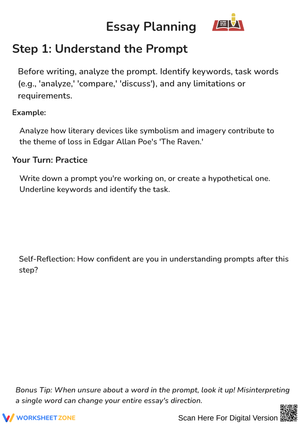
- Prompt analysis: Students identify the essay type, the task demand, and the audience before writing a single sentence — a step most skip entirely when left to work independently.
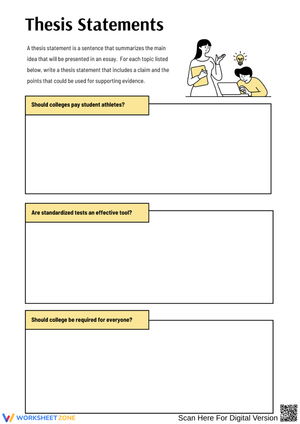
- Claim and thesis construction: Students practice writing statements that take a specific position rather than just naming the topic.
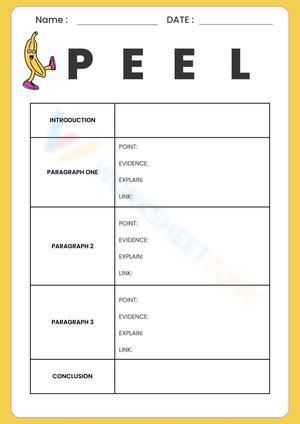
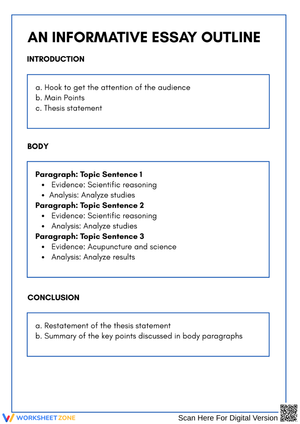
- Body paragraph development: Students introduce a reason, support it with evidence or explanation, and add analysis — the "so what" step after evidence — before moving to the next paragraph.
- Transition use: Targeted practice choosing connective language that signals specific relationships — contrast, cause and effect, elaboration — rather than filling in "first," "next," and "finally" by habit.
- Introduction and conclusion writing: Each has its own focused worksheet because students struggle with both, but for entirely different reasons.
- Revision and self-editing: Students mark and rewrite weak paragraph samples, then apply the same analytical moves to their own drafts.
The opinion and informative worksheets share an organizational logic — claim, support, analysis, conclusion — but treat evidence differently. Narrative worksheets address sequencing, scene detail, dialogue, and reflection as separate skills that need their own focused practice before students can produce a coherent story-based essay.
Where Sixth-Grade Writers Consistently Break Down
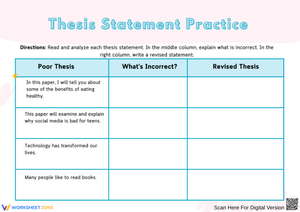
The most common error at this level is the thesis that announces rather than argues. A student who writes "This essay will discuss the benefits of renewable energy" has named the subject without taking a position — there is no claim there, just a topic. The claim-building worksheets address this directly by requiring students to complete a specific stance and state at least one reason before the outline can move forward. That single structural constraint eliminates the announcement-as-thesis pattern for most students within a few rounds of practice.
Body paragraph development is the other major pressure point. Read a class set of first drafts and you see the same pattern nearly every time: a topic sentence, one sentence of explanation, and the paragraph ends — three sentences, no development. Students believe they have supported the point; they haven't built it. The paragraph-development worksheets require students to write the evidence, explain it, and then connect it back to the claim. That third step — the analysis after the evidence — is the one 6th graders skip most reliably, and a worksheet that names it explicitly and requires it before moving on does more than a rubric descriptor about "elaboration" ever does.
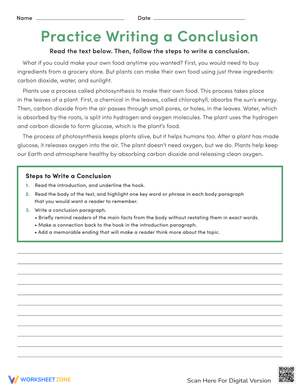
Conclusions produce a different failure mode. Many students copy the introduction almost word for word, assuming repetition equals summary. Others trail off with "In conclusion, I have shown that..." without synthesizing anything. A revision worksheet where students read a weak conclusion and rewrite it makes the problem concrete in a way that written instruction alone doesn't — students have to produce the improvement, not just read about it.
There is also a subtler pattern worth watching: mechanical transition use without any sense of what the transitions signal. A paragraph that moves through "First of all," "Also," and "Lastly" technically has transitions, but those words carry no information about how the ideas relate. The transition-focused worksheets ask students to choose between options that signal specific logical relationships, which produces noticeably more precise writing after just a few rounds of practice.
Where These Worksheets Fit in a Real Writing Week
For a full essay unit, the sequence holds together cleanly: prompt analysis and planning on day one, outline or paragraph organizer on day two, drafting with the paragraph-development worksheet as a reference on day three, then revision and editing resources on days four and five. Students aren't starting fresh each session — they're building toward one complete piece, which gives every worksheet a visible purpose in the progression.
For shorter instructional windows, one skill-focused worksheet fits cleanly into the first 10 to 12 minutes of class. These work especially well on Monday mornings: a paragraph revision task pulls students back into analytical mode faster than a discussion opener and requires almost no prep from the teacher. The editing-checklist worksheets serve a similar function near the end of a unit — they give students a structured task to complete during the last 8 to 10 minutes without opening a new line of instruction.
These 6th grade essay writing worksheets resources also fit naturally into small-group instruction. Pull three or four students who are still writing topic-announcement thesis statements, work through the claim-building worksheet together, and send them back to their drafts with a clearer model. The skill-isolated worksheets are built for that use because the instruction focus doesn't shift mid-group — everyone works on the same targeted move for the duration of the pull.
One approach that reliably sharpens results: assign the same essay prompt across several worksheets in sequence rather than switching topics each day. When students keep returning to one topic, they concentrate on the skill of the day — writing a stronger introduction, developing the analysis after evidence — instead of spending cognitive energy generating new ideas every session. Keeping the content constant also makes growth more visible when you compare the day-one draft to the revised version at the end of the week.
Adjusting the Set for Mixed-Readiness Classrooms
These 6th grade essay writing worksheets resources work across the full range of a typical sixth-grade classroom with targeted adjustments — not entirely separate lesson plans. Sixth grade writing classes hold students who write organized paragraphs independently alongside students who freeze without explicit structure, and the same set can serve both groups.
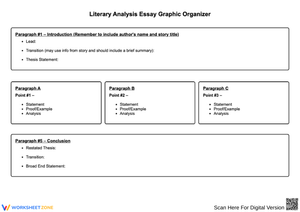
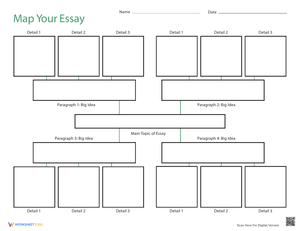
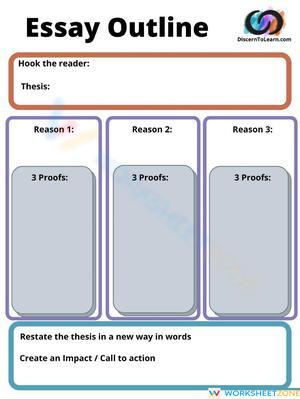
For students who need more support, the worksheets with sentence frames, guided outline sections, and boxed graphic organizers reduce the number of decisions students must make before writing begins. A student who freezes at "write an introduction" can start from a frame that provides the opening context and ends with a blank for the thesis — that removes the "how do I start?" barrier and keeps the student's attention on the actual claim. ELL students and students receiving writing intervention benefit especially from the graphic organizer versions, which separate planning from drafting and make the task's expectations visible on the worksheet itself.
For students ready to work with more independence, use the same essay mode and the same drafting worksheet but swap the boxed organizer for a blank outline, or replace the checklist-heavy revision worksheet with a more open peer-review task. Students writing above grade level respond well to revision worksheets that ask them to cut unnecessary sentences, strengthen the analysis following evidence, or vary sentence openings across a paragraph.
- Offer two prompt choices — same genre, different topic complexity — so students select the one that fits their background knowledge.
- Use the graphic organizer version for some students and lined drafting space for others on the same worksheet day.
- Shorten expected output for intervention groups: one fully developed body paragraph instead of three.
- Use a three-item editing checklist for students who get overwhelmed and a six-item version for those ready for more thorough self-review.
Standard Alignment
These 6th grade essay writing worksheets align to the following Common Core State Standards for grade 6 ELA writing:
- W.6.1 — Write arguments to support claims with clear reasons and relevant evidence. The opinion worksheets target claim construction, reason development, and evidence support — the three moves this standard names at grade 6.
- W.6.2 — Write informative/explanatory texts that examine a topic and convey ideas clearly. The informative worksheets address topic introduction, fact organization, transition use, and precise language, all of which this standard specifies.
- W.6.3 — Write narratives using effective technique, descriptive details, and clear event sequences. The narrative worksheets cover sequencing, scene-building, dialogue, and reflection.
- W.6.5 — Develop and strengthen writing through planning, revising, and editing with guidance and support. The full process sequence in this set — planning organizer through editing checklist — maps directly to this standard's expectation that students move through multiple writing stages with structured support.
In terms of instructional placement, W.6.1 and W.6.2 carry the most formal assessment weight in sixth grade — both appear in state ELA assessments and in content-area writing tasks across the curriculum. The opinion and informative worksheets build toward that demand while keeping instruction grounded in a real, teachable process.
Frequently Asked Questions
Should I use these worksheets as a complete unit sequence or pull from them individually?
Both approaches work. The full process sequence — planning, drafting, revision, editing — holds together as a four- to five-day mini-unit. Individual skill-focused worksheets pull cleanly for bell ringers, small-group reteaching, or mini-lessons without requiring teachers to run the full sequence first.
How long does each worksheet take in class?
Skill-focused worksheets — a claim-writing practice, a transition task, a conclusion revision — typically run 10 to 15 minutes, making them workable as class openers or mid-lesson checkpoints. Planning organizers and full drafting worksheets are built for a 30- to 45-minute class period and can extend across two shorter sessions when needed.
Do the narrative worksheets connect structurally to the opinion and informative ones?
They're separate sets. Narrative writing requires skills — sequencing, scene detail, dialogue, reflection — that don't overlap meaningfully with argument or explanation structure. Teachers can sequence all three modes across a semester or treat each as a standalone unit depending on their curriculum pacing.
What support do these worksheets provide for ELL students?
The worksheets with graphic organizers, sentence frames, and guided outline sections reduce the language production demand enough that ELL students can work through them with teacher check-ins rather than full independence. Transition vocabulary is worth particular attention: connecting words don't transfer automatically from a student's home language, and they often need explicit, repeated practice before they appear reliably in student writing.












 Interactive Worksheet Maker
 Quiz Maker
 Word Search Maker
 Crossword Puzzle Maker
 Word Scramble Generator
 Sentence Scramble Generator
 Handwriting Worksheet Generator
 Name Tracing Generator
 Fill In The Blank Generator