What topics these grade 4 science worksheets cover?
The Worksheetzone's Other Science Worksheets collection for Grade 4 groups resources across major domains, and that wider coverage matters when you are planning review or differentiation. Strong sets of 4th grade others science worksheets should give students a chance to work across several common topic areas instead of repeating one skill in isolation.
- Energy and motion: identifying examples of energy transfer, pushes and pulls, and cause-and-effect relationships in physical systems.
- Waves and sound basics: reading simple diagrams, matching terms, and applying vocabulary in short explanations.
- Plant and animal structures: connecting body parts or structures to survival, growth, and reproduction.
- Earth processes and weather: interpreting patterns, land changes, and basic weather-related observations.
- Human impact and applied science ideas: thinking about how people use resources and affect Earth systems.
When a worksheet set touches several of these areas, it becomes much easier to use the same resource bank for review days, centers, homework, and quick intervention groups.
How these worksheets support standards-aware review
The worksheets included in this collection are designed to meet NGSS-style Grade 4 topics such as energy transfer, waves, plant and animal structures, Earth processes, and human impacts on Earth systems. That means mixed-topic worksheets work best when they do not feel random. They should still reflect the concept clusters teachers are expected to teach over the year.
According to the NGSS Fourth Grade Overview PDF, Grade 4 science work commonly returns to at least five recurring topic clusters: energy transfer, waves, plant structures, animal structures, and Earth processes. That makes mixed-topic review more than filler. It mirrors how teachers revisit connected ideas across a full year of instruction.
For teachers, the takeaway is simple: these worksheets are most effective when they align to broad Grade 4 science expectations without forcing you to sort every printable into a separate unit binder. That is especially helpful late in a quarter, before benchmark checks, or during short reteach windows.
Best classroom use cases for 4th grade others science worksheets
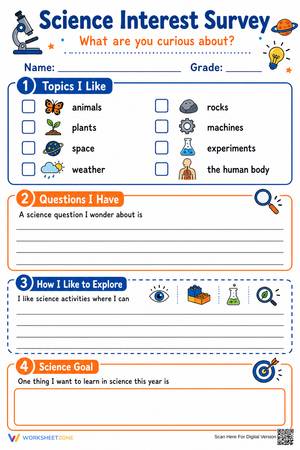
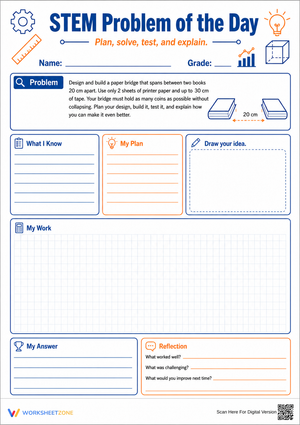
Mixed-topic worksheets are often the pages teachers reach for when the schedule changes. They are practical because they fit short blocks of time and do not require labs, materials, or complicated setup. If you are building a science routine that can survive interruptions, these printables fill several real classroom needs.
- Bell ringers: start class with 3 to 5 questions that reactivate prior knowledge before a new mini-lesson.
- Centers: place a worksheet at an independent station for vocabulary practice, sorting, or diagram labeling.
- Homework: send home short review that reinforces classroom language without needing special materials.
- Sub plans: use straightforward pages that let students work independently while still staying in your science scope.
- Quick formative assessment: collect one page to see which students need reteaching before moving on.
The Worksheetzone 4th Grade Other Science Worksheets page is especially useful for these moments because teachers are not always searching for a unit-long packet. Often, they just need one clean practice page that matches the grade band and the general science focus of the week.
How to differentiate without adding more prep
Differentiation does not have to mean creating three brand-new assignments. Mixed-topic science worksheets are helpful because you can adjust the task around the same printable. In Grade 4, that usually means changing the level of support, the amount of writing, or the way students explain their thinking.
- For emerging readers: preview 4 to 6 key terms before students begin and let them explain answers orally first.
- For on-level practice: assign the full worksheet and ask students to underline evidence in the question before answering.
- For enrichment: add one transfer prompt such as "Which idea on this page connects to something we learned last month?"
- For small groups: turn selected items into discussion cards and have students justify choices with science vocabulary.
The benefit of a mixed worksheet bank is that you can keep the content aligned while changing the support. That matters in upper elementary classrooms where readiness levels vary widely even within the same science block.
Frequently Asked Questions
1. What science topics should 4th grade worksheets cover?
They should sample the broad Grade 4 science areas teachers commonly teach, including energy, waves, plant and animal structures, Earth processes, weather, and human impact ideas. Mixed-topic pages are most useful when they support review across several domains instead of focusing on only one isolated subtopic.
2. Are these worksheets aligned with common US Grade 4 science standards?
They are best understood as standards-aware resources that reflect NGSS-style Grade 4 topic clusters named in the prefetched research, especially those highlighted in the NGSS 4th Grade Topics Model and the NGSS Fourth Grade Overview PDF. Teachers can use them to reinforce taught concepts and check retention across the year.
3. How can teachers use mixed science worksheets in centers, homework, or review lessons?
Use them as station work, bell ringers, sub plan assignments, homework refreshers, or short end-of-week review. Because the topics are mixed, the same page can reactivate older learning while supporting the current unit, which makes these printables practical for real classroom pacing.
4. Do these worksheets work for independent practice and quick assessment?
Yes. They are a strong fit for independent work because the format is short and printable, and they are also useful for quick assessment because one page can reveal whether students remember vocabulary, read diagrams correctly, and connect ideas across multiple Grade 4 science topics.












 Interactive Worksheet Maker
 Quiz Maker
 Word Search Maker
 Crossword Puzzle Maker
 Word Scramble Generator
 Sentence Scramble Generator
 Handwriting Worksheet Generator
 Name Tracing Generator
 Fill In The Blank Generator