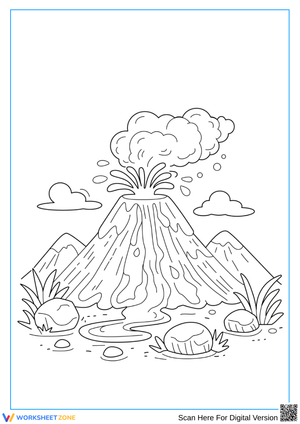
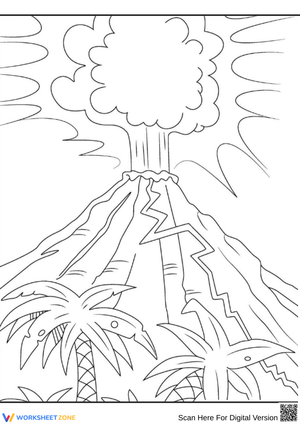
Volcanoes give 4th graders the perfect mix of excitement and real earth science. Students are often fascinated by eruptions, lava, ash clouds, and the idea that Earth can change dramatically over time. 4th grade volcano worksheets help turn that curiosity into structured learning by guiding students through volcano parts, eruption types, Earth’s layers, vocabulary, diagrams, and cause-and-effect explanations. With the right activities, students can move beyond “volcanoes are cool” and begin understanding how they form and why they matter.
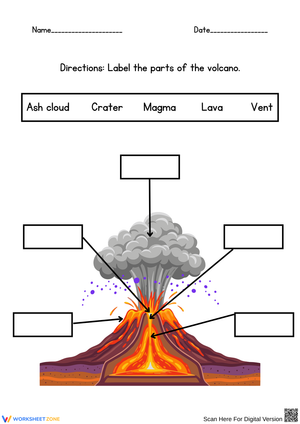
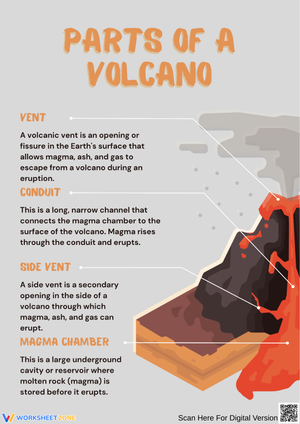
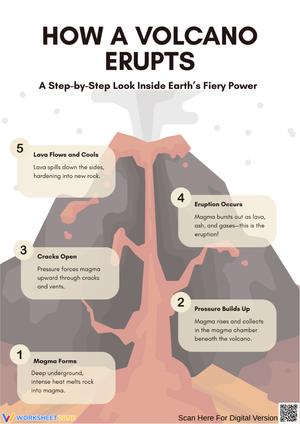
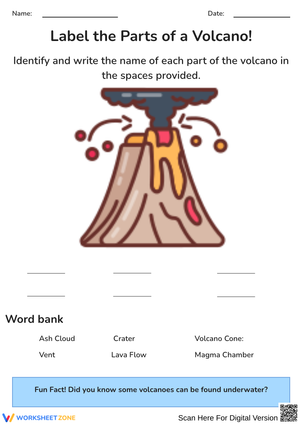
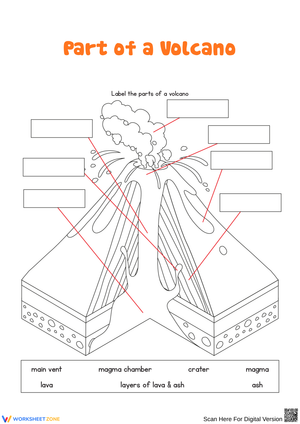
By 4th grade, learners are ready to explore volcanoes with more depth than simple labeling. They can study how magma forms below Earth’s surface, how pressure builds, and how lava, ash, and gases are released during an eruption. Worksheets can help students identify the crater, vent, magma chamber, lava flow, ash cloud, and cone while also explaining the role of each part. This combination of visual learning and written explanation supports both science understanding and academic vocabulary growth.
A volcano unit also connects naturally to Earth’s internal structure. Students can begin learning that volcanic activity is related to what happens beneath the crust, especially in the mantle where melted rock can form. Teachers can use layers of the earth worksheets to help students understand the crust, mantle, outer core, and inner core before discussing how magma moves toward the surface. This connection makes volcano learning more complete and helps students see Earth as a dynamic system.
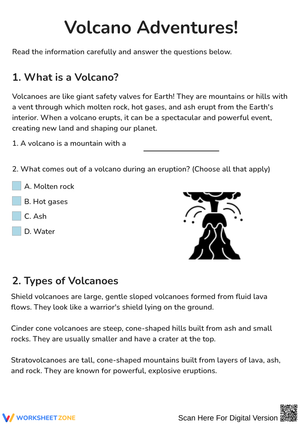
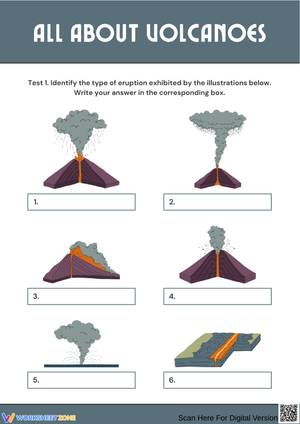
Inquiry-based lessons can make volcano worksheets even more meaningful. Students might compare explosive and gentle eruptions, read about famous volcanoes, analyze a diagram, or explain how volcanoes can create new land. Teachers can also pair worksheet practice with safe classroom demonstrations, research projects, or model-building activities. For broader hands-on learning ideas, fourth grade science projects can help students connect volcano concepts to observation, prediction, and scientific investigation.
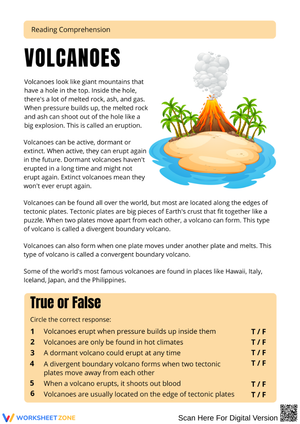
4th grade volcano worksheets work well in classrooms, homeschool lessons, science centers, review blocks, and earth science units. They help students practice labeling, reading comprehension, vocabulary, cause-and-effect reasoning, and written explanation. More importantly, they encourage students to ask deeper questions about how Earth changes, how landforms are created, and how natural events affect people and environments. With clear visuals and thoughtful prompts, volcano worksheets can turn a high-interest topic into strong science learning.
Frequently Asked Questions
Question 1: What should 4th grade volcano worksheets include?
Good 4th grade volcano worksheets should include clear diagrams, accurate vocabulary, and activities that help students understand both structure and process. Common topics include magma, lava, crater, vent, magma chamber, ash cloud, cone, eruption, and volcanic rock. Strong worksheets may ask students to label volcano parts, explain what happens during an eruption, compare eruption types, or answer questions based on a short reading passage.
Question 2: How do volcano worksheets support 4th grade earth science learning?
Volcano worksheets support earth science learning by helping students connect Earth’s surface features with processes happening below the surface. Students learn that volcanoes are not just mountains but openings where materials from inside Earth can reach the surface. This helps build understanding of landforms, Earth’s layers, rocks, natural hazards, and how the planet changes over time. Worksheets also give students practice using science vocabulary in context.
Question 3: How can teachers make a volcano lesson more engaging?
Teachers can make a volcano lesson more engaging by combining worksheets with diagrams, models, videos, map activities, or simple demonstrations. Students might build a volcano model, compare real volcanoes from different parts of the world, or create a cause-and-effect chart showing what happens before, during, and after an eruption. After these activities, worksheets help students organize their observations and explain the science behind what they learned.
Question 4: What vocabulary should students learn in a volcano unit?
Students should learn key terms such as magma, lava, crater, vent, magma chamber, ash, eruption, cone, dormant, active, extinct, and tectonic plates. They should also understand the difference between magma and lava, since magma is melted rock below Earth’s surface and lava is melted rock that reaches the surface. Learning these terms helps students describe volcanoes accurately and prepares them for more advanced earth science topics in later grades.












 Interactive Worksheet Maker
 Quiz Maker
 Word Search Maker
 Crossword Puzzle Maker
 Word Scramble Generator
 Sentence Scramble Generator
 Handwriting Worksheet Generator
 Name Tracing Generator
 Fill In The Blank Generator