Why 4.OA.4 Factor Pairs Need Structured Practice in Grade 4
Fourth grade number theory work asks students to hold several related ideas in their heads at once: factor pairs, multiples, and prime or composite classification. Factors and multiples worksheets for 4th grade give teachers a way to isolate each of these sub-skills before asking students to blend them together on an assessment.
According to the Common Core State Standards Initiative, Grade 4 Operations and Algebraic Thinking standard 4.OA.B.4 requires students to find all factor pairs for whole numbers 1 to 100, recognize multiples of one-digit factors within that range, and classify each number as prime or composite before moving into fraction work.
That single standard covers four distinct demands, which is exactly why one worksheet rarely covers everything a student needs. Teachers planning a number theory unit often need a stack of targeted practice sets rather than one general review sheet.
Sequencing Worksheets From Factor Pairs to Multiples to Prime and Composite Sorting
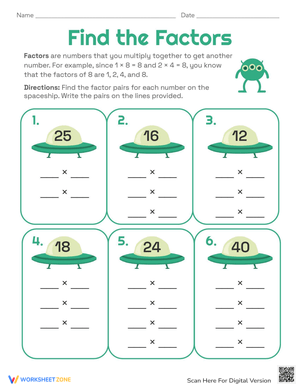
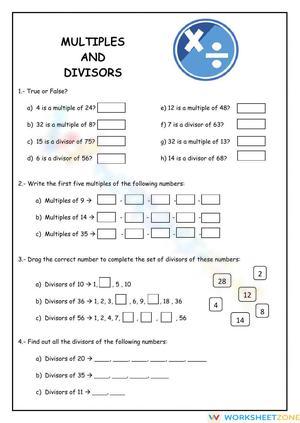
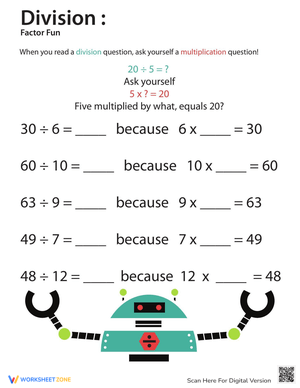
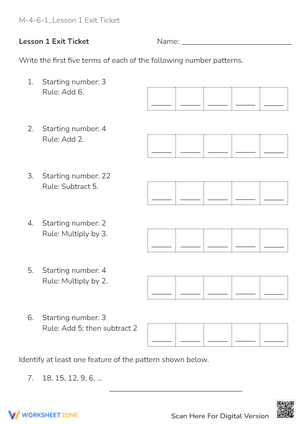
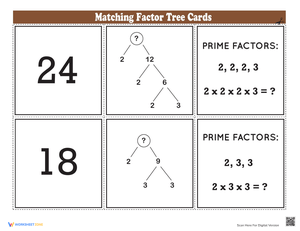
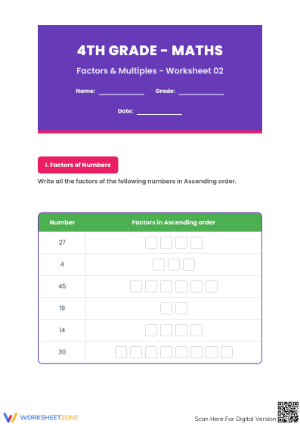
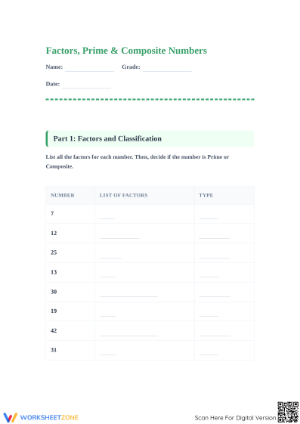
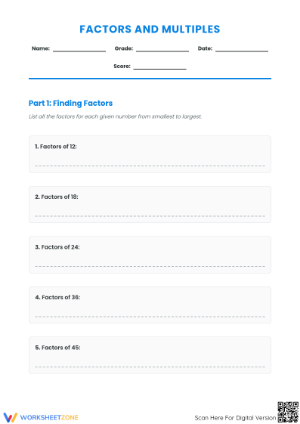
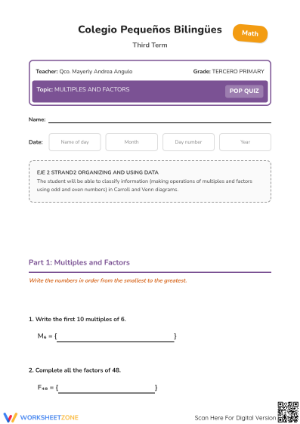
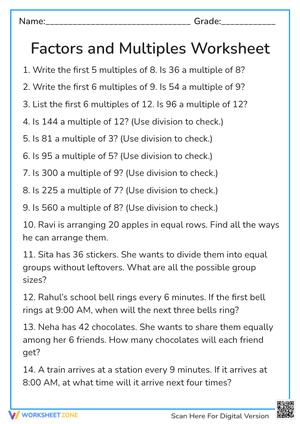
A logical worksheet sequence mirrors how the standard is written. Start with factor-pair worksheets that ask students to list every pair for numbers like 24, 36, or 48. Once students can generate factor pairs without missing any, move to multiples worksheets that ask whether a number in the 1-100 range is a multiple of a given one-digit number, such as 6 or 8.
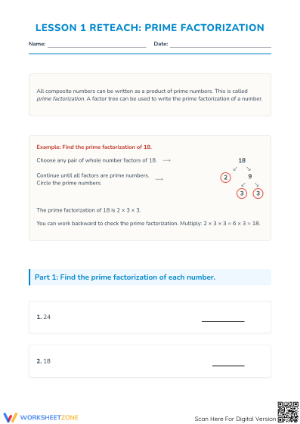
The final stage in the sequence is prime and composite sorting. This step depends on the earlier factor work, since a student who cannot find all the factor pairs of a number will struggle to decide whether it has more than two factors. Sequencing worksheets this way keeps struggling students from being asked to sort primes before they can reliably find factors.
Common Misconceptions: Factors vs. Multiples
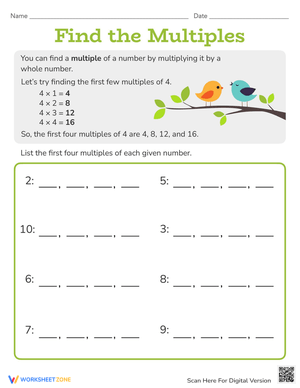
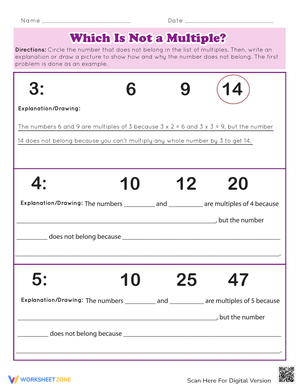
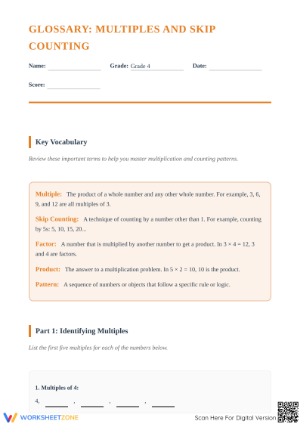
The most frequent error in fourth grade number theory work is confusing factors with multiples. Students often describe multiples of 4, such as 4, 8, 12, and 16, when asked for factors of a number, since both concepts involve multiplication facts. Worksheets that require students to label each answer as either a factor or a multiple, rather than just listing numbers, help correct this confusion early.
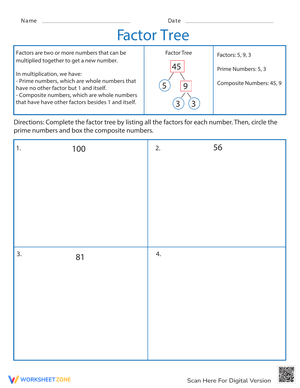
A second common error is stopping a factor-pair search too early, missing pairs that sit near the square root of the target number. Worksheets that require students to check every whole number in order, rather than jumping around, reduce this type of omission.
Teacher Tips
Pair every factor-pair worksheet with a quick check for missed pairs near the square root of the number, since that is where most errors occur. Keep multiples worksheets tied to one-digit factors at first, matching the exact language of 4.OA.4, before mixing in two-digit multiples for enrichment.
When grading prime and composite sorting worksheets, look specifically at whether a student's reasoning traces back to a complete factor-pair list. A wrong answer on a sorting worksheet is often a factor-pair gap in disguise, not a misunderstanding of what prime and composite mean.
Frequently Asked Questions
1. How do factors and multiples worksheets align with CCSS 4.OA.4?
4.OA.4 asks students to find all factor pairs for numbers 1-100, recognize multiples of one-digit factors, and classify numbers as prime or composite. Worksheets that isolate each of these three demands give teachers a direct way to practice and assess the standard piece by piece.
2. What is the difference between a factor and a multiple, explained for classroom use?
A factor is a number that divides evenly into another number, while a multiple is the product of a number and a whole number. For example, 4 is a factor of 12, while 12 is a multiple of 4. Worksheets that require students to label each response help reinforce this distinction.
3. How can teachers use these worksheets for small-group intervention or reteaching?
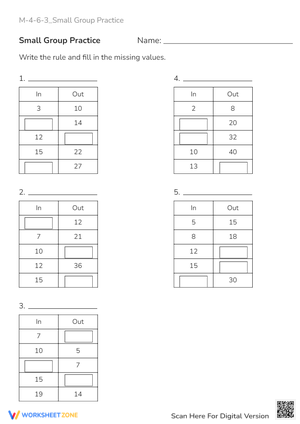
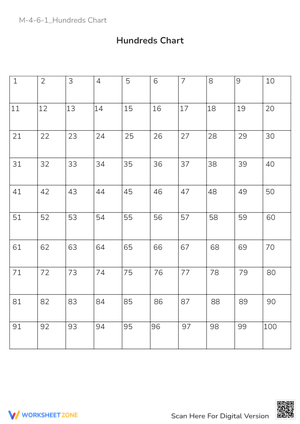
Use single-skill worksheets with a smaller number range, such as 1-30, so students can focus on one sub-skill at a time. Pair the worksheet with a factor-pair chart for students who still need a visual reference while they build fluency.
4. What number range should 4th grade factor and multiple practice cover?
CCSS 4.OA.4 specifies the range 1-100 for both factor pairs and multiples of one-digit numbers. Early practice can start with a smaller range, such as 1-30, before expanding to the full 1-100 range as students build confidence.













 Interactive Worksheet Maker
 Quiz Maker
 Word Search Maker
 Crossword Puzzle Maker
 Word Scramble Generator
 Sentence Scramble Generator
 Handwriting Worksheet Generator
 Name Tracing Generator
 Fill In The Blank Generator