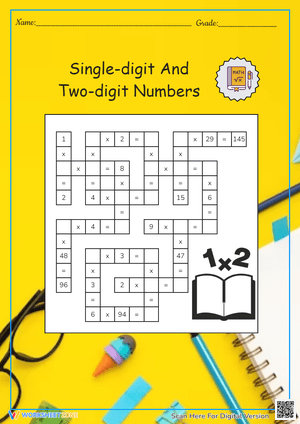
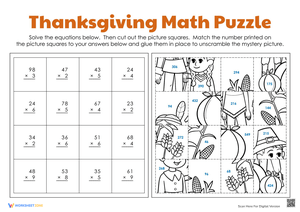
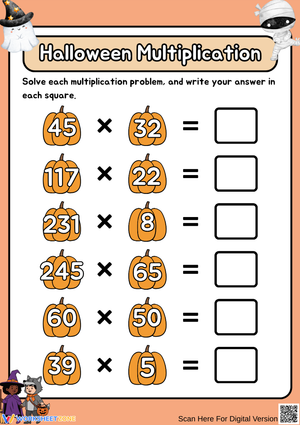
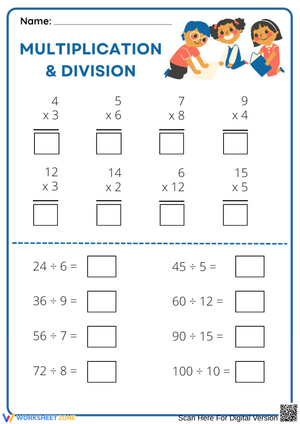
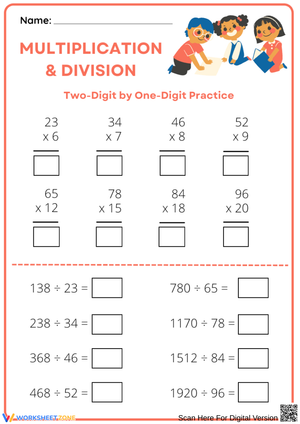
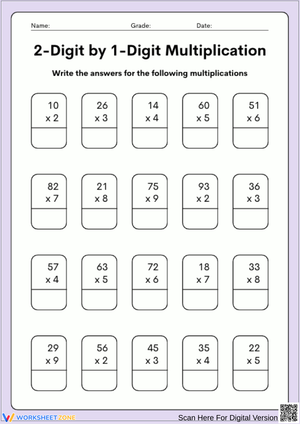
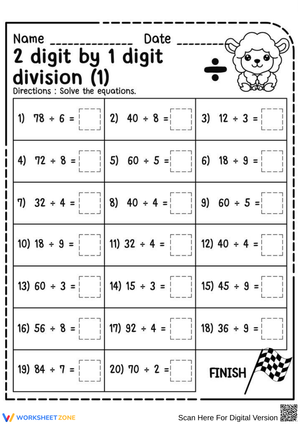
2 Digit Multiplication 2 by 1 printable worksheets for 4th Grade
These 2 digit multiplication 2 by 1 printable worksheets for 4th grade arrive at a specific instructional pivot — the point where students stop treating multiplication as a recalled fact and start working a procedure for numbers they cannot hold in their heads. That transition is harder than it looks in early October, and well-structured practice materials are what make the difference between students who understand the algorithm and students who are only imitating it.
The Specific Skills Each Worksheet Targets
The core progression runs through three connected ideas: what the multiplication means, how place value organizes the work, and how to carry that thinking into an efficient written procedure. Students who skip the first two and jump straight to the algorithm can produce correct answers on simpler problems — 21 × 3 goes fine — but fall apart as soon as regrouping enters the picture, because they have no conceptual framework for checking their own work.
Across the set, students practice:
- Decomposing the two-digit factor using expanded form (34 = 30 + 4) before multiplying each part separately
- Area models and partial products — recording each piece of the multiplication and then combining
- The standard algorithm with regrouping, including problems that require carrying into the tens column
- Fact fluency inside a procedure — retrieving single-digit products quickly while managing the larger computation
- Word problems and missing-factor tasks that ask students to read a context, write the equation, and solve rather than compute from a given expression
A set of 2 digit multiplication 2 by 1 printable worksheets for 4th grade that spans model-based and algorithm-based tasks gives teachers both the practice material and the diagnostic information to make mid-unit decisions — because a computation-only drill sheet cannot distinguish between a student who understands partial products and one who is executing steps without knowing why they work.
Frequent Student Errors Worth Watching For and Addressing
The most persistent error in this skill is what might be called the "forgotten carry." Here is what it looks like in practice: a student solves 47 × 3 by multiplying 3 × 7 = 21, writes the 1 in the ones place, and records a small 2 above the tens column. Then they multiply 3 × 4 = 12 — and write 12 without adding the carried 2. The recorded answer is 121 instead of 141. The regroup mark is visible in the student's work. The step was not ignored; it was simply dropped at the moment when attention shifted from the ones column to the tens. This pattern persists even after weeks of practice because retrieving a multiplication fact and remembering to add a carry value compete for working memory at exactly the same moment.
A second pattern shows up specifically in area model work. Students who correctly decompose 47 into 40 + 7 will compute 3 × 7 = 21 without trouble. But when they reach 3 × 40, many drop the zero — computing 3 × 4 = 12 in their heads and recording 12 instead of 120. The partial products then become 12 and 21, which combine to 33, nowhere near the correct answer of 141. Students frequently accept this because each individual step felt right. The underlying issue is cognitive load: the decomposition step frees working memory for the multiplication itself, but students lose track of the place value that each decomposed piece carries. When this error appears in student work, more computation practice will not fix it — the place-value meaning of the decomposed parts needs explicit reconnection through reteaching.
How to Build These Worksheets Into Your Lesson Plans
The most natural fit is in the independent practice segment right after direct instruction closes. Students have just watched a model of partial products or the standard algorithm, and they need 10 to 15 minutes of quiet individual work before the method fades. A focused worksheet with 10 to 12 problems — a mix of regrouping and non-regrouping items — gives teachers a clear picture of who grasped the day's method and who needs a reteaching moment before the block ends.
Beyond the main practice block, a few other classroom slots work well. The first 6 to 8 minutes of class, before the full lesson begins, handles 4 or 5 review problems from a previously taught method — a low-stakes way to reactivate prior learning before introducing something new. In centers, one worksheet becomes a repeatable routine: solve three problems, compare answers with a partner, and circle any item where you disagree. In small-group intervention, pulling the students who all made the same error — say, everyone who forgot to add the carry in yesterday's lesson — and working through one worksheet together while narrating each step aloud surfaces the exact moment the logic breaks down for each student.
Before the unit begins, sorting the worksheets into three labeled groups — model support, regrouping practice, and application check — saves meaningful time mid-lesson. When a student finishes early or a small group needs a different entry point, the right worksheet is already labeled and ready rather than requiring a mid-lesson search.
Adjusting the Set for a Range of Learners
Differentiation here does not require a different topic — it requires different amounts of support and different types of response. Students still working on place-value understanding benefit most from worksheets that include a pre-drawn area model with blank boxes to fill in. They are doing the same multiplication as the rest of the class, but the structure removes the decomposition step as a source of confusion so the practice can focus on the multiplication itself. Wide-ruled workspace or graph paper prevents the column-alignment errors that catch students who understand the math but lose track of digit position when writing on blank lines.
On-level practice works best as a mixed set: some non-regrouping problems, some regrouping required, and one or two word problems where students write the equation before solving. That combination is closer to what appears on the unit assessment and state tests, so the practice transfers beyond the worksheet. Students who are moving quickly through the algorithm benefit from error-analysis tasks — a completed problem with a mistake embedded — that require identifying and explaining the error rather than simply computing. Asking those students to solve the same problem two ways and confirm that both methods produce the same answer deepens the work without adding more computation volume.
Standard Alignment
These worksheets address CCSS 4.NBT.B.5, which calls for students to multiply a whole number of up to four digits by a one-digit whole number using strategies based on place value and properties of operations. Two-digit by one-digit multiplication is the opening case of that standard — where teachers first build the partial-products reasoning that will later extend to three- and four-digit factors. The standard's language specifies strategies based on place value, not just efficient computation, which is why worksheets limited to algorithm steps are underaligned. The area model and expanded-form tasks in this set address the conceptual language of the standard directly, not just the computational outcome. In most 4th grade classrooms following a standard pacing sequence, this skill appears in late September or early October, with two to three weeks of focused instruction before factor sizes increase.
Frequently Asked Questions
What prior knowledge do students need before working on this skill?
Students need reliable recall of single-digit multiplication facts through 9 × 9, a working understanding of two-digit place value, and comfort breaking numbers into parts. If a student cannot quickly say that 36 is 3 tens and 6 ones, partial products will feel like an arbitrary rule rather than a logical extension of what they already know. A short place-value check at the start of the unit saves time compared to diagnosing two separate gaps at once in the middle of the multiplication sequence.
How many problems belong on each practice worksheet?
For most Grade 4 classes, 10 to 16 problems is a workable range. When the worksheet mixes regrouping and non-regrouping items and includes a word problem or two, fewer problems produce better-quality work than a crowded set of 25 computation items. The goal is careful procedure with visible reasoning — not stamina through volume. For intervention groups, a worksheet with 6 to 8 problems and ample workspace often produces more useful diagnostic information than a full computation set.
Should area models appear on the same worksheet as algorithm practice?
Early in the unit, yes. Pairing an area model task with a standard algorithm problem lets students cross-check answers and builds an explicit connection between the two methods. Later in the unit, once students are moving through the algorithm accurately, area models work better as an available tool rather than a required step. When models remain required on every problem after students have moved past that stage, the algorithm can feel artificially cumbersome, which undermines the motivation to use it fluently.
Does this skill appear on 4th grade state assessments?
Yes, under CCSS 4.NBT.B.5 and its state equivalents. The skill appears in both standalone computation items and embedded within multi-step word problems. Students who practice only computation tend to struggle with the applied form of the question — because word problems require identifying the operation, writing an equation, and then solving, rather than computing from a given setup. That is why the 2 digit multiplication 2 by 1 printable worksheets for 4th grade in this set include application tasks throughout the unit, not just as a final review item.
How do these worksheets hold up for homework at this grade level?
Well, provided students received direct instruction on the method that day. A set of 6 to 10 problems with clear workspace is the right scope — enough to reinforce the lesson without requiring a family member to re-teach a strategy they may not recognize. Answer keys support the next morning's class discussion: reviewing two or three problems together takes far less time than collecting and marking every paper. The 2 digit multiplication 2 by 1 printable worksheets for 4th grade in this collection keep that classroom-to-home handoff in mind, with clean layouts and enough white space that student work remains readable when it comes back the next day.
Clear All