3rd Grade Citizenship in the Community Worksheets
These 3rd grade citizenship in the community worksheets printable give teachers a direct route into one of the harder conceptual shifts in elementary social studies: moving students from "rules in my house" to "laws in my city." At eight and nine, students are developmentally ready to think beyond their immediate family circle, but abstract civic concepts — rights, responsibilities, common good — need concrete, visible practice to stick. This set delivers that practice across a range of formats built for Grade 3.
The Specific Skills These Worksheets Build
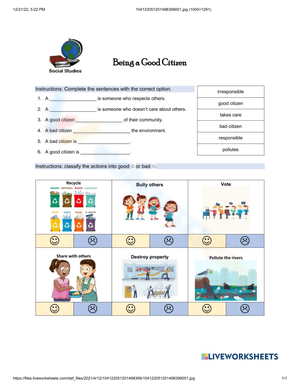
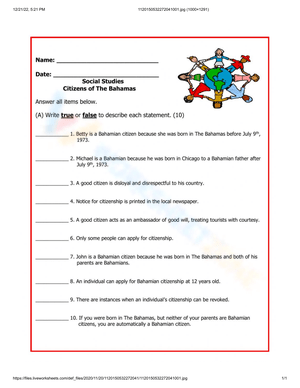
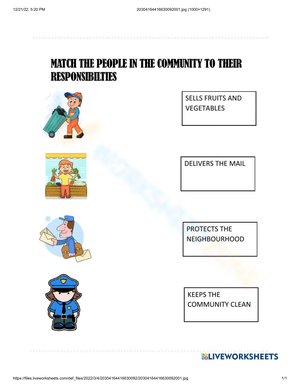
The set covers five concept areas that third-grade social studies programs address together rather than in isolation. Rights and responsibilities sorting asks students to categorize statements and then justify one placement in writing, which immediately surfaces muddled thinking. Community helper profile worksheets have students identify the civic need behind each role, moving past "firefighters put out fires" toward understanding why a community funds and organizes that service. Rules-vs.-laws worksheets ask students to distinguish between a household rule, a school rule, and a community law — then explain what would happen if each were ignored, a task that requires genuinely different reasoning for each category. Scenario worksheets present brief neighborhood situations and ask what a responsible community member would do. One worksheet walks students through a simple action plan: identify a local problem, name who is affected, write two realistic steps toward a solution.
Vocabulary work runs alongside each concept area, reinforcing terms like civic duty, common good, elected official, and volunteer through matching and sentence-completion rather than isolated definitions. Students who can use a word correctly in a sentence about a real situation understand it. Students who only recognize it on a word wall do not.
Student Mistakes Teachers Should Anticipate and Correct
The most persistent error at this grade level is collapsing rights and responsibilities into a single idea. Students will write that having the right to a clean park means they are responsible for cleaning it — conflating the entitlement with the obligation in a way that blocks more precise civic reasoning. Sorting worksheets expose this because physically placing a statement in one column forces a decision. When a student puts "I am allowed to speak in class" under Responsibilities, you see the confusion immediately rather than reading past it in a paragraph answer.
A second pattern shows up around rules versus laws. Third graders regularly treat all rules as having equal weight — a student will argue that violating a "no running in the halls" rule and speeding in a car are equivalent offenses. The scenario worksheets bring this kind of reasoning to the surface so it can be addressed directly. The rules-vs.-laws worksheet in particular works well displayed under a document camera after independent practice, using student examples to anchor a whole-class discussion about why consequences differ.
Getting the Most Out of These Worksheets in Your Lesson Planning
The vocabulary matching worksheets serve as reliable Monday warm-ups — five minutes at the start of a social studies block reactivates prior knowledge before new content begins. Sorting activities work well mid-unit when students have enough context to make and defend decisions but haven't yet had the exit-ticket assessment that closes the concept. The scenario and action plan worksheets require more time and do better as independent practice during a full social studies period.
One pairing that deepens the content noticeably: when teaching the community helper and civic roles worksheet, run the lesson alongside a classroom job system that mirrors local government. Assign roles like City Council Member (helps settle classroom disputes), Sanitation Engineer (responsible for end-of-day cleanup), and Public Records Keeper (updates the class agenda on the board). Students completing 3rd grade citizenship in the community worksheets printable about community roles have an immediate real-world parallel in their own daily responsibilities, which makes the abstract concrete rather than just stated. The connection becomes visible.
For formative assessment, the sorting worksheets are the most efficient tool in the set. After four or five days on rights and responsibilities, a sorting task takes less than eight minutes and gives clear data on who has internalized the distinction and who is still guessing — useful information before moving into laws and civic participation.
Standard Alignment
These worksheets align with the NCSS C3 Framework for Social Studies State Standards, specifically Dimension 2: Civics. D2.Civ.1 asks students in grades 3 through 5 to explain how rules and laws change society and how people work together to shape them — the exact reasoning the rights-vs.-responsibilities and rules-vs.-laws worksheets require. D2.Civ.5 at this grade band addresses the ways people can participate in civic and community life, which the action plan and scenario worksheets address directly. Most state-level Grade 3 social studies standards map closely to this framework, though some states add requirements around specific state or local government structures. These worksheets address the universal civic concepts; teachers in states with additional local requirements can use the action plan worksheet to direct students toward real examples from their own city or county.
Stretching and Tightening the Set for Different Learners
Students who need additional support on the vocabulary worksheets benefit from a simple reference card listing the unit terms with one example sentence each — not a formal glossary, just a printed anchor that reduces the cognitive load of holding definitions in working memory while completing the task. Moving those students through the matching format before sentence completion gives them a lower-stakes entry point into the same content.
For students working above grade level, the action plan worksheet extends naturally into independent research. Instead of a hypothetical community problem, they identify a real local issue — something from a recent school newsletter, a town meeting notice, or a local news story — and write a multi-step response that includes identifying who in the community has authority over the problem and how a citizen can participate in that process. The 3rd grade citizenship in the community worksheets printable in this set work at standard without teacher modification, but the action plan worksheet opens cleanly into extended work for students who finish quickly and need substantive next steps rather than busywork.
For students who struggle specifically with the scenario format — where an unfamiliar situation is presented and an open-ended judgment is required — thirty seconds of partner talk before writing helps significantly. Students arrive at the writing task with language already in hand, and the blank-page freeze that some readers experience after a short story prompt happens far less often.
Frequently Asked Questions
What civic concepts should third graders understand about their community?
Third graders should be working toward a clear distinction between rights — freedoms and protections that belong to all community members — and responsibilities — actions community members are expected to take to keep things functioning. They should understand why rules and laws exist, not just that they do, and be able to explain the difference between a classroom rule and a city law. Understanding the roles of community helpers, including elected officials, volunteers, and public workers, rounds out the core concept set. Participation — the idea that citizens affect their community through daily choices and deliberate actions — is the thread running through all of it.
How do these worksheets support students who struggle with abstract civic ideas?
The 3rd grade citizenship in the community worksheets printable in this set move abstract concepts into concrete tasks. Rather than asking students to define "civic responsibility," a scenario worksheet asks them to read about a character who finds litter near a playground and decide what that person should do — and why. The decision-making process builds the concept from the inside out. Sorting tasks work the same way: students form an opinion and commit to a column before they're asked to articulate a rule. That sequence — act first, then explain — is more productive at this age than defining terms first and applying them second.
Are these worksheets more useful as homework or in-class practice?
Both uses work, but they work differently. In class, scenario and sorting worksheets are most valuable when student responses can be quickly discussed or compared — the formative data is immediate and the discussion extends the learning. As homework, vocabulary and community helper profile worksheets travel well because they don't depend on partner work or teacher facilitation. Sending a community helper worksheet home also tends to generate family conversations about civic roles, which connects the content to students' real neighborhoods in ways a classroom-only unit can't replicate.
Clear All