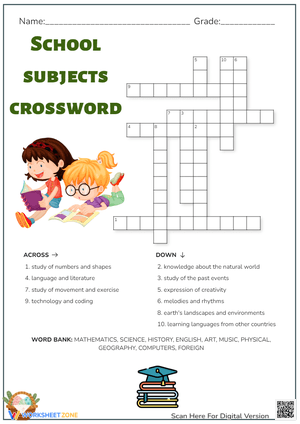
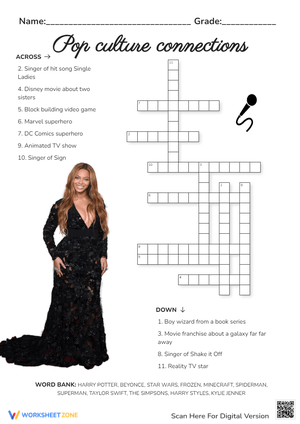
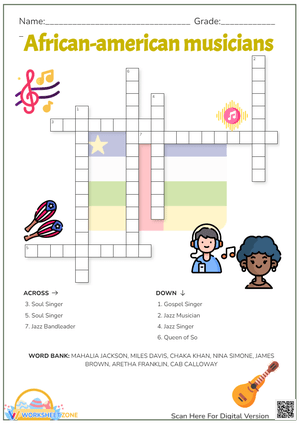
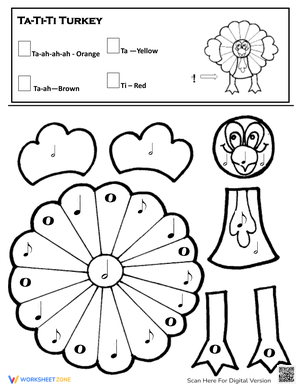
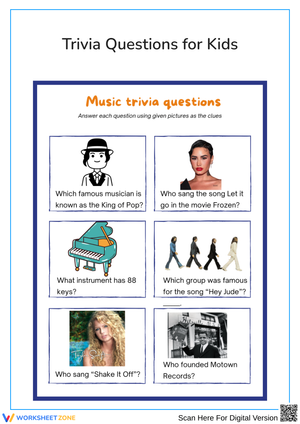
These music pdf worksheets for 3rd grade are built around a gap that shows up in most elementary music programs: students clap a rhythm confidently during class and then sit down with a worksheet and draw the wrong note value for that same pattern. Each worksheet in the set targets one skill cluster — note reading on the treble staff, rhythm notation, instrument families, or music vocabulary — so teachers can use the written work as a real formative check rather than as busywork.
Skills These Worksheets Build
The skills in these music pdf worksheets for 3rd grade reflect where Grade 3 students are developmentally — ready for concrete notation practice but still dependent on visual anchors and repeated exposure to connect symbols to sound. The four areas covered are:
- Treble staff note reading: Students label, identify, and match note names using line and space positions. Most worksheets in this cluster reference standard mnemonics as a starting point and then ask students to apply note naming to non-sequential patterns — which is where actual understanding shows up, as opposed to rote recitation.
- Rhythm notation: Students count beat values, draw bar lines, and match written patterns to their equivalent durations. Several worksheets include a marking step where students clap a pattern and then indicate what they identified on the page, connecting physical response to printed symbols.
- Instrument families: Students sort strings, woodwinds, brass, and percussion using picture clues, written descriptions, or sound-based prompts. The sorting structure keeps the task accessible even for students still building music vocabulary.
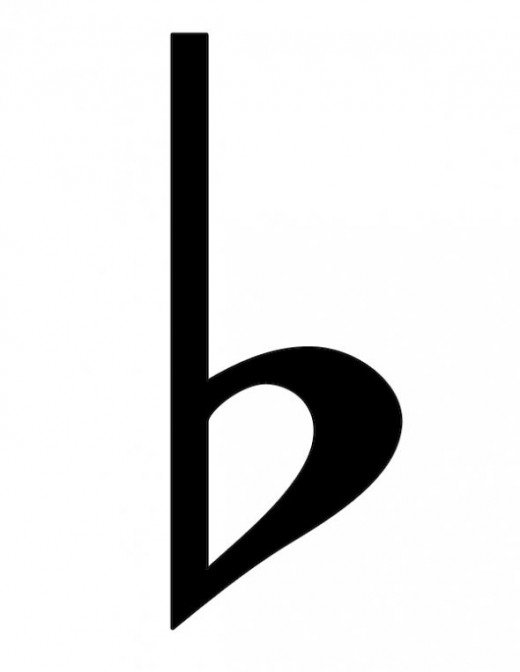
- Music vocabulary: Tempo terms like allegro and andante, dynamic markings like forte and piano, and basic staff symbols appear across multiple worksheets in matching, fill-in, and identification formats.
Each worksheet keeps one skill at the center. A resource that mixes note names, rhythm values, and instrument families in the same task allows students to complete it through process of elimination or lucky guessing — and teachers cannot distinguish that from actual understanding based on the written output alone.
Errors Students Make That These Worksheets Surface
The most persistent note-reading error in Grade 3 is directional miscounting. Students who have memorized "Every Good Boy Does Fine" will recite it quickly and still label a note incorrectly because they started counting from the top of the staff rather than the bottom. A worksheet that places notes in non-sequential order — rather than walking neatly up the scale — catches this pattern immediately. Once a teacher spots three or four students making the same directional error, the follow-up instruction becomes specific rather than general.
Rhythm worksheets produce a different and equally predictable problem. Students consistently assign the value they know best — the quarter note equals one beat — to whichever note they see first, regardless of stem and flag markings. When eighth notes appear alongside quarter notes in a short mixed pattern, a large portion of Grade 3 students count them both as one beat each. Short worksheets that interrupt the predictable quarter-note sequence force students to slow down and read each symbol separately rather than pattern-matching their way through.
In the instrument family worksheets, the piano is the consistent outlier. Students see keys, reach for woodwind, and are genuinely surprised to learn the piano is a percussive instrument. Keyboards used in school music rooms reinforce the confusion. That specific error is easy to address once a worksheet makes the sorting decision visible — it converts a misconception into a discussion point rather than leaving it undetected through the year.
Where These Worksheets Earn Their Place in the Week
The sequencing decision matters more than teachers often expect. Handing students a rhythm worksheet before any clapping or movement practice sends them straight into symbol decoding with no reference point. Reversing the order — five minutes of echo clapping or body percussion first, then the worksheet — almost always produces cleaner written work and fewer erased attempts. Students who have already felt the beat physically have something to anchor the symbol to when they see it on paper.
Music pdf worksheets for 3rd grade fit most naturally into three weekly slots: a focused 8-minute warm-up on Tuesday or Wednesday after Monday's performance-based lesson, a center rotation for students waiting to work with classroom instruments, and a Friday exit ticket checking vocabulary or notation retention across the week. Sub plans are another reliable context — a note-reading or instrument-sorting worksheet with picture-based directions gives a substitute teacher something concrete to collect with no musical expertise required.
One scheduling approach that extends the value of each worksheet: use the same resource across two different days. On day one, students complete it independently. On day three, cut the items apart and run them as a small-group sorting activity during a reteach block. Teachers with 30-minute class periods and instrument rotation schedules find this kind of double-use essential for keeping paper tasks proportional to active music-making time.
Standard Alignment
These worksheets align to the National Core Arts Standards for Music at the Grade 3 level. Note-reading and rhythm tasks connect to MU:Pr4.2.3, which asks students to demonstrate understanding of musical elements — including rhythm and pitch — in music selected for performance. The instrument family and vocabulary worksheets address MU:Re7.2.3, which focuses on demonstrating and describing how specific music concepts function across musical contexts. Teachers working within a Kodály or Orff sequence will find the rhythm worksheets consistent with preparatory notation-reading tasks common in Grade 3 of those frameworks, where students typically move from aural recognition to written identification around this point in the curriculum.
Adjusting the Worksheets for a Range of Learners
Grade 3 music classes regularly include students who take private lessons alongside students who are still tracking a steady beat. These worksheets do not flatten that gap, but the format makes differentiation manageable without reprinting or redesigning anything.
- For students who need extra support: Reduce the item count, read directions aloud as a group before beginning, or pre-label the staff lines with numbers so students have a counting anchor before they start identifying notes.
- For students with limited reading fluency: Prioritize the picture-matching and circling worksheets over fill-in-the-blank vocabulary tasks. The instrument-sorting worksheets are especially accessible because the image carries most of the semantic load.
- For students ready for more challenge: Ask them to write a sentence explaining their answer — not just labeling the note, but stating that it sits on the third line of the treble staff. That explanation requires a meaningfully different level of processing than filling in a blank.
- For English language learners: Pair any vocabulary worksheet with a brief visual glossary — even a quickly drawn anchor chart on the board — so students can cross-reference terms without interrupting the group's work time.
Frequently Asked Questions
Do these worksheets work in music classes that meet once or twice a week?
They are especially practical in that context. A short-period music schedule does not leave room for extended paper work, but a 5-to-8-minute focused worksheet at the start or end of class adds written practice without displacing active music-making. Teachers with once-weekly schedules often use a vocabulary or note-reading worksheet as the first task of the period — it reorients students toward music after a full week away from the room before the lesson moves into singing or instruments.
What materials do students need?
A pencil is enough for most worksheets. Some teachers add crayons for the instrument-sorting and family-labeling tasks, which makes categorization more visible and easier to check at a glance. No music notation software, interactive boards, or specialized paper is required. All worksheets are PDF downloads that print cleanly on standard letter paper.
How do these worksheets connect to active music-making rather than replacing it?
The strongest connection happens when teachers use music pdf worksheets for 3rd grade as the second step in a lesson rather than the first. Singing a pattern, clapping a rhythm, or identifying an instrument by ear before handing out the worksheet makes the written task a confirmation of something already experienced — not a cold introduction to an unfamiliar symbol. That sequence uses paper practice the way it works best: to consolidate understanding, not initiate it.
What should students who finish early work on?
Ask them to extend the work rather than switch subjects entirely. A student who finishes a rhythm worksheet can write a two-measure original pattern using only the note values shown on that worksheet. A student who completes an instrument family sort can name two additional instruments from the same family and write one sentence explaining what those instruments have in common. Both extensions take under two minutes and keep early finishers inside the skill rather than moving on to something unrelated.












 Interactive Worksheet Maker
 Quiz Maker
 Word Search Maker
 Crossword Puzzle Maker
 Word Scramble Generator
 Sentence Scramble Generator
 Handwriting Worksheet Generator
 Name Tracing Generator
 Fill In The Blank Generator