Understanding Sound Volume in 2nd Grade Science
At this level, teachers focus on the tangible aspects of sound, specifically how it is created and how its characteristics can change. Volume, or how loud or soft a sound is, represents one of the most accessible variables for young learners to investigate. When teachers introduce 2nd grade loud and soft sounds worksheets, they provide a structured framework for students to transition from intuitive observation to scientific classification.
These resources help children articulate their experiences, moving beyond simple adjectives to a more structured understanding of acoustic energy and its impact on our environment. By focusing on volume, teachers can build a foundation for more complex topics like pitch and frequency in later grades. The ability to identify and categorize sound intensity is a milestone in early scientific development that encourages students to look closer at the mechanics of their daily auditory experiences and understand the physical reality of the world around them.
The Physics of Volume: Strong and Weak Vibrations
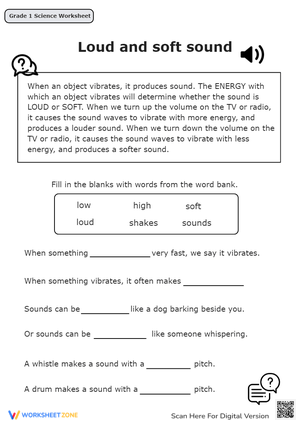
Second graders must understand the relationship between energy and vibration intensity. While the physics of acoustics can be complex, the core concepts are quite intuitive when presented through clear, visual examples. Loud sounds are the result of strong vibrations. These vibrations possess high energy, which displaces more air particles and creates larger pressure waves that reach our ears. Conversely, soft sounds are generated by weak vibrations. These have lower energy, moving air particles only slightly and creating smaller waves. This distinction is vital for students to grasp because it connects the abstract idea of 'sound' to the physical reality of energy transfer.
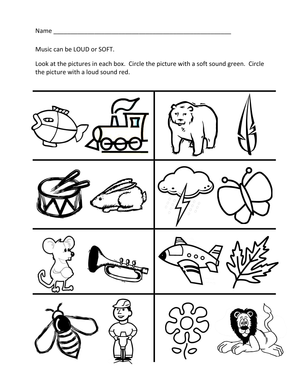
Teachers often use 2nd grade loud and soft sounds worksheets to help students visualize these invisible vibrations through matching exercises that link high-energy actions with loud outcomes. This visual reinforcement is essential for concrete learners who are still developing their ability to think about abstract scientific processes and energy concepts. By reinforcing this link between energy and volume, teachers help students develop a deeper appreciation for the mechanical nature of the world around them, setting the stage for future learning.
Differentiating Loud and Soft Sounds: Key Concepts
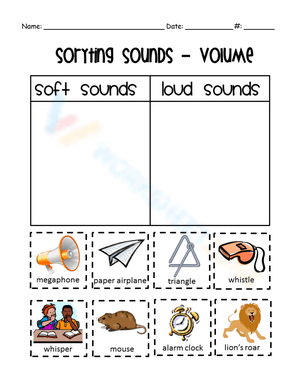
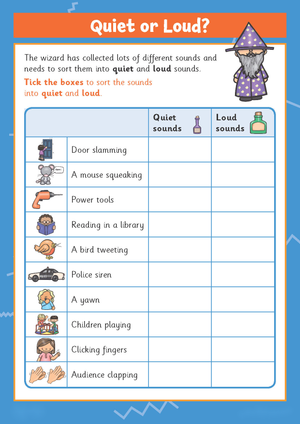
Developing the ability to differentiate between loud and soft sounds is a core sensory and cognitive skill for primary students. In a noisy world, being able to categorize sounds by their intensity helps children organize their sensory input and understand social cues. For example, a whisper is appropriate in a library because it is a soft sound that does not disturb others, whereas a fire alarm is loud by design to ensure everyone hears the warning.
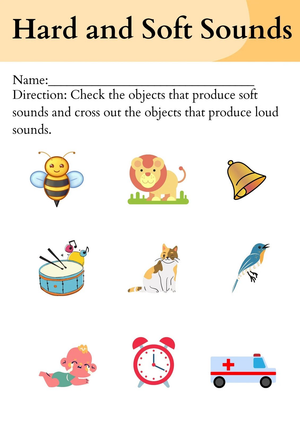
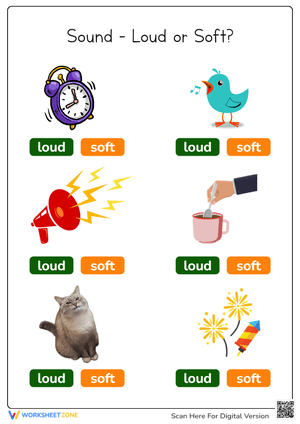
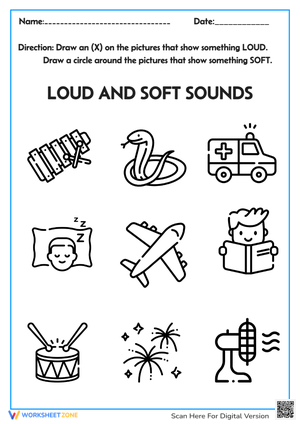
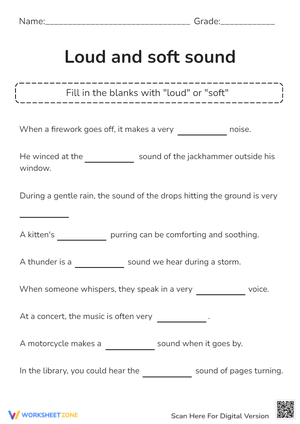
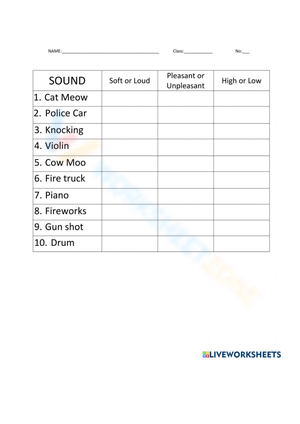
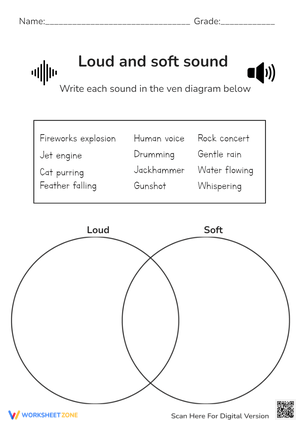
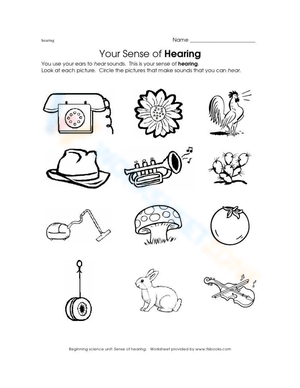
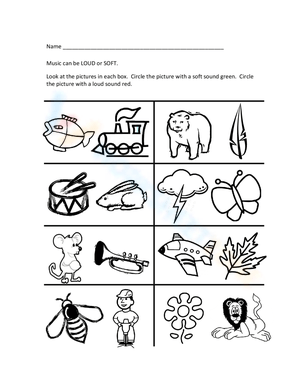
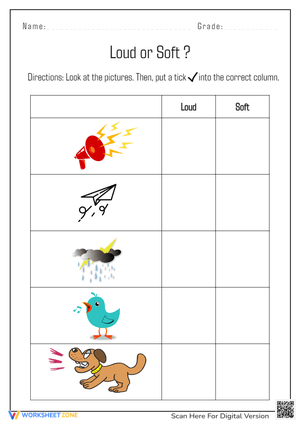
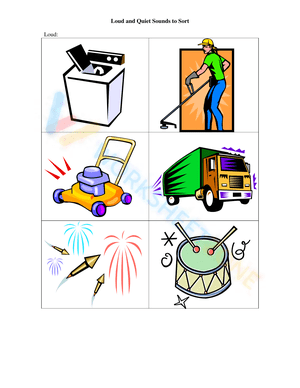
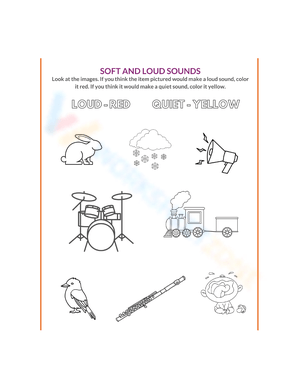
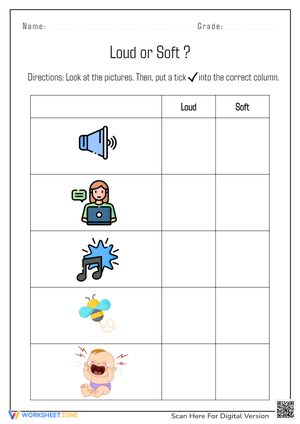
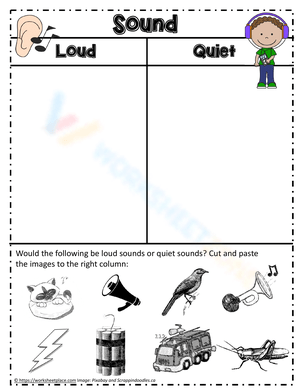
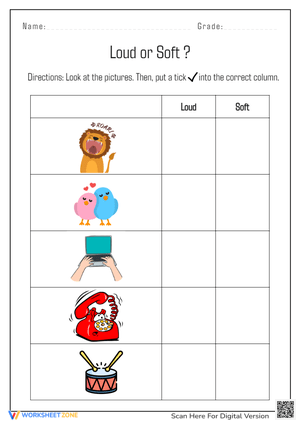
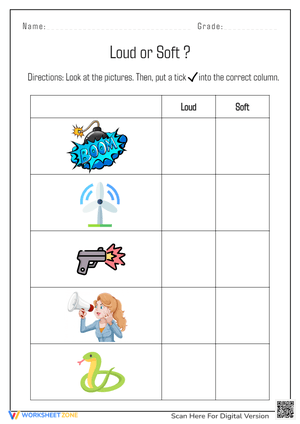
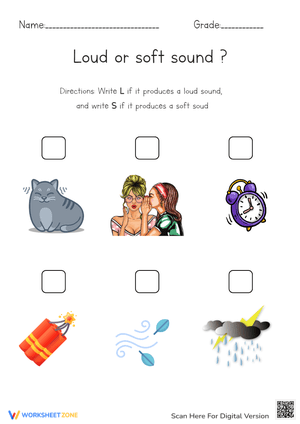
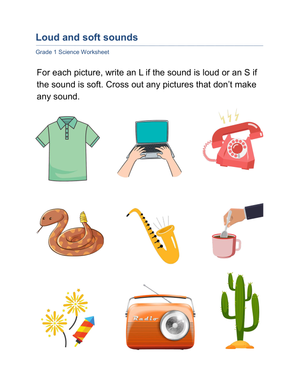
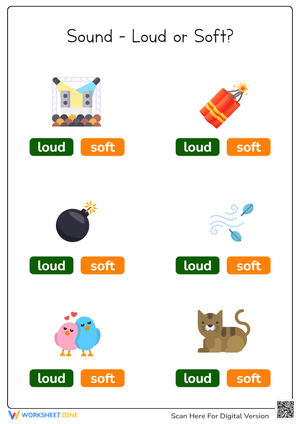
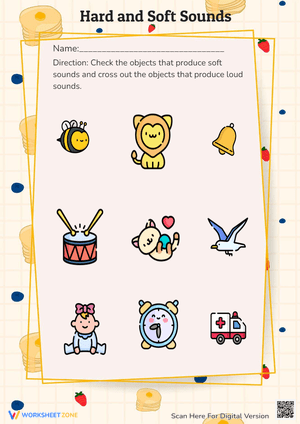
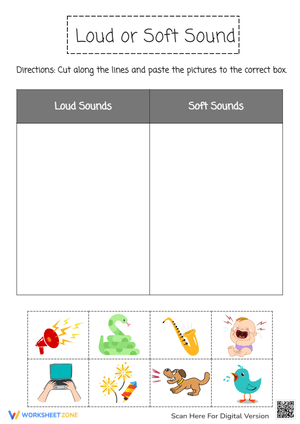
Teachers use 2nd grade loud and soft sounds worksheets to practice this categorization in a controlled environment. These activities often involve sorting common sounds into categories, which helps students internalize the characteristics of different volume levels. This practice is not just about labeling; it is about building a mental library of acoustic references that students can use to describe their world more accurately. These references become the building blocks for more sophisticated scientific descriptions as they progress through the grades and encounter more complex wave phenomena like resonance.
Engaging Sound Activities for Young Learners
Effective science instruction often relies on high-quality external resources to provide variety and depth to the curriculum. When exploring the mechanics of volume, teachers frequently turn to established platforms that specialize in kid-friendly science content. These resources offer a wealth of information that can be integrated into daily lesson plans to make the study of sound more dynamic and interactive.
By using a mix of traditional worksheets and hands-on activities, teachers can reach students with different learning styles, ensuring that the concept of volume is understood by everyone in the classroom. This integrated approach is particularly useful for complex topics where visual and auditory reinforcement are both needed for full comprehension. It allows for a more comprehensive exploration of the topic, moving beyond the limitations of a single textbook and giving students a broader perspective on scientific inquiry.
Teacher Tips: Implementing Sound Volume Lessons
When teaching volume to second graders, it is important to provide a variety of contexts for learning. One practical tip is to take the class on a 'sound walk' around the school where they tally loud and soft sounds on their 2nd grade loud and soft sounds worksheets. This real-world application turns a static lesson into an exploration that reinforces the science concept while integrating observation skills. Back in the classroom, use these tallies to create a class graph to see the value of organized data collection in science.
Expanding Learning with Comparative Sound Experiments
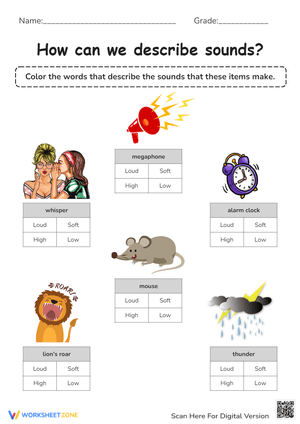
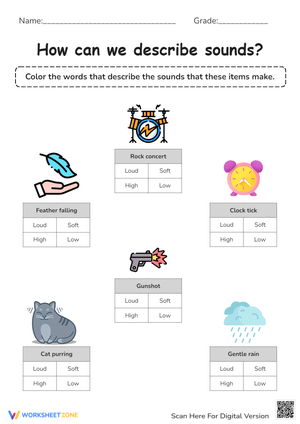
Research suggests that 2nd grade students often confuse pitch and volume, seeing high-pitched sounds as inherently 'louder' than low-pitched ones. Successful teachers use visual aids like 'volume sliders' and 'pitch ladders' to decouple the concepts of high/low from loud/soft, leading to a 30% improvement in conceptual retention during summative assessments. This distinction is vital for accurate scientific classification. For example, a high-pitched whistle can be blown very softly, and a low-pitched drum can be hit very loudly. By explicitly addressing this common misconception through targeted 2nd grade loud and soft sounds worksheets, teachers can prevent long-term confusion. Using worksheets that specifically ask students to separate these two characteristics helps reinforce the idea that volume is about energy, while pitch is about the speed of vibrations. This clarity sets the stage for more advanced physical science topics in the upper elementary years, ensuring that students have a correct and stable conceptual framework.
Frequently Asked Questions
1. What is the difference between loud and soft sounds for a 2nd grader?
In a 2nd-grade context, the difference between loud and soft sounds is explained through the lens of energy and vibration. Loud sounds are created by strong, high-energy vibrations that move air particles significantly. Soft sounds come from weak, low-energy vibrations that move particles only a little. Students learn to identify these differences through their senses and then categorize them using worksheets that feature common, relatable examples from their daily lives. This approach makes a complex physical concept accessible and understandable for young children starting their scientific journey.
2. How can students identify sound volume in the classroom?
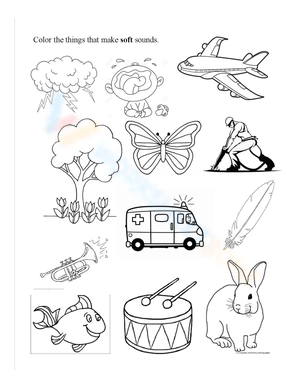
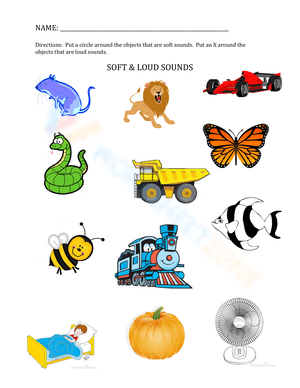
Students can identify sound volume by using their ears to judge the intensity of a sound and by observing the source of the vibration. Teachers often use comparative activities, such as comparing a whisper to a shout, to help students understand the scale of volume. 2nd grade loud and soft sounds worksheets provide pictures of various items, like a lawnmower or a feather falling, and ask students to predict or identify the volume based on their prior knowledge and classroom experiments. This combination of observation and prediction is a key component of the scientific method.
3. Why are some sounds louder than others?
The volume of a sound depends on the amount of energy used to create the vibration. More energy results in a larger vibration, which produces a louder sound. For example, hitting a drum with a lot of force creates a loud noise because the drumhead vibrates strongly. Tapping it gently creates a soft sound because the vibrations are smaller. Understanding this cause-and-effect relationship is a key goal of the 2nd-grade science curriculum and is reinforced through many of our worksheet activities. It provides a clear, physical explanation for a common sensory experience.
4. How do these worksheets align with 2nd grade science standards?
These 2nd grade loud and soft sounds worksheets align with physical science standards that focus on sound and its properties. They support the objective of having students observe and describe how sound is produced by vibrations and how those vibrations can vary in intensity. By providing opportunities for classification and prediction, the worksheets help students meet core scientific inquiry standards, preparing them for more detailed studies of waves and energy in the future. They ensure that classroom instruction is rigorous and relevant to the expected learning outcomes for this grade level.
5. Can these worksheets be used for home-schooling?
Absolutely. These resources are designed to be self-explanatory and classroom-ready, making them ideal for home-schooling. Parents can use them to guide a child through a home science lesson by finding examples of loud and soft sounds around the house. The clear instructions and familiar imagery allow students to work independently or with minimal guidance, ensuring that learning continues whether they are in a traditional classroom or at home. They provide a high-quality, structured learning experience that supports consistent academic progress.












 Interactive Worksheet Maker
 Quiz Maker
 Word Search Maker
 Crossword Puzzle Maker
 Word Scramble Generator
 Sentence Scramble Generator
 Handwriting Worksheet Generator
 Name Tracing Generator
 Fill In The Blank Generator