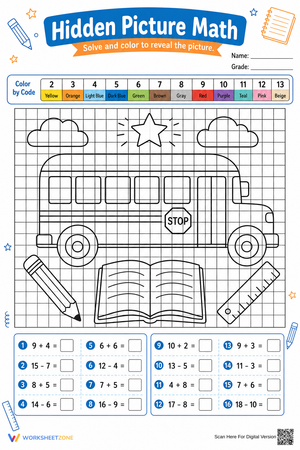
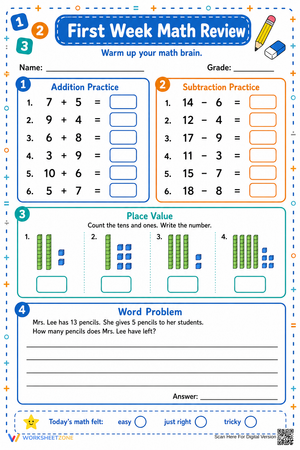
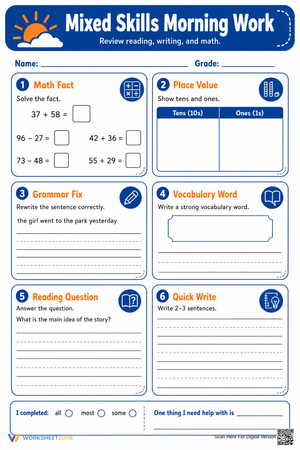
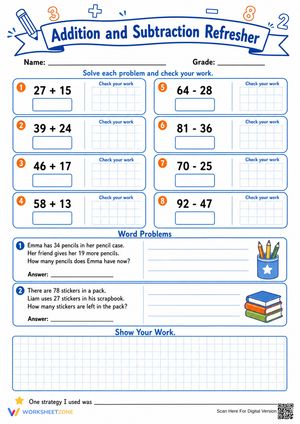
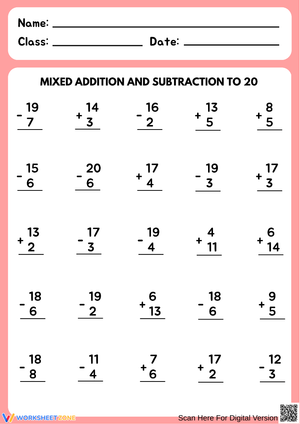
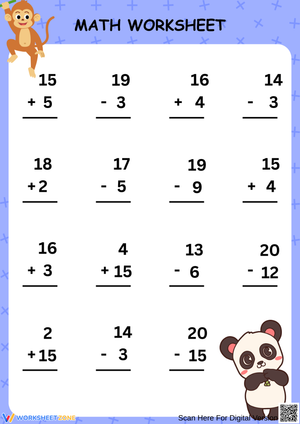
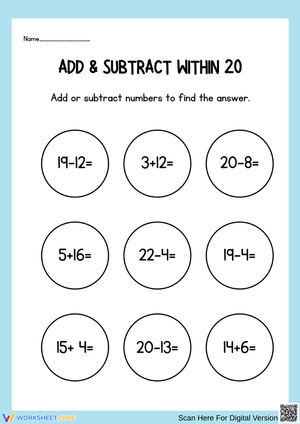
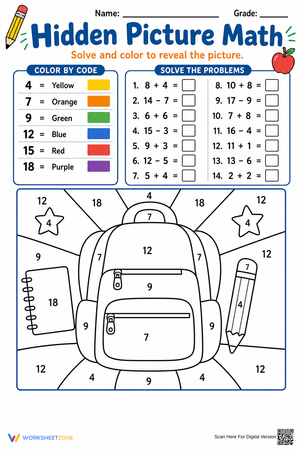
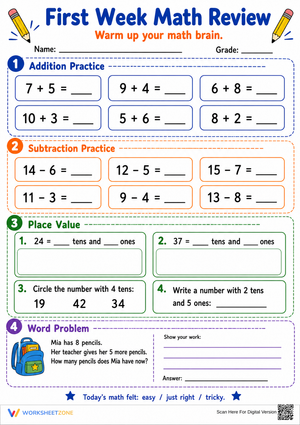
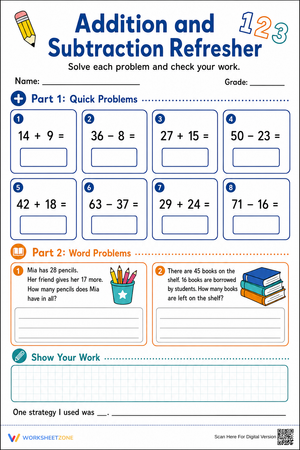
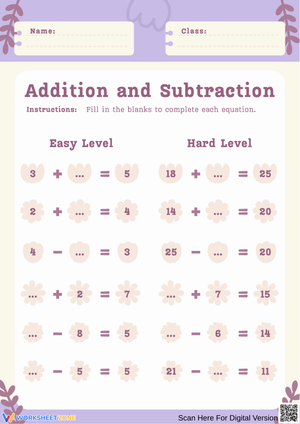
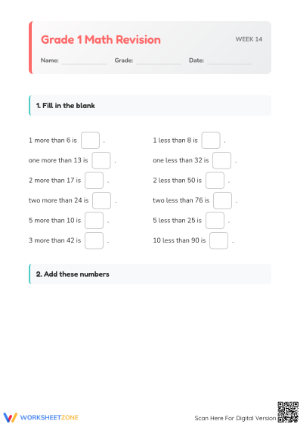
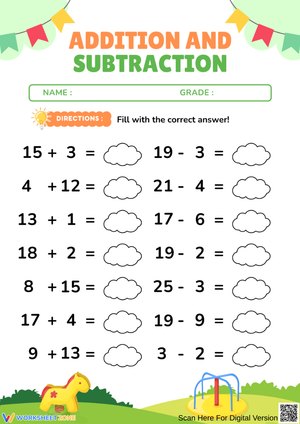
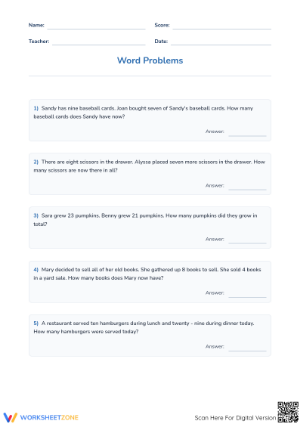
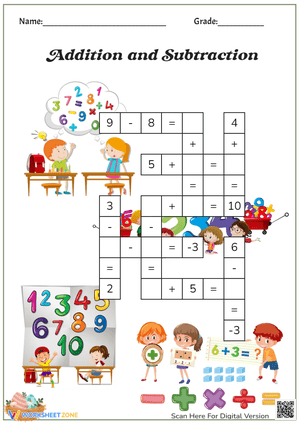
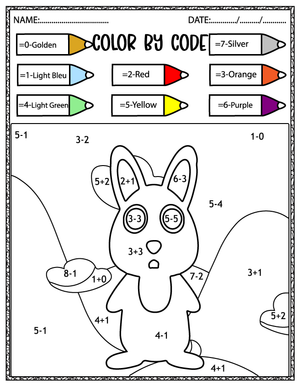
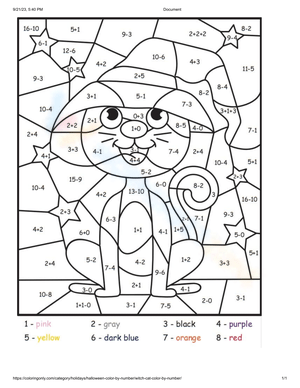
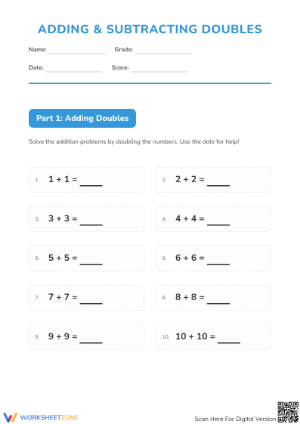
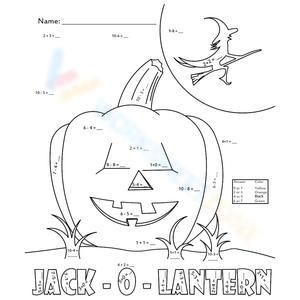
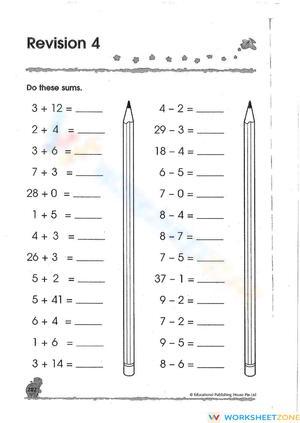
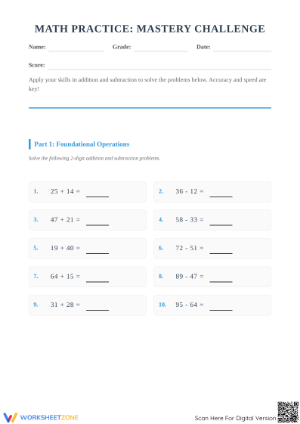
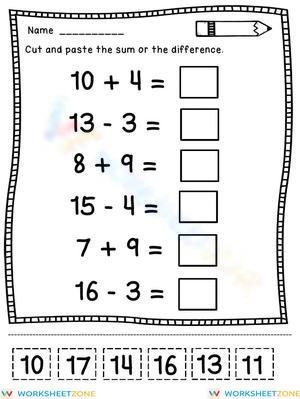
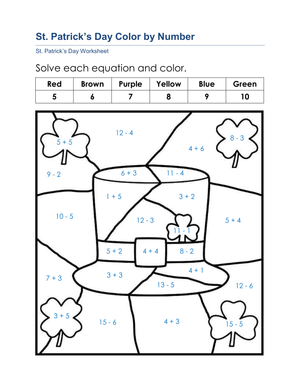
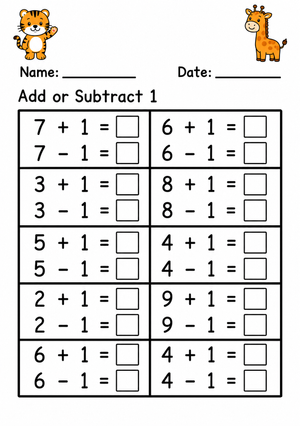
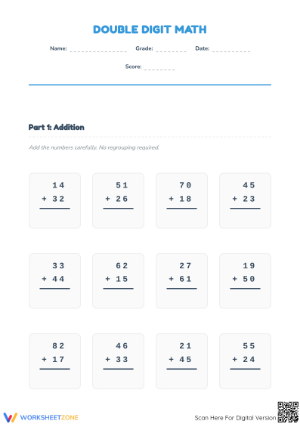
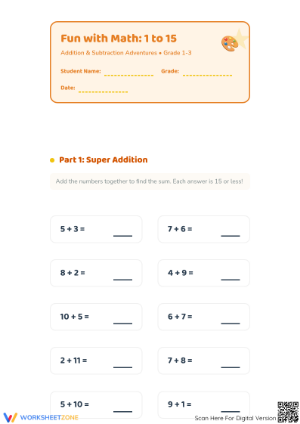
These 2nd grade addition subtraction printable worksheets resources give teachers a focused way to address one of the trickier transitions in second-grade math — the shift from practicing each operation in isolation to reading every sign as a genuine decision point before starting a problem. Each worksheet mixes addition and subtraction so that students can't rely on procedure memory alone; they have to identify the operation first, which is a different cognitive demand than running through a column of identical problems.
Student Errors That Show Up Predictably in This Work
The most reliable error to plan for: a student who just finished a week of two-digit addition will read a subtraction sign and add anyway. It's not inattention — it's a strong procedural groove. When one operation dominates recent practice, the brain defaults to it under even mild time pressure. Mixed operation practice interrupts that groove, but only if students have a habit of reading the sign before touching the numbers.
A classroom routine that addresses this directly: before solving a single problem, students use two different colors to mark every addition sign and every subtraction sign across the worksheet. The sorting step forces the brain to treat the operation as a separate action from the calculation — registering what to do before doing it. After two or three weeks, most students internalize the check and stop needing the visual prompt. A second error pattern surfaces specifically on subtraction with regrouping: students subtract the smaller digit from the larger regardless of column position, so 43 minus 28 becomes 25 instead of 15. When this appears on a class set of papers, it signals that the student hasn't yet understood what decomposing a ten means, and a mixed worksheet surfaces that confusion earlier than a subtraction-only set would.
Skills and Problem Types Across the Set
The worksheets cover the two main number ranges second graders work through during the year. Problems within 20 build mental strategy flexibility — students apply make-a-ten, doubles, and near-doubles across both operations in the same sitting, which is harder than applying them in separate units. Problems within 100 require students to manage place value columns and evaluate on each problem whether regrouping is necessary at all. That second judgment — deciding whether to regroup rather than always regrouping — is where students in a single-operation unit often stumble on assessments, because unit practice rarely presents the question as optional.
- Single-digit addition and subtraction within 20, problems mixed in non-sequential order
- Two-digit addition and subtraction within 100, with and without regrouping
- Multi-step word problems requiring students to identify the operation from context before calculating
- Both vertical and horizontal formats represented across the set
The word problem worksheets carry a specific instructional load. A problem like "Darius had 34 stickers. He gave 12 to his partner and then found 9 more in his desk. How many does he have now?" requires two operations in sequence, and the student must decide which comes first. That decision is exactly what 2.OA.A.1 addresses — reading a problem to identify its mathematical structure, not just executing a memorized algorithm. Regular exposure to these builds a reading-for-math-structure habit that carries into third grade and beyond.
Standard Alignment
The primary standard for the within-20 worksheets is 2.OA.B.2, which asks students to fluently add and subtract within 20 using mental strategies. Fluency in this standard means accurate, flexible, and quick retrieval — not just fast addition. A student who recalls 7 plus 8 instantly but hesitates on 15 minus 8 hasn't fully met the standard. The 2nd grade addition subtraction printable worksheets resources in this set address that gap directly, because mixing the operations in a single sitting means students can't selectively practice the one that feels easier.
The within-100 worksheets align to 2.NBT.B.5, which targets fluency using place value strategies and "the relationship between addition and subtraction." That phrase — relationship between operations — is easy to pass over in lesson planning, but it's the core of what mixed practice actually develops. When students work through 56 plus 27 and 83 minus 27 on the same worksheet, they begin noticing the inverse connection without being told to look for it. That's the standard's intent, and it's difficult to reach through single-operation practice alone.
Where These Worksheets Fit in the School Day
Morning work is the most natural placement. The 8 to 10 minutes before morning meeting — when students are arriving, settling, and waiting — is exactly when a short mixed-operation worksheet runs independently without a launch. Students who arrive first get started; latecomers pick it up mid-way through. Using 2nd grade addition subtraction printable worksheets resources as morning work means the practice is consistent and low-stakes, and it doesn't pull time away from direct instruction.
Exit tickets are a second high-value use. Four or five mixed problems at the end of a lesson give you a fast class read: sort the papers into three stacks — got the operation right every time, got it right most of the time, missed it frequently — and that sort tells you exactly who needs a reteach before the next session. You can move through a full class set in under two minutes. For math centers, laminating the worksheets and pairing them with dry-erase markers makes each worksheet reusable across groups all week without any additional prep. Students who finish the computation section early can write their own mixed problem on the back of the laminated sheet for a partner to solve, which extends the session without adding paper.
Matching These Worksheets to Different Student Readiness Levels
The most practical lever is number range. Students still developing fact fluency work with within-20 worksheets, where the target skill is choosing the right mental strategy for each operation — not managing two-digit procedures. Students ready for more challenge move to within-100 problems, and within that group, regrouping problems add a procedural layer on top of the operational decision. When you assign different worksheets from this set to different groups on the same day, all students are doing mixed operations — the numbers simply reflect where each group is in the curriculum, which makes differentiation less conspicuous.
For students who struggle with word problems, the computation-only 2nd grade addition subtraction printable worksheets resources reduce the reading demand while keeping the operational decision intact. The student still reads the sign — that's the target skill. The sentence-level comprehension load is removed temporarily, not permanently. For students ready for extension, having them compose a two-operation word problem that uses both addition and subtraction, then swap it with a partner, adds application without requiring a different worksheet entirely.
Frequently Asked Questions
Do these worksheets include problems that require regrouping?
Yes. The within-100 worksheets include two-digit addition with carrying and two-digit subtraction with borrowing, alongside problems that don't require regrouping. That mix is intentional — students must evaluate each column rather than assume the same procedure applies to every problem in the set.
How can I help a student who keeps performing the wrong operation?
Start with the two-color sign-marking habit before any calculation begins — one color for addition signs, another for subtraction signs. This slows the default-to-one-operation reflex by making sign identification a physical, visible step. If the error continues after a few weeks, check whether the student understands the inverse relationship between the operations conceptually. Students who see subtraction as a completely separate skill — rather than the reverse of addition — tend to be the ones who still flip operations even after extended drill practice.
Are word problems included in every worksheet?
Not every worksheet in the set includes word problems. The set contains both computation-only worksheets and worksheets with a dedicated word problem section. The computation worksheets are most useful when the lesson focus is operational awareness and calculation fluency; the word problem worksheets bring in the comprehension layer that 2.OA.A.1 targets. Using both types across the week gives students practice with both dimensions without every session feeling identical.
Can these be sent home as homework?
Mixed-operation homework works well once students have enough classroom practice to approach the problems independently. Sending them home before the sign-reading habit is stable tends to produce completed work full of the wrong operations — not useful data for you, and not reinforcing the right practice for students. Once students are reliably catching the sign in class, these make solid homework because the format is familiar enough to complete without an adult walking them through each problem.













 Interactive Worksheet Maker
 Quiz Maker
 Word Search Maker
 Crossword Puzzle Maker
 Word Scramble Generator
 Sentence Scramble Generator
 Handwriting Worksheet Generator
 Name Tracing Generator
 Fill In The Blank Generator