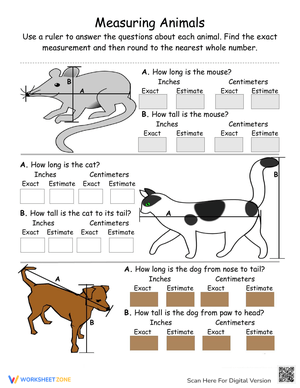
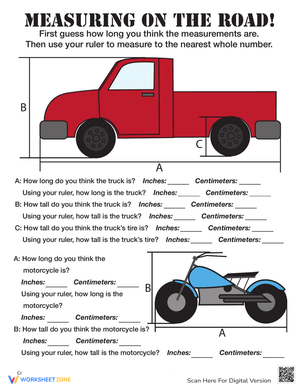
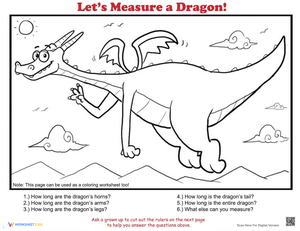
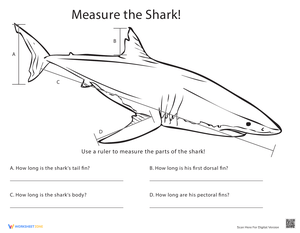
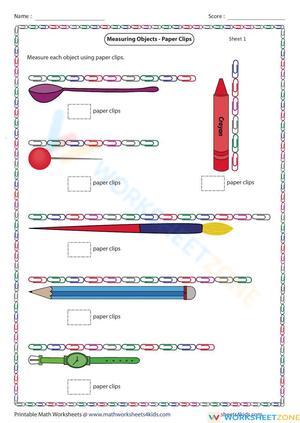
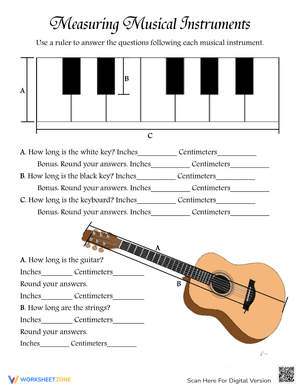
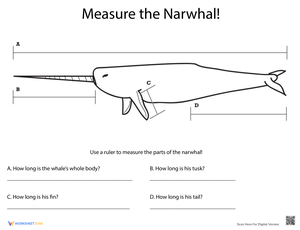
These measurement tools and strategies worksheets for 2nd grade give teachers a focused, ready-to-use set for the year when standard units first take hold. Second grade is the transition point — students move from counting paperclips to reading rulers, from eyeballing length to recording it in inches and centimeters. Each worksheet targets a specific piece of that shift, so teachers can match the resource directly to where a class is in the measurement unit.
The Specific Skills Each Worksheet Addresses
The set covers measurement across the four standard tools introduced at this grade level:
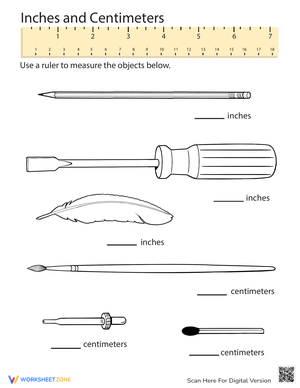
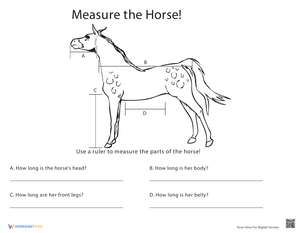
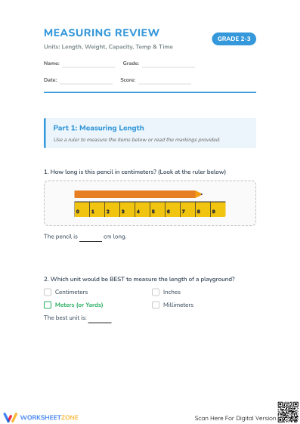
- 12-inch ruler — the primary tool for tasks in both inches and centimeters; worksheets address the dual-sided scale and zero-mark alignment.
- Yardstick — introduced for objects longer than a foot; students practice understanding the relationship between inches, feet, and the 3-foot yard.
- Meter stick — the metric parallel; since 2nd graders are working with hundreds in place value, the 100-centimeter meter stick connects directly to number sense and reinforces both strands at once.
- Measuring tape — the flexible tool for longer distances or curved surfaces; it also tends to be the instrument students are most eager to use, which makes it worth saving for station rotations.
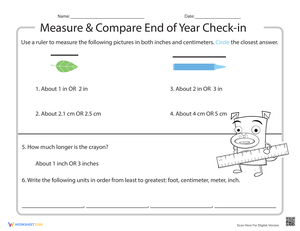
Beyond tool identification, each worksheet builds one or more of the core strategies the 2nd-grade curriculum requires: aligning objects to the zero mark rather than the physical edge of the ruler, estimating before measuring, reading to the nearest whole unit, and using the mark-and-move method when an object exceeds the ruler's length. Several worksheets use "broken ruler" tasks — images of rulers starting at the 3-inch mark — so students must calculate the interval between two points rather than simply read the number at the object's end. A student who handles that task accurately has internalized linear measurement in a way that a standard ruler exercise alone cannot confirm.
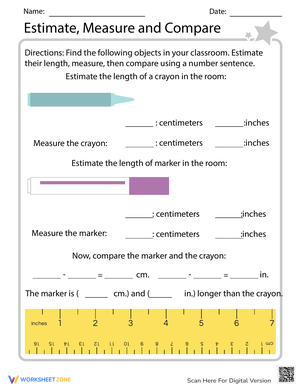
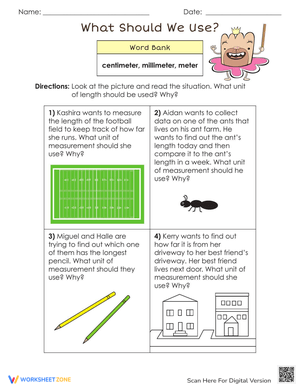
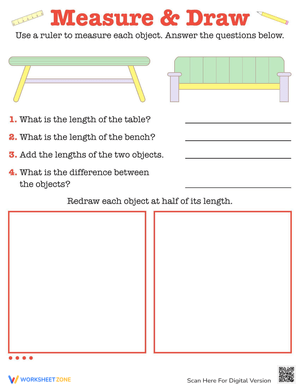
Unit fluency runs through the later worksheets in the set. Students mark the better unit for a list of objects, compare two measurements and find the difference, and solve word problems that require both measurement reasoning and subtraction. These tasks make visible something that often stays invisible in early math instruction: measurement and operations are not separate skills.
Common Misconceptions to Anticipate Before the Unit Ends
The offset error — lining up the physical end of the ruler with the edge of the object rather than the zero mark — is the most persistent mistake at this grade. A student measures a pencil and records 6.5 inches when the correct answer is 6 inches; the discrepancy is small enough to feel like an estimation rather than a procedural problem. Worksheets that show side-by-side correct and incorrect ruler alignments in large, clear images address this directly, but the most efficient fix happens during direct instruction, when a teacher projects an oversized ruler image and explicitly names the gap between the edge and the zero mark before students ever pick up a physical ruler.
A separate error surfaces on dual-sided rulers. Students who have practiced reading inches on one edge will sometimes flip the ruler mid-task and start reading centimeters without noticing the switch. The result is a recorded measurement of something like 17 centimeters when the object is closer to 7 inches — and because both numbers feel plausible in isolation, the student rarely catches the error. Worksheets that require students to circle the unit they used before writing the number create a moment of self-awareness that interrupts this before it becomes a habit.
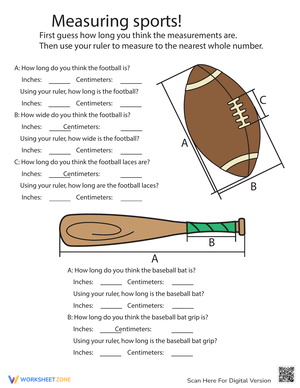
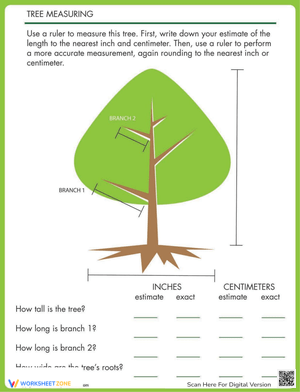
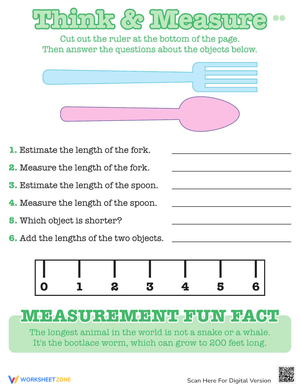
Estimation errors are subtler but show up clearly in student work. Students who skip estimating and measure first lose the internal check that a prior estimate provides. A student who guesses a desk is about 2 feet wide and then reads 24 inches will usually recognize those are equivalent or close. A student who goes straight to the ruler has no anchor for deciding whether 24 inches makes sense as an answer. The estimate-then-measure format throughout the set builds the checking habit rather than treating estimation as an optional warm-up step.
Fitting These Worksheets Into a Measurement Unit That Actually Moves
Tool-identification and alignment worksheets belong in the first two or three days, while students are still forming clear mental images of each instrument and its appropriate use. Broken-ruler worksheets land better mid-unit — after students have had enough physical ruler practice to have a firm expectation of where zero belongs, so a ruler starting at 3 inches creates productive confusion rather than just confusion. Word-problem worksheets that combine measurement with subtraction work well as exit tickets in the final week, when the goal is confirming that students can transfer a measurement context into a problem-solving frame.
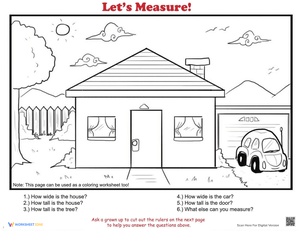
These measurement tools and strategies worksheets for 2nd grade are organized so that sequencing is straightforward. Pull estimation worksheets for Monday warm-ups after morning meeting, tool-selection tasks for Tuesday's station rotation, and comparison word problems for the Friday review block — without rebuilding a lesson plan from scratch. For station work, print one worksheet per student and pair it with a physical ruler and a small collection of classroom objects. Students who finish early measure in the second unit system and record both values, which generates an organic conversation about why the same object produces different numbers depending on the unit chosen.
Standard Alignment
2.MD.A.1 requires students to measure the length of an object by selecting and using appropriate tools — rulers, yardsticks, meter sticks, and measuring tapes. The tool-selection and measurement-recording worksheets address this standard directly and provide the repeated practice it takes for that decision to become automatic. 2.MD.A.3 targets estimation: students estimate lengths in inches, feet, centimeters, and meters before measuring. The estimate-then-measure format throughout the set satisfies that requirement. 2.MD.A.4 asks students to measure to determine how much longer one object is than another — the comparison and word-problem worksheets handle that task and connect measurement directly to the subtraction strategies students are building at the same time. Teachers in Common Core-aligned schools will find all three standards addressed without pulling from outside the set.
Adjusting the Worksheets for a Range of Learners
For students still building number line confidence, restrict starting tasks to whole-inch or whole-centimeter values and place a small sticker dot on the zero mark of their physical ruler. That one small support removes the alignment question entirely, so students can focus on reading the scale and recording the number accurately. Pull the sticker once their measurements are consistent, then return them to standard ruler work without the prompt.
Students who measure accurately and quickly need tasks that push reasoning rather than speed. Broken-ruler worksheets serve this purpose — a student who finishes a standard measurement task in four minutes will slow down and work carefully when the ruler starts at 4 inches. You can also extend any comparison problem by adding a third object and asking which two are closest in length, which requires students to hold multiple measurements in working memory at once rather than perform a single subtraction.
For English language learners, measurement turns out to be one of the more accessible math strands because so much of it is procedural and visual. The difficulty concentrates in word problems. A sentence frame — "The ___ is ___ inches longer than the ___" — reduces the language demand without changing the mathematical requirement. These measurement tools and strategies worksheets for 2nd grade include enough labeled diagrams and illustrated rulers that most ELL students reach the core question without additional modification to the worksheet itself.
Frequently Asked Questions
Why do students keep starting measurements from the wrong end of the ruler?
Most 2nd graders have used rulers as straight edges for drawing lines long before they measure with one. The physical boundary of the tool feels like "the start" because it is the boundary of the object. The zero mark sits a small distance inward on most rulers, and that gap confuses students who have never had it explicitly named. Consistent modeling with a projected or oversized ruler image — where the zero mark is circled before any measuring begins — corrects this more reliably than verbal reminders after students have already written the wrong number down.
When should the broken-ruler tasks be introduced?
Mid-unit, not at the start. Students need enough experience with a standard ruler to have a firm expectation of where zero belongs. When that expectation is established, a ruler starting at 3 inches creates useful confusion — students notice that something is different rather than simply misreading the scale. Introducing broken rulers on the first day produces frustration without insight, because students haven't yet built the mental model the task is meant to challenge.
How do these worksheets work in settings where physical rulers aren't available?
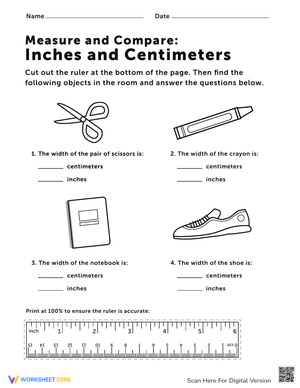
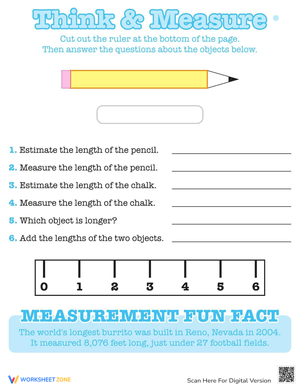
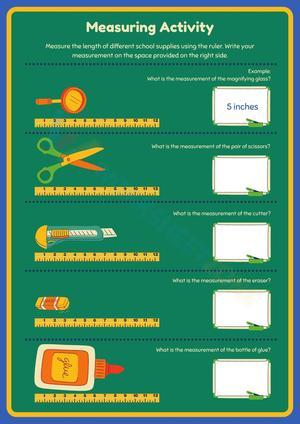
The measurement tools and strategies worksheets for 2nd grade include tasks where rulers are printed directly on the worksheet. Students read and interpret the illustrated ruler rather than aligning a physical tool with an object. This format works well for homework assignments, remote learning catch-up work, and classrooms where the class set of rulers runs short. The printed-ruler format also isolates the skill of reading a scale from the motor task of holding the ruler steady — a useful separation for students who struggle with the physical coordination of measurement before they run into any difficulty with the math.
Do the worksheets cover both inches and centimeters?
Yes, and the set distributes tasks across both unit systems rather than front-loading one and tacking the other on at the end. A few worksheets ask students to measure the same object in both inches and centimeters and record each value — this builds the understanding that a number without a unit is incomplete, and that the same physical length produces different numbers in different systems. Students encounter that concept again in 4th- and 5th-grade science, and early exposure in 2nd grade gives it time to settle before it carries more formal weight.













 Interactive Worksheet Maker
 Quiz Maker
 Word Search Maker
 Crossword Puzzle Maker
 Word Scramble Generator
 Sentence Scramble Generator
 Handwriting Worksheet Generator
 Name Tracing Generator
 Fill In The Blank Generator