2nd Grade Measuring With a Ruler PDF Worksheets
These 2nd grade measuring with a ruler pdf worksheets give teachers a reliable way to practice one of the trickier skills in the Grade 2 math unit: reading whole-number lengths accurately from a standard ruler. Students in Grade 2 are making the move from counting discrete objects to understanding continuous distance, and that shift trips them up more than the numbers themselves ever do. The worksheets address that gap through task types that slow the measuring process down — measuring segments, drawing segments, estimating, and comparing — rather than repeating one item format across the set.
The Errors That Surface First — and Why They Happen
The single most common ruler mistake at this grade level is not miscounting. It is lining the object up with the physical edge of the ruler instead of the zero mark. That edge-to-zero gap is only a few millimeters on most plastic rulers, but it throws every measurement off by exactly one unit — and students have no idea why their answers keep coming out wrong. The error compounds when students then count the tick marks rather than the spaces between them. They land on 5 when the correct answer is 4, and because 5 is a larger, more satisfying number, they trust it without question.
A second cluster of errors involves units. Many second graders write "4" instead of "4 inches" or "4 cm," which looks like carelessness but often signals something deeper: the student recorded an endpoint, not a distance. They measured to a number, not across a span. Worksheets that require students to write both the number and the unit — and that occasionally ask them to measure the same object in inches and then in centimeters — surface this misunderstanding far more reliably than a quick whole-class check-in does.
What's Inside the Set
Finding 2nd grade measuring with a ruler pdf worksheets with genuine variety in task type — not just repetition of the same format — makes a real difference in whether students grasp the underlying concept or just memorize a procedure. The set covers whole-number measurement in both inches and centimeters, appropriate for Grade 2 where fractional units are not yet the instructional focus.
- Locating and aligning to the zero mark on printed ruler images
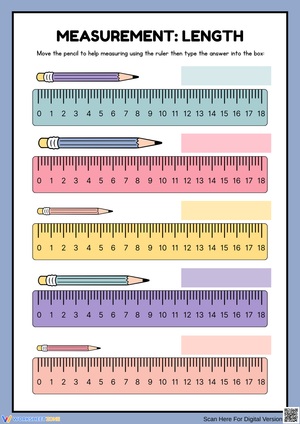
- Measuring line segments to the nearest inch and centimeter
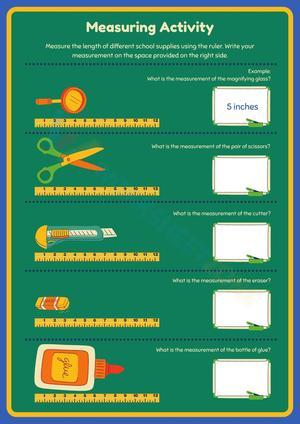
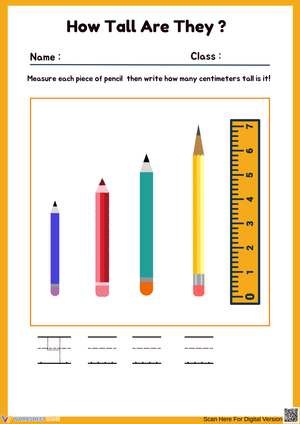
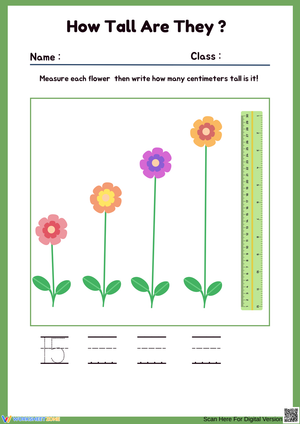
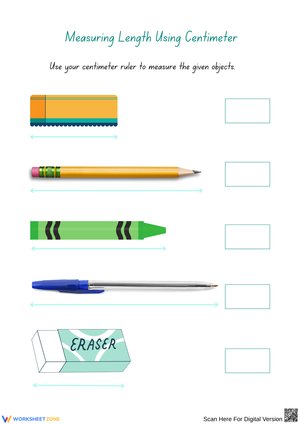
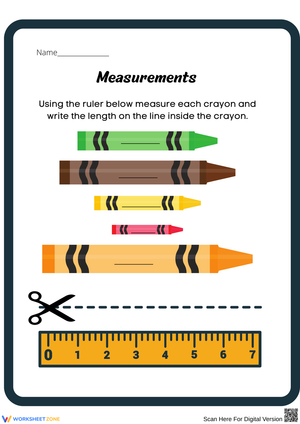
- Measuring illustrated objects and recording answers with units
- Comparing two lengths and identifying which is longer
- Estimating a length before measuring, then comparing both numbers
- Drawing a segment to a given whole-number length
The segment-drawing task deserves a note. Drawing a 7-centimeter line requires students to place the pencil at zero and work outward — a different mental move than reading an existing measurement, and one of the most reliable indicators of whether a student truly controls the ruler or is simply reading the number closest to the object's end.
Fitting These Into Your Week Without Disrupting Your Flow
The most effective use of these resources pairs each worksheet with two to three minutes of hands-on work first. Students measure a pencil, a crayon, or the cover of their math notebook with an actual ruler, then move to the printed practice. When the worksheet comes second, it functions as confirmation rather than introduction — students carry the physical memory of the action into the paper task and make noticeably fewer alignment errors as a result.
For math centers, one worksheet per rotation keeps independent work manageable. For small-group reteaching, an error-analysis approach works especially well: project a ruler image where the object starts at 1 instead of 0, and let students argue about what went wrong before they touch their own worksheets. That conversation takes about five minutes and accomplishes more than re-explaining the rule from scratch.
The 2nd grade measuring with a ruler pdf worksheets in this set also work cleanly as Monday warm-ups after a weekend break. A two-item check at the start of the week tells you quickly who held onto the skill and who needs a pull-aside before Friday's assessment. The layouts are uncluttered, the ruler images are clearly labeled, and the answer lines have room for students to write both the number and the unit.
Standard Alignment
These worksheets align to CCSS.MATH.CONTENT.2.MD.A.1, which requires second graders to measure the length of an object by selecting and using appropriate tools such as rulers. In classroom terms, this standard sits in the unit where students move from nonstandard units — linking cubes, paperclips — to standard tools, and that transition is exactly where these worksheets earn their time. Several tasks also connect to 2.MD.A.2, which introduces the idea that measuring the same object with different units produces different numbers. That concept reliably generates the most useful discussion of the entire measurement unit: students who measured the same pencil in inches and centimeters and got two different numbers want to know why, and working through that question builds the kind of understanding that sticks past the end of the unit.
Adjusting These Worksheets Across Ability Levels
Students who are still shaky on alignment need reduced complexity before independent work is realistic. Highlight the zero mark on the ruler image in yellow, or let students place a physical ruler directly below the printed one on the worksheet. Keep segments short — 2 to 5 inches — so cognitive load stays on process rather than reading larger numbers. Working in one unit at a time, inches before centimeters, also helps these students build the habit cleanly before introducing a second reference scale.
For students who have the alignment basics and are ready for more, ask them to measure the same illustrated object in both units on the same worksheet and then write a sentence explaining why the numbers differ. That reflection requires more than procedural accuracy — it asks students to reason about the relationship between unit size and count, which is exactly the conceptual stretch 2.MD.A.2 targets. You can also offer tasks where the object does not begin at zero — it starts at the 2-inch mark and ends at the 7-inch mark — forcing students to find the difference rather than simply read the endpoint.
Frequently Asked Questions
Should students have hands-on ruler experience before using these worksheets?
Yes. These worksheets reinforce what students have already encountered through physical tool use. Without prior hands-on work, the printed ruler images do not teach alignment — they generate guessing. Even one class session with real rulers before introducing these worksheets changes the results significantly.
How do the ruler images hold up when printed?
The ruler images are proportionally accurate and sized for standard letter-format pages. The zero mark and unit labels are clearly visible at 100% print size. For students who struggle with fine visual detail, printing at 110–115% solves the problem without distorting the scale relationships between units.
Can these work as homework if students do not have a ruler at home?
The worksheets that ask students to measure printed line segments and illustrated objects work fine for home practice — no physical ruler needed. Worksheets that ask students to measure real objects are better kept for classroom use, where you can watch the process and not just check the recorded answer.
Are these useful only during initial instruction, or do they hold up across a full measurement unit?
The 2nd grade measuring with a ruler pdf worksheets in this set are useful at several points across the unit. Alignment and reading tasks fit early lessons; comparison and estimation tasks work better once students have some accuracy established. The error-identification tasks make strong review tools at the end of the unit, or as a warm-up the day before a measurement assessment.
Clear All