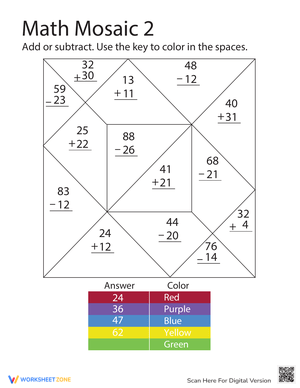
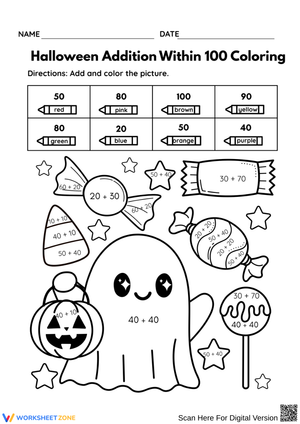
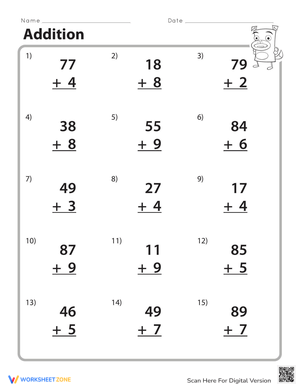
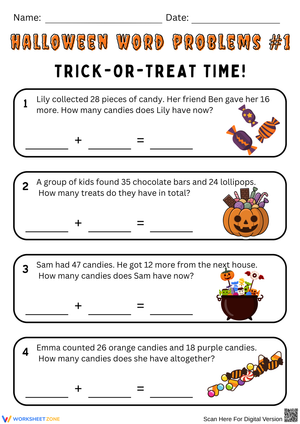
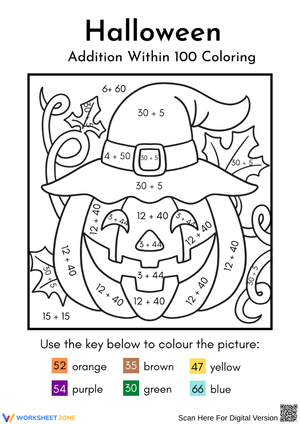
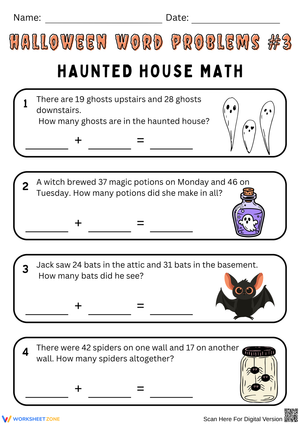
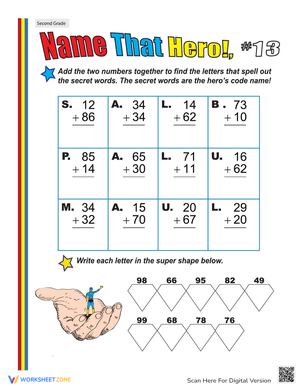
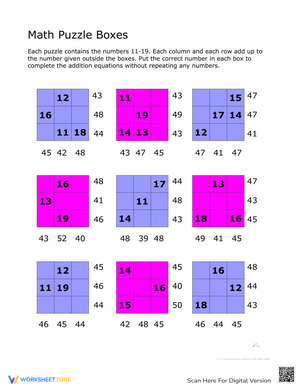
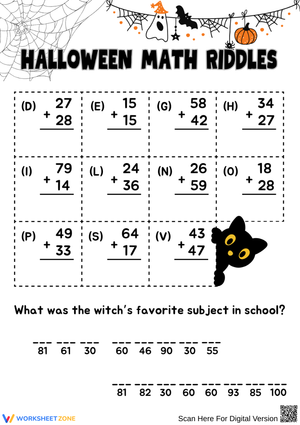
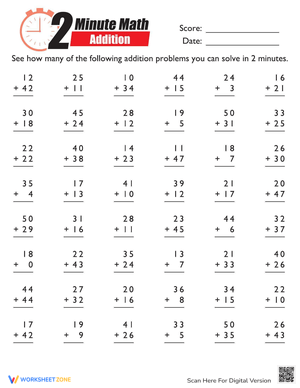
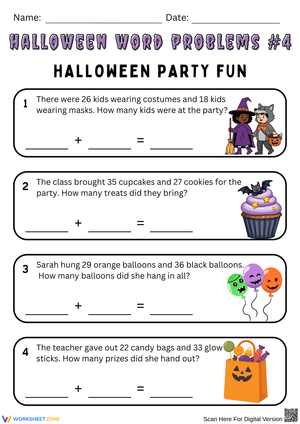
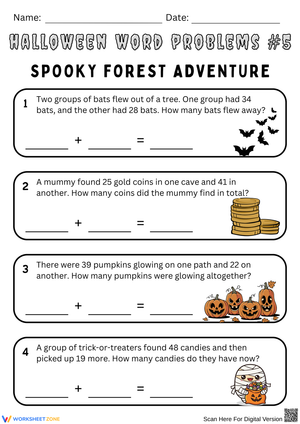
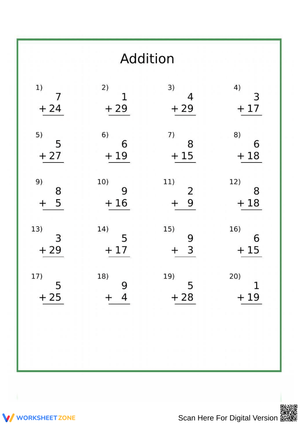
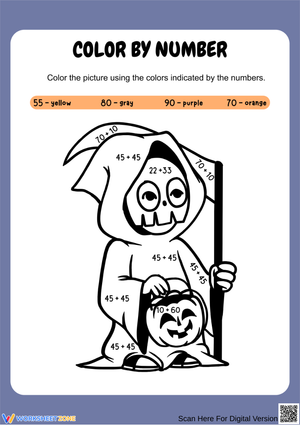
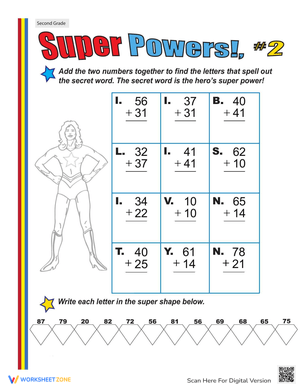
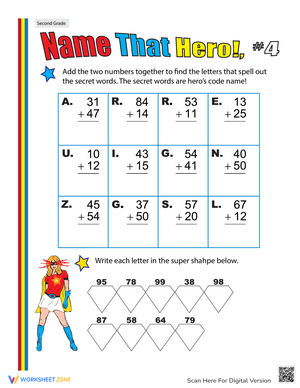
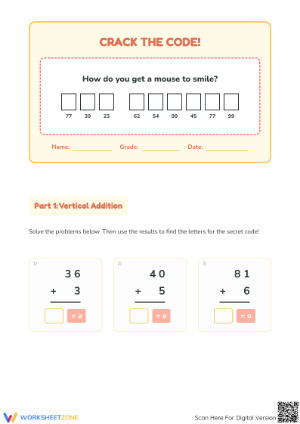
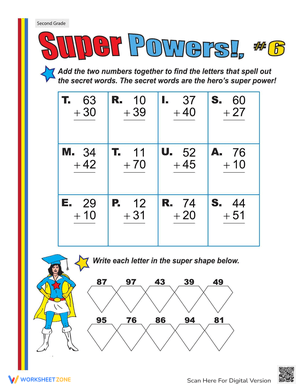
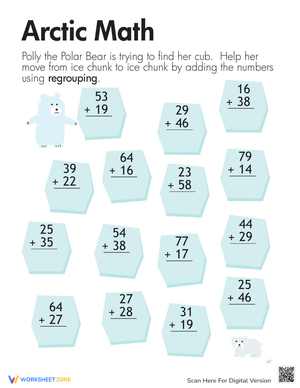
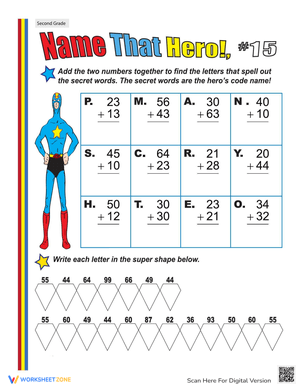
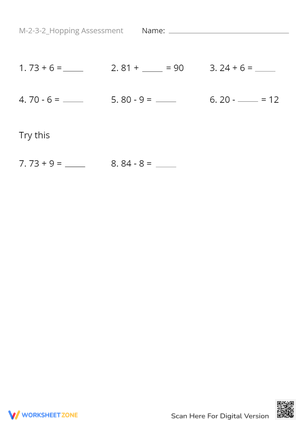
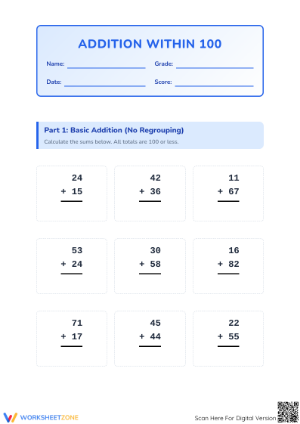
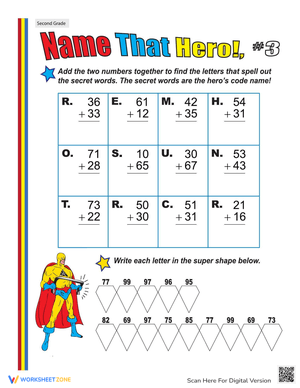
These 2nd grade addition within 100 printable worksheets give teachers focused, strategy-specific practice for the skill that most directly predicts how smoothly students will handle multi-digit work in third grade. Each worksheet targets a defined number range or strategy, so teachers can pair practice with instruction rather than handing out unfocused review.
The Specific Skills Each Worksheet Builds
The set moves through the full progression of addition within 100, from adding a one-digit number to a two-digit number without regrouping all the way through adding two two-digit numbers where the ones exceed nine and require a trade. Specific skills across the worksheets include:
- Adding a one-digit number to a two-digit number (no regrouping)
- Adding two two-digit numbers without regrouping
- Adding two two-digit numbers with regrouping
- Adding a multiple of ten to a two-digit number
- Using base-ten drawings to model and solve addition problems
- Recording two-digit addition on open number lines
- Applying the "add tens first, then ones" strategy and the compensation approach
Several worksheets pair a written equation with a base-ten drawing, asking students to complete both. That pairing is intentional — it keeps the visual and symbolic representations connected rather than letting students drift toward treating the standard algorithm as a set of digit rules they don't need to understand.
Where Second Graders Go Wrong — and How to Spot It Early
The most persistent regrouping error is not procedural carelessness — it is a place value misunderstanding. When students add 47 + 36 and see 13 in the ones column, many write 413 rather than 83. They are treating each column as an independent container rather than recognizing that the 1 in 13 represents a ten that must be traded up. This error looks like a skipped step, but the real problem is that the student does not yet understand what the columns mean. The same misunderstanding surfaces in three-digit addition, subtraction with regrouping, and eventually multiplication — catching it in second grade costs far less instructional time than addressing it at those later stages.
A second error pattern appears specifically on number line worksheets. Students who count the starting number as the first jump rather than as a position routinely land one unit short. Several worksheets address this by pre-marking the starting position, which removes that particular ambiguity and lets teachers isolate whether the jump-counting itself is accurate.
Getting the Most From These Worksheets Week to Week
The most efficient routine is a warm-up deployment — one worksheet at the start of the math block, before new instruction begins. Students working without fresh input show what they've genuinely retained, not what they absorbed twenty minutes ago from a whole-class discussion. Four to five targeted problems take about six minutes and produce cleaner formative data than most end-of-lesson checks.
For small-group instruction, the regrouping worksheets work well at a teacher-led table while the rest of the class handles center rotations. A group of three to five students can work through six to eight problems in about twelve minutes, which leaves room for the teacher to ask "what does that 1 above the tens column actually represent?" before errors get rehearsed into habit. The 2nd grade addition within 100 printable worksheets in this set are also compact enough to serve as exit tickets: three problems pulled in the last four minutes of the period give a quick read on who understood the day's strategy and who needs a different entry point tomorrow.
The set also functions in a math center rotation. Students who finish early can pull a strategy worksheet, work independently, and self-check against a posted answer key — a structure that runs without teacher presence once the routine is established.
Standard Alignment
These worksheets align directly with CCSS.MATH.CONTENT.2.NBT.B.5, which requires second graders to fluently add and subtract within 100 using strategies based on place value, properties of operations, and the relationship between addition and subtraction. In classroom terms, this standard draws a clear line between counting-on fluency and strategy-based fluency — and these worksheets operate entirely in the strategy-based zone. The set also supports CCSS.MATH.CONTENT.2.NBT.A.1, since meaningful regrouping work requires students to understand the place value structure of hundreds, tens, and ones. Teachers moving toward end-of-year benchmarks or beginning to preview third-grade expectations will find the mental math strategy worksheets relevant to CCSS.MATH.CONTENT.2.NBT.B.8, which asks students to mentally add or subtract 10 or 100 from any number between 100 and 900.
Reaching Students at Both Ends of the Second-Grade Range
For students still consolidating single-digit facts, the no-regrouping worksheets establish fluency with two-digit notation and place value alignment before trading is introduced. These are not remediation — they are the foundation that makes regrouping legible. Once students can add two-digit numbers without regrouping without hesitation, the base-ten drawing worksheets introduce trading visually: students draw tens and ones, circle any group of ten ones, and redraw the regrouped value before writing the equation. That step-by-step visual process gives students a way to check their own reasoning rather than applying a rule they haven't yet internalized.
Students who already regroup fluently move into the compensation and mental math strategy worksheets, which require them to show their thinking — not just the answer. The 2nd grade addition within 100 printable worksheets with mental math prompts serve a diagnostic function: a student who writes "54 + 20 = 74, then 74 + 3 = 77" is demonstrating transferable place value reasoning, while a student who writes only "77" may have computed correctly by a method that won't extend to three-digit work. The distinction matters for placement decisions later in the year.
Frequently Asked Questions
Do these worksheets address both conceptual understanding and fluency practice?
Yes. Some worksheets focus on base-ten drawings and number line models to build understanding of what addition does to place value. Others center on written equations and standard notation for fluency. A number of worksheets combine both, asking students to draw a model and record the equation it represents. Teachers typically use the visual worksheets during initial instruction and the equation-focused ones for fluency practice later in the unit.
Are regrouping problems separated from non-regrouping problems, or mixed together?
Both options appear in the set. Dedicated regrouping worksheets are most useful when the concept is first introduced, because students know every problem requires a trade and can focus entirely on the regrouping process. The mixed worksheets — which include both types without signaling which is which — are harder and more revealing, because students must decide on their own whether regrouping is needed. That decision-making step is where many students stumble even after they can regroup correctly on dedicated practice, and the mixed worksheets are the best tool for exposing that gap.
How do these worksheets connect to mental math and number talk instruction?
Several worksheets in the 2nd grade addition within 100 printable worksheets set prompt students to show a specific mental math move — a compensation adjustment or a tens-first breakdown — rather than solve by any method. Teachers who run daily number talks can use these worksheets the following day as written follow-up to the oral strategy discussion. That sequence — reasoning aloud one day, recording it the next — builds a more durable connection between talking about numbers and operating on them.
In what order should these worksheets be introduced?
Begin with no-regrouping worksheets to confirm that students understand two-digit place value and can add fluently before trades are introduced. Move to base-ten drawing worksheets once that fluency is established, using them to introduce regrouping visually before the standard algorithm. Introduce number line worksheets in parallel — they develop different reasoning than column addition, and some students find them more accessible at first. Mental math strategy worksheets work best once students have fluency with both representations, typically during the second half of the second-grade year.













 Interactive Worksheet Maker
 Quiz Maker
 Word Search Maker
 Crossword Puzzle Maker
 Word Scramble Generator
 Sentence Scramble Generator
 Handwriting Worksheet Generator
 Name Tracing Generator
 Fill In The Blank Generator