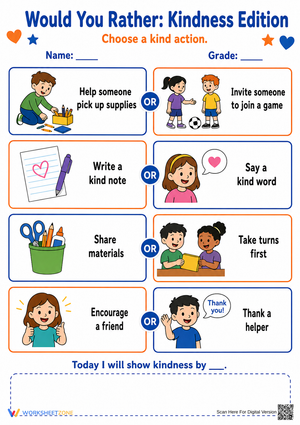
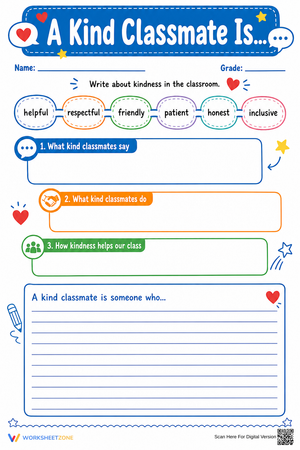
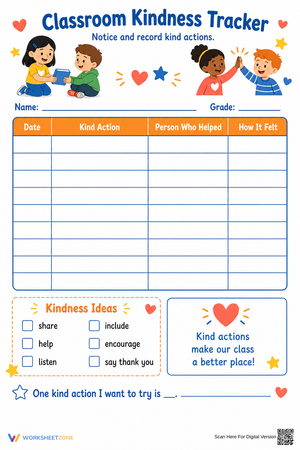
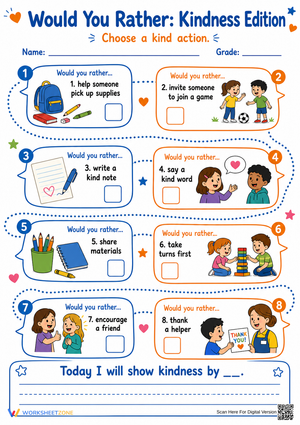
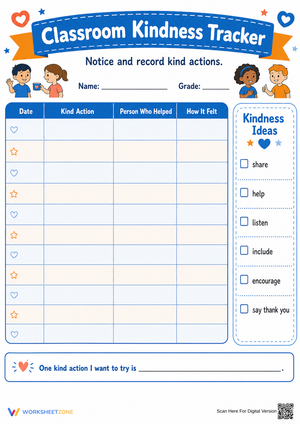
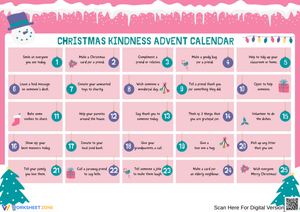
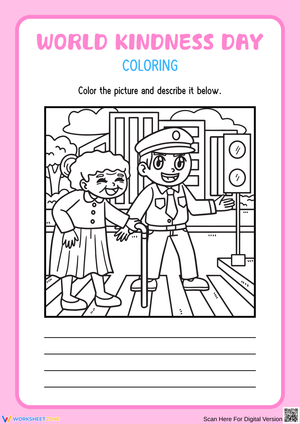
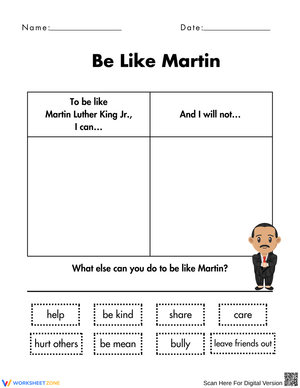
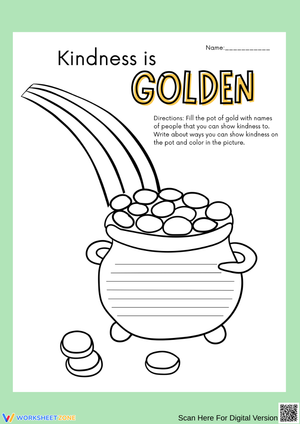
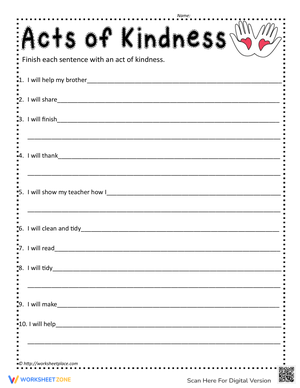
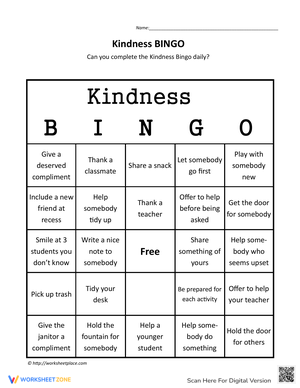
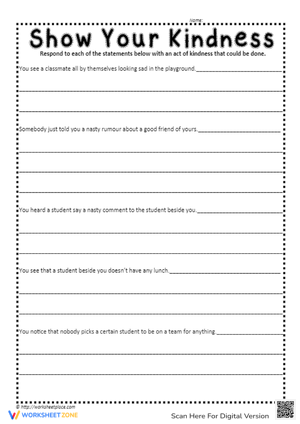
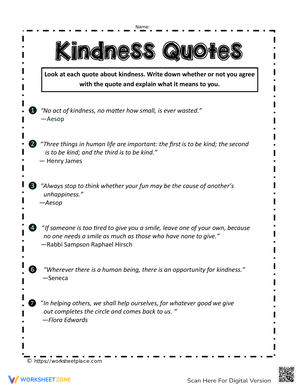
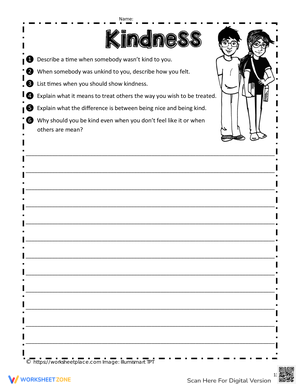
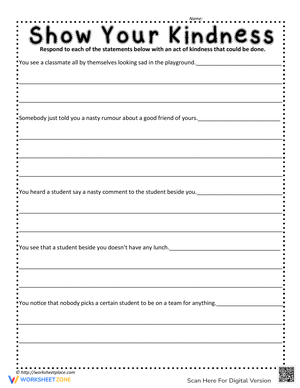
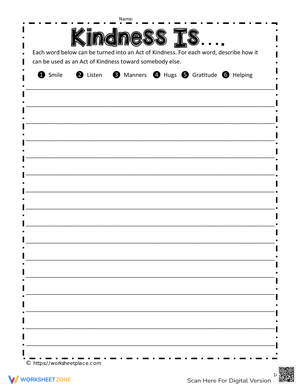
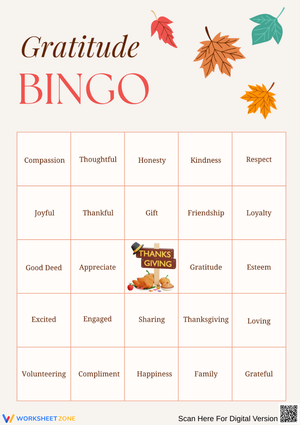
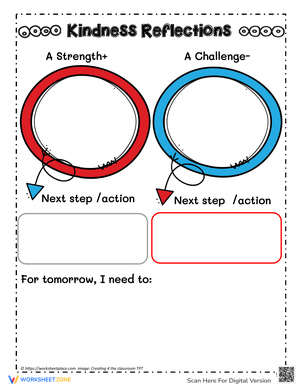
These kindness printable worksheets for 2nd grade address the developmental moment when seven- and eight-year-olds move from performing kind acts because adults expect it to reasoning about how their choices land on other people. Each worksheet gives students a concrete task — reading a short scenario, naming an emotion, or writing a kind response with a specific reason attached — rather than asking for vague reflection. Teachers who've used these during morning meeting or the weekly SEL block report that students start applying the reasoning patterns outside the worksheets, which is the real measure of whether the instruction took.
The Specific Skills Each Worksheet Targets
The set moves across five interconnected competency areas, each focused tightly enough that one worksheet can develop a skill in depth rather than skim across several at once.
- Perspective-taking: Students read a scenario and write what the other person might be feeling and why. The critical piece is the "why" — it is easy for a second grader to label an emotion but considerably harder to explain what caused it.
- Emotion vocabulary: Worksheets that push students past "happy," "sad," and "mad" into more precise language — "embarrassed," "left out," "proud of myself." Second graders who develop this range communicate more honestly when social conflicts actually arise.
- Kind-response planning: Students are given a situation and asked to name a specific kind act, then explain how it would affect the other person. The planning format builds the habit of thinking before responding rather than reacting on instinct.
- Distinguishing kindness from surface behavior: Some worksheets present scenarios where the "nice" action doesn't address what the other person actually needs — for example, offering to share a toy with a classmate who is upset because someone made fun of them. Students work out why the gesture misses the mark.
- Self-to-peer connection: Students name a time they felt a specific emotion, then use that experience to reason about someone else's situation. This is the closest a worksheet format can get to building genuine empathy rather than just practicing the vocabulary of it.
How to Build These Worksheets Into Your Lesson Plans
The most consistent use pattern is the Monday morning warm-up — five to eight minutes at the start of morning meeting where one student reads the scenario aloud, the class briefly discusses it, and then everyone writes independently. That sequence keeps the social-emotional conversation threaded through the week rather than isolated to a single block, and it gives quieter students the whole-class discussion as a thinking prompt before they write alone.
For teachers running a dedicated SEL block, kindness printable worksheets for 2nd grade work well as the independent practice portion of a gradual-release lesson: teacher models the reasoning process with one scenario, the class works through a second scenario together, then students tackle a third on their own. That 10-to-12-minute arc stays tight enough to hold second-grade attention without cutting the reflection short.
A third approach worth trying: let a student volunteer — not the teacher — choose which completed worksheet gets posted on the class kindness board each Friday. Shifting the selection from teacher to student changes the reinforcement source from adult approval to peer recognition, which is more durable at this age for building habits that persist when no adult is watching.
Student Errors Worth Watching For and Addressing
The most common pattern in this work is circular reasoning. Ask a student "what should you do in this situation?" and they write "be kind" or "be a good friend." Ask "why?" and they write "because kindness matters." No actual reasoning is present — just vocabulary recall. The worksheets that require students to complete the chain "I would ___ because then ___ would feel ___" interrupt this pattern by forcing them to connect an action to an outcome to an emotion.
A second error worth catching early is the fairness-empathy conflation. When a student writes "I would tell the teacher because it's not fair," they're applying a fairness judgment, not an empathy response. These are different cognitive moves — fairness reasoning centers on rules and equity; empathy reasoning centers on another person's internal experience. Second graders use both frameworks but frequently mix up the vocabulary. The worksheets that present scenarios involving exclusion or unkind words are where this conflation surfaces most clearly.
Stronger writers produce a subtler version of the same problem: they identify the right kind act but explain it in terms of obligation rather than the other person's experience — "you're supposed to include everyone" instead of "she would feel less lonely." A brief follow-up prompt — "how would that person feel, specifically?" — turns a rule-following answer into a reflective one.
Adjusting the Work for a Range of Learners
For students who move quickly and write easily, the natural extension is asking them to generate a second kind response to the same scenario — one that goes beyond the most obvious choice. A student who writes "I would help him pick up his crayons" might realize, on a second pass, that asking "are you okay?" first addresses something the first response doesn't.
Students who struggle with open-ended writing do better with a sentence-frame version of each prompt. "When ___ happened, ___ probably felt ___ because ___" provides enough structure that students aren't staring at a blank line, but still requires them to supply the meaningful content. This removes the cognitive load of format uncertainty so the actual reasoning work can happen — not a reduction in rigor, just a cleaner path to it.
The kindness printable worksheets for 2nd grade in this set also lend themselves to a talk-before-write format for ELL students and students who process ideas more fluently in speech than on paper. Students explain their response to a partner first, then write. The verbal run-through surfaces the reasoning that the writing task alone would filter out for students still building English fluency or writing stamina.
Standard Alignment
These worksheets align most directly with CASEL's Social Awareness competency, which asks early elementary students to recognize the feelings and perspectives of others and demonstrate empathy across varied situations. The Relationship Skills competency is also present in worksheets that ask students to plan how they would respond in a social situation — that deliberate planning work maps onto CASEL's language around maintaining healthy and supportive relationships.
At the state level, many SEL frameworks name perspective-taking explicitly at the second-grade band. Illinois Social-Emotional Learning Standard 2A, for instance, asks students to identify and describe the feelings and perspectives of others — precisely what these scenario-based worksheets practice. Teachers in states with adopted SEL standards will find these resources fit directly into those sequences rather than requiring supplemental alignment work.
When paired with a read-aloud, several worksheets in the set also reinforce ELA standard RL.2.3, which addresses how characters respond to major events and challenges. Using a scenario worksheet during or after a read-aloud gives students a structured way to analyze a character's choices through an empathy lens rather than a purely plot-level one — the kind of cross-curricular connection that makes SEL instruction feel less like a separate subject and more like a lens students carry everywhere.
Frequently Asked Questions
How do I know whether students are actually developing empathy or just writing the answers they think I want?
Look at the explanations, not just the answers. A student who writes "be nice" and explains "because that's the rule" is performing compliance. A student who writes "I would sit with her at lunch because she looked like she was hoping someone would come over" is doing genuine perspective work. The worksheets that ask students to name an emotion and explain its cause make this distinction visible in the written work — which makes it much easier to address directly in a brief conference or during the whole-class debrief.
What about students who resist SEL activities and shut down during feelings-based lessons?
Scenario-based worksheets tend to get more traction with resistant students than open-ended reflection prompts do, because they read more like a situational puzzle than a feelings disclosure task. Students are asked to analyze what happened and what could happen next — not to share personal emotions on demand. Starting with the scenario worksheets and moving toward the more personal reflection prompts over several weeks works considerably better than leading with "write about a time you felt left out."
How many worksheets per week is actually useful?
One per week is enough in most classrooms. The value in these resources is in the discussion and reasoning practice they generate, not in volume. Rushing through kindness printable worksheets for 2nd grade without leaving time for students to share and compare responses wastes most of what the worksheets are built to do. One worksheet used with a ten-minute whole-class debrief produces more than three completed in silence and collected.