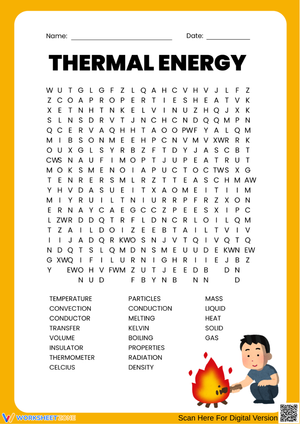
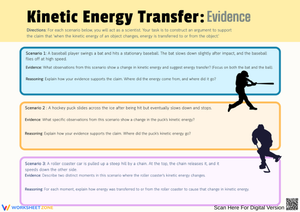
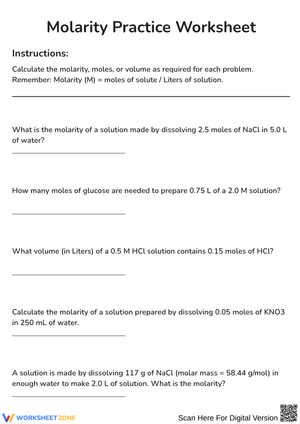
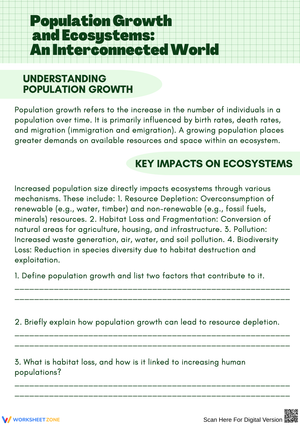
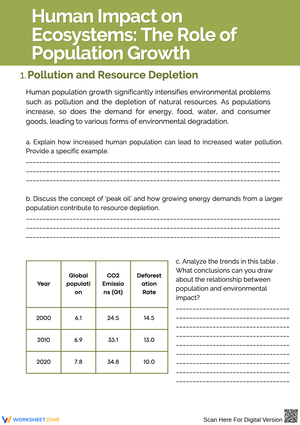
These science pdf worksheets for 12th grade address the disciplines senior students are most likely navigating in parallel — AP Biology, AP Chemistry, AP Physics, and Environmental Science — and treat them as the rigorous, quantitative courses they actually are. Each worksheet targets a specific concept rather than surveying an entire unit, so teachers can pull exactly what a class needs without sorting through unrelated problems. The set spans molecular genetics, chemical equilibrium and kinetics, classical and electromagnetic physics, and Earth systems analysis.
What the Set Covers Across Senior-Year Science
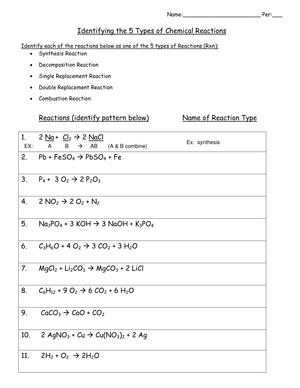
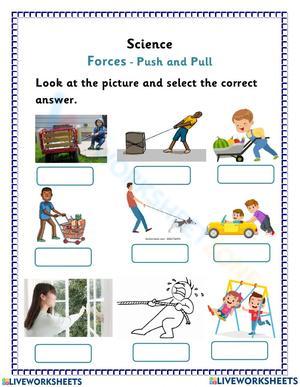
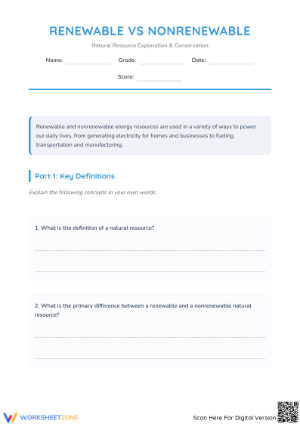
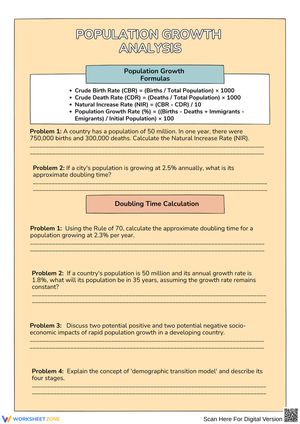
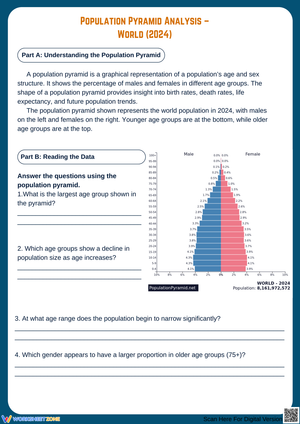
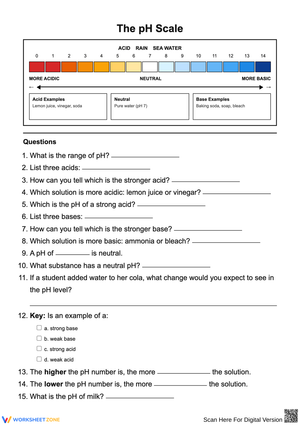
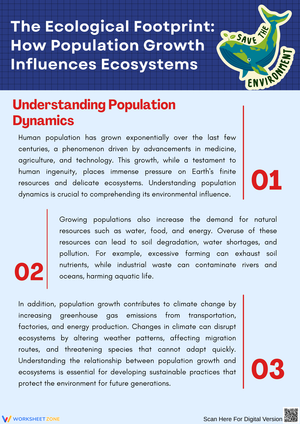
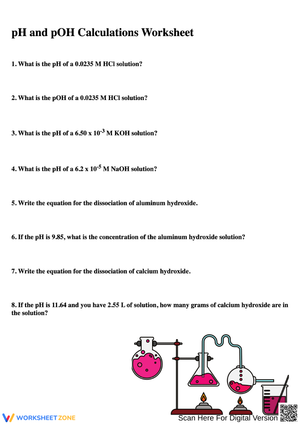
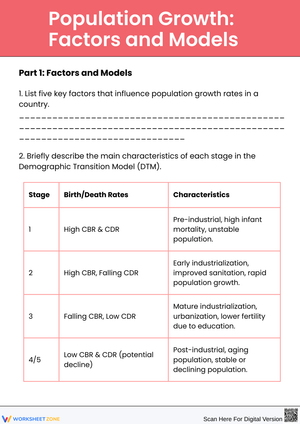
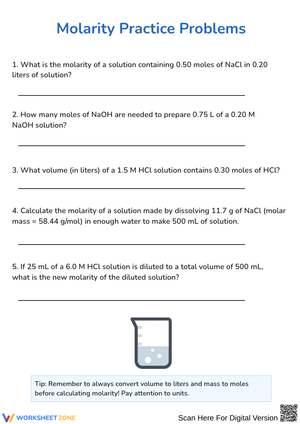
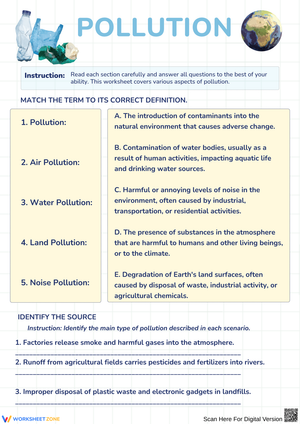
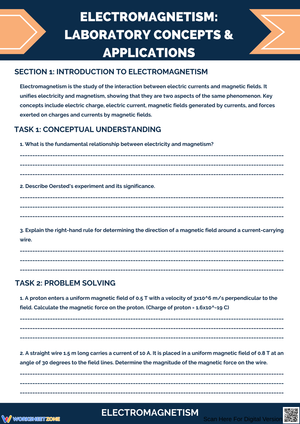
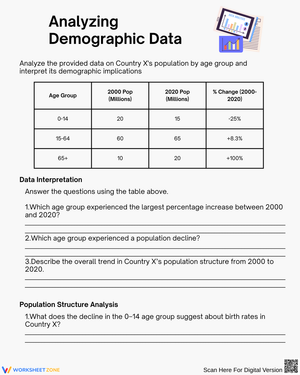
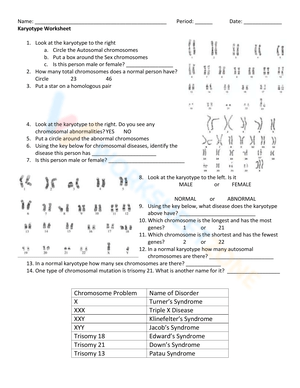
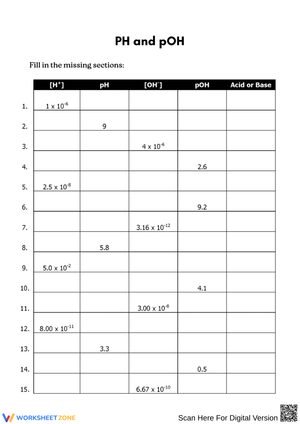
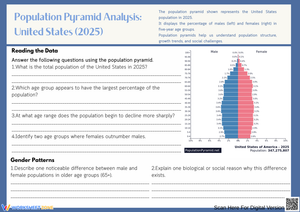
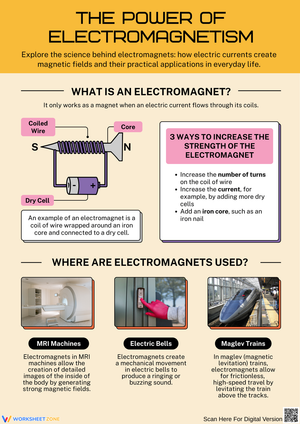
Biology worksheets move well past cell structure into the operational mechanics of DNA replication, protein synthesis, cellular signaling cascades, and the logic behind CRISPR-based gene editing. Students diagram, label, annotate, and interpret — not just define. Chemistry worksheets concentrate on the quantitative core of advanced coursework: Le Chatelier's principle applied to specific constrained systems, pH and pOH calculation sets, rate law derivation, and organic functional group identification. Physics worksheets work through projectile motion, rotational dynamics, circuit analysis, and electromagnetic induction, with problems that require students to set up force diagrams before they reach for equations — because students who skip that step make predictable algebra errors. Environmental science worksheets ask students to read and interpret real-format graphs — atmospheric CO₂ trends, population growth curves, deforestation satellite data — and then construct written responses that connect that data to biogeochemical cycles or specific policy trade-offs.
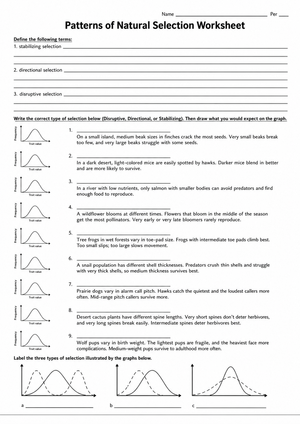
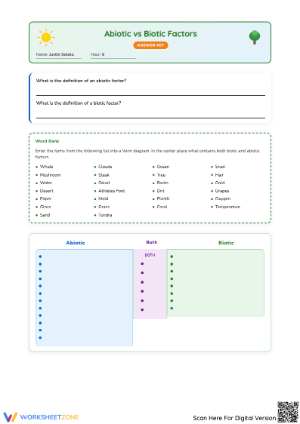
Several worksheets integrate disciplines explicitly. A unit-bridging worksheet on ecosystem energy flow, for example, requires students to apply both thermodynamic reasoning from chemistry and population dynamics from biology. This kind of integration mirrors what AP Environmental Science free-response prompts actually ask, and it reflects the reality that senior-year courses increasingly expect students to draw connections across subject boundaries rather than treating each discipline as sealed.
Student Errors Senior Teachers See Every Year
One of the most persistent errors in 12th-grade chemistry is the misapplication of Le Chatelier's principle under pressure-change conditions. Students who can correctly state the rule will still predict the wrong direction of shift when a problem specifies that volume decreases in a system where both sides carry the same number of moles of gas. They apply a memorized pattern without checking whether that condition actually produces a pressure imbalance. A worksheet presenting five such problems in sequence — with mole counts explicitly stated — makes this error visible in a way that class discussion rarely does, because the written work shows whether a student is reasoning through the mechanism or pattern-matching.
In biology, the transcription-translation confusion collapses most noticeably under timed conditions. Students who have it right during lecture will write that ribosomes "read DNA directly" on an exam, because the two-step process compresses in memory under pressure. Worksheets that require students to write a step-by-step sequence with locations — nucleus, cytoplasm, ribosome — rather than just labeling a static diagram force that procedural knowledge into a more durable form. In physics, many students treat rotational dynamics as an entirely separate topic from linear mechanics, missing the structural parallel between F = ma and τ = Iα entirely. Worksheets that explicitly ask students to identify the rotational analogue for each translational quantity — and then use both in a single connected problem — address that gap directly rather than leaving students to discover the connection on their own.
Fitting These Worksheets Into Your Course Calendar
The most effective placement for science pdf worksheets for 12th grade is not as standalone homework but as targeted formative checkpoints within a unit sequence. Running a 20-minute worksheet session the day after introducing Le Chatelier's principle — before any lab work — surfaces confusion while there is still time to correct it. Physics teachers have used the force diagram worksheets as Monday problem sets worked through in pairs, with the teacher circulating to catch students who skip the diagram step and jump straight to algebra. For biology, the protein synthesis worksheet works well as a pre-lab primer the day before students run a gel electrophoresis activity, because students who cannot articulate what mRNA does will struggle to explain what they're observing on the gel — and that gap usually does not surface until the lab is already underway.
The flipped classroom model fits naturally here too. Assigning an equilibrium or molecular genetics worksheet the evening before a lab session means students arrive having already worked through the underlying mechanics on paper. Class time then shifts toward data analysis, experimental design, and discussion rather than concept review. The 15 minutes saved at the start of a lab period is not trivial when safety protocols, equipment setup, and student questions are all competing for the same window.
Standard Alignment
These worksheets map most directly to the College Board's AP Biology, AP Chemistry, AP Physics 1/2/C, and AP Environmental Science curriculum frameworks. AP Chemistry materials on equilibrium address Big Idea 6 and Science Practice 2 (use of mathematical representations). AP Biology worksheets on DNA replication and protein synthesis align with Big Idea 3 — living systems store and transmit information. AP Environmental Science materials connect to Unit 3 (populations) and Unit 5 (land and water use). For non-AP courses following NGSS at the senior level, the relevant disciplinary core ideas are HS-PS1 (matter and its interactions), HS-LS3 (heredity), and HS-ESS3 (Earth and human activity). Teachers in states with independent science frameworks will find that the conceptual depth of these worksheets aligns with HS-level performance expectations in most state documents, even when the specific code differs from NGSS notation.
Adjusting the Set for Mixed-Ability Senior Science Classes
For students who need more support, the most practical move is to sequence the visual and structural worksheets before the quantitative ones. A student who cannot accurately diagram the steps of DNA replication will not make progress on a worksheet asking them to predict the outcome of a replication error — the visual representation has to come first. That sequencing is not remediation; it is sound instructional order. The science pdf worksheets for 12th grade that focus on diagram completion and structural labeling serve as genuine entry points for students who are strong in reasoning but shaky on the procedural sequence of a given process.
For students working above grade level, the same worksheets become more demanding with one added constraint: require written justification for every step, not just a numerical answer or labeled diagram. Asking a student to explain in writing why a chemical system shifts direction under changed pressure conditions — or why a particular organic structure is an ester rather than an ether — forces higher-order reasoning from the same problem set without creating entirely separate materials. Students preparing for AP free-response questions benefit from this practice specifically because the AP scoring rubrics reward explicit, mechanistic explanations over correct answers without reasoning attached.
Frequently Asked Questions
Can these worksheets substitute for lab work in courses with limited equipment access?
They cannot and should not. Each worksheet builds conceptual understanding and procedural fluency, but does not develop the observational and data-collection skills that come from hands-on work. What the worksheets can do is make lab time more productive by ensuring students arrive understanding the underlying principles before they touch equipment. Teachers in schools with limited lab resources have used the data-interpretation worksheets — particularly those involving real atmospheric or population graphs — as partial substitutes for data-collection activities, but those worksheets work best when paired with some form of primary data experience, even a simple structured observation exercise.
Are these appropriate for 12th-grade science courses that are not AP-designated?
Yes. Students in honors, dual-enrollment, or senior electives like Anatomy and Physiology work at a level where these worksheets provide appropriate challenge. The chemistry and physics worksheets are the most explicitly AP-aligned and may need to be selected carefully for courses where calculus integration is not expected. The environmental science and molecular biology worksheets transfer more flexibly across advanced and non-AP senior courses because the conceptual demand is high without requiring AP-level mathematics at every step.
How should teachers handle students who are simultaneously enrolled in two of these science courses?
That situation is more common in senior year than most teachers expect — a student taking both AP Biology and AP Chemistry in the same semester is not unusual at schools with open science elective policies. The good news is that these science pdf worksheets for 12th grade treat each topic discretely, so a student can work through the chemistry equilibrium set independently of the biology genetics materials without content overlap creating confusion. The cross-disciplinary worksheets — particularly those touching biochemistry — are worth flagging for those students as intentional integration points, so the overlap reads as meaningful connection rather than accidental repetition.












 Interactive Worksheet Maker
 Quiz Maker
 Word Search Maker
 Crossword Puzzle Maker
 Word Scramble Generator
 Sentence Scramble Generator
 Handwriting Worksheet Generator
 Name Tracing Generator
 Fill In The Blank Generator