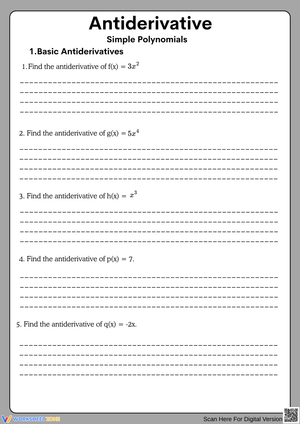
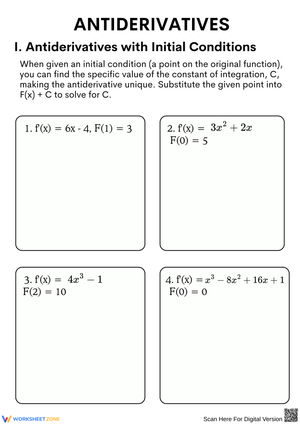
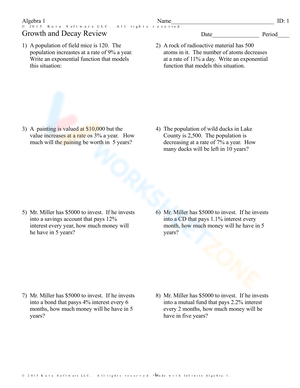
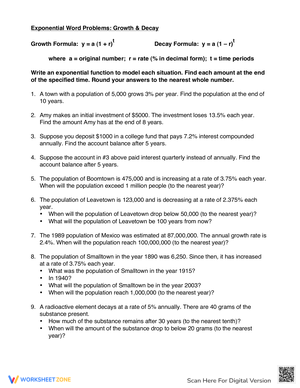
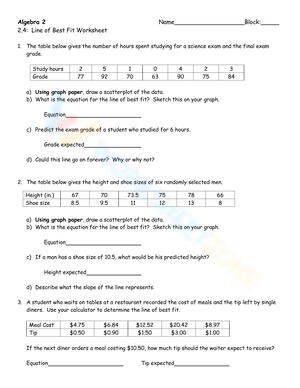
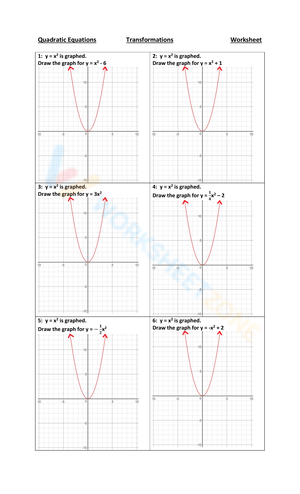
These 11th grade others math worksheets printable resources gather the mathematical topics that fall between standard course titles — financial literacy, applied statistics, combinatorics, and formal logic — giving teachers clean, classroom-ready practice for units that routinely get compressed or skipped. The set covers six distinct topic areas, each handled in its own worksheet, so teachers can pull exactly what they need without wading through material that doesn't fit the current unit.
What's Inside the Set
Each 11th grade others math worksheets printable addresses a topic area that surfaces in elective courses, integrated math pathways, and gap-filling units at the junior level. The coverage runs across six content strands:
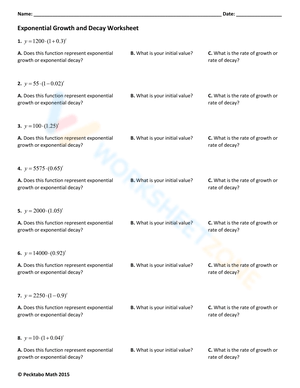
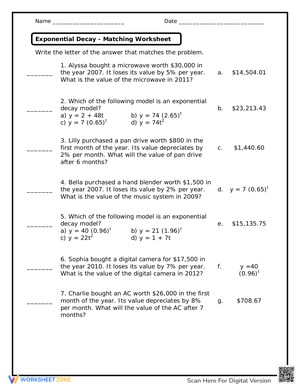
- Financial mathematics: Students calculate simple and compound interest using the formulas A = P(1 + r/n)^(nt) and A = Pe^(rt), then apply those results to real scenarios — student loans, savings projections, and car depreciation. One worksheet focuses on progressive income tax brackets, requiring students to distinguish marginal from effective tax rates rather than treating all income as taxed at a flat percentage.
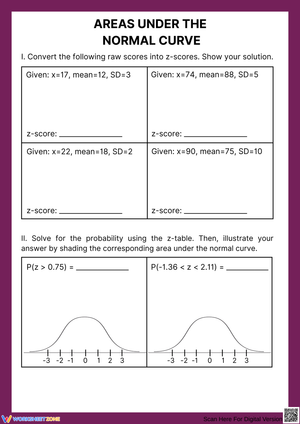
- Descriptive and inferential statistics: Exercises move from mean absolute deviation into standard deviation, then into reading and interpreting normal distribution curves. Students mark data positions on bell curves, identify percentile rankings, and flag values that fall beyond two standard deviations from the mean.
- Probability models: Worksheets distinguish between independent and conditional probability through two-way table analysis, Venn diagram interpretation, and problems where the context determines which formula applies — not the other way around.
- Discrete mathematics: Set theory and Venn diagrams reappear with a different emphasis — union, intersection, complement, and cardinality — followed by permutations and combinations. A logic worksheet walks students through truth tables and introduces symbolic notation for conjunctions, disjunctions, and negations.
- Complex numbers: Students rewrite expressions in standard form a + bi, perform arithmetic operations, and work with the complex plane — a topic tied to N-CN standards that sits outside both Algebra II and Pre-Calculus in many district sequences.
- Matrix operations: Basic matrix addition, scalar multiplication, and matrix multiplication expose students to the structure underlying linear transformations, often covered in isolation when it doesn't fit neatly into a concurrent course.
Mistakes Students Make That These Worksheets Surface
The most consistent error in the financial math materials involves the compound interest formula. Students routinely conflate the compounding period variable n with the number of years t. A junior who knows A = P(1 + r/n)^(nt) will still write 12 where they should write 12 × t in the exponent — and when the time period is exactly one year, that error stays invisible. These worksheets include multi-year problems specifically to force that distinction into the open, making it correctable before it costs students on a test or an exam.
In probability, the conditional probability formula P(A|B) = P(A ∩ B) / P(B) is widely memorized but poorly applied. What appears in student work, again and again, is this: students correctly identify that a conditional probability is being requested, write the formula, and then substitute P(A) in the numerator instead of P(A ∩ B). The two-way table exercises make the numerator concrete — students extract joint frequencies directly from a table rather than computing them abstractly, which closes that substitution gap reliably.
Logic worksheets reveal a third pattern. Students handle simple negations without much difficulty but consistently err on compound statements — they misapply De Morgan's Law, writing the negation of "P and Q" as "not P and not Q" instead of "not P or not Q." That error doesn't surface in a logic unit that only covers truth tables without also asking students to rewrite logically equivalent statements in a different form.
Fitting These Worksheets Into a Junior-Year Schedule
The most workable use pattern is the standalone Friday application lesson. Many 11th-grade teachers run their core curriculum Monday through Thursday and use the last 15-20 minutes of a longer block — or an entire Friday period — for applied or enrichment material. One financial literacy or statistics worksheet fits that window cleanly. Students work individually or in pairs, and the teacher circulates to catch formula errors before they harden into habits.
For teachers running an integrated math pathway or a semester elective, these worksheets function as the core of individual units. The discrete math materials pair well with a short computer science crossover — logic gates map directly onto the truth table format students have already practiced on paper, and that connection tends to stick in a way that purely abstract logic exercises don't.
One sequencing note worth flagging: the probability worksheets work better when introduced before the statistics materials, not after. Students who understand conditional probability reason more carefully about what normal distribution tails represent, because they've already practiced asking "under what conditions" before drawing conclusions from data. That ordering decision makes a measurable difference in how students engage with the standard deviation work that follows.
Standard Alignment
The statistics materials address CCSS.MATH.CONTENT.HSS-ID standards — specifically S-ID.1 through S-ID.4, which cover data representation, central tendency, spread, and the normal distribution. The probability worksheets target S-CP.1 through S-CP.8, with direct attention to S-CP.5, which requires students to explain conditional probability and independence in everyday language rather than purely symbolic terms. That language-based standard is often undertaught, and the two-way table exercises here address it directly.
The complex number exercises align with N-CN.1 through N-CN.3, standards that appear in high school Number and Quantity and are assessed consistently on the SAT's Advanced Math subsection. Discrete math topics — combinatorics, set theory, formal logic — are not explicitly enumerated in CCSS but are addressed in the NCTM's High School Reasoning and Sense-Making framework, which treats logical argument as a cross-strand skill rather than isolated content. Teachers who use these 11th grade others math worksheets printable for SAT preparation will find the data analysis and probability coverage most directly transferable — the College Board's data analysis subsection accounts for roughly 29% of the SAT Math score and draws on exactly these skill areas.
Adjusting the Worksheets for a Range of Learners
The financial literacy worksheets carry the widest entry range. Students still developing fluency with multi-step algebraic manipulation can work through the simple interest problems and the progressive tax bracket exercises without needing the compound interest formula — those two worksheets stand alone and remain rigorous without that added complexity. Students ready for more can extend the compound interest problems by comparing continuous versus periodic compounding, an extension the worksheet format accommodates without requiring anything additional to print.
The discrete math worksheets present a different challenge: students frequently freeze when the symbolic notation is unfamiliar, even when the underlying reasoning is well within their reach. A brief worked example on the board before distributing the worksheet removes that initial barrier efficiently. The logic worksheets benefit from a three-minute class discussion about how "and" and "or" function differently in mathematics versus everyday speech — students who've had that conversation move through truth table problems noticeably faster than those encountering the distinction cold.
Advanced students can move toward proof-based extensions: instead of filling in a truth table, they prove logical equivalence directly or construct a counterexample to a conditional statement. That kind of extension requires nothing additional to print — it's a whiteboard or verbal task that follows naturally from the worksheet's content and keeps faster students genuinely occupied rather than marking time.
Frequently Asked Questions
What course level do these worksheets fit — Algebra II, Pre-Calculus, or something else?
They're built for the space between those courses. The financial math, statistics, and discrete math materials don't require calculus prerequisites and fit naturally into Algebra II or a standalone junior-year elective. The complex number and matrix worksheets assume students have completed a full algebra sequence. A teacher running a semester elective in financial math or a junior-year integrated pathway will find the most use for the set taken as a whole, while a core Algebra II teacher can draw selectively from the financial and probability materials.
Can these be used for SAT or ACT preparation?
Yes, and the connection is direct rather than incidental. The data analysis, probability, and complex number worksheets address content areas that appear on both exams. The SAT's data analysis subsection explicitly tests standard deviation interpretation, two-way table probability, and proportional reasoning — all practiced across multiple worksheets in the set. These 11th grade others math worksheets printable work well as targeted test prep rather than general review, because each worksheet isolates a specific skill the exams assess rather than mixing question types across a broad unit.
Do students need graphing calculators to complete these worksheets?
For most worksheets, no. The financial math and probability exercises are built for hand calculation, which forces students to work through formula mechanics rather than treating the calculator as a black box. The standard deviation worksheets include a calculator-permitted version and a by-hand version. Teachers running a no-calculator policy during a particular unit can use the by-hand version without loss of rigor — the problem sets are the same; only the computational expectation differs.
How long does a typical worksheet take to complete?
Most fall in the 20-35 minute range for a junior working at grade level with full work shown. The compound interest and conditional probability worksheets tend to run closer to 35-40 minutes when students are showing formula steps thoroughly. Teachers using these as opening or closing activities may want to assign selected problem sets within each worksheet rather than the full version — the problem sets within each worksheet are distinct enough that partial use remains coherent.