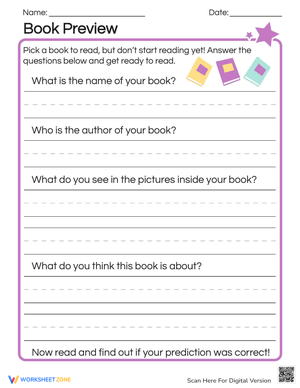
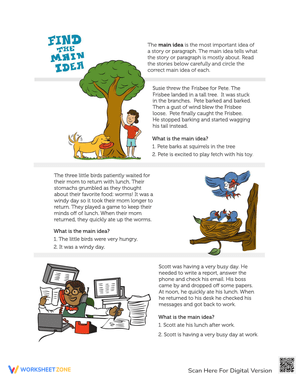
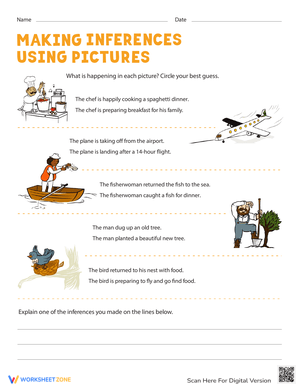
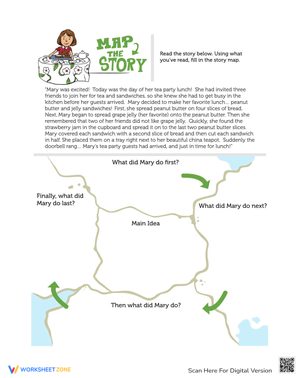
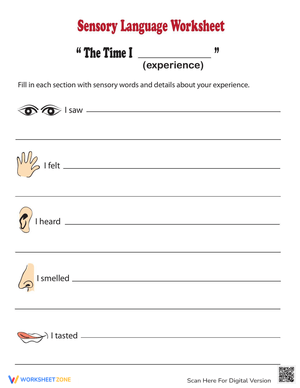
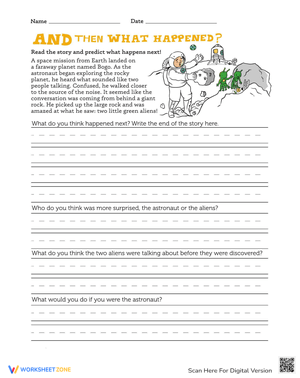
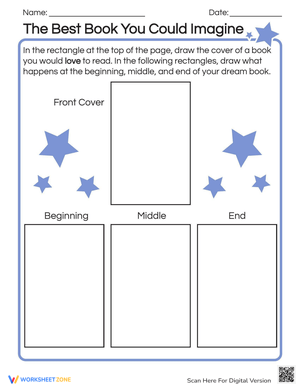
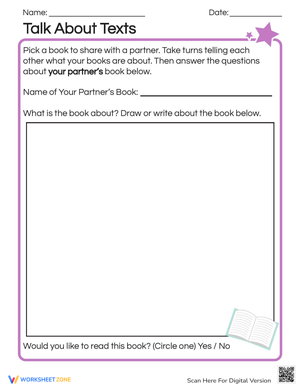
These fiction pdf worksheets for 1st grade give teachers short, decodable passages paired with focused comprehension tasks — identifying characters, mapping the setting, sequencing story events, and sorting narrative from informational text. Each worksheet is self-contained, making it equally workable in a guided reading rotation, a literacy center, or as a five-minute settling task after transitions.
The Comprehension Skills Each Worksheet Targets
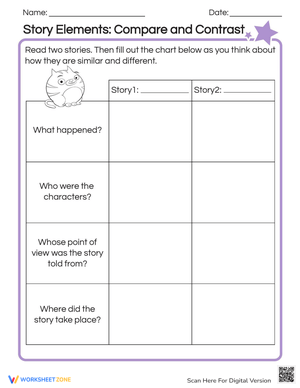
The set addresses the narrative skills that appear most often in 1st grade ELA progress monitoring, broken down into discrete tasks so teachers can see exactly where a student is and is not connecting. Skills covered include:
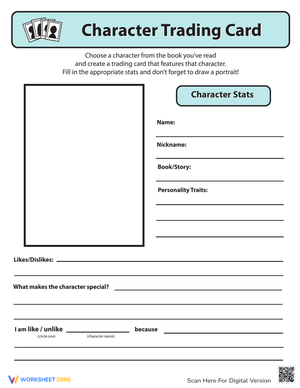
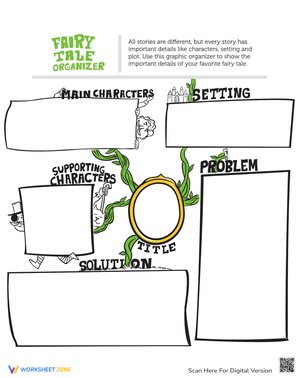
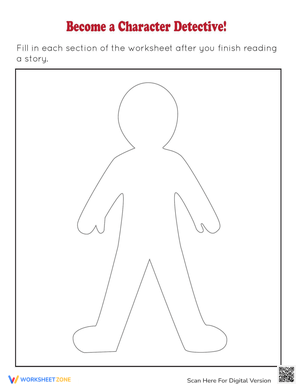
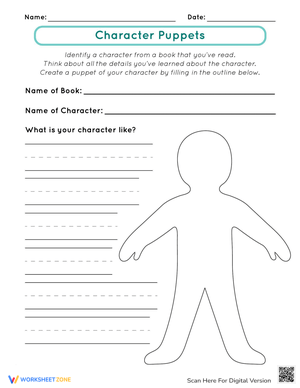
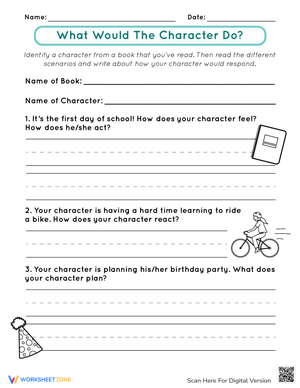
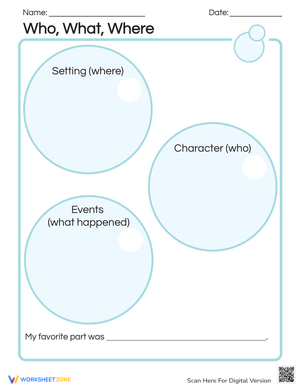
- Character identification — students circle or name who the story follows, a task that sounds simple but produces revealing errors (more on this below)
- Setting identification — both location and time, since students routinely name one but miss the other
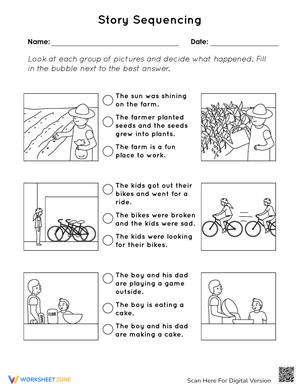
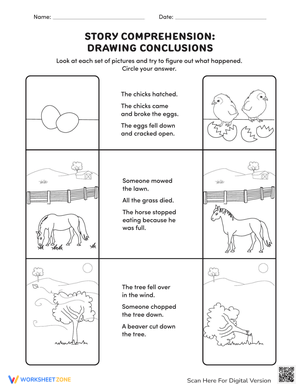
- Story sequencing — ordering events using "first," "next," "then," and "last," with the emphasis on understanding that story order reflects cause and consequence, not just clock time
- Problem and solution retelling — in a complete sentence, not a fragment or a single circled word
- Genre sorting — deciding whether a passage is fiction or nonfiction and identifying one piece of text evidence that supports the decision
The passages draw on the kinds of stories 1st graders already know from read-alouds — animals with names, children navigating small problems, brief adventure setups — which reduces the cognitive load of unfamiliar content and lets students focus on the comprehension work itself.
Mistakes First-Grade Readers Make That These Worksheets Help You Catch
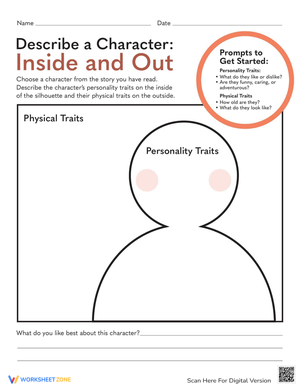
Four error patterns show up consistently in student work at this level, and each one is worth anticipating before distributing the worksheet rather than discovering during correction. The first is what might be called the "any noun can be a character" mistake: a student reads a story set in a forest where a squirrel talks to an oak tree, and they circle the oak tree as a character because something happens to it. The distinction between a character — an entity that thinks, feels, and initiates action — and a passive element of the setting has not yet crystallized at this age. Naming that distinction explicitly before students begin cuts this error rate noticeably.
The second pattern is partial setting responses. Ask a 1st grader where a story takes place and most students answer correctly. Ask when it takes place and the same students go blank, even when "one cold morning in December" appears in the first sentence. Worksheets that prompt separately for place and time — rather than asking a single "Where does the story take place?" question — surface this gap immediately.
The third pattern is sequencing by salience rather than chronology. Students often place the most dramatic event first in a written retell because it is what they remember most clearly. A child might write "Last, the dog ran away" for an event that happened in the middle of the story, because the dog running away is more emotionally vivid than the resolution that follows. Numbered cut-and-sort sequencing tasks work better here than fill-in-the-blank prompts for students still building this skill.
Fourth: genre confusion around realistic fiction. Students consistently label stories about real animals or real activities as nonfiction, because they associate "real" with "not made up." A worksheet that asks students to find one reason a passage is fiction — a made-up name, an invented event, a talking animal — teaches them to read for genre markers rather than rely on topic alone.
Standard Alignment
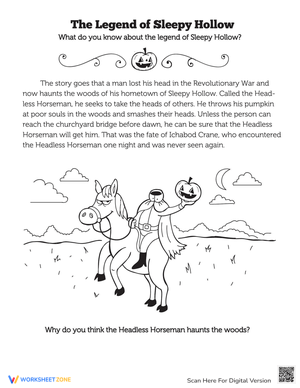
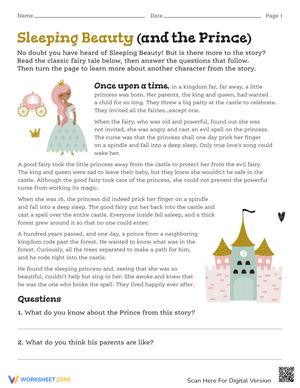
These worksheets address three standards from the Common Core ELA framework for Grade 1 Literature. RL.1.3 asks students to describe characters, settings, and major events using key details from the text — the character and setting identification tasks map directly onto this standard. RL.1.5 requires students to explain major differences between storybooks and informational texts — the genre sorting activities are built specifically for that distinction. RL.1.7 calls for using illustrations and story details together to describe characters, settings, and events — worksheets that include a small image alongside the passage address this standard without adding instructional complexity. In classroom terms, RL.1.3 typically anchors the opening weeks of a narrative unit, RL.1.7 is reinforced throughout daily read-aloud time, and RL.1.5 lands most effectively after students already have a working sense of what fiction feels like from the inside.
How to Work These Worksheets Into Your Literacy Block
The most reliable placement is as the independent rotation task during small-group guided reading. While you pull a reading group, three or four other students work through a worksheet at their seats. This works because the task structure — read, respond to five or six discrete questions, done — does not require you to be present to keep students on track. The finished worksheets double as a quick formative check: scanning four or five completed papers after groups rotate tells you which students are still struggling with setting or sequencing before whole-group instruction the next morning.
A second effective placement is the Monday morning warm-up, the ten minutes before morning meeting when students need a structured re-entry into academic reading after the weekend. The fiction pdf worksheets for 1st grade format — brief passage, clear task, no elaborate setup — makes this manageable even for students who arrive distracted. Collecting these warm-ups over several weeks produces a running record of growth that a single end-of-unit quiz cannot replicate.
One honest limitation worth knowing: students who rely heavily on classroom read-aloud support sometimes return blank worksheets not because they lack comprehension skills but because independent silent reading feels overwhelming as a starting point. Pairing those students with a partner for the reading portion, while keeping the response tasks individual, resolves this without altering the comprehension work at all.
Adjusting the Work for Different Readers in the Room
For students reading below grade level, reduce the task demand rather than the content. Ask them to draw the main character instead of writing the name, or provide a word bank of two or three setting options to choose from. The passage stays the same; the response format meets where they are. This keeps the whole class working with the same story — which matters when you want to debrief whole-group — while giving developing readers an entry point that does not stop them before they begin.
Students reading above grade level benefit from added response depth. After completing the standard questions, a single extension prompt — "Write one sentence about why the character made the choice they made" — moves them from identification into inference without requiring a separate resource. This prompt works with nearly any narrative passage and takes no additional preparation time. When students working through fiction pdf worksheets for 1st grade can explain a character's motivation rather than simply name the character, they are demonstrating readiness for the more complex analysis work that waits in 2nd grade.
Frequently Asked Questions
What story elements are covered across the set?
Each worksheet focuses on the core narrative elements targeted in 1st grade ELA: character, setting, and major events, including the central problem and its resolution. Several worksheets include a genre-awareness component asking students to identify one piece of text evidence that marks the passage as fiction rather than informational writing.
Do these worksheets support English language learners?
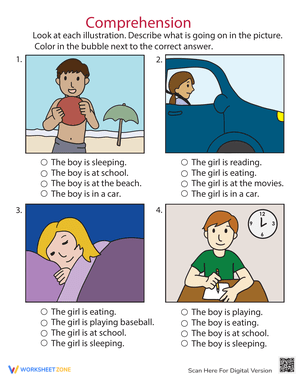
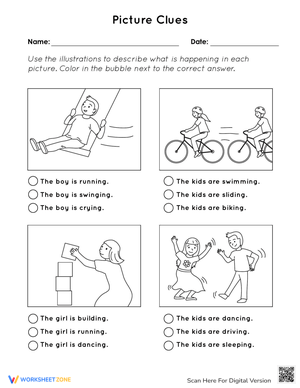
Yes, with one adjustment worth building in. The illustration that accompanies each passage gives ELL students a visual frame for the story before they begin reading. A brief oral preview — naming what you see in the image, taking about two minutes — significantly improves performance on the written tasks that follow. The structured response format (circle, draw, write one sentence) also reduces the language demand on the output side without compromising the comprehension goals.
How are individual worksheets different from a general comprehension packet?
Each worksheet is a standalone resource built around one short passage with tasks targeting specific narrative skills — not a broad mix of vocabulary, fluency, and main idea rolled together. Teachers who use fiction pdf worksheets for 1st grade as rotation tasks find them easier to manage than multi-skill packets precisely because each worksheet has one clear instructional focus, which also makes the formative data they produce cleaner and more actionable.
Can these be used for assessment purposes?
They work well as informal formative checks during a narrative unit. They are not standardized assessments and should not substitute for benchmark testing, but the responses students produce — especially on sequencing and problem-solution tasks — give clear signals about whether a skill has been internalized or is still uncertain. Most teachers find that reviewing a week's worth of completed worksheets gives more useful instructional information than a single end-of-unit quiz.












 Interactive Worksheet Maker
 Quiz Maker
 Word Search Maker
 Crossword Puzzle Maker
 Word Scramble Generator
 Sentence Scramble Generator
 Handwriting Worksheet Generator
 Name Tracing Generator
 Fill In The Blank Generator