Teaching Phonics with Double Consonant Worksheets for Early Readers
Strengthening Literacy Foundations with Double Consonant Practice
Phonics instruction provides young learners with the essential tools they need to decode unfamiliar text and encode their thoughts into writing. Among the various patterns students encounter in early literacy, double consonants represent a significant milestone in their understanding of English orthography. These patterns help children recognize predictable spelling structures that stabilize their reading fluency and overall phonetic awareness. By utilizing a comprehensive double consonants worksheets, teachers can provide the repetitive, high-frequency exposure necessary for these rules to become second nature to students in kindergarten through second grade.
onsistent practice helps bridge the gap between initial letter recognition and fluent reading, ensuring a solid foundation for future academic success and lifelong literacy. These targeted resources allow teachers to support diverse learners by reinforcing the connection between letter patterns and the sounds they represent in common one-syllable words.
The Mechanics of the Floss Rule: FF, LL, SS, and ZZ Patterns
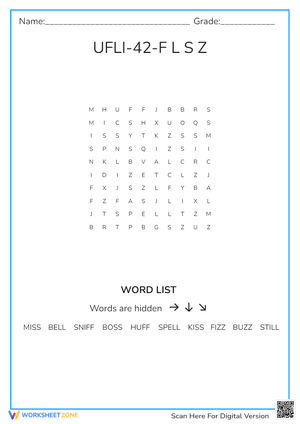
One of the most reliable and widely taught guidelines in early phonics is the Floss Rule. This rule states that if a one-syllable word has a short vowel and ends in f, l, s, or z, the final consonant is usually doubled. For example, 'puff,' 'hill,' 'miss,' and 'buzz' all adhere to this pattern. Teaching this rule explicitly helps students categorize a large group of words they will encounter frequently in their early reading materials. By focusing on these four specific letters, teachers can provide a clear framework that simplifies the spelling process for novice writers who might otherwise struggle with when to double a letter.
According to Worksheetzone curriculum analytics, over 85% of early literacy learners show improved spelling accuracy after consistent practice with Floss Rule words. This suggests that targeted intervention with double consonant patterns provides a predictable framework for students struggling with final consonant sounds in one-syllable words, underscoring the value of high-quality practice in the early grades to establish foundational habits.
Instructional Strategies for Teaching Double Consonants in K-2
Effective phonics instruction requires a multi-sensory approach that engages students' auditory, visual, and kinesthetic processing systems. When introducing double consonants, it is often helpful to start with auditory discrimination exercises where teachers say a list of words and ask students to identify which ones require a double letter based on the length of the ending sound. Following this with visual aids, such as large letter tiles or colored markers to highlight the double letters, helps reinforce the pattern visually. Integrating physical movement into phonics lessons significantly enhances retention for kinesthetic learners who may find traditional seatwork challenging.
For instance, teachers can have students 'clap out' the double letters in words or use sand trays to trace the letters as they say the sounds aloud. This kinesthetic engagement, paired with high-quality worksheet practice from a double consonants worksheets, ensures that the brain is forming multiple pathways to the same information, meeting the diverse needs of all students in the classroom and making abstract rules more concrete.
Integrating Double Consonants worksheets into Daily Lessons
Many teachers find success using short, focused activities during transitions or as part of a morning meeting to reinforce previous learning. A single page from a double consonants worksheets can be used as a quick 'warm-up' at the beginning of an ELA block, helping students shift their focus to the mechanics of language. These brief, consistent touchpoints provide the repetitive exposure needed for automaticity without taking away from other areas of instruction like reading comprehension.
Another effective method is through literacy centers, where various activities are placed in stations for students to work at their own pace in small groups. This rotation system keeps students engaged and allows the teacher to provide individualized support while students practice word sorts, tracing, and identifying double consonants in short stories, ensuring that resources are perfectly matched to learning objectives.
Teacher Tips for Effective Phonics Reinforcement
Consistency is the primary factor when teaching any phonics rule, as short, frequent exposures are more effective than infrequent long lessons. It is often better to spend ten minutes every day on double consonants than to have one long session once a week, helping to build the memory needed for automaticity in both reading and spelling. Teachers should point out double consonants in every text they read with the class, whether it is a picture book or a morning message, to show that these patterns are fundamental to communication. Encouraging students to become 'word detectives' with a magnifying glass and a worksheet can turn routine practice into an engaging game.
Additionally, providing immediate feedback when a student correctly identifies or spells a word helps solidify the learning. Specific praise that names the rule used, such as noting how a student remembered the Floss Rule, reinforces the conceptual connection between the rule and the written word, making the knowledge more durable and motivating students to continue their literacy journey.
Developing Vocabulary and Spelling Fluency with Double Consonants
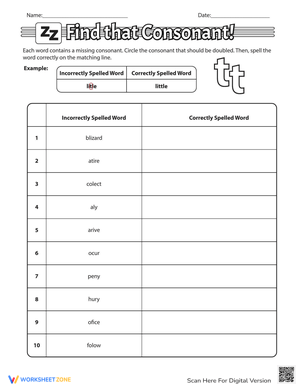
As students become more comfortable with double consonants, they naturally begin to expand their vocabulary and improve their overall spelling fluency. Many common, high-frequency words contain these patterns, and mastering them allows students to read and write with greater ease and confidence. Words like 'happy,' 'little,' 'yellow,' and 'middle' introduce students to double consonants that occur in the middle of words, moving beyond the simple Floss Rule.
A comprehensive double consonants worksheets often includes these more complex examples, helping students transition from simple CVC words to more sophisticated language structures. Spelling fluency is a direct result of this increased vocabulary and pattern recognition. When a student no longer has to stop and think about whether a word like 'puddle' has one 'd' or two, they can write more fluidly and express their ideas more clearly. This fluency is a prerequisite for successful composition in later grades, as it frees up the student's cognitive energy for higher-level thinking and creative expression during the writing process.
Assessment and Progress Monitoring in Phonics Acquisition
Regular assessment is necessary to ensure that every student is making progress toward mastery of double consonants and other foundational phonics skills. These assessments do not need to be formal or stressful; simple check-ins during small-group time or a review of a completed page from a double consonants worksheets can provide valuable data on student performance. Teachers should look for patterns in errors, such as a child consistently forgetting to double specific letters, to allow for more effective instruction that addresses specific needs. Monitoring progress helps identify students who may need more intensive intervention before they fall behind their peers.
Celebrating success is also vital, as acknowledging improvement on worksheets or in writing assignments builds confidence and reinforces a positive learning culture. By combining rigorous assessment with a supportive environment, teachers can ensure that all students reach their potential in phonics. Building these literacy skills early provides a lifetime of benefits, ensuring students have the tools they need to communicate effectively and enjoy the world of reading and academic exploration.
Frequently Asked Questions
1. What are double consonants and why are they important?
Double consonants occur when two of the same letter are used together to represent a single sound in a word, such as the two 'l's in 'bell.' They are important because they follow specific spelling rules, like the Floss Rule, which help students decode and spell many common English words accurately. Mastered early, these patterns build the foundation for reading fluency and spelling confidence.
2. When should teachers introduce double consonants to students?
Double consonants are typically introduced in late kindergarten or early first grade, after students have a firm grasp of individual letter sounds and simple CVC words. Starting with the Floss Rule (ff, ll, ss, zz) is a common instructional path because these patterns are frequent in early reading materials and follow a predictable structure that is easy for young learners to grasp.
3. What is the Floss Rule and how is it taught?
The Floss Rule states that one-syllable words with a short vowel ending in f, l, s, or z usually double the final consonant. It is taught through direct instruction, auditory discrimination, and visual practice using tools like a double consonants worksheets. Teachers often use the mnemonic 'FLoSS' to help students remember which letters the rule applies to, making the concept more accessible and memorable.
4. How can a double consonants worksheets help struggling readers?
A PDF of structured worksheets provides the repetitive, focused practice that struggling readers often need to solidify phonics rules. These resources offer visual cues, tracing opportunities, and word-sorting activities that break down complex concepts into manageable steps. The ability to print specific pages allows teachers to provide targeted intervention that addresses the unique needs of each student in a low-stakes environment.
5. Are there exceptions to the double consonant rules?
Yes, there are exceptions to every English spelling rule. For the Floss Rule, common exceptions include words like 'bus,' 'gas,' 'if,' and 'us.' Teaching these exceptions alongside the rules helps students develop a more sophisticated understanding of language and encourages them to pay closer attention to word structures and patterns as they encounter them in various texts.
Clear All